
Samsung washing machine won't turn on
 The laundry is cancelled, and now all plans are ruined, all because the Samsung washing machine won't turn on. There could be many possible causes for this. But before you panic, you need to determine what's wrong. Of course, the problem could be more serious and require professional help. However, it's quite possible you can fix the problem yourself.
What do we check first?
Before rushing to disassemble your washing machine, it's important to eliminate any external factors that could be affecting its operation. Let's start with the most common:
- It is worth making sure that the power supply is connected and that there is electricity in the apartment.
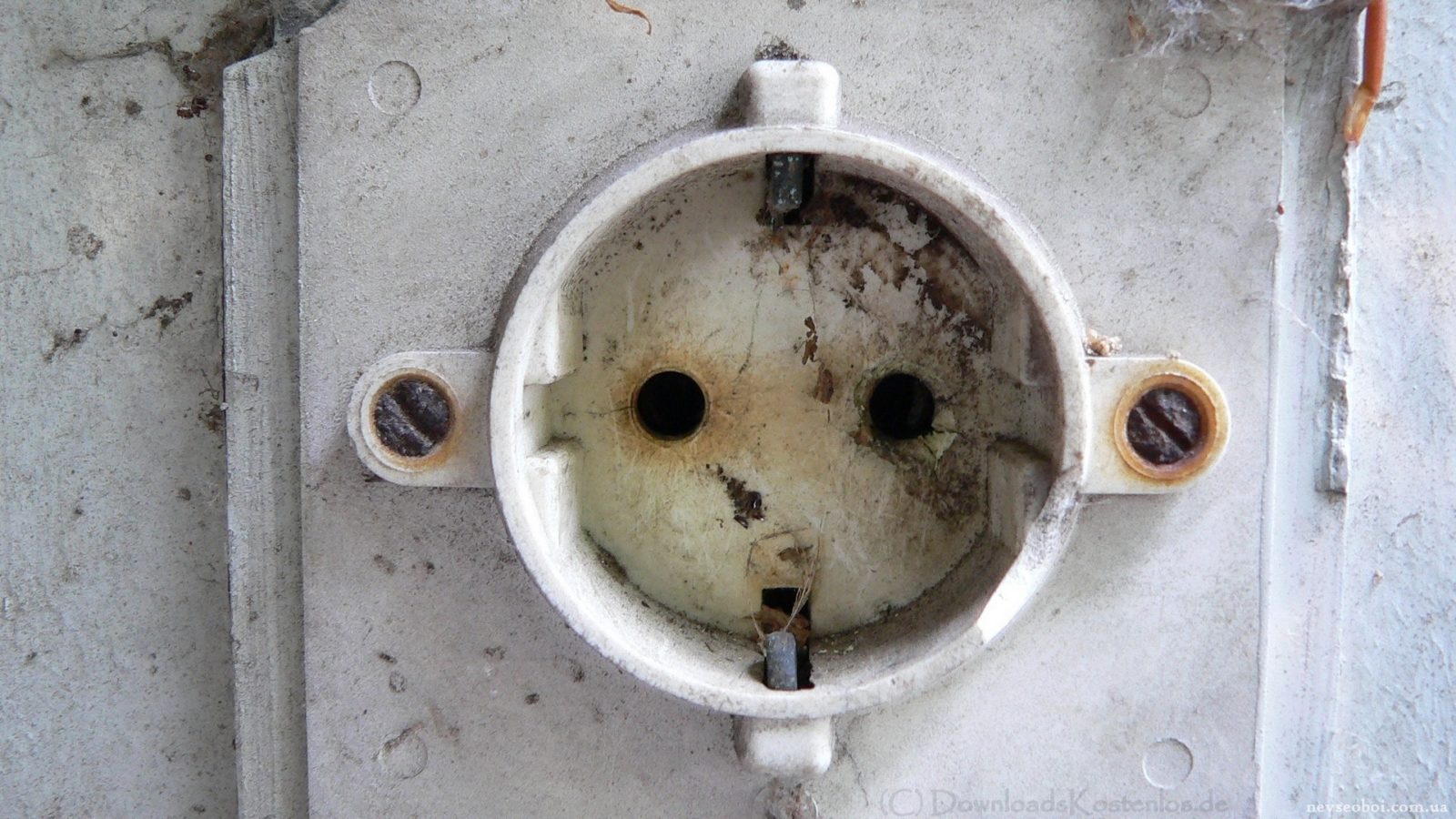
- Check that the outlet your washing machine is plugged into is working. This can easily be done by plugging in any other electrical appliance. If it works, the outlet is fine.
- If you use an extension cord, make sure it's in good working order. A broken cord is often the cause of a power outage.
- Availability of water. First, in the water supply, and then access to the washing machine.
- Please pay attention to the weight of your laundry load. If the load exceeds the maximum weight, the program will not start. In some cases, the entire machine may malfunction.
- A faulty RCD can block the operation. Modern apartments have a residual-current device (RCD) in their electrical panels. In the event of a short circuit, it cuts off the power supply to the apartment.
- Is the door closed tightly enough? If the door isn't pressed firmly enough and the lock doesn't click, the wash cycle won't start.
- Sometimes a washing machine breaks down due to a sudden power surge. Even when turned on, it doesn't work and the display doesn't light up. Manufacturers recommend unplugging the device when not in use.
- The water pressure is very weak. The pump isn't powerful enough to draw enough liquid for washing, and the machine shuts off.
- Pay attention to the entire appliance connection system. If the drain connection instructions aren't followed correctly, the entire washing machine may not function.
Diagnostics are significantly simplified if your washing machine is equipped with an electronic display. In this case, a combination of lights will indicate a malfunction. You can decipher the meaning of the warning signs in the washing machine manual. Usually, appliance repair specialists can easily repair faulty parts.
The most likely breakdowns
So, we've tested the machine for external faults. Now let's look at possible malfunctions of the automatic washing machine. We recommend preparing the necessary tools in advance. First and foremost, you'll need a multimeter, a modern device that combines the functions of an ammeter and voltmeter. It's used to measure current and resistance, and some models can even measure temperature. A tester is always useful around the house, as it's indispensable when repairing any household appliance. And, of course, have screwdrivers and a wrench ready. Let's begin by inspecting the individual components of the washing machine to avoid missing a fault.
Don't forget to follow safety precautions. First and foremost, disconnect the device from the power supply.
Let's check the cord and plug. Check the integrity of the wire at the bends and where it connects to the plug. This is often where breaks occur. Try wiggling the metal pins in the plug. They should remain still. These components may also have internal damage. To check, use a tester. To do this, set the device to "buzzer" mode, and a distinctive beep will indicate the component is working properly.
Let's move on to the door. We know that for the washing machine to start a program, the door must be tightly closed. A clicking sound indicates that the door is locked. Visually, it's impossible to determine the lock's functionality unless there's mechanical damage. Let's use a multimeter to check the resistance. Please note that the washing machine must be disconnected from the power supply.
Open the door. Touch the tester probes to opposite sides of the lock. Then look at the display. If there's no resistance, the reading is 0; if there is, it's infinity. Close the door. And repeat the same steps. If the reading changes, the lock is working; if not, it will need to be removed and replaced. This process is not difficult. You can do it yourself.
Let's test the power button. To do this, we'll again use the multimeter and the dial tone function, as described in step 1. If there's no signal, you'll need to install a new button. A faulty filtering system (FPS) in a washing machine can also block its operation. This device is designed to filter electromagnetic interference from other household appliances. It's located under the cover. Remove it and measure the voltage. To do this, set the tester to "voltage" mode. Touch the clamps to different ends of the device and read the readings on the display.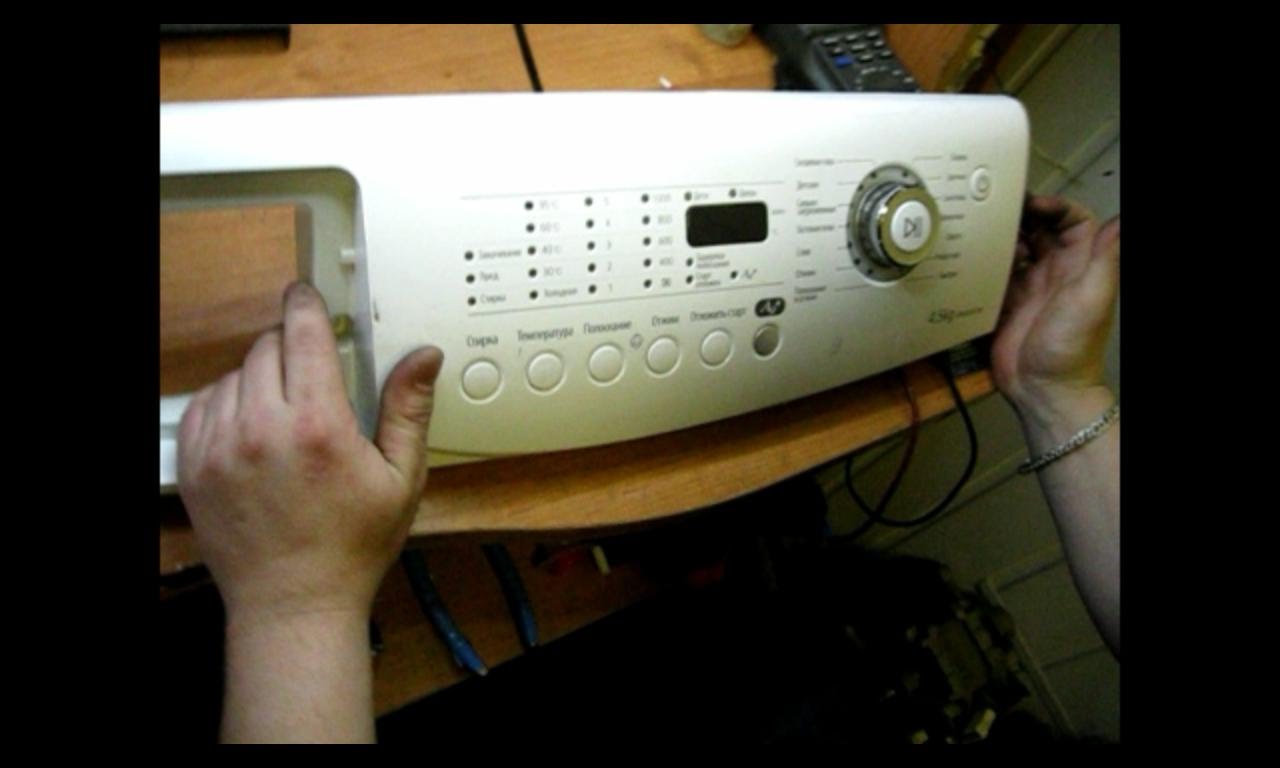
The most difficult part to check is the electronic module. Repairs are only possible with a service center technician, but you can perform diagnostics yourself. Remove the module; it's located behind the control panel in the washing machine. Test each component with a tester to determine its functionality.
A clogged filter may be the cause of a malfunction. To check it, unscrew the drain hose on the back of the washing machine. Remove the filter and rinse it. We've covered the most common problems with Samsung washing machines. Most of them can be repaired yourself.
It's worth checking the heating element.
We'll describe in more detail how to check the heating element. Damage to the heating element can prevent the entire washing machine from working. This type of failure triggers the safety mechanism, as current leaks into the housing. The heating element may be damaged. It's one of the most important components of the machine. Checking it requires time and disassembling the housing. We hope these detailed instructions will help you complete the task. So, what should you do?
- Position the washing machine so that all sides are easily accessible.
- Remove any remaining liquid from the tank by removing the debris filter.
- Remove the compartment intended for washing powder and other detergents.
- There are screws on the back of the case that need to be removed to remove the top panel.
- There are mounting screws under the cuvette. Remove them. There's another one on the right side that also needs to be removed. That makes three screws total.
- Very carefully move the control panel away. We won't detach it completely.
- There's a plastic clamp around the entire circumference of the hatch. Use a flat-head screwdriver to pry it loose and carefully remove it.
- Carefully insert the hatch cuff into the washing tank.
- Using the same flat-head screwdriver, carefully pry up the front trim panel. Remove it. This will reveal the washing machine's steel frame.
- Now you can easily see four bolts at the bottom of the front wall. They need to be unscrewed.
- Next, very carefully, so as not to damage the electrical wires, move the control panel onto the top cover of the washing machine. Now you need to unscrew three more screws located under the panel. These secure the front part of the housing.
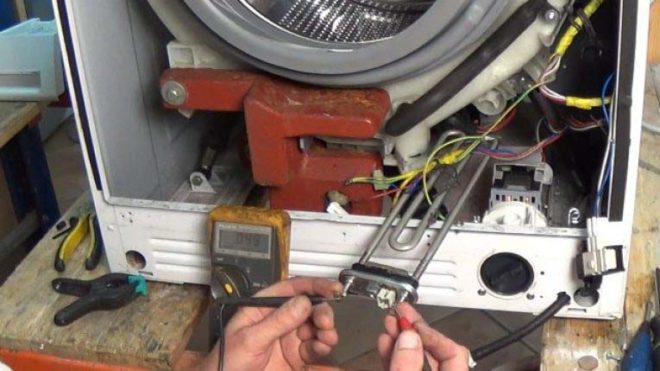
The most difficult part of removing the heating element has already been completed. All that remains is to detach the front panel. To do this, remove it from the hooks that hold it in place. Grasp the lower ends of the panel and gently lift it upward.
There is no need to apply force, as this may damage the wires that are connected to the hatch lock.
This opened up access to the temperature sensor and heating element, allowing them to be checked for damage. Try to position the control panel as securely as possible; if it falls, it will most likely cause serious damage.
So, let's begin diagnosing the heating element. For this, we'll need a multimeter again. Set it to resistance measurement mode. Observe the tester's readings by placing the first clamp on one terminal and the second on the other. If the display shows a value of 25-30 ohms, you can be sure the heating element is working properly. If the reading is 0 or 1, we can conclude that the part is faulty. Therefore, the faulty element must be replaced.
In this article, we've examined in detail the possible causes of washing machine failure. We hope this information will help restore the functionality of your appliance.
Interesting:
1 reader comment
Add a comment
Headings
Washing machine repair




For buyers




For users


Dishwasher




My car also doesn't respond when I turn it on. Your video makes everything clear and understandable. After a full check, I'll get to work on the trans. Thanks again for the tip.