
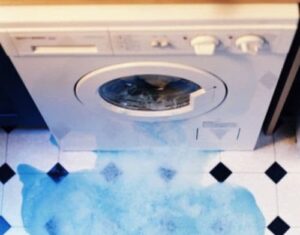
Water is leaking from the bottom of my Samsung washing machine.
 You should always be prepared for your beloved washing machine to break down: no appliance can last forever. But while an erratically flashing display or a locked door are merely warning signs of a problem, a puddle under the machine is an urgent and serious matter. You can't just put a rag underneath and continue the cycle: you need to quickly diagnose the source of the leak and fix the problem.
Despite the dreaded water underfoot, you can repair your Samsung washing machine yourself. Simply partially disassemble the unit and carefully inspect a few weak spots. The following overview of all the possible problems that can cause a washing machine to leak from the bottom will help.
Why does this happen?
No washing machine is immune to sudden leaks, and even models from a trusted and reliable brand like Samsung are no exception. Every machine has its own shortcomings and weaknesses that can lead to failure over time, especially if the machine is used frequently, for extended periods, and carelessly. Specifically, a puddle may be caused by:
- improper use of the washing machine;
- use of detergents that are not suitable for the machine;
- mechanical damage to machine components;
- installation of low quality parts;
- manufacturing defect.
Important! If the problem is due to poor-quality parts or a manufacturing defect, the leak will appear almost immediately after repair or assembly of the washing machine.
The point about mechanical damage to individual parts can be supplemented by a number of other parts of the washing machine that are vulnerable to wear. These include the drum, pump, drain hoses, seal, inlet and outlet pipes, drum seal, and detergent dispenser. These are the parts most likely to experience damage and leaks, leading to water leaks from the bottom left, front, or back. Therefore, it's essential to inspect each of these components.
Mandatory initial steps
Water with any electrical appliance is dangerous to life and health, so if you notice a wet spot near the washing machine, be careful. Approach with extreme caution and do not touch the puddle under any circumstances, otherwise there is a high risk of electric shock. First of all, unplug the machine from the power supply as soon as possible, even if the cycle is not completed.
Important! If the outlet is too close to a working circuit breaker, it's best to shut off power to the entire room or apartment at the main switchboard.
The next steps are as follows:
- We shut off the water supply to the machine (turn the tap on the pipe).
- We drain the remaining water in the washing machine through the drain filter.
- We wipe up the puddles around.
- We move the machine away from the wall or take it out of the box (if the machine is built-in).
- We examine it carefully.
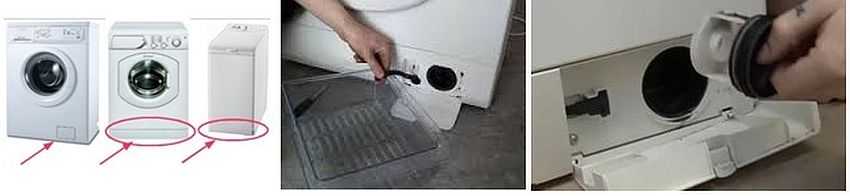
To fully inspect the washing machine, you'll need to remove the back or side panel, and in some cases, tilt it toward you and place a platform underneath. It's important to try to remember at what point in the wash cycle the leak began; this will significantly narrow the search. It's also recommended to pay attention to the nature of the water: dirty water indicates a leak mid-cycle, while clean water indicates a leak at the beginning or end. Next, carefully examine each possible culprit.
Checking the filler hose
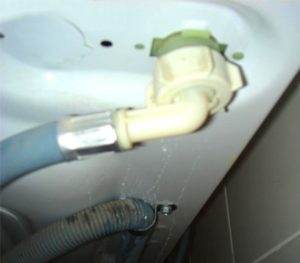
The first thing to check is the inlet hose, which is most often the source of a mini-flood. There are many possible causes for this: mechanical damage to the rubber, pinching, wear, premature wear, and poor sealing at the joints. A visual inspection will help pinpoint the cause.
Important! You can check the water inlet hose without plugging in the machine.
- We remove the back and top covers from the unit.
- Tilt the machine forward and place something hard under the bottom.
- We inspect the hose for cracks, abrasions, and gaps at the joints.
- If there is no visible damage, wipe the entire surface dry.
- We turn on the water and try to notice drops or splashes.
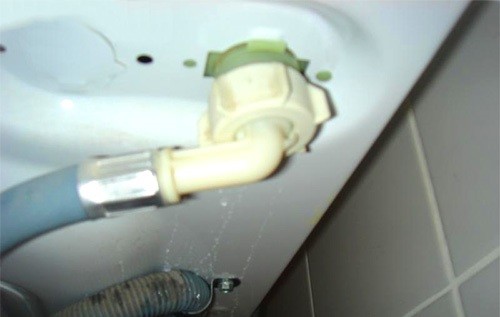
Dryness will clearly indicate that the rubber is intact and doesn't need replacing. Otherwise, the leak will be obvious. It's important to remember that the water inlet hose is under pressure, so simply sealing the crack or wrapping it with sealant is not enough—a complete replacement of the element is necessary. If the leak is due to leaky connections at the joints, then the problem can be fixed by replacing the gasket and tightening it thoroughly.
If there is waste water on the floor
When the water under the washing machine isn't clean, but dirty, it's worth acknowledging that the inlet hose isn't to blame. Dark liquid indicates a leak in the lower parts of the machine: the tub, hoses, pump, or drainage system. Let's start with the drain: simply run the washer on the drain or rinse cycle and take a closer look. If the problem persists, patch the cracks in the hose with a rubber patch or replace it with a new one.
Finding a fully functional hose is easy, as the vast majority of Samsung drainage system components are standard dimensions and readily available at all plumbing stores. Pay particular attention to the connections to the pump, volute, and trap. It's likely that the connection has become loose. The solution is to replace the gaskets, reinforce the connections with an additional clamp, and use waterproof sealants.
Let's check the dispenser pipe
Clear water may indicate a problem with the dispenser hose. This can be easily verified by opening the detergent drawer and assessing the quality of the rinse. Powder that is not completely washed out indicates a leak in the pipe through which water flows from the inlet valve into the dispenser. Now we will fix the problem, for which we need to:
- de-energize the washing machine;
- ensure free access to the machine;
- remove the top cover;
- find the nozzles that fit the powder receiver;
- replace hoses if they are wet or have external damage;
- tighten loose clamps;
- assemble the car.
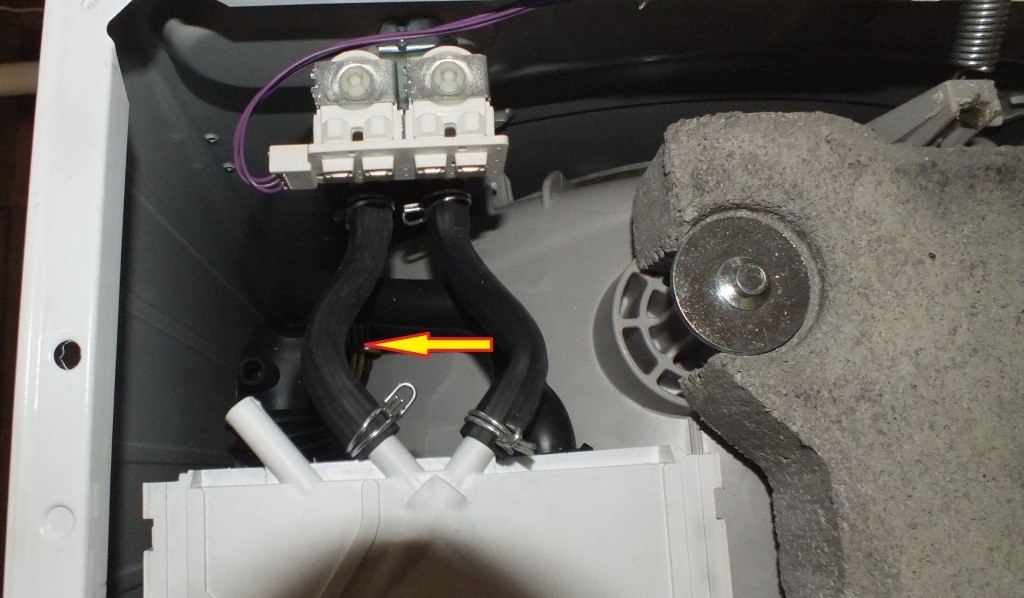
This type of leak becomes apparent from the very start of the cycle, when water begins to flow into the powder dispenser. The problem is that the low pressure and small volumes make the leak virtually invisible. Therefore, it's important to periodically inspect the machine during the wash cycle.
It might be a problem with the drain pipe.
Rarely, the drain hose located underneath the drum can leak. This hose is unique in that it always contains liquid, so the puddle continues to fill even after the washer stops and the water supply is cut off. If you notice a persistent leak, the problem is definitely there.
You don't have to call a service center to fix the problem. Almost any Samsung washing machine owner can replace it. Simply drain the water through the waste filter, turn the machine on its side, and carefully inspect all the supply lines. Replacement parts can be purchased at a regular store, and loose clamps can be tightened manually.
Let's take a look at the pump at the same time.
We also check the drain pump here. To do this, we disconnect the pump from the housing and pipe, clean out any debris, and replace it with a new one. Don't ignore accumulated dirt—it's often the source of damage to the part.
If the pump doesn't raise any concerns and appears intact, clean, and functioning, check the volute. There shouldn't be any cracks or water on its surface. If there are any, the spool has likely cracked due to a manufacturing defect and is leaking. The only solution is to replace it with an undamaged part.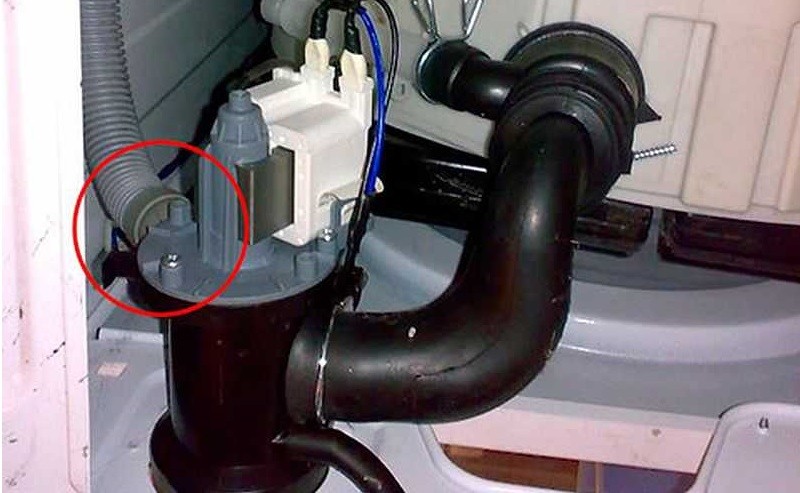
It's worse if the tank wall is damaged.
If the puddle is large and the water is soapy, there's a good chance your drum is failing. More precisely, cracks have formed in its walls and a leak has started. This is easily explained: the drum is often damaged by foreign objects, overloading during the spin cycle, or a faulty heating element.
A visual inspection of the washing machine's interior will confirm this assumption. It's important to check for any droplets on the underside of the machine. You'll need excellent eyesight and a flashlight. A front-loading washing machine is installed at an angle of 20-30 degrees, and with a vertical one, the side wall is removed, after which we try to see the accumulated water.
You can repair the crack yourself, but a special moisture-resistant adhesive will only seal the crack temporarily. Installing a new drum will solve the problem, but it's best to call a service technician for this. For a drum made of two halves, replacing the gasket is also an option, which is also more reliable and more reliable.
Let's check the powder receptacle and cuff
The next possible sources of leaks are the detergent drawer and seal. However, the problem often stems not from wear and tear, but from carelessness and negligence. The detergent drawer, for example, can easily become clogged by using the wrong detergent or by a foreign object getting into the dispenser. In these cases, the hopper must be thoroughly cleared of any blockage. A common cause is a lack of control over the water supply pressure and the inlet channel. If the pressure is reduced, the stream will drain away and not leak out.
Getting foreign solid objects into the drum and rough unloading/loading of laundry can result in damage to the cuff.
Any damage to the rubber seal in the washing machine's door frame compromises the drum's seal, leading to leaks. Water drains only from the front wall of the machine, creating the illusion of leakage from below. Taping or patching a damaged seal is strictly prohibited; a complete replacement is required.
Let's protect your machine from leaks
Many problems with Samsung washing machines can be avoided, especially when it comes to leaks. Water will remain properly contained within the drum if the owner follows the operating instructions and maintains the machine with care. Remember that these machines are highly durable, and most breakdowns are caused by carelessness and inattention. Most of these problems can be prevented by regularly following a few simple guidelines.
- Use special bags for washing items containing metal objects and small parts.
- During washing, monitor the operation of the unit in order to detect any leaks as soon as possible.
- Always unplug the machine when not in use to prevent any potential damage to the equipment during a thunderstorm.
- Install the machine in rooms with low humidity.
- After each series of cycles, check the cuff, powder receptacle and run the “empty” mode for cleaning.
- Do not exceed the maximum permissible weight when loading laundry.
- Set up a filtration system if your water supply is too hard.
- Select a powder of the appropriate quality for a specific model.
- Clean the drain hose and pump every two months to avoid blockages.
Knowing what to do when a puddle forms under your washing machine can help you avoid flooded neighbors, a damaged washing machine, and electrical shock. What's more, you won't have to wait for a specialist or pay for repairs—the vast majority of leaking problems can be solved at home. The key is to follow the instructions, carefully inspect the parts, and proceed with extreme caution.
Interesting:

2 reader comments
Add a comment
Headings
Washing machine repair




For buyers




For users


Dishwasher




The explanation is simple, clear, and accessible. Thank you very much! I just ask that you use personal protective equipment. This is important for both yourself and your audience. Safety preserves health and prolongs life.
Thank you for the detailed and clear information.