
How to sell a washing machine for scrap metal?
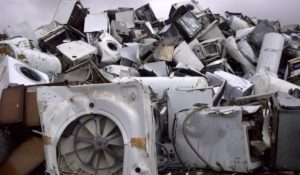 When a washing machine runs from repair to repair or breaks down completely, the user has no choice but to buy a new one. But what to do with the old one? The easiest way is to simply throw it away, but some enterprising individuals are considering a different approach. Is it possible, for example, to scrap a washing machine and make a small profit?
We hand over the total weight
Ferrous metal recycling centers accept scrap cars by the total weight. While this typically doesn't fetch much money, it can still yield some value. First, the car owner needs to decide how to deliver the product to the recycling center. There are two options.
- Independently, meaning either alone or with the help of friends, relatives, or acquaintances. You'll need to load the car into your own vehicle and take it to a scrap yard, where a worker will accept it and give you cash. This way, you'll only spend money on gas, and the benefit depends on how long it takes to get to the nearest scrap yard.
- In the second case, you can use a specialized company that will bring a truck with movers to your home. They will pick up the equipment, load it into the truck, and then take it to a scrap metal collection point. It's very convenient and comfortable, but it's not free. Chances are, the money you earn will only cover the transportation costs, nothing more.
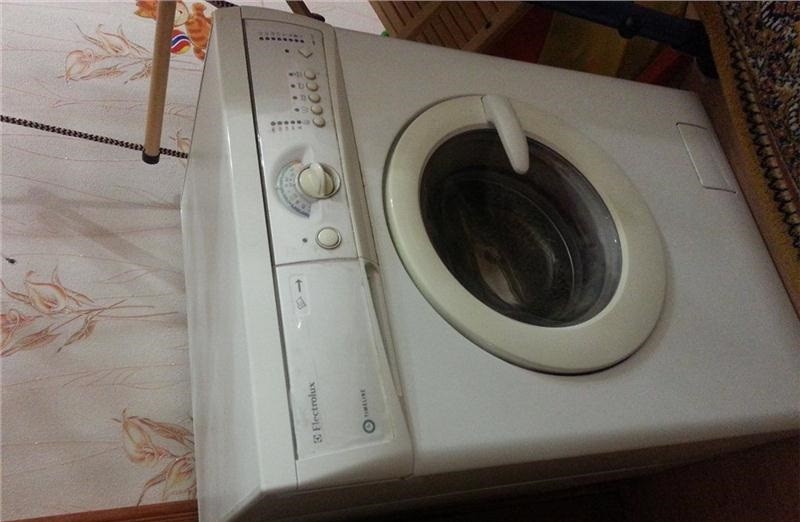
It's difficult to say definitively which option is more acceptable. Both are viable. Now we need to calculate how much money we can earn by trading in one average washing machine. The price of the product on the metal market will depend directly on the weight of the unit.Given that the body is made partially of plastic, counterweights play a key role. Thanks to them, the washing machine can weigh between 50 and 70 kilograms. The purpose of these components is to prevent excessive movement during operation.
Important! In most washing machines, these parts are made of concrete, although there are some particularly rare models with cast iron counterweights. Therefore, if you're lucky enough to own one of these machines, you could make a pretty penny.
Naturally, concrete counterweights are not accepted for scrap metal. Therefore, their weight must be subtracted from the total weight of the washing machine. Therefore, in Moscow, the price per kilogram of ferrous metal is approximately $0.12–$0.15. A machine with cast iron counterweights can fetch between $8.40 and $10.50. A model with concrete components, however, will weigh 20–30 kilograms and fetch only $3.60–$6.
We'll sort it out, sort it, and hand it over.
While in the previous section we dropped off the washing machine by its total weight, in this section you'll find a slightly different method. Instead of taking the entire unit to a collection center, you can disassemble it yourself and then sort the parts by metal category. For example, almost every washing machine contains massive motors with windings containing up to 2 kg of copper, and in Moscow, the price per kg of this metal can reach up to $3.60. You can also find other non-ferrous metals there. Overall, you can get a good return, but keep in mind that it'll take a fair amount of effort and time. Here's a breakdown of how much non-ferrous metal is in the average washing machine: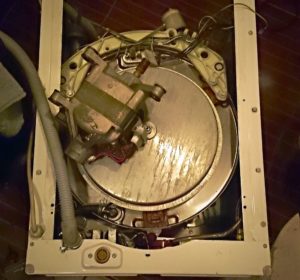
- 1-2 kg approximately $4.32.
- 2 kg of aluminum – $1.60.
- 0.2 kg of zinc – $0.13.
- 20 kg of iron – $3.
- 0.1 kg brass – $0.20.
Add it all up, and you'll get around $9.25. Of course, that's more cost-effective than simply handing over the car's weight. But it'll also take quite a bit of time, and it's still unclear which is more expensive. And, of course, the difference in revenue is quite small. Residents of large cities would probably prefer to give away their car for free, just to get rid of it and the hassle associated with it.
The main ways to get rid of old equipment
There are many more ways to get rid of an unwanted washing machine than you might think. They all vary in terms of financial costs/profits, as well as the time and effort required. Here's a list of the main options:
- Recycling. The idea is that you personally take your machine to a designated location, where you pay an additional 1,500–2,000 rubles for the procedure. This fee covers transportation to a designated landfill and the recycling service itself.
- Sell it or give it away for free. Of course, this is only possible if the machine is still in good working order. Some people will be happy to come and pick it up themselves if you offer it for free.
- Trade in your equipment. This refers to various promotions like "Trade in your old for new." You can make some money and get rid of your equipment.
- Donate to an institution. Orphanages and other similar institutions are happy to accept any donation. You can never have too many appliances, so why not donate if yours is still in good working order?
But if your household appliance has already outlived its usefulness, the most profitable option is, of course, to scrap it. As you can see, its valuable metal content is quite high. While transporting it may be inconvenient, it's still better than paying extra for disposal.
Interesting:

Readers' comments
Headings
Washing machine repair




For buyers




For users


Dishwasher




Add a comment