
Secrets to softening water for your washing machine
 Hard water is one of the reasons for ineffective washing. Many housewives report that hard water makes their laundry stiff, and some say it affects the internal components of the machine. So, the question arises: how to soften the water entering the machine, and what product should be used?
Why soften water?
A washing machine, like other household appliances, requires careful maintenance and regular cleaning. Housewives who monitor the condition of their washing machine and its washing performance know that soft water cleans laundry better. Furthermore, softening the water is essential if you notice any of the following in your washing machine:
- scale;
- soap scum;
- unpleasant smell.
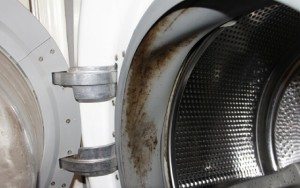
When water is heated to high temperatures, magnesium and calcium ions deposit on the heating element and drum of the machine as scale. This gray deposit is especially noticeable in machines that frequently wash clothes at temperatures above 60°C.0WITH. At low temperatures, scale does not form, so don't completely trust advertisements that show a heating element with large chunks of scale. However, you should consider softening your water.
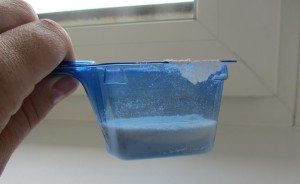
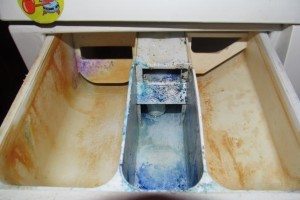 In hard water, detergent dissolves poorly at low temperatures. As a result, soap scum, powder particles, and dirt settle on washing machine parts. This scum can be seen on the detergent and fabric softener drawer, drain filter, and rubber seal. Softening the water will not only improve detergent dissolution but also improve stain removal.
After washing in a damp environment, bacteria actively multiply and develop, causing unpleasant odors. Without proper washing machine maintenance, this odor can be absorbed into the laundry. Therefore, water softening and machine cleaning are essential, and you can use a deodorizer for effective cleaning. citric acid.
Chemicals
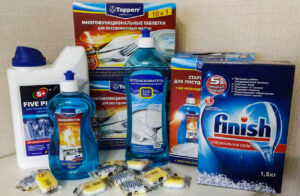
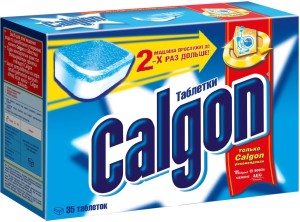
One of the most popular water softeners is CalgonHowever, its popularity stems not from its miraculous properties, but from advertising. In fact, a closer look at the ingredients reveals that similar water softening agents are found in any high-quality detergent. Therefore, simply use the detergent in the dosage indicated on the packaging and avoid wasting money on "advertising."
Remember! The harder the water, the more detergent you need per wash cycle.
A good water softener, familiar to older generations, is washing soda. It should be added directly to the washing powder. This folk remedy is truly effective in protecting washing machine parts from hard water. However, it has a negative impact on clothing made from natural fibers, so its use should be done sparingly and with caution.
You can soften water with regular laundry soap. You just need to add the soap to your wash cycle along with the detergent. But It is highly not recommended to use this method for washing children's clothes. Because clothes washed with laundry soap will dry out the child’s skin.
Water filters
Experts believe that softening hard water with chemicals is not as effective as softening with water filters. Filters not only soften water, but can also purify it from harmful impuritiesThere are several varieties of such filters.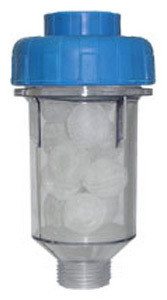
- Polyphosphate (salt) filter.
- Magnetic filter.
- Ion exchange devices.
- Reverse osmosis systems.
A salt filter is the most affordable way to soften water. In this filter, water is softened as it passes through polyphosphate crystals, which react with the salts in the water, absorbing them. The resulting soft, industrial water is suitable for washing and does not damage washing machine components. This filter can be installed in the water pipe, connecting it to the inlet hose, or it can be inserted into the inlet hose. The former option is preferable.
Please note: The polyphosphate filter should be changed at least once every six months, provided it is washed daily.
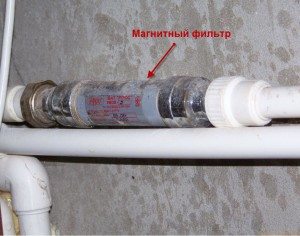 A magnetic filter uses a magnetic field to attract metals found in hard water. As a result, most of the magnesium, calcium, and other metal salts are retained in the filter, making the water suitable for washing. Unlike a polyphosphate filter, a magnetic filter is more reliable and durable. However, it is also much more expensive. In addition, such a filter can be used not only to soften water for washing, but also to purify drinking water.
Ion exchange filters operate on the principle of double absorption, removing metal salts from the water passing through them. How does this work? First, the water enters one section of the filter, which contains a sticky substance that saturates the water with ions that react with heavy metals.
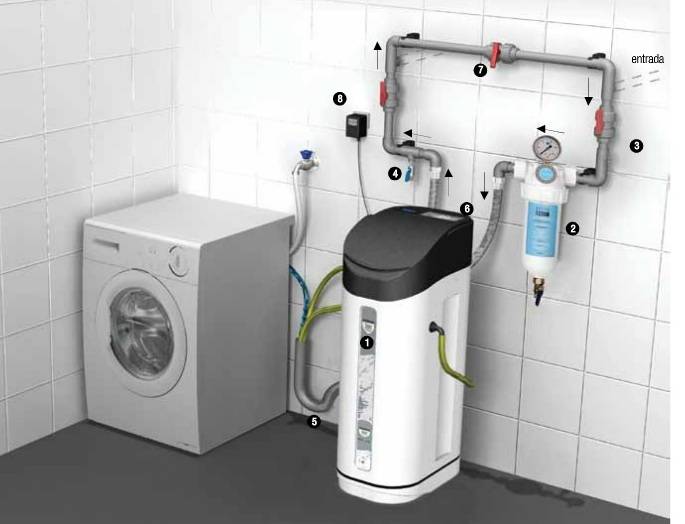 The ions of this substance essentially bind heavy metals, passing along with the water into the second compartment. The second compartment contains salt crystals that trap the ions along with the heavy metal salts. The result is perfectly soft water.
 Osmosis filters. These are among the most effective filters, as they remove heavy metals from water better than other filters. These filters have at least two or three compartments separated by a membrane. Each compartment contains solutions of varying concentrations and densities. Water passes through these solutions under pressure, removing all dense elements. The output is excellent soft water, which can only be used for technical purposes..
Please note! Reverse osmosis filters are not used to produce drinking water, as the purification provided by the filter is too thorough. All beneficial substances are removed from the water, and it can be harmful to the human body.
So, there are different ways to soften hard water, and each of them can be used to soften water for your washing machine. Choosing the most suitable method will depend on your budget, your desire to improve washing results, and your desire to protect your washing machine.
Interesting:

4 reader comments
Add a comment
Headings
Washing machine repair




For buyers




For users


Dishwasher




You're talking about the dangers of reverse osmosis water and the effectiveness of magnetic converters. Are you living in a world beyond the looking glass?
Water passing through reverse osmosis has a salt content very close to that of distilled water. This is known to leach salts from the body, leading to serious consequences. A reverse osmosis system must be equipped with a mineralizer to achieve the desired mineralization of the output water.
Water filtered through reverse osmosis is not suitable for drinking, as it leaches essential salts from the body. Naturally, this damage will occur and become noticeable after a period of consumption.
This is all pure science fiction. The difference in mineralization between regular water and distilled water is insignificant compared to the mineralization of body fluids. That is, the mineralization of body fluids is significantly higher than the mineralization of any water, regular or distilled. Therefore, the idea that distilled water "washes out" anything from the body is unfounded.