
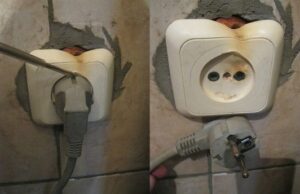
The plug on the washing machine melted.
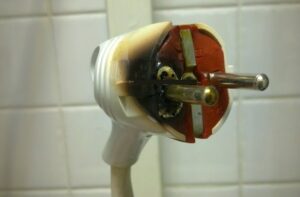 If you notice a burnt plug on your washing machine, immediately unplug the power from the outlet where the appliance is plugged. Once the cord has cooled, carefully remove it (assuming it hasn't fused to the appliance body) and inspect the damage. In some cases, you'll need to replace the entire power cord, but more often, a lesser solution is to install a new plug. We'll explain how to do this correctly.
Replacing a melted plug
A melted casing and an unpleasant burning smell will indicate that the plug needs repair. What should you do if you notice visible damage? You'll have to replace the plug. It's very dangerous to continue using the machine with such a plug.
When replacing an electrical plug, you need to have a sharp knife, a thin screwdriver, and pliers on hand.
To install a new fork, follow these steps:
- cut off the old plug from the cord;
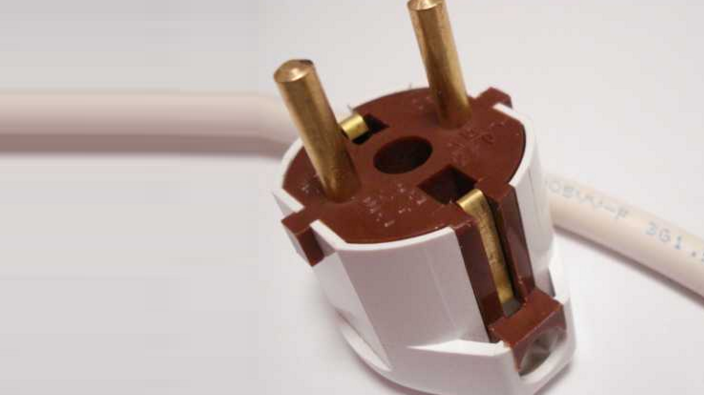
- Use a knife to remove the top insulating layer from the cable;
- strip each wire;
- twist the wires and cut them so that the length of the uninsulated section of the cable is 10 mm;
- bend the ends of the wires with pliers;
- Inspect each internal wire. Typically, a washing machine's power cord has three wires: neutral (blue or light blue), ground (yellow or green), and live (may be black, brown, or pinkish);
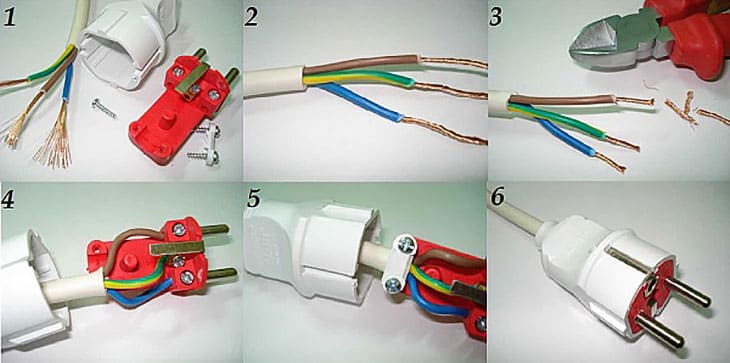
- Connect the wires to a working plug according to the diagram. Ground the plug to the center contact;
- clamp the cord with a special plastic jumper to securely fasten it in place;
- Assemble the body of the electric plug by connecting its halves with a screw.
As you can see, replacing the plug is easy. Just follow the instructions carefully and be sure to connect the wires correctly. Otherwise, no special knowledge or tools are required.
For fans of Soviet forks
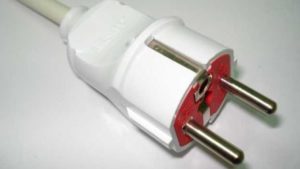
Modern washing machines are equipped with Europlugs. If the plug has melted and you only have a Soviet-style plug at home, you can, at your own risk, install this component. The procedure is essentially the same as the previous one:
- cut off the faulty plug;
- remove a couple of centimeters of outer insulation from the cord;
- strip each wire with a knife, trim the length with scissors;
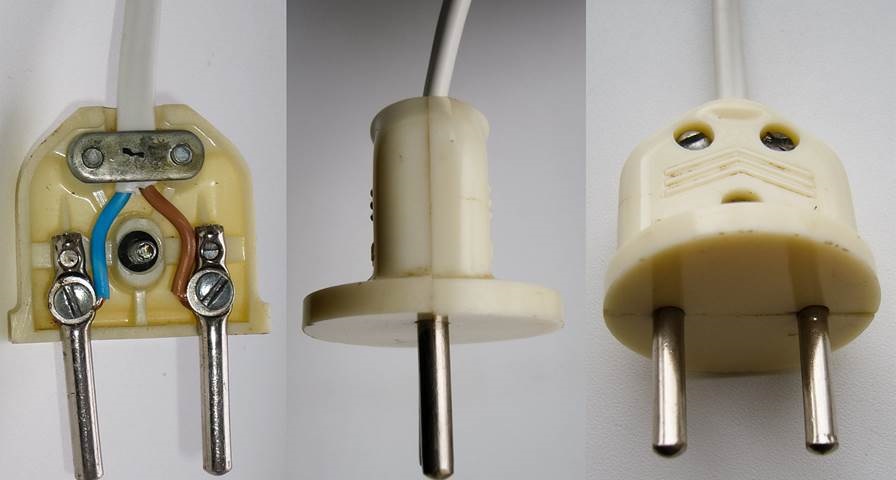
- Use pliers to make a ring at the end of each wire;
- Connect the neutral and live wires to the contacts of the new plug. Soviet-style plugs do not have a ground connection, so the third, yellow-green wire of the cord can be cut off.
Next, check to see if the wires are securely connected. If so, all that's left to do is reassemble the housing by tightening the central screw. After replacing the plug, it's recommended to monitor the washing machine's operation for a while.
If you notice a burning smell, you should immediately turn off the power to the outlet and find out why even a new plug is starting to melt.
Checking the network cable
Sometimes the reason for the plug to fuse is a short circuit. If replacing the plug does not help, and the new plug also fails, you need to check the power cord for damage. First, inspect the washing machine cable to make sure there are no cracks, pinches, kinks, or burn marks.
The easiest way to check your washing machine's power cord is with a multimeter. This special device will immediately detect any electrical faults. What should you do to diagnose this? Set the tester to buzzer mode and test the washing machine's power cord. If the multimeter detects an electrical leak, it will beep loudly. In this case, the only way to fix the machine is to replace the power cord.
If you don't want to buy a multimeter to diagnose a cord, you can make a homemade device and use it to test the wire. All you need is a 3.5V light bulb, a battery, a connector, and two connecting wires. The device is assembled in a specific order:
- a lamp is connected to the positive terminal of the battery;
- a wire with a clamp is connected to the negative.

It's best to first test your homemade device on a working section of the power cord. Attach the clamp anywhere on the cord. If it's assembled correctly and there's current flowing through the cable, the lamp will light. If the LED doesn't light, there's a break in the circuit.
Which fork is better?
If you decide to change the plug of your washing machine's power cord, it's best to immediately purchase a high-quality plug. On store shelves you can find detachable and cast Euro plugs. Let's consider the advantages of each type and which one is best. A molded plug is manufactured using spot welding. This type has the advantage of tight contacts. Furthermore, a one-piece plug is considered more reliable due to its hermetic seal.
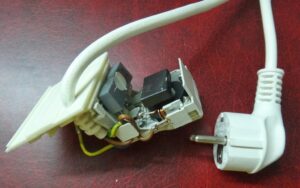
The downside of a molded plug is that it can't be separated for repair. If the plug fuses, you'll have no choice but to cut it off and install a new one. A detachable plug, however, can be easily repaired if the problem is simply a loose contact. The procedure for replacing a Euro plug is the same for any brand of washing machine. Samsung, LG, Bosch, Ariston, and other brands have no fundamental differences in this regard.
Interesting:
Readers' comments
Headings
Washing machine repair




For buyers




For users


Dishwasher




Add a comment