
What is the purpose of the ball in the washing machine hose?
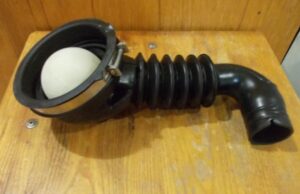 If you decide to repair your washing machine yourself, be sure to familiarize yourself with its design. Sometimes, when disassembling the machine, novices discover many parts they consider "unnecessary." And then, after the repair, the "home helper" no longer functions as before. A common question among novice repairmen is the ball in the washing machine's outlet. Let's explore the purpose of the ball, and whether it should be removed to improve drainage, or whether it's best to leave it as is.
Purpose of this element
If your washing machine isn't draining properly, and while searching for a clog, you discover a strange ball in the pump hose, don't rush to get rid of it. In fact, the ball doesn't interfere with the normal operation of the washing machine; rather, it plays a special role.
The plastic ball in the washing machine's outlet acts as a check valve, preventing waste liquid from flowing back into the tank.
The ball does not fit tightly against the walls of the pipe, so it cannot obstruct the drain. When the pump starts, the ball rises upward and prevents the discharged liquid from flowing back into the tank. If it's removed, the drainage system may not function properly. Also, when the washing machine is connected to the sewer system rather than through a trap, and the drain hose is installed directly into the pipe, the ball in the nozzle prevents unpleasant odors from entering the tank.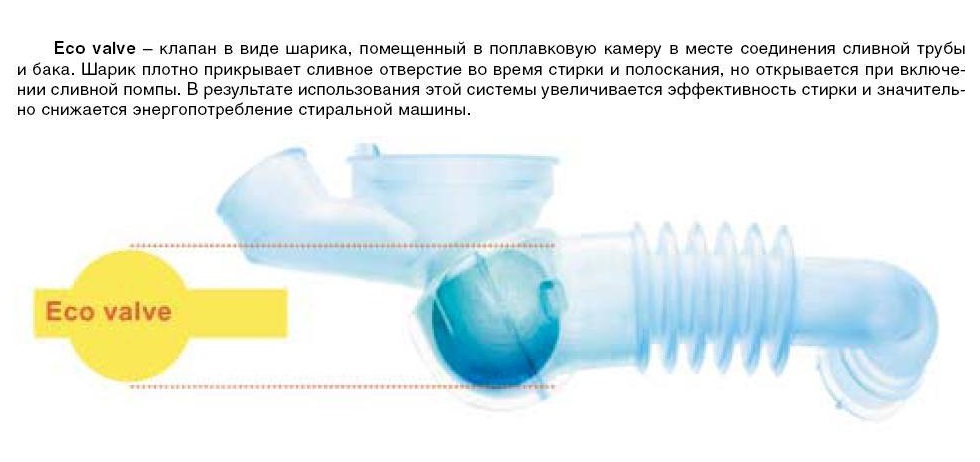
Washing machine manufacturer Zanussi calls the plastic ball inserted into the drain spout the "ECO BALL." In modern models, it helps use detergent more efficiently. During the wash cycle, the ball prevents soapy water from flowing down the drain, saving detergent and improving washing results. It's now clear that the drain spout ball is a crucial component of any automatic washing machine. It shouldn't be removed; it doesn't obstruct the flow of water into the drain. If your "home helper" refuses to drain, the cause should be elsewhere.
There is a lot of rubbish inside
A clogged drain hose, debris filter, or the pipe connecting the tub to the pump can cause a lack of or difficulty draining. Another cause is a faulty pump. Diagnosing your washing machine can help identify and fix the problem. When inspecting your "home helper," start with the simplest and work your way up. First, inspect the drain hose and feel the corrugated pipe. There shouldn't be any blockages. Make sure the drain hose isn't pinched or kinked. If the drain pipe is fine, check to see if the debris filter is clogged. To do this:
- unplug the washing machine from the power supply;
- turn off the valve responsible for the water supply;
- If there are mats in front of the machine, remove them;
- cover the floor around the washing machine with dry, unnecessary rags;
- prepare a low but roomy basin;
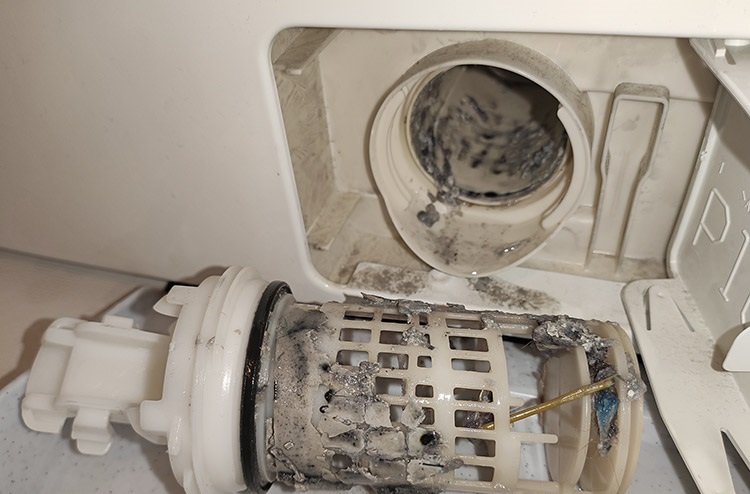
- open the technical hatch door or remove the lower false panel (the course of action depends on the model of the automatic machine);
- Tilt the washing machine back and place a basin under the body, in the area where the waste filter is located;
- find the "plug" of the filter element;
- take hold of the trash can lid and turn it from left to right half a turn;
- Make sure that the liquid flowing out of the system goes into the basin;
- Unscrew the plug further, when the spiral loosens, remove the filter from the hole.
Clean off all dirt and remove any tangled threads and hair from the filter element. Next, rinse the filter basket in warm water. If the coil is coated with scale, soak it in a citric acid solution for 5-6 hours, then brush off the limescale. Avoid using boiling water, as it will warp the plastic.
After removing the dustbin, immediately clean the snail—the hole where the coil is inserted. Wipe away any dirt from the walls with a damp cloth. Don't forget to shine a flashlight into the "nest"—there might be a foreign object or a clump of lint or hair stuck there. Once finished, screw the dustbin back in, open the water supply, and run a test wash. Observe how the machine operates. If water flows freely down the drain, the repair is complete. If the problem persists, you'll need to check the pump.
Let's remove the pump
If cleaning the debris filter does not help, proceed further. Often the pump is the culprit behind difficult drainage. This is what pumps wastewater out of the tank and directs it to the sewer. You'll need to remove the pump from the housing and inspect it. On most front-loading machines, the drain pump is accessible through the bottom. A Phillips-head and flat-head screwdriver, a wrench, and a bowl to catch the water will be helpful. Be sure to disconnect the power to the machine and turn off the shut-off valve on the water pipe. The next step is as follows:
- drain the remaining water from the system by removing the debris filter (how to unscrew the coil has already been described);
- cover the floor with a blanket and carefully lay the washing machine on its left side;
- Remove the bottom of the case, if applicable. To do this, unscrew several screws securing the tray;
- unscrew the bolt holding the pump;
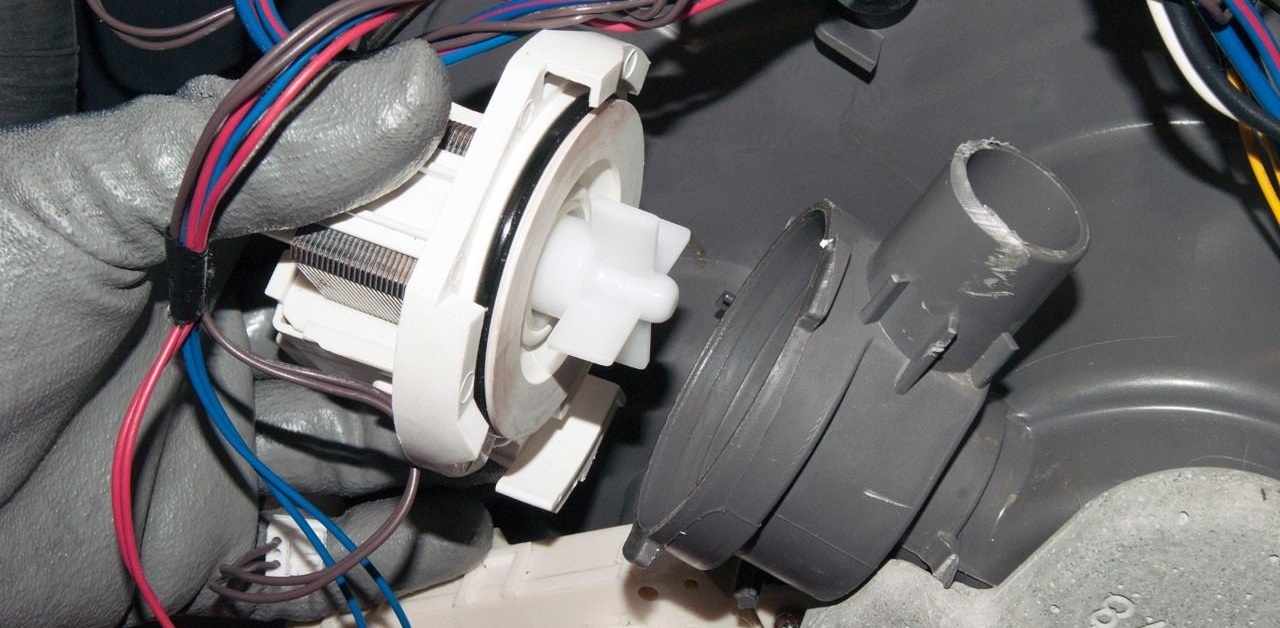
- disconnect the drain pipe from the pump by loosening the clamp;
- Take a photo of the wiring diagram for the pump;
- remove the wiring from the element;
- turn the pump from right to left, push it in;
- remove the pump from the housing.
Now you can begin cleaning and testing the pump. To diagnose the pump, you'll need a special device—a multimeter. We'll explain how to proceed.
Checking and cleaning the pump
First, you need to clean the pump impeller. To access the rotating part, you need to remove all the screws and separate the housing. Once you remove the top section, you'll immediately see the head and blades.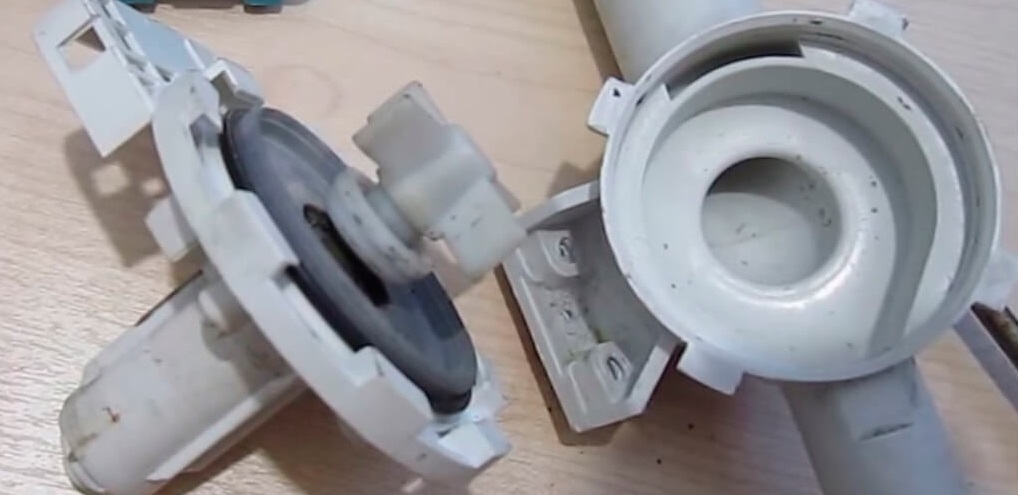
Remove any hair or threads from the impeller. Check for any foreign objects stuck between the blades. Next, be sure to check the head's movement—it should rotate with slight effort. If the part rotates completely freely, tighten the bolts securing it. At this stage, it's also a good idea to clean the inside of the pump, removing any dirt from the housing walls. At this point, clean the drain pump volute as well.
Manufacturers of household appliances recommend cleaning all elements of the washing machine's drainage system at least once a year.
Next, all that remains is to connect the pump housing halves and reinstall the pump. If the machine runs flawlessly during a test wash, the repair is complete. However, before reassembling the cleaned pump, it is still recommended to test it with a multimeter. Using a tester, you can draw precise conclusions about the pump's functionality or failure.
Is the coil working?
It is very easy to check the performance of the drain pump using a special device – a multimeter. It is necessary to switch the tester to ohmmeter mode and attach its probes to the pump contacts. If the pump is working properly, the multimeter screen will display a value between 150 and 260 ohms. If the tester display shows "0," the pump is shorted. If the display shows an infinite number, the winding is broken.
It is not practical to repair the drain pump; it is better to buy and install a new part.
Replacing the pump is easy, especially if you've managed to remove and disassemble the pump for inspection. You'll need to purchase a new part suitable for your specific washing machine model, secure it to the housing, and reconnect the hoses and previously removed wiring. If cleaning the drain filter and replacing the pump doesn't produce the desired result, the problem is most likely with the main control module. Messing with the electronics yourself without the necessary knowledge is not recommended. It's best to call a technician to repair the circuit board.
Interesting:

Readers' comments
Headings
Washing machine repair




For buyers




For users


Dishwasher




Add a comment