
How to Replace a Dishwasher Inlet and Drain Hose
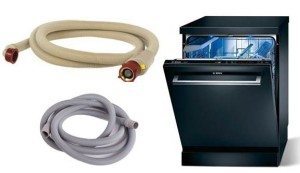 The inlet and drain hoses in your dishwasher are components supplied with the appliance itself. The manufacturer provides a good warranty on them, so breakdowns or defects are very rare. However, situations can vary. You may be one of those rare cases where a hose breaks, or there may be no hoses included at all due to the manufacturer's fault, or the hoses are too short. In short, replacing or extending the hose may be necessary, so we'll explain in detail how to do it correctly.
Preparing for repairs
First, prepare yourself for the repair by preparing the dishwasher. First, disconnect the machine from the power supply, water supply, and sewer. Then, move it to an open area, covering it with plastic wrap and a large cloth. This will prevent any residual water from spilling on the floor, making it easier to work.
Next, gather the necessary tools you might need during the work, namely screwdrivers and pliers. Also, prepare the inlet and drain hoses. Before purchasing, determine the required length of the hoses; do not connect them tightly.
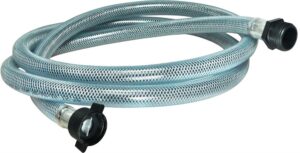
Inlet hoses are available in lengths from 1.5 to 5 m, with 2-2.5 m considered optimal. Drain hoses are sold by the meter, meaning they can be cut to the exact length you need.
 When choosing the inlet and drain hose, be careful. The inlet hose must have a technical passport indicating its parameters; if there is no such passport, then the numbers must be indicated on the hose itself. First of all, this is the maximum allowable water supply pressure, the operating pressure, and the temperature for which the inlet hose is designed. Typically, cold water hoses have an operating temperature of 20-25°C.0C, and for hot water 60-700WITH.
The inlet hose is made of polyvinyl chloride, and the ends of the hose are fitted with a fitting with a union nut made of plastic. Fittings can be straight or angled; angled fittings are used for dishwashers. Additionally, some hoses are equipped with a special valve (Aqua Stop) to prevent water leaks. This type of inlet hose is significantly more expensive.
Changing the inlet hose
Replacing the inlet hose in a dishwasher is fairly simple. Most dishwasher models have the inlet hose connected to the rear of the machine at the bottom. Examples include Samsung and Hotpoint-Ariston dishwashers. To replace the hose, simply carefully unscrew the hose nut with your hands and screw the new hose in place of the old one.
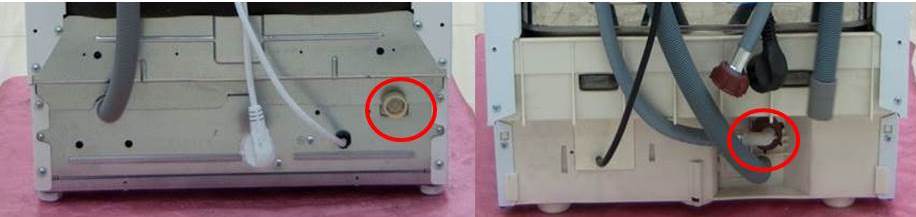
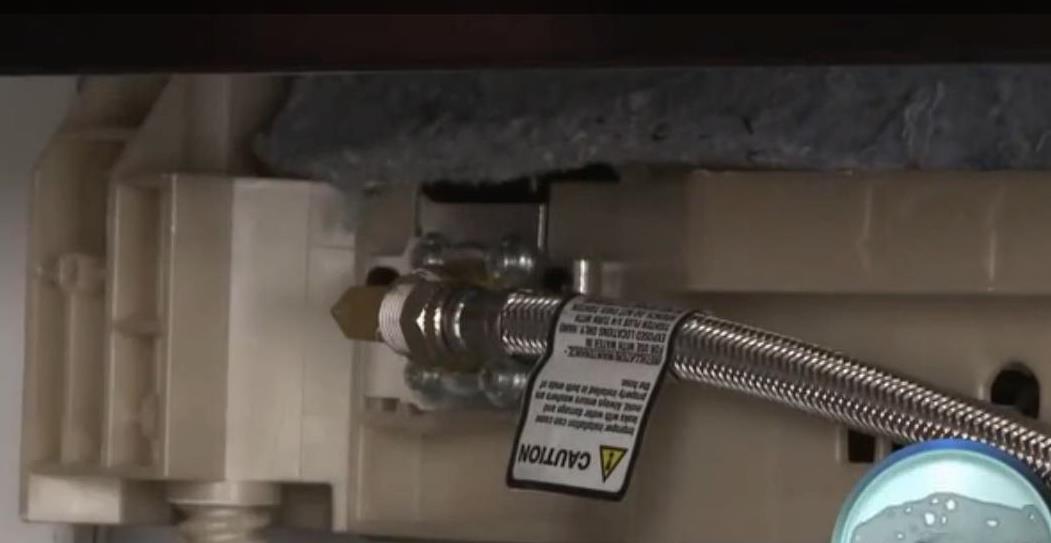
On some dishwasher models, the inlet hose extends inside the machine. Removing this hose requires some disassembly. For ease of access, the machine can be laid on its side or upside down. Unscrew the lower front panel and the base. This will give you access to the interior. The inlet hose, connected to the inlet valve, is located at the front of the dishwasher. Using a small wrench, you can unscrew the old water inlet hose and connect the new one in its place.
If there is no need to replace the water supply hose, but only to extend it, then in this case you will need another inlet hose of the same length as the hose and a special coupling. It is better to use a brass coupling rather than a plastic one. So, the inlet hose coming from the dishwasher is screwed onto one end of the coupling, an extension hose is screwed onto the other end of the coupling, and then the extended hose is connected to the water supply.
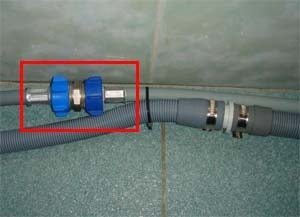
Please note! Experts still recommend replacing the water supply hose rather than extending it. An additional joint increases the risk of water leakage.
Changing the drain hose
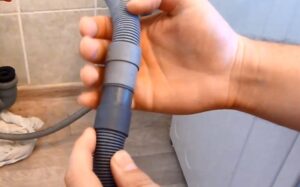
The drain hose can connect to a dishwasher in a variety of locations, from the bottom left, bottom right, or even top, depending on the model and brand of the dishwasher. Let's look at replacing the hose using a Gorenje dishwasher as an example.
- First, disconnect the drain hose from the machine body by removing it from the plastic clips.
- For convenience, lay the machine on its left side to allow access to the right side.
- Have some rags ready in case there is some water left in the tray.
- Remove the 4 screws from the base of the machine, remove the bottom and set it aside.
Be careful not to jerk the bottom abruptly, as the device is secured to it to prevent water leaks and you could accidentally tear off the wires. - Using pliers, carefully remove the clamp holding the drain hose on circulation pump. This The clamp will have to be replaced along with the hose, as it cannot be reused.
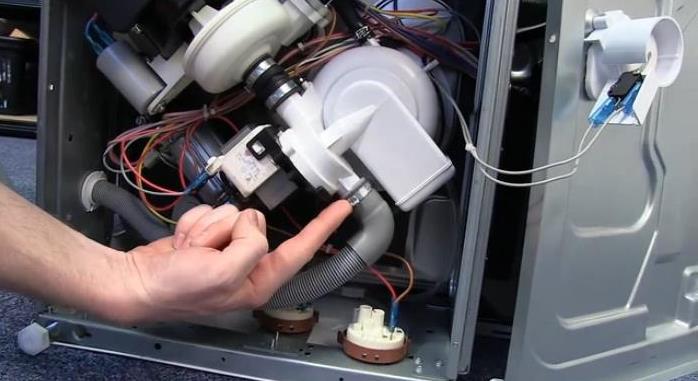
- Remove the check valve from the drain hose and reinsert it into the pump.
- Unscrew the back panel of the dishwasher and move it to the side.
- Disconnect the sleeve holding the hose and pull it out.
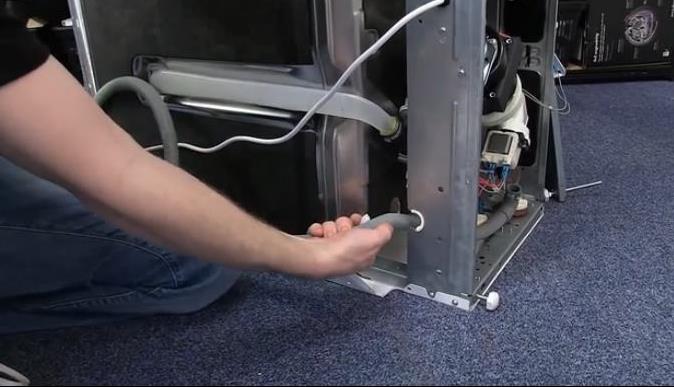
- Insert a new hose into the hole, connect it to the pump, and tighten the clamp.
- Assemble the car.
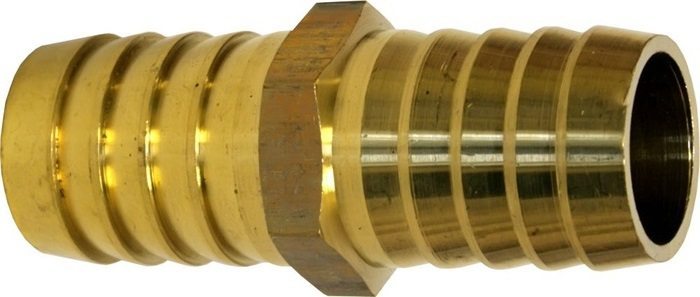
If you need to extend the drain hose, you'll need to purchase an extension hose of the required length, three new hose clamps, and a herringbone connector. The adapter is inserted into the end of the hose coming from the machine and into the extension hose. Both hoses are secured with clamps. Then, the other end of the extension hose is placed over the drain trap branch and secured with a clamp.
Important! After replacing the water inlet hose or drain hose, be sure to run a test wash of the dishwasher to check its functionality and the tightness of the hose connections.
So, replacing or extending your dishwasher's drain and inlet hoses isn't as difficult as it might seem. Just be patient, follow the instructions, and you'll be fine.
Interesting:
Readers' comments
Headings
Washing machine repair




For buyers




For users


Dishwasher




Add a comment