
Sink siphon with outlet over washing machine
 If you've decided to install a washing machine in your bathroom, hiding it under a dedicated sink, you'll definitely need a sink trap with a drain outlet for the washing machine. Without a trap, you won't be able to create a drain for the sink, let alone connect the washing machine to the sewer system, so we've dedicated this article specifically to traps. We hope this article will help you choose and install the right plumbing fixture, ensuring proper wastewater disposal.
Varieties
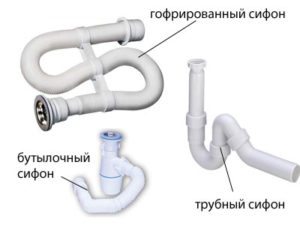
Today's market offers a wide variety of traps, each with its own distinct characteristics: size, number of outlets, shape, installation, and more. If you're installing a washing machine under a bathroom sink for the first time, it's crucial to choose the right trap. It will not only allow for proper drainage for both the sink and the machine, but also ensure proper placement of the washing machine.
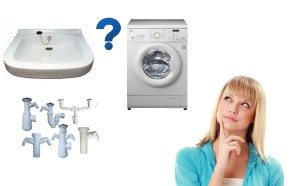
Sometimes siphons have such a strange appearance that it is impossible to even understand what kind of plumbing device it is and how it can be used.
The problem is that a standard trap is located directly under the sink and takes up quite a bit of space. And if we decide to place the washing machine directly underneath, rather than to the left or right of the sink, this could cause problems. But let's not get ahead of ourselves; first, let's look at the different types of traps that could potentially be useful in our situation.
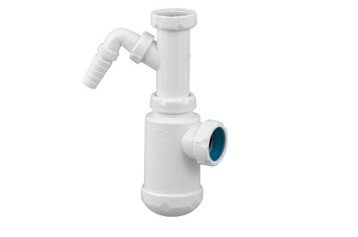
A standard siphon with a drain outlet. You can see it in the picture below. It's no different from a regular sink siphon, except for a special side outlet to which the washing machine drain hose connects. Such siphons are very common, but they are not very suitable for our purpose. They can only be used when installing a washing machine under a sink with a countertop, and even then with a great deal of conventionality.
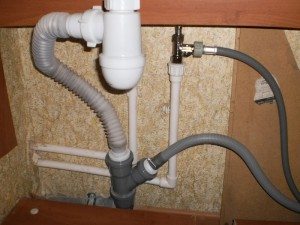
A siphon splitter is a very simple plumbing fixture that helps create a dual connection to the sewer system. It consists of a plastic tee, one end of which connects to the sewer system, and the other two are fitted with corrugated hoses. One hose runs from the washing machine, and the other from the sink drain.
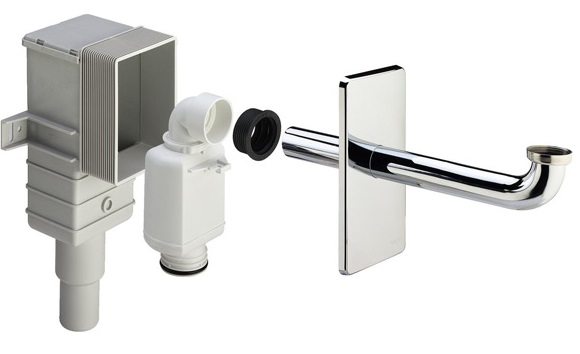
A siphon built into the wall. This is the most compact of all siphons, since its “body” is walled up together with the sewer pipe, Only a small portion of the body and outlets for connecting the washing machine drain hose and the sink drain hose protrude outside. The picture below shows a built-in siphon with one outlet, but there are identical models with two and even three outlets.

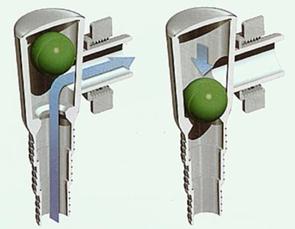
A device with a check valve. These traps appeared relatively recently, but have already gained popularity among plumbers, who are increasingly using them. The check valve prevents wastewater from the sewer from flowing into the washing machine and rising up to the sink drain in the event of a clogged pipe.
For people living on the ground floors of apartment buildings, these siphons have become a real salvation. If only they could invent a similar valve for the toilet, it would be absolutely fantastic!
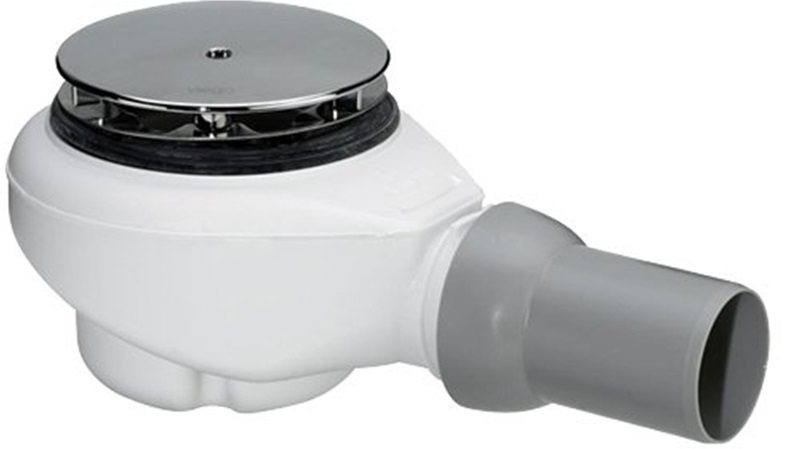
Flat trap. Specifically designed for situations where the washing machine is positioned directly under the sink and the distance between the lid and the sink bottom is minimal. These plumbing components have recently become very popular due to their compact size and ease of installation.
What are they for and how do they work?
Everyone knows that a trap is essential for draining wastewater from sinks, washing machines, dishwashers, and other appliances into the sewer system. This is undoubtedly the primary purpose of this plumbing component. However, it's important to remember that this is far from the only task it successfully performs.
- A properly installed trap creates a good barrier to unpleasant odors that could potentially penetrate from the sewer pipe into the room.
- This plumbing component is designed in such a way that a fairly large amount of various debris settles in it, which can easily clog the sewer pipe. You can remove debris from the siphon with a "flick of the wrist" by unscrewing the collector, but you won't be able to clean the pipe in one fell swoop.
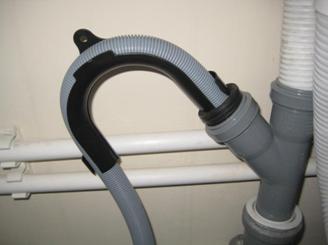
- The siphon outlet is attached to its body at an angle, allowing the washing machine drain hose to be connected with only a bend. This bend, in turn, facilitates the pump's operation and prevents the "siphon effect."
One of our craftsmen joked, calling the siphon a "sewage router"; perhaps there is some truth in this joke.
Installation Features
Installing a sink over a washing machine with an overflow has many unique features. If you want to learn more about this process, read the article about installing a washing machine under the sinkIn this section, we'll only touch on the installation of the siphon, although in our opinion, there's nothing complicated about this process; everything is intuitive.
A sink with an overflow can be supported by a sink or countertop, hanging on special brackets mounted to the wall. To select and install a trap, we only need to know the intended location of the washing machine relative to the sink.
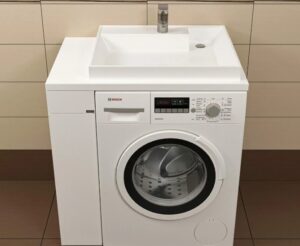
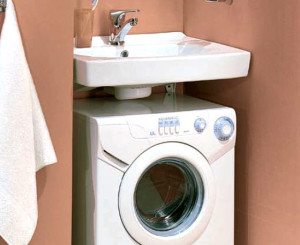
- The washing machine is located directly under the sink. We choose a flat or wall-mounted trap. We screw the flat trap to the sink drain. We insert a corrugated hose into one outlet, the other end of which we've already threaded into the sewer pipe. We insert the washing machine drain hose into the second outlet and secure it with a clamp – the installation is complete.
- The washing machine is located to the left or right of the sink under the countertop. Theoretically, you can use any trap with a drain outlet for the washing machine, but keep in mind that the space under the sink will be open and the trap itself will be visible in all its glory, so it makes sense to choose a wall-mounted model.
- The washing machine is located under a long countertop, a respectful distance from the sink. Any trap will work in this case, as long as it doesn't detract from the aesthetics of the room. However, due to the washing machine's location far from the sink, its standard drain hose may not be long enough to connect to the trap. You'll have to purchase an extended hose and install it in its place.
In conclusion, we'd like to point out that installing a sink trap over a washing machine doesn't require much effort, and you don't need any tools. However, choosing the right trap can often be difficult. We hope that using the information above will help you make the right choice. Good luck!
Interesting:
Readers' comments
Headings
Washing machine repair




For buyers




For users


Dishwasher




Add a comment