To ensure your washing machine lasts a long time and remains stable during spin cycles at the highest speeds, its drum is supported by shock-absorbing elements. In the past, washing machines were equipped with shock absorbers, but today, dampers are more commonly used. In this article, we'll explain how many shock absorbers are in a washing machine, how to care for them, and how to replace them if they break.
Let's count the shock absorbers
Every modern washing machine uses sophisticated shock-absorbing technology. To absorb the centrifugal force generated by a drum spinning at up to 1,000 rpm, springs and dampers are installed. The former help balance the top of the tub, while the latter are responsible for the bottom.
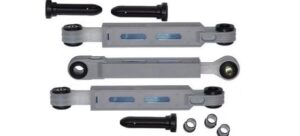
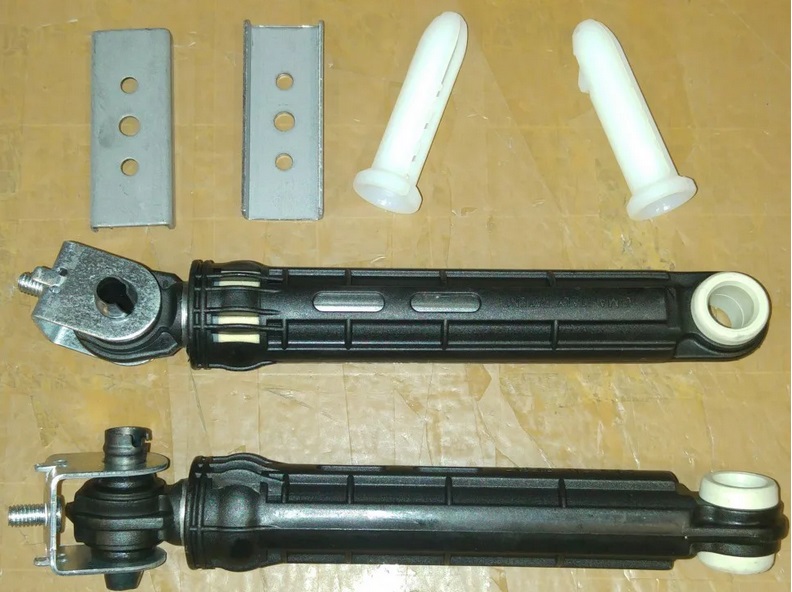
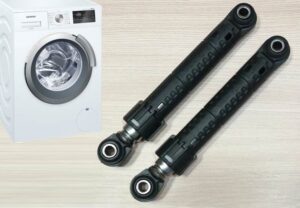
Modern shock absorbers are piston-mounted struts that dampen vibration and balance the washing machine. Their advantage over shock absorbers is that they lack internal springs, which could wear out during use and cause the entire unit to fail. However, the absence of springs doesn't guarantee a lifetime of service. Therefore, shock absorbers often fail, but manufacturers still install them due to their low cost.
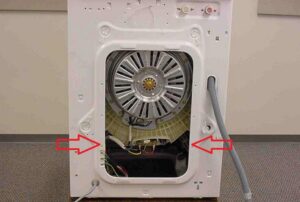
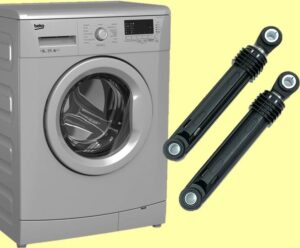
Currently, two dampers are installed in the machines, located on both sides of the tank. A common situation is when one shock absorber breaks while the other remains undamaged. But this isn't much fun – it only worsens the machine's performance, as one shock absorber dampens vibration unevenly, throwing the drum off balance and causing the wash tub to slam against the machine's frame at high speed.
Diagnostics of shock absorbing elements
If your car starts acting up, that's not a reason to rush out and buy new shock absorbers and replace the old ones. Before replacing any components, it's worth inspecting them to determine if they're damaged. To diagnose the problem, remove the suspect components and perform a test:
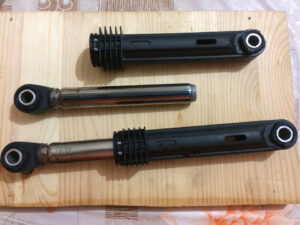
First, we inspect the damper;
we press on the rod;
we pull the rod out of the machine body;
We evaluate the resistance provided by the shock absorber.
If the piston can be compressed and released only with significant tension, it's intact. If the piston rod slides in very easily, "flies out" of the groove, or doesn't respond to pressure at all, as if stuck, the strut needs to be replaced immediately. In this condition, the device has lost its ability to dampen vibration and should be replaced immediately.
Always listen to the sounds your machine makes. It's cheaper to replace a single damper than a broken wash tub.
In addition to resistance, inspect the parts for signs of rust and deposits. It's also worth assessing the amount of lubricant in the piston. If the sealing gel layer has disappeared, this is another sign that the part needs to be scrapped.
We replace parts with our own hands
If you've already discovered a problem, don't delay repairs. Believe me, the consequences could be devastating for your washing machine. As soon as you suspect the dampers are failing, check them and replace them. How do you do this?
Prepare pliers or a hammer, Phillips and slotted screwdrivers, then disconnect the washing machine from all communications;
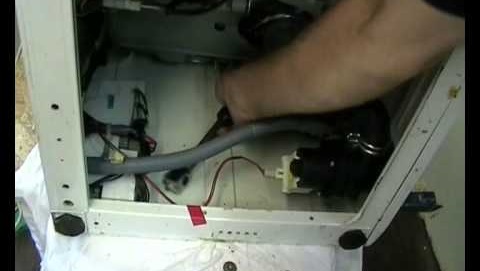
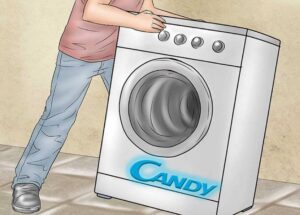
Turn the machine upside down and find two shock absorbers - these are stands installed on both sides of the washing tank;
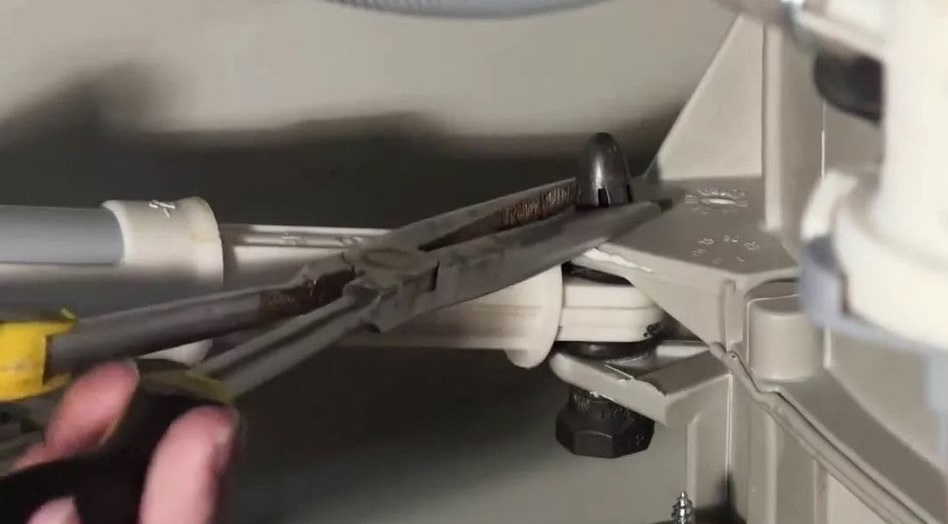
Find the retaining pins at the ends of the dampers and then clamp the tongue onto them;
Next, you need to “sink” the pin into the part and then knock it out using a hammer;
The actions must be repeated from the other end of the rack, and then on the second shock absorber;
Finally, remove the posts from the slots.
To replace them, you must purchase two dampers—they should be replaced in pairs, otherwise the vibration will be damped unevenly. There is nothing complicated in the installation - just a different order of actions.
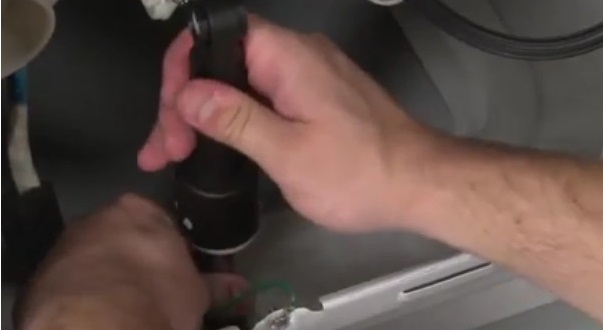
We turn the part with the rod down so that dust, which accelerates wear of the product, cannot get into it;
We install the shock absorber into the groove;
Carefully install the pin into the groove.
The stud is always extremely tight when the damper is just installed, but this is normal.
Be sure to check the latch after installation, as it should engage and secure the strut. If the latch doesn't lift, pry it up with a small screwdriver. Repeat the procedure on the other ends of the dampers.
After installation, return the washing machine to its normal position, carefully lift the lid, and try applying pressure to the wash tank. If the tank immediately rises to its normal level after applying pressure, the replacement was successful.

 To ensure your washing machine lasts a long time and remains stable during spin cycles at the highest speeds, its drum is supported by shock-absorbing elements. In the past, washing machines were equipped with shock absorbers, but today, dampers are more commonly used. In this article, we'll explain how many shock absorbers are in a washing machine, how to care for them, and how to replace them if they break.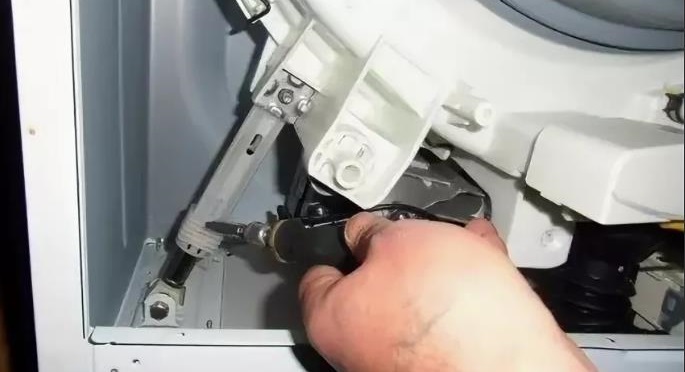














Add a comment