
How much washing powder is in a tablespoon?
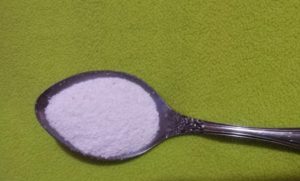 Laundry detergent recommendations often list dosages in grams. However, not every homemaker has the time or tools to calculate the weight of the detergent. Cutlery—spoons—comes in handy. Knowing how many grams of laundry detergent are in a tablespoon makes it easy to calculate the amount of detergent needed.
We measure the powder with spoons
Controlling the detergent ratio is a good idea. The quality of the wash and its final result depend greatly on the correct ratio. If you don't add enough detergent, the stains won't be removed, and you'll have to start over. If you add too much, you won't be able to rinse the detergent completely, it will settle on the clothes, and irritate the wearer's skin.
Furthermore, by constantly exceeding the recommended dosage, you're wasting both the product and your money. There's also a practical reason to stick to the recommended dosage.
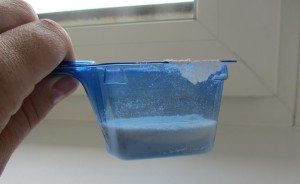
To figure out grams, take a tablespoon and a teaspoon and scoop out the powder to form a mound.
- A tablespoon contains 25 grams.
- There are 5 grams in a teaspoon.
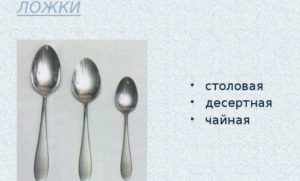 At least these two types of cutlery are certainly present in every home. But some are lucky enough to have dessert spoons. They're slightly larger than teaspoons but smaller than tablespoons, yet convenient for measuring. Why? Because they're twice as large as teaspoons and, accordingly, hold 10 grams of powder. Very convenient for keeping even count.
Experts recommend using 40 grams of detergent per 6 kg load. Therefore, if you have a dessert utensil, you can measure out 4 portions of 10 grams each to get the desired result. Similarly, if you use teaspoons, you'll need 8 equal portions. IN Other recommendations say to add one level tablespoon of detergent per 1 kg of laundry; when washing in hard water, the dose should be increased by 20 grams.
True dosage of powder
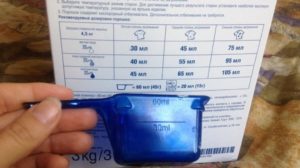 In general, it's best to consult independent sources for dosage recommendations, not the powder packaging or instructions. On average, manufacturers overstate the required dosage by 10%-15% to increase profits. Therefore, you'll need to determine the optimal dosage for yourself.
Once again, don't play it safe and fill the compartment with as much detergent as possible. It won't make your clothes cleaner, and there are several other negative consequences:
- It is extremely difficult to rinse out dry powder, especially in large quantities, which results in whitish stains on clothes;
- an unpleasant chemical smell in the drum that will not go away and will remain on other items;
- clogged tray.
Furthermore, washing parameters play a huge role in dosing, such as temperature, fabric type, type of soiling, and other conditions. Experienced homemakers quickly figure out how much detergent is needed in any given situation, so don't worry. Method Through trial and error, you will sooner or later determine the optimal volumes.
One rule always applies to any fabric and any washing cycle: the higher the water temperature, the less detergent you need. If you wash at 30 degrees Celsius with a rinse cycle, you can increase the dosage.
Interesting:




Readers' comments
Headings
Washing machine repair




For buyers




For users


Dishwasher




Add a comment