
How much rinse aid should I put in my dishwasher?
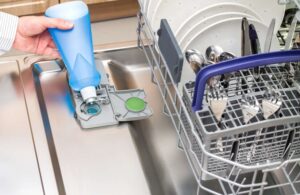 Special dishwasher detergents—salt, tablets, powders, and rinse aids—are expensive. If you overload the machine, the detergent will run out quickly. If you underload, the dishwashing results will be poor. Therefore, it's crucial to use the right amount of household chemicals.
Is it worth understanding the dosage of mouthwash?
Many people wonder how much rinse aid to add to their dishwasher. The answer to this question is in the dishwasher's instructions. Before using your dishwasher for the first time, be sure to read the user manual.
The instructions say to fill the rinse aid compartment to the top. This should be done before using the machine for the first time. Then, set the rinse aid flow rate by turning the switch with the arrow to the desired position.
It is not recommended to set the minimum consumption of the product when the dishwasher is fully loaded, otherwise streaks will remain on the cutlery.
The optimal dosage should be determined by following the dishwasher instructions. Also, check the information on the rinse aid packaging. Experience shows that turning the dial 3-4 notches is sufficient.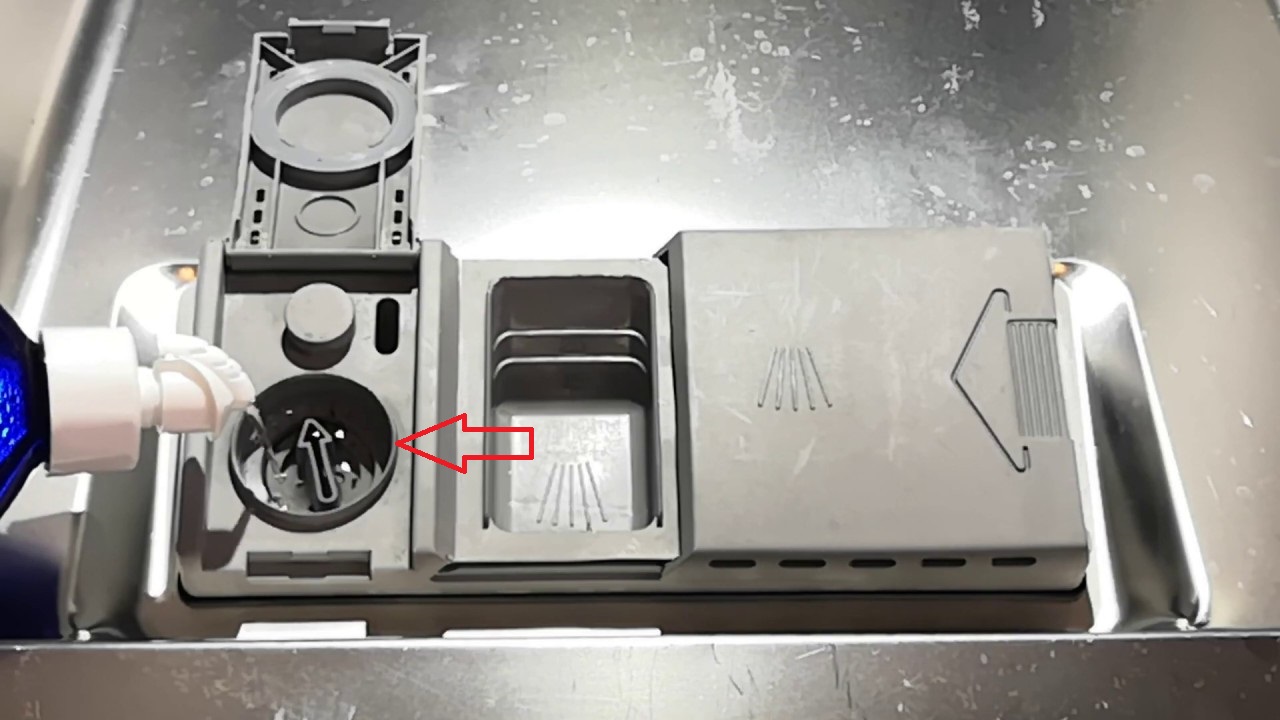
The rinse aid dispenser is very easy to find, even without the instructions. Firstly, this compartment is equipped with a dispenser control (the aforementioned switch with the arrow). Secondly, the tray is marked with a sun symbol.
So, how much product should I pour into the machine? The dishwasher rinse aid tray is filled to the brim, and then the amount of rinse aid is set. At first, you can experiment with the dosage - many users find out through trial and error how far to turn the switch.
Why do you need mouthwash?
Some users avoid using dishwasher rinse aid. In fact, it's used sparingly, so don't neglect it. What function does this product serve?
- Thanks to cationic and ionic substances, the rinse aid helps the main detergent remove ingrained stains from dishes.
- Non-ionic particles prevent excessive foaming.
- The alcohol components included in the composition prevent a film from forming on cutlery.
- Acids neutralize aggressive components found in detergents.
- Polycarboxylates protect the dishwasher from scale and corrosion.
The main active ingredients are combined with water. Some rinse aids contain fragrances and natural oils. These impart a light, subtle scent to your cutlery.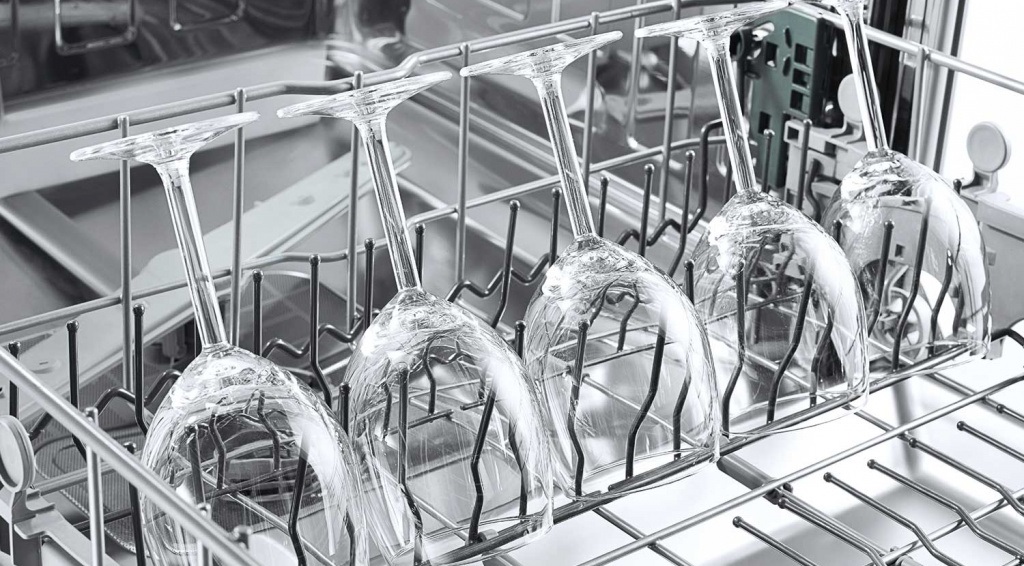
If you use a multi-purpose dishwasher detergent, you don't need to add rinse aid to the machine. These capsules, tablets, and powders already contain salt, detergents, and everything you need to rinse your dishes.
The rinse aid gives cutlery a shine, prevents streaks, and additionally dries dishes.
Rinse aid removes detergent residues and chemicals that are hazardous to human health from cutlery. The components begin to work towards the end of the cycle, when the water heats up to the highest temperature. The composition significantly improves the quality of washing kitchen utensils.
It's important to buy a good-quality dishwasher rinse aid. Otherwise, it won't prevent stains, but rather promote them and won't remove stains effectively. Therefore, choose household cleaning products with safe ingredients.
Can I use homemade mouthwash?
If someone in your family is allergic to store-bought rinse aids, you can make a similar product yourself. It only takes a little tinkering around in the kitchen. Many products are quite capable of adding shine to dishes and preventing streaks.
- Citric acid. This versatile solution can be used as a rinse. Dilute 1 teaspoon of citric acid in a liter of water. To enhance the effect, add a couple of tablespoons of rubbing alcohol. You can also add a drop of your favorite essential oil for added scent.
- Grape or apple cider vinegar. To clean dishes, add 1 tablespoon of the product to the dishwasher. It's best not to use regular table vinegar, as it will leave a distinctive odor on your kitchenware after washing.

- Lemon juice. To make rinse aid, mix 5 tablespoons of lemon juice with a spoon of any dish soap. Pour the mixture into the washing machine's rinse aid compartment.
Making your own dishwasher rinse aid is quite simple. So if you're not satisfied with store-bought cleaning products, don't shy away from using them; make your own.
Interesting:

Readers' comments
Headings
Washing machine repair




For buyers




For users


Dishwasher




Add a comment