
How much energy does a tumble dryer use?
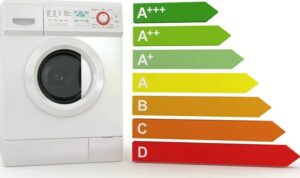 A tumble dryer is an important and expensive purchase that should be approached responsibly, carefully researching all options. Unfortunately, sales associates aren't always able to clearly answer all questions, and they rarely provide precise information about a tumble dryer's energy consumption in-store. Therefore, you have to research this information yourself online to avoid exponentially higher utility bills after purchasing. Let's explore how energy-efficient tumble dryers are, what models are available, and how to choose the right one.
How much energy does the dryer consume?
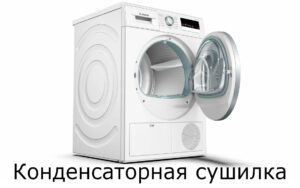
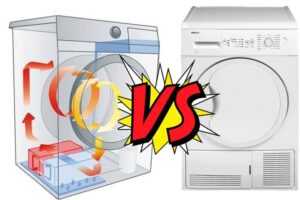
The design of dryers affects their kWh consumption. Condenser, ventilation, and heat pump dryers are currently the most common options on the market, and are considered the most energy-efficient. Dryer consumption typically remains within the following ranges.
- For condensation and ventilation options, the values are within the range of 5 kW per hour, if we are talking about the maximum load of laundry and the standard drying program after spinning in a washing machine at 1400 rpm.
- Heat pump devices not only generate less heat, but also consume almost 2.5 times less energy—approximately 2 kW per hour on the same program—than machines without a pump.
However, these are only approximate average figures, which will vary for different models of household appliances. For a more precise example, we'll list the energy consumption information for six popular models.
- The Bosch WTM83261OE freestanding condenser dryer can dry up to 8 kg at a time, using 4.63 kWh in the Cotton + Cupboard mode and 2.61 kWh with a half-load. It's far from the most energy-efficient dryer, as evidenced by its energy efficiency rating of B, but it's certainly one of the quietest, at just 53 dB. It's currently available on Yandex.Market starting at $999.90.
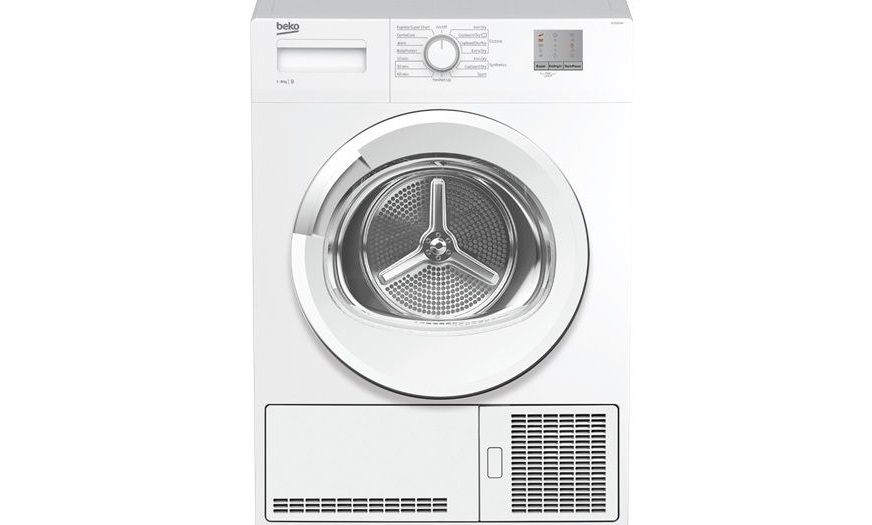
- The Beko DU 7111 GAW freestanding dryer also has an energy rating of B, but uses slightly less energy—the manufacturer records a power consumption of 3.92 kWh with a full load in the same "Cotton and Cupboard" mode. This condenser dryer has a more familiar noise level of 65 dB. The price of this "home helper" is more attractive: $599.
- The Gorenje DA82IL stand-alone tumble dryer is equipped with a heat pump, making its energy consumption figures significantly higher than previous pump-less options – just 1.97 kWh, and that's with a maximum load of 8 kg and the standard "cupboard" cotton drying mode. This energy-efficient unit, with an A++ energy rating, will set you back $1,039.90.
- Another premium A++ class representative is the Bosch WTW85469OE freestanding heat pump tumble dryer. With a full 9 kg load, it consumes only 2.05 kWh per hour when using the standard "Cotton + Cupboard" setting. Currently unavailable for purchase on Yandex's aggregator;
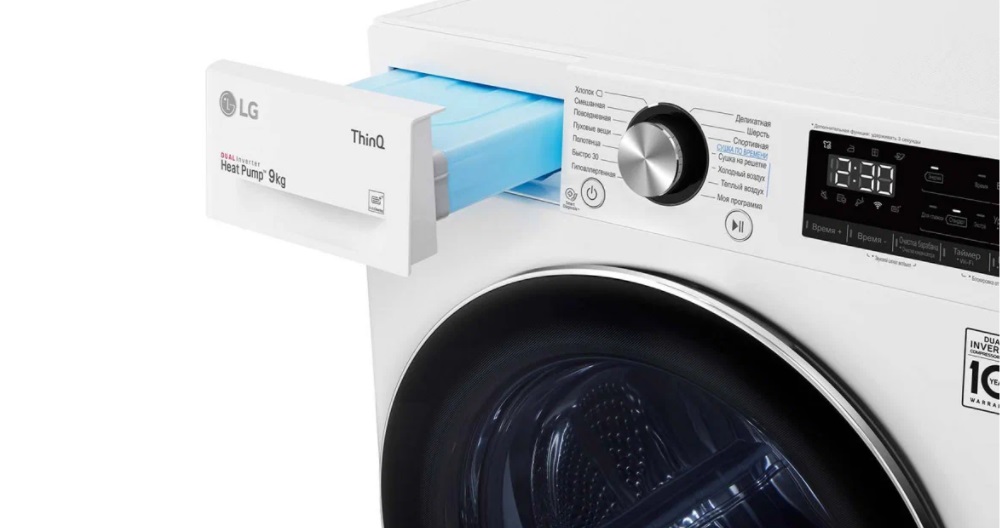
- One of the best freestanding pump machines, the LG DC90V9V9W, will impress you with its astonishing A+++ energy efficiency rating. Even with a maximum load of 9 kg of laundry, it consumes only 1.46 kWh per hour. With a partial load, the figures are even more impressive: 0.77 kWh. But these savings come at a price, as prices start at $1,705.50.
- Finally, another freestanding "home helper" with an A+++ rating and a price to match. The Siemens WT47XEH1OE heat pump tumble dryer consumes just 1.61 kW with a maximum load of 9 kg and 0.9 kW with a partial load, but it'll set you back $1,958.
Thus, it can be noted that models without heat pumps generally have class B and below. If you want to use electricity more efficiently, you should buy models with a pump, which sometimes use less than 1 kW per hour for drying.
What is condensation efficiency class?
It's always nice when smart appliances conserve energy, allowing you to save on utility bills. However, this is pointless if such appliances fail to perform their intended functions and dry clothes poorly. To avoid this, you should choose an option that both saves energy and performs its job. To do this, it's important to understand condensation classes, which will help you avoid making mistakes when choosing a dryer.
There are seven condensation classes, starting with the Latin letter "A" and ending with the letter "G." Each class has specific standards for residual moisture in laundry after the end of the cycle, which should be taken into account when choosing:
"A" is the best available choice at this time. Devices with this rating typically retain only 5-7% moisture, which is the best possible result;
Housewives do not recommend turning this setting to the maximum, since clothes with a moisture content of about 5% are not very convenient to iron, so it is better to slightly adjust the humidity for convenience.
Class "B" indicates humidity levels between 11-20%, which is considered optimal. Approximately 98% of modern dryers are equipped with this condensation class;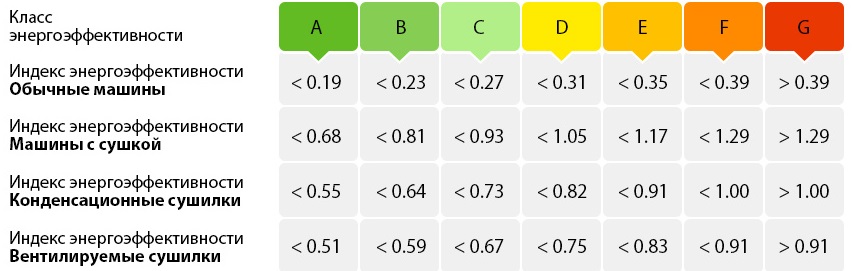
It's difficult to find a "C" level dryer on the market, as these devices leave a significant amount of moisture in clothes. Drying rates on these devices can reach as much as 30%, which is unacceptable for most dryer users;
And while household appliances with the previous efficiency class are still being produced, devices marked with the letter “D”, which leave up to 35% humidity, are no longer produced today;
Manufacturers once produced devices with the remaining three classes “E”, “F” and “G” (40%, 45% and 50% humidity), but today it is almost impossible to find such devices even in used condition.
Therefore, when choosing a new "home assistant," carefully study all the technical specifications. Most importantly, pay attention not only to the energy efficiency class to save precious kWh, but also to the condensation class, which directly affects drying efficiency.
Interesting:
Readers' comments
Headings
Washing machine repair




For buyers




For users


Dishwasher




Add a comment