
How much does a washing machine weigh?
 What's the first thing we look at when choosing a washing machine? Right, its specifications. First, the load capacity. Second, the washing machine's rating, which determines the spin speed, energy consumption, and so on.
Somewhere in the middle of the list of essential criteria when choosing a washing machine is its specific weight. Why don't consumers pay such close attention to this factor? Because it's not that significant.
This should be taken into account if you plan to move frequently, or if transporting the washing machine requires a long journey. Furthermore, many people live in high-rise buildings with small elevators. Only then do we begin to wonder how much our washing machine weighs.
What factors determine the weight of a washing machine?
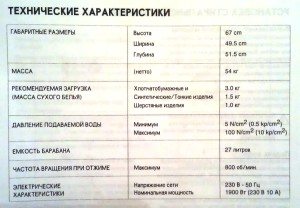
To be clear, the minimum weight of a typical automatic washing machine is approximately thirty kilograms. The maximum weight of existing washing machines is one hundred kilograms.
Externally, washing machines may appear absolutely identical, but upon closer examination, it becomes clear that, despite having the same external dimensions, the weight of different washing machines varies.
A washing machine consists of many metal components. Metal, as we know, can have different specific gravities.
The metal structure of the machine, made of stainless steel, will be much heavier than its counterparts made of polymer materials (plastic).
Which is better, a lightweight or a heavy washing machine?
 Many people encounter this problem when, while spinning the laundry, the machine begins to shake, which is at best, and at worst, your washing machine literally “jumps” all over the room, as far as the cord and hoses allow.
For this reason, many manufacturers artificially increase the weight of their washing machines. This is achieved by adding counterweights to the drum. They are located in pairs at the top and bottom of the drum. These heavy counterweights prevent the washing machine from shaking during both the wash and spin cycles. Ideally, they should be heavier than the recommended load of wet laundry.
However, recently, manufacturers have increasingly opted for electronic automatic balancing. This is achieved by varying the speed of the washing machine's motor. This method isn't ideal for the overall performance of the washing machine. Therefore, it's still too early to abandon artificial metal balancing.
Conclusions
How many What should a washing machine ideally weigh? First, let's look at the advantages and disadvantages of heavier washing machines.
Dignity:The main advantage of the heavy weight is the stability of the washing machine during washing and spinning, therefore, its service life is extended.
Flaw:If you need to move frequently from one place to another, a heavy washing machine is not convenient to transport.
The ideal weight for a washing machine is between 55 and 80 kilograms.
Interesting:




Readers' comments
Headings
Washing machine repair




For buyers




For users


Dishwasher




Add a comment