
How much liquid detergent should I put in my washing machine?
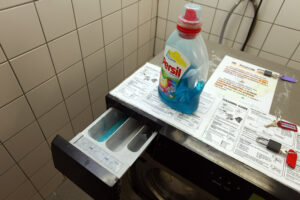 Laundry detergent gel is more expensive than regular powder detergent. Therefore, thrifty washing machine owners want to know exactly how much liquid detergent to use to avoid wasting expensive detergent. It turns out that answering this question isn't as simple as it seems.
How economically is the gel used?
Without knowing the established guidelines for adding laundry detergent to the washing machine's detergent drawer, people often estimate the amount by eye and overfill. However, following the guidelines for using detergents not only allows for economical use but also extends the life of household appliances and protects laundry from damage.
The first step to accurately determining how much liquid detergent to add to your washing machine's drawer is to read the instructions on the bottle. These instructions typically specify the volume of gel to pour into the detergent drawer compartment per wash, taking into account the degree of soiling, the load size of the washing machine, and the water hardness. The cap included with the liquid detergent helps you measure out the correct amount of gel.
Important! The manufacturer's recommended amount of gel detergent can be safely reduced by a third. For example, if the instructions call for one capful, you can pour two-thirds of a capful into the machine's tray.
Another source of information on the optimal amount of laundry detergent is advice from experienced housewives. Many have found that adding 2–3 tablespoons of detergent is sufficient for effective washing. This amount is suitable for machines with a 5–6 kg load capacity and a water consumption of 35–50 liters. Before putting items with a lot of stains or stubborn dirt into the washing machine, it is better to pre-treat them with gel. If the maximum capacity of the drum is higher and the washing machine uses more water, then the volume of liquid detergent can be doubled, provided the load is full.
How to determine how full the drum is before starting the washing program:
- filling a quarter of the volume - small load;
- half the volume - average;
- the drum is completely full.
If the washing machine is overloaded, liquid detergents are distributed unevenly in the drum. This results in poor washing results and stains on clothes.
Correct compartment for gel
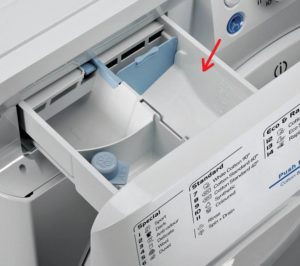
Modern washing machines come with instructions that provide advice on how to use detergents. Special markings on the detergent compartments help housewives determine where to pour liquid detergent. These are typically marked with Roman numerals or letters.
- I (1) or A – compartment for the pre-soak wash program. If the program does not require detergent to be dispensed from this compartment, it remains inside.
- II (2) or B – compartment for main programs. Liquid detergents should be added here.
- (Star) or flower – the compartment for rinse aid. Do not pour gel into it.
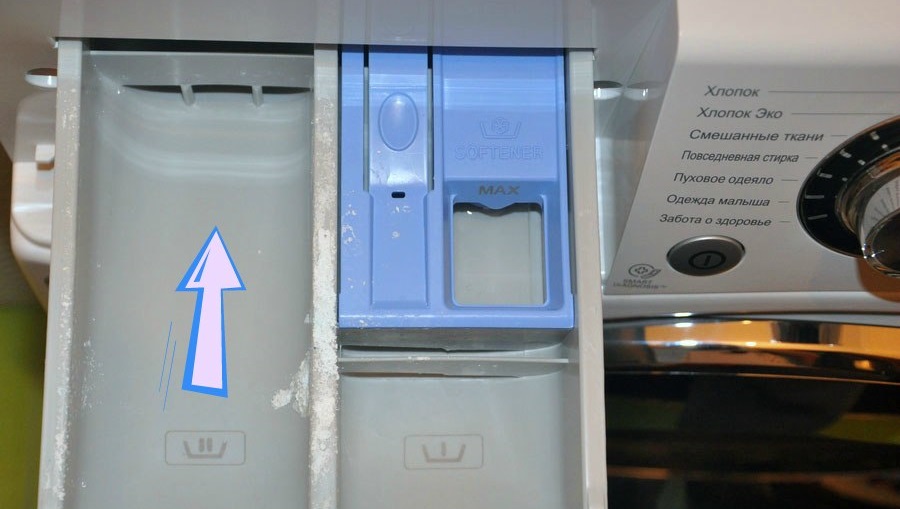
Some manufacturers offer a different method for adding liquid detergents. They recommend pouring them directly into the drum. This does not affect washing performance.
Should I use gels?
Many housewives are increasingly using gels instead of regular laundry detergents. These products have proven their effectiveness in practice. Their advantages include the following:
- economical consumption due to liquid consistency;
- effective cleaning of complex contaminants;
- better rinsing of laundry and absence of streaks due to the washing out of gel-like agents from fabric fibers;
- can be used for washing delicate fabrics;
- hypoallergenic composition due to the absence of volatile compounds.
Liquid detergents also have a number of disadvantages. First of all, improper dosing can degrade washing performance and ruin laundry. Furthermore, using gel detergents at temperatures above 60°C (140°F)0No, you can't. And for some housewives, the higher price of gel-based detergents is the deciding factor in favor of traditional laundry detergents.
Knowing how much liquid detergent to pour into a specific compartment of the detergent drawer can help you achieve high-quality results: clean, fresh laundry, and extend the life of your washing machine.
Interesting:





2 reader comments
Add a comment
Headings
Washing machine repair




For buyers




For users


Dishwasher




The article helped
Thank you very much!