
Is it possible to wash a non-stick frying pan in the dishwasher?
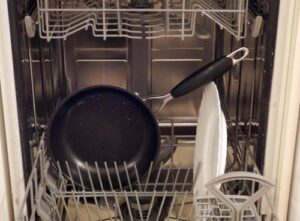 Non-stick frying pans are very convenient to use and practically indispensable for any home cook. But here's the problem: they say you can't wash non-stick frying pans in the dishwasher because it can ruin them. Is it really that serious? Let's try to figure out what happens to a non-stick frying pan if you wash it in the dishwasher.
Should you say no to PMM?
Experts aren't certain that washing a non-stick pan in the dishwasher is unacceptable. Technology improves almost daily, and many kitchenware manufacturers have likely already created more durable and low-maintenance materials. However, to ensure the non-stick coating lasts longer and maintains its strength, it's important to follow a number of rules not only when washing, but also when using and caring for the product.
You've probably had the experience of leaving a dirty frying pan in the sink and then being unable to remove the caked-on black layer of grease from the surface. The whole point is that you need to wash the frying pan immediately, without putting it off until later. Otherwise, washing off burnt-on fat is useless; you'll only damage the protective surface and food will start to burn during cooking.
Important! Immediately after cooking, the pan should be left to cool for a while. Never attempt to cool it artificially by placing it in the refrigerator or under cold water.
After cooling, wash the pan in warm water with a soft cloth or sponge and a drop of liquid dishwashing detergent. Avoid hard brushes, metal scouring pads, or abrasive-containing detergents. If you do place the non-stick pan in the dishwasher, avoid using detergents with high concentrations of active particles.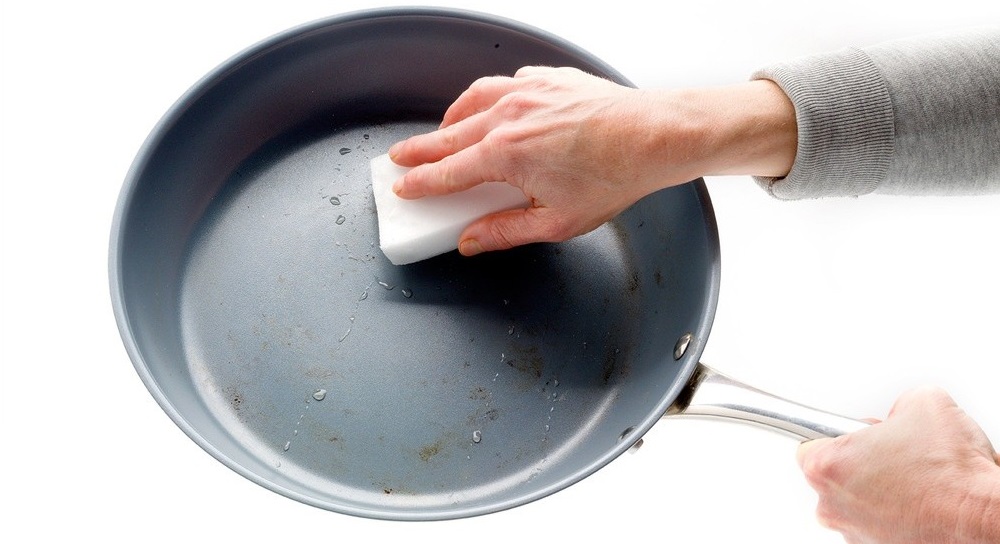
There are a few more general recommendations for handling the frying pan.
- When stirring food, use wooden or silicone spatulas, rather than metal forks and knives that scratch the surface.
- When large areas of damage to the coating form on the surface, the pan must be replaced, otherwise it will be impossible to cook in it.
- Use delicate sponges and detergents.
- Do not cut food inside the pan.
- Non-stick coatings are sensitive to temperature fluctuations, so never put a pan with food in it in the refrigerator. You should also heat the appliance carefully (even though it's rated for 260 degrees Celsius). If you overheat it, the coating will start to peel. When cleaning a frying pan in the dishwasher, keep this in mind and set the settings to heat the water to 35-45 degrees, no higher.
Important! Never place a dry frying pan on the stove; always oil the inside first to prepare it for heating.
Before using the pan for the first time, soak it in warm water, then dry it with a towel and oil the inside. This will prevent damage to the pan, making cooking simple and convenient. While it's not recommended to wash non-stick cookware in the dishwasher, it's sometimes possible to save time and effort. In this case, avoid harsh detergents and high-temperature settings.
Frying pans that won't withstand the dishwasher
The only items that definitely don't tolerate dishwasher cleaning are aluminum, cast iron, and Teflon-coated pans. Let's look at each in more detail.
When exposed to water, aluminum begins to darken, deteriorate, and release substances harmful to the human body. These substances can negatively impact memory, digestion, and other functions. To prevent this, aluminum pans are coated with a special protective layer—an oxide film. The high water pressure in a dishwasher, combined with alkaline detergents, destroys the oxide film, leading to contact between the aluminum and water, and consequently, to health consequences.
Cast iron pans are known for their porous, almost rough, surface. Before using, experienced cooks season the pan over a thick layer of vegetable oil. The oil fills the pores and creates a protective film. This film is destroyed by harsh detergents and abrasive sponges. As a result, the cast iron coating rusts and food begins to stick to it especially strongly. What's more, even keeping cast iron in water for a long time has a negative effect on its properties.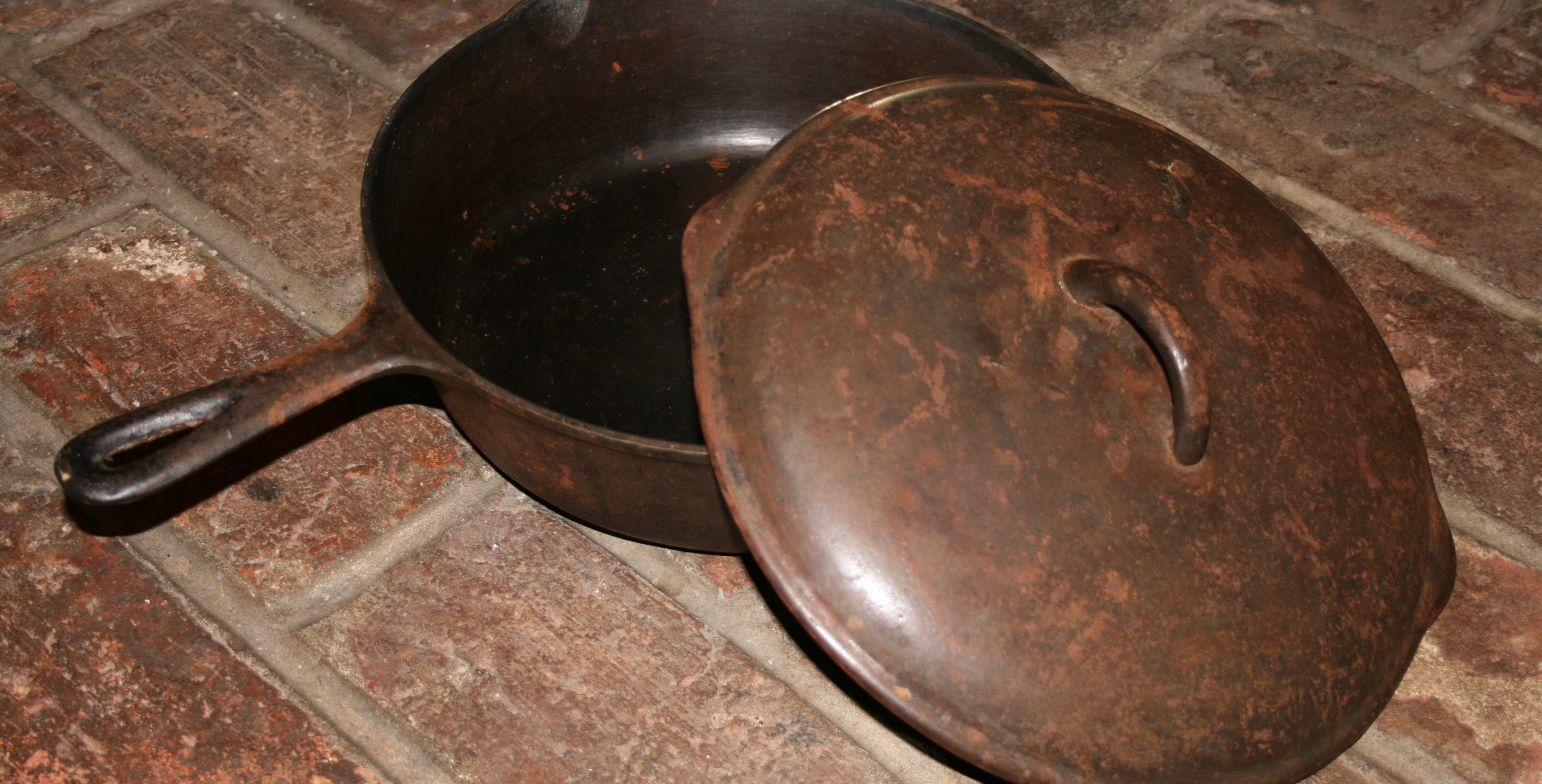
Teflon coating is actually a polymer, meaning it's synthetic. Such materials are particularly sensitive to strong mechanical stress. In the dishwasher, this coating won't just be damaged; it'll peel off completely. Even stirring food while cooking in a Teflon pan should be done only with a wooden spatula, otherwise, disaster is inevitable.
Teflon and cast iron pans are easy to clean by hand. Just follow these basic rules:
- use only soft cloths and sponges;
- Do not use harsh cleaning powders or gels with a high alkali content as a cleaning agent.
Sometimes people realize it's too late, when they're already taking a rusty frying pan out of the dishwasher. How can you revive the material?
- Try to remove any surface rust with a soft cloth soaked in warm water.
- Then wait until the interior surface is dry, then pour in some oil and sprinkle in some coarse salt. The salt will absorb any remaining rust.
- Place everything over medium heat and heat until hot. As soon as the characteristic aroma appears, turn off the heat and let the salt cool.
- After cooling, remove the salt from the pan and generously oil both sides again. This will restore the damaged coating.
As for washing aluminum pans, this also needs to be done by hand, but cast iron and Teflon pans are much more convenient for everyday use. Aluminum heats up quickly, and overheating can lead to burning of food and grease, which can be extremely difficult to clean.
Dishwasher-safe cookware
Frying pans made from materials resistant to mechanical impact, harsh detergents, and temperature fluctuations are dishwasher-safe. These include: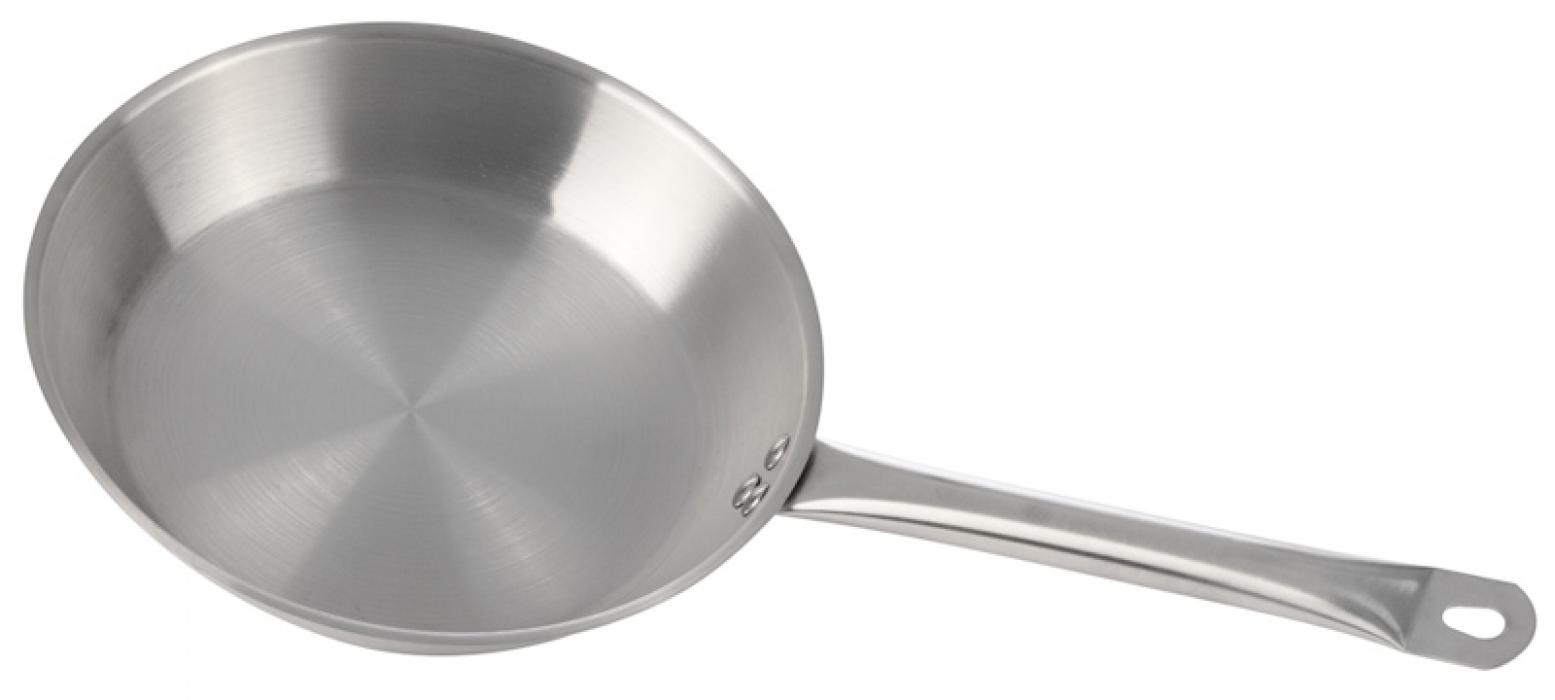
- stainless steel;
- ceramics or enamel (although it is better to avoid products with a high content of chlorine, alkalis and acids);
- Titanium. Choose a gentle cycle and more or less delicate detergents.
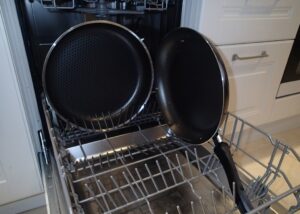
Place the appliance in the dishwasher either upside down or on its side to ensure all active surfaces are clean. Plastic handles, if present, should be removed to prevent damage. Furthermore, removing them will make it easier to place the pan in the dishwasher.
Interesting:
Readers' comments
Headings
Washing machine repair




For buyers




For users


Dishwasher




Add a comment