
The drum in my Indesit washing machine is squeaking.
 If the drum of your Indesit washing machine is creaking, you need to take action. This creaking noise signals a malfunction in the machine, and without prompt diagnosis, it will result in serious damage and lengthy, expensive repairs. The good news is that the cause of the grinding noise can be easily determined independently. What should you inspect first, and what should you follow?
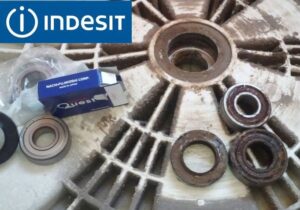
Destruction of the bearing unit
Most often, the creaking sound when the drum rotates is caused by worn bearings. If the grinding noise is accompanied by a hum and whistle, then the problem is clearly in the bearing assembly. Most likely, its expiration date is nearing its end and the element needs to be replaced urgently.
If the drum not only creaks but also hums and whistles when rotating, then the bearings in the Indesit machine are worn out.
It's easy to confirm that the bearings are at fault: simply empty the drum and perform a manual test. The results will determine the extent of wear.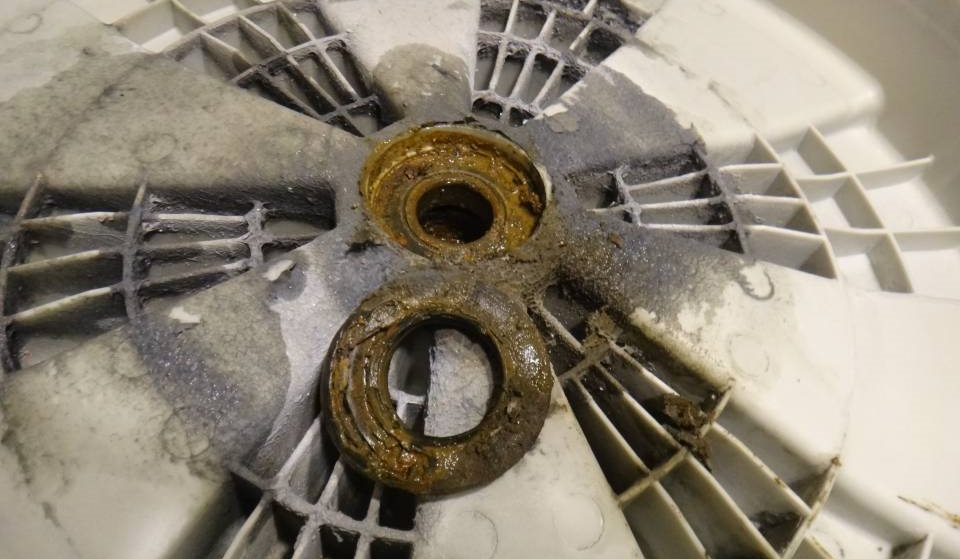
- Weak. If uneven rotation is observed when spinning the reel.
- Strong. If, when rocking the drum up and down, play is visible (i.e., a significant separation from the housing).
In any case, the bearing assembly needs to be replaced: you'll need to purchase a repair kit, completely disassemble the washing machine, remove and split the tub, knock out the drum, and then address the bearings and seals. The repair will be long and difficult, so it's best to contact a service center immediately. However, this procedure is not cheap, and if your Indesit machine is already old, you might want to consider upgrading to a new model.
Something caused an imbalance
Another possible cause of squeaking is an unbalanced machine. This occurs when the user exceeds the maximum load weight or, conversely, causes the load to be underweight. As a result, the laundry clumps during the spin cycle, becomes stuck on one side, and the drum loses its proper trajectory and begins to rub against the drum walls. This can also occur when washing a single large item, such as a coat or duvet cover.
When there is an imbalance, the creaking sound is accompanied by a clanking sound, as the drum hits the machine body and the walls of the tank.
Any Indesit machine user can handle the imbalance. Simply stop or pause the program, drain the water using the button or the emergency hose, then wait for the lock to unlock and open the door. Next, remove some items, distribute the laundry evenly in the drum, or add more clothes.
But imbalance occurs only in older Indesit models. Modern machines are protected from imbalance by a special function.
The body was positioned incorrectly
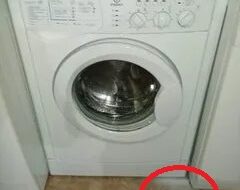
A creaking sound can also be heard if the machine's housing is improperly installed when connecting it. Typically, this causes the machine to become unsettled during the spin cycle, when the motor accelerates the drum, and high speeds cause severe vibration. This vibration causes the washing machine to rattle and squeak, and the metal parts to creak.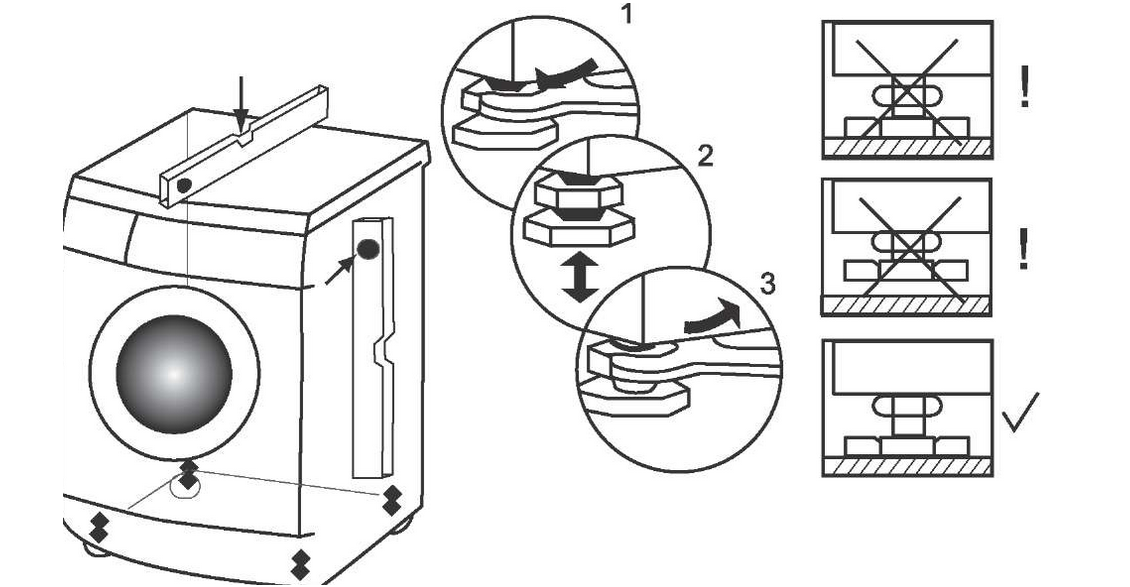
It's best to immediately forcefully shut down the system and check the quality of the installation:
- Measure the evenness by placing a building level on the lid of the machine.
- Rock the body, placing your hands on either side. If the feet lift off the surface, the washing machine is not installed correctly.
Let's reiterate the rules for installing any washing machine: a solid, stable, and level surface and carefully adjusted feet. Preventative measures, such as the use of special anti-vibration attachments, are also a good idea.
There's something inside the tank.
A creaking sound when the drum spins up can also indicate a foreign object lodged inside the machine. To check this, spin the metal container again: if you feel the obstruction and hear a ringing, knocking, or grinding sound, the mystery is solved. Most likely, a button, coin, bra underwire, or other foreign object has gotten stuck in the machine.
You cannot leave the object inside, as over time it will shift and cause the drum to jam, with all the ensuing consequences. It's best not to delay, stop the cycle, drain the water and fix the problem as soon as possible. This is done in three ways.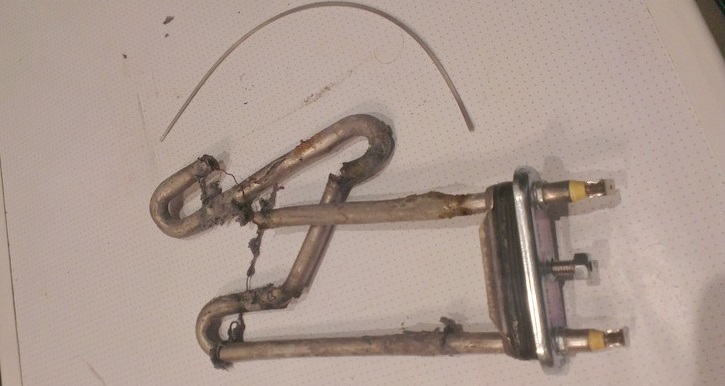
- Pull back the hatch cuff. You might find long metal objects like keys or bra underwires.
- After removing the heating element, medium-sized objects tend to fall straight into the tank. Remove the back cover, unscrew the bolts holding the heating element in place, and retrieve the "lost object" through the opening.
- After removing the tank, in difficult situations you'll have to work hard and almost completely disassemble the machine.
It's also a good idea to check the power filter. It's located on the back panel and, if loosened, rubs against the tank. Tighten the fastenings, and if damaged, replace the element.
Check the shock absorption system
The source of the creaking noise may also be worn shock absorbers. When the springs are stretched, the vibration is not dampened, but is transmitted to the body, which causes clicks, creaks and crackles.The machine shakes, causing an imbalance with all the ensuing consequences.
The shock absorbers can't be repaired. You need to replace the struts by removing the rear bulkhead, taking out the shock absorbers, and installing new parts. The job isn't difficult, but it's best to follow the instructions.
Interesting:
Readers' comments
Headings
Washing machine repair




For buyers




For users


Dishwasher




Add a comment