
Hidden connection of a washing machine
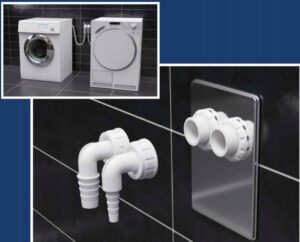 Modern home appliance users often spend a lot of time ensuring their appliances don't spoil the stylish design of their apartment or home. Concealed washing machine connections are an effective way to achieve a minimalist, clean look without overloading the design with unsightly plumbing. Hiding hoses in the wall or simply in designated niches requires special fittings and a siphon, which we'll discuss in today's post.
What is needed for a closed connection of a washing machine?
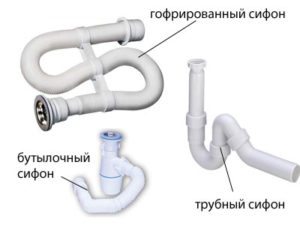
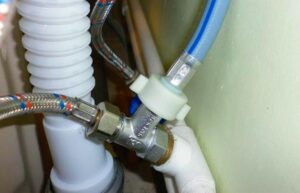
First, you'll need a special trap and a chrome-plated tee. This will allow for a concealed connection to the water supply and sewer lines. These supplies can be found at any hardware store.
Experts recommend the Miano concealed siphon. It's relatively inexpensive, well-built, and provides reliable service for many years. It has many advantages.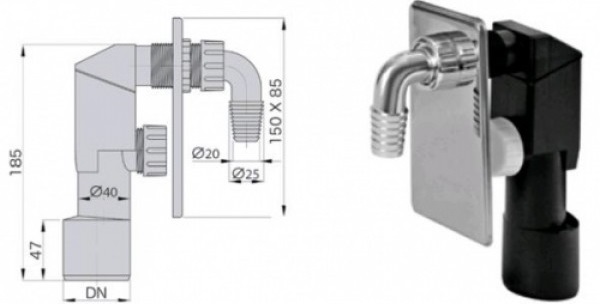
- It needs to be mounted directly into the wall, which will place the drain as close to the wall as possible, meaning it will take up a minimum of free space.
- It has an inspection hatch, which allows access to the siphon even if it gets clogged.
- It is equipped with a functional connection nipple, to which you can connect drain hoses from washing machines and dishwashers of different diameters.
As for the tee faucet, it also needs to be sophisticated. First and foremost, it needs to be bent 90 degrees—this will allow the inlet hose of household appliances to be routed along the wall. It also needs to be attractive and fit the overall style of the apartment, as this element is visible.
Niche for communications
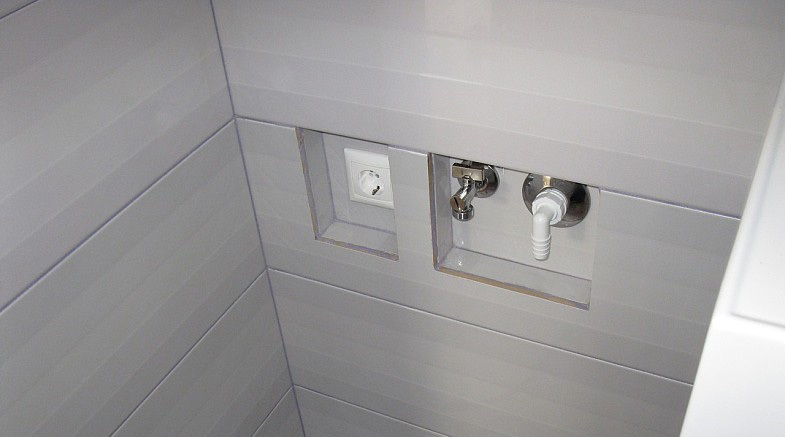
There are various ways to create a niche for utilities in apartments and houses. Most often, builders create a niche in the tile. The wall next to the washing machine is constructed from a thicker layer of mortar underneath, as the niche must be deep enough to accommodate the trap and pipes. The niche itself is created one tile wide and the same length as the trap, but slightly lower than the height of the washing machine. At the very bottom, the niche must be slightly larger than the diameter of the drain pipe - this will allow the hot and cold water pipes to be installed along it.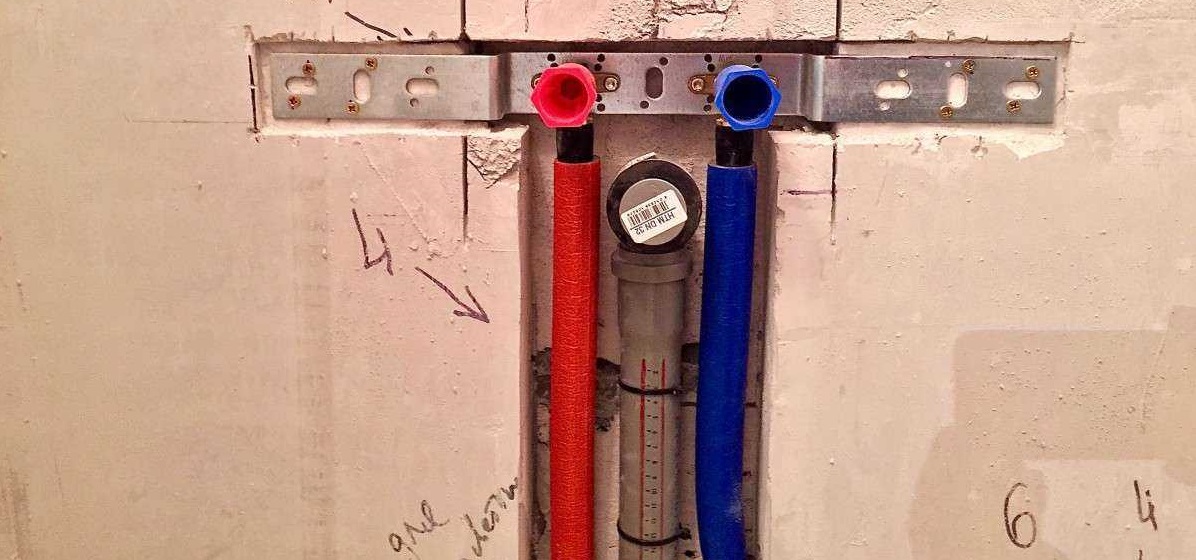
Once all the pipes are installed, the niche should either be filled with mortar and then tiled, or concealed with a small plastic box, color-matched to the bathroom tiles. The second method is much more practical, as you won't have to dismantle the mortar and tiles if a pipe bursts or another emergency occurs. If something happens to the utility lines, you can quickly remove the box and begin troubleshooting.
We connect the machine to the water supply and sewerage system
Once the niche is prepared, all that remains is to install the washing machine and connect it to all utilities. First, let's take care of the sewer connection.
- Find the outlet of the tee tap in the niche, prepared for the washing machine.
- Install a rubber seal for your trap. This seal will prevent the connection from breaking and flooding your floors with dirty water.
- Now position the siphon so that its nipple comes out of the plastic plug.
- Bend the tube into an elbow to create a liquid plug that will prevent unpleasant sewer odors from entering your home in the future.
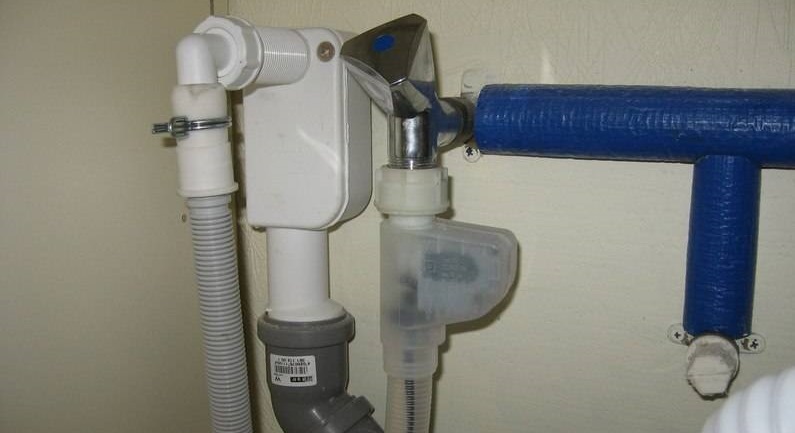
- Attach the inspection hatch to the wall using special holes, ensuring that the inspection hatch cover protrudes outward and is always easily accessible.
- Close the niche, and if necessary, fit the plastic plug to the inspection cover.
- Make sure there are no gaps that will spoil the appearance of the house.
- If everything is in order, then connect the washing machine's inlet hose to the siphon fitting, which is visible above the plastic plug.
If you're unsure whether you're doing something correctly, you can always check the official user manual, which provides a detailed description of how to connect your "home assistant" to your network.
Now let's move on to water supply. Most often, users connect their "home assistant" to cold water, but sometimes there are exceptions. A number of household appliances can be connected to hot water, but this is not practical for the following reasons:
- hot tap water is dirtier than cold water, so all filters in household appliances will become clogged much faster;
- Such water is also harder, which will not only affect the quality of washing and the consumption of softening detergents, but will also reduce the service life of a number of key components of the washing machine.
If the equipment manufacturer recommends connecting the device to cold water, then that's the way to go, without even considering other options. Connecting to the water supply is as follows:
- in the prepared niche with a plastic box, you need to remove the protruding plug in order to unscrew the adapter from the tee tap;
- under the plug you will see a nut for the cold water pipe, to which you need to screw the adapter and install the plastic plug in place;
- Screw the tap onto the adapter thread, and then screw the washing machine's inlet hose onto it.
Afterwards, all that remains is to check the machine's functionality and ensure it's properly connected to all utilities. If there are no leaks during the idle cycle and the equipment operates properly, the installation has been successful.
Interesting:

Readers' comments
Headings
Washing machine repair




For buyers




For users


Dishwasher




Add a comment