In the final months of autumn, many people finally wrap up their summer cottage season, pack up their belongings, and leave their cottages unattended for several months. While ordinary household items are safe in an unheated space, the same cannot be said for household appliances like washing machines and dishwashers. This poses a major problem for summer residents, as if the dishwasher isn't drained promptly for the winter, the liquid will freeze in the cold, and the dishwasher's water tank will rupture. So what should you do to avoid finding your dishwasher in need of costly repairs in the spring due to water that was forgotten to be drained during the cold season?
Preparing your dishwasher for winter
It can be difficult to completely drain a washing machine if you're unfamiliar with the internal workings of household appliances and their intricacies. However, we have a number of recommendations for beginners that will help avoid danger during the winter, ensuring that complex appliances are safe to leave in an unheated room.
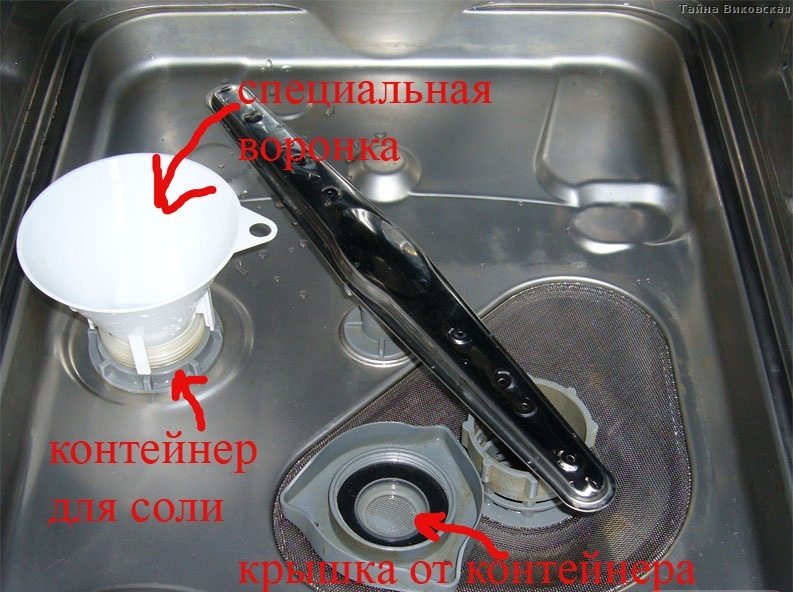
Open the dishwasher door and remove the lower basket, thus gaining access to the salt compartment located at the bottom of the appliance chamber.
Even if you've never used dishwasher salt before, fill the salt compartment completely with salt. Continue adding salt until water begins to flow into the dishwasher.
Make sure there is no salt in the hopper neck, then close it tightly.
The first three steps are necessary to allow the saline solution to displace the water, as it does not freeze in the winter, unlike water.
Next, you should add detergent to the dispenser to clean the water circulation system and disinfect the dishwasher before the winter period.
We start the work cycle, selecting a program with the maximum temperature, which will wash out the remaining salt from the machine and prevent through corrosion.
When finished, remove the inlet hose from the faucet, run any cycle, and blow through the hose for about half a minute to remove any remaining liquid from the inlet valve. Then, cancel the cycle and turn off the machine.
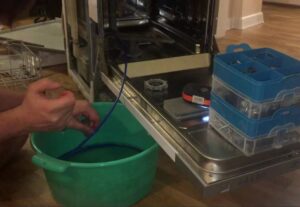
Now you can disconnect the drain hose and lay it on the floor of the room, after removing any remaining water from it.
Finally, open the filter located at the bottom of the appliance's chamber and check that there's no liquid in the bowl. If there is, place a dry cloth in it, wait for the moisture to be absorbed, and then remove the cloth. It's also a good idea to use the cloth to remove any remaining water from the chamber itself. Make sure the filter is clean and the appliance's chamber is empty.
Do not close the dishwasher door, leaving it slightly open.
Just nine simple steps can completely prevent water from freezing in winter. By taking these steps before the cold season arrives, you reduce the risk of damage to household appliances and save yourself from potential expensive repairs.
Should I add antifreeze to my dishwasher?
There's another way to prevent your dishwasher from freezing in winter, devised by those ordinary people who, for various reasons, chose not to follow the expert recommendations outlined in the previous section of this article. Many people in our country believe they don't have to waste time servicing their dishwashers; they simply replace the water in the dishwasher with antifreeze. Supposedly, ordinary, inexpensive car antifreeze is so versatile that it will protect both your car and your dishwasher in winter. In this case, a large amount of antifreeze is poured into the filter or salt container, and then the "home helper" is left in this state for several months.
It's easy to guess that such naive actions not only won't protect your dishwasher from damage, but will actually cause it. The antifreeze reacts with the resin in the appliance's ion exchanger, causing the element to need to be replaced. Moreover, the antifreeze is not so easy to wash out of the machine, which will result in the user having a nauseating smell of car windshield wiper on freshly washed dishes for a long time. Therefore, under no circumstances should you use this “barbaric” method of preparing equipment for winter.

 In the final months of autumn, many people finally wrap up their summer cottage season, pack up their belongings, and leave their cottages unattended for several months. While ordinary household items are safe in an unheated space, the same cannot be said for household appliances like washing machines and dishwashers. This poses a major problem for summer residents, as if the dishwasher isn't drained promptly for the winter, the liquid will freeze in the cold, and the dishwasher's water tank will rupture. So what should you do to avoid finding your dishwasher in need of costly repairs in the spring due to water that was forgotten to be drained during the cold season?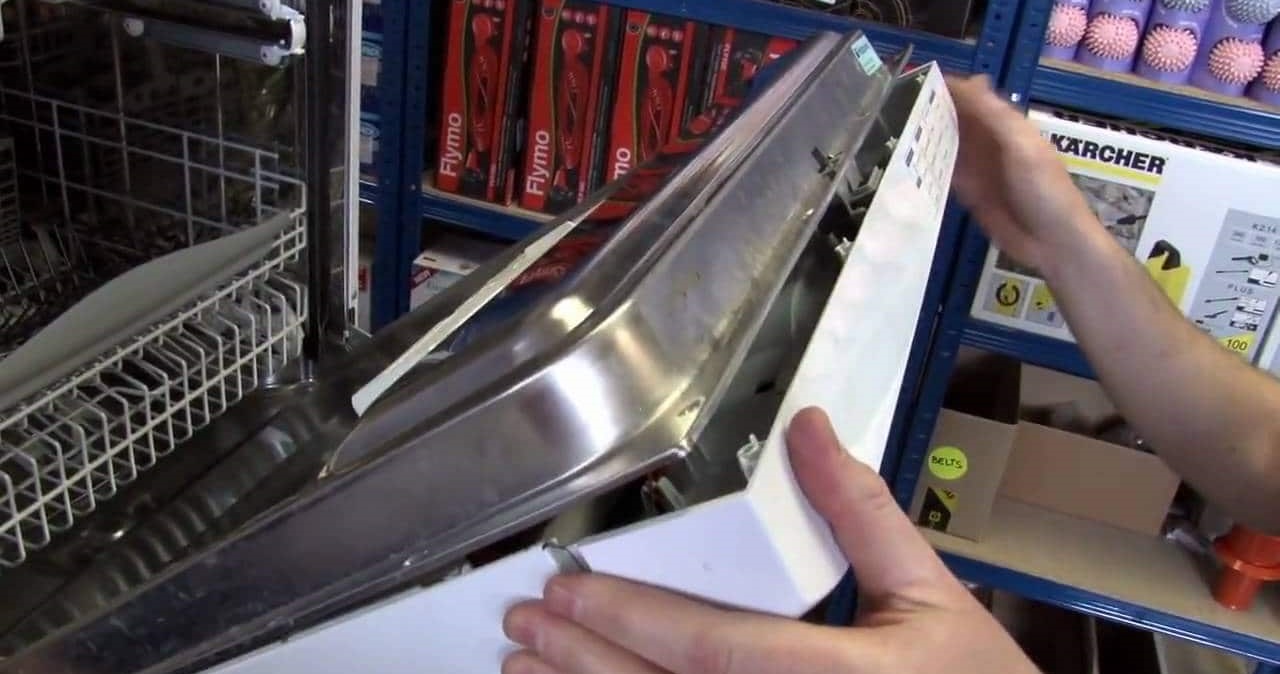



















Add a comment