
How to drain water from an Ariston washing machine?
 It's frustrating when your washing machine suddenly freezes with a full tank. This is especially true if the problem isn't resolved by rebooting the system and pressing the "Drain" button again. If the machine isn't responding to external commands, you'll have to resort to forceful action, carefully draining the water from your Ariston washing machine, and performing a comprehensive diagnostic. There are several ways to manually drain the water—fast or slow, safe or emergency. To choose the right one, it's important to consider all the options and assess the nature of the problem.
How to drain the washing machine tank?
If the washing machine refuses to respond to commands, the "Drain" button will not help - you will have to act manually. Fortunately, the manufacturer has provided alternative options for emptying the tank. Moreover, there are several ways to drain the water: you just need to assess the situation and choose the appropriate method.
The drum is forced to empty through:
- drain hose, but the pump is not activated;
- unscrewed trash filter;
- emergency opening of the hatch door;
- disconnected drain pipe.
Before forced draining, you must disconnect the machine from the power supply and water supply!
The method for emptying the tank depends on the situation. In any case, it's necessary to prepare the area and the washing machine itself beforehand. To avoid flooding your neighbors, it's important to understand the nuances of the upcoming draining process in advance. Recommendations and instructions for each method are provided below.
Let's remove the filter and the water will flow out.
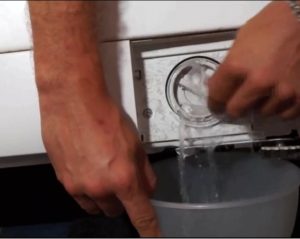
A virtually foolproof way to quickly and easily drain your machine is to go through the debris filter. This is a plastic spiral attachment that protects the pump from debris and accidentally dropped objects. The spiral is located behind the service hatch in the lower right corner of the Ariston's body.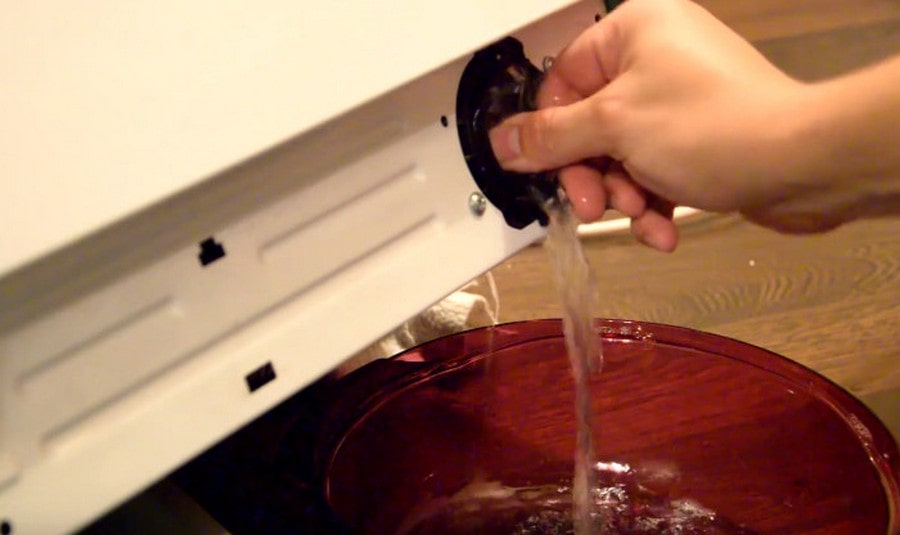
Next we proceed as follows:
- we check that the washing machine is disconnected from all communications;
- wait until the water in the tank cools down (otherwise you can get burned);
- Using a flat-head screwdriver, pry up the cover of the service hatch and remove it;
- we find a plastic black round cover – a trash filter;
- carefully tilt the machine body to the left and place an empty container under the trash filter;
- Additionally, we cover the surrounding area with old rags and newspapers;
- We take hold of the protruding part of the “trash can” lid and unscrew the filter a few turns until water flows out of the hole;
There's no need to remove the entire debris filter! Leaving it in place allows you to adjust the water pressure!
- We collect water in a prepared container.
Emergency drain through trash filter This method is among the safest and fastest. If your washing machine is broken and unresponsive, it's best to empty the drum this way. The advantage of this method is that there's no need to disassemble the machine or manually scoop out the water. However, be prepared for a certain amount of dirty liquid to spill past the basin.
Drain hose
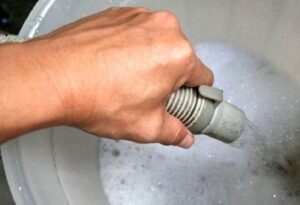
The second method involves using a drain hose. Specifically, you need to tilt the hose below the drum and let the water drain, using the so-called "siphon effect." The key is to be able to disconnect the corrugated hose from the drain pipe. To drain water through the hose in an emergency, follow these instructions: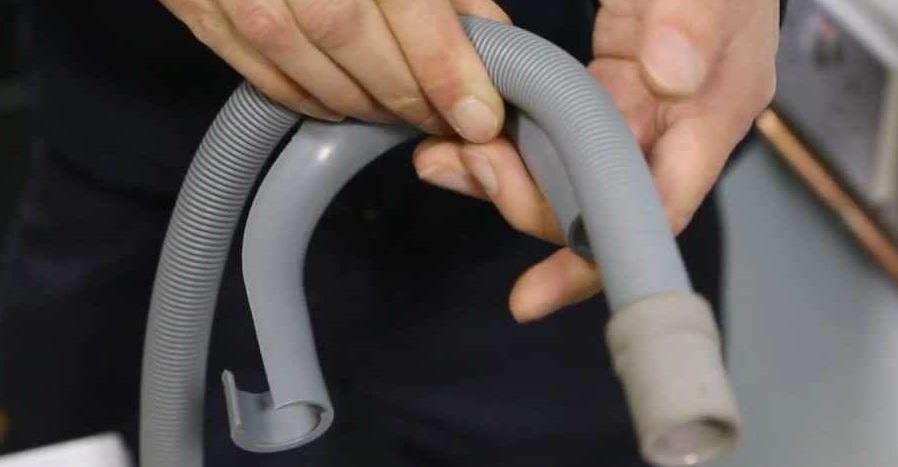
- disconnect the hose from the sewer (release the clamp with pliers and unhook the corrugated pipe from the pipe);
- detach the hose from the rear panel of the washing machine by removing the provided plastic fasteners;
- lower the corrugated pipe below the level of the Ariston washing machine tank, placing the free end in a basin, bathtub or toilet;
- wait until the water drains out of the washing machine by gravity.
Drainage through a hose is only possible on Ariston models that are not equipped with an internal loop or a non-return valve.
Draining water through the main hose is simple, quick, and requires no extra preparation. But there's a catch: this method doesn't work on all machines. Modern washing machines, equipped with a special internal loop or check valve, block gravity flow, preventing accidental leakage during washing. Typically, this applies to models manufactured after 2015. To find out whether the drum can be emptied through the sleeve on your existing washing machine, simply consult the user manual.
Emergency opening of the machine
If for some reason you can't drain the Hotpoint Ariston through the debris filter and hose, you'll have to resort to "heavy artillery." This means urgently opening the hatch door and then scooping out the water. This procedure requires more effort and time, so it's a last resort.
We proceed as follows:
- We estimate how much water is in the tank (if the liquid level is above the edge of the drum, then we tilt the machine back and fix it);
- open the machine;
- we scoop out water.
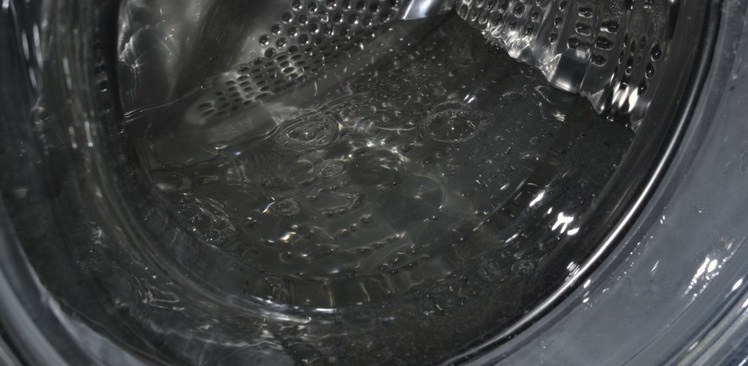
This simple sequence is complicated by several nuances. The first is the need to open the door urgently. It is not possible to open the hatch by pressing the handle, since Ariston is securely locked during washing. The lock can be bypassed using a rope. Insert it into the gap between the door and the body, pull it inward, and then pull until you hear a click. Then, unlock the machine as usual.
Alternative method
Forced drainage can also be achieved through the drain pipe connecting the drum to the pump. This is difficult and time-consuming, but it often eliminates the cause of the unit's freezing, as a clogged pipe is often the culprit. However, this method should only be used if the debris filter, main hose, and emergency "opening" fail.
Water is removed through the pipe as follows:
- remove the top cover and the back wall of the washing machine;
- we find the branch pipe (a rubber tube under the drum, connected to the pump);
- we place a basin under the pipe and cover the area next to it with rags;
- using pliers or flat-nose pliers, loosen the clamp that secures the tube to the pump;
- We disconnect the tube and collect the water.
Don't leave a full washing machine—it needs to be completely emptied for diagnostics and repairs. This isn't difficult, just follow the instructions and safety precautions.
Interesting:

Readers' comments
Headings
Washing machine repair




For buyers




For users


Dishwasher




Add a comment