Sometimes, a washing machine freezes during a wash cycle, even with a full tank of water. This "home assistant" stops responding to button presses. In this situation, the user will need to perform an emergency drain, remove the laundry from the drum, and only then begin troubleshooting the washing machine.
Let's figure out how to drain water from an Atlant washing machine without flooding your apartment or neighbors. We'll explain several emergency draining methods. You'll need to drain the washing machine anyway, as this is essential for troubleshooting and repairing the equipment.
Methods for removing water from a washing machine
The easiest way to drain the water from your washing machine is to use the special mode. This option is useful if the machine continues to respond to control panel button presses. Here's what you'll need to do:
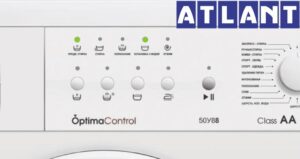
Use the rotary switch to select the “Drain/Spin” program;
if necessary, turn off the spin option (for example, if the washing machine freezes at this stage);
start the cycle with the "Start/Pause" key.
When your Atlant automatic washing machine doesn't respond to commands, you'll have to drain the water manually. There are several possible forced drain options:
using a drainage hose (the water will drain away by gravity);
by unscrewing the trash filter;
through the pipe between the tank and the pump volute;
opening the washing machine hatch door.
Before draining water from the washing machine, be sure to de-energize the equipment.
First, be sure to unplug the washing machine from the power source. Otherwise, you risk electric shock. Also, turn off the shut-off valve that supplies water to the washing machine.
Each of the above methods of removing water from the tank has its own advantages and disadvantages. The choice of forced flush method will depend on the specific situation. Sometimes, simply running the appropriate program solves the problem; in other cases, there's no other option but to open the washing machine door. The solution will depend on what happened to the washing machine.
Unscrew the filter plug
If the control panel isn't working and the automatic drain fails, you'll have to do it manually. You can drain the water in the drum through the waste filter. This method is used when the washing machine freezes mid-cycle and stops responding. It's important to remember safety precautions.
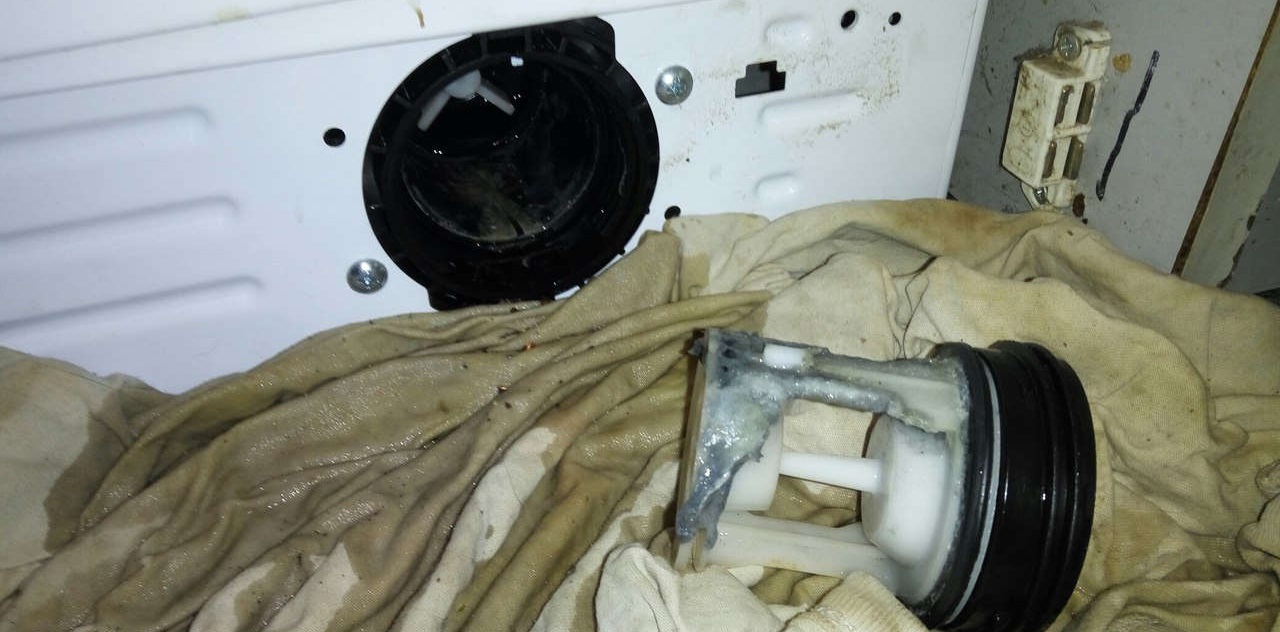
The waste filter is a plastic spiral element installed in the lower front section of the Atlant machine. Its purpose is to trap foreign objects, dirt, and other debris, preventing them from entering the drain pump. At the same time, it allows wastewater to pass through without any problem.
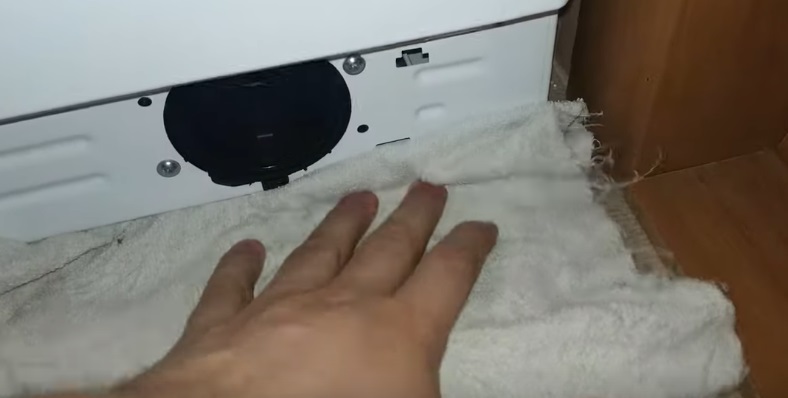
The emergency drain is often initiated through this filter. Before removing the waste container plug, cover the floor around the washing machine with rags (some liquid may spill onto the flooring). Also, prepare a small, but roomy container.
The algorithm of actions will be as follows:
unplug the washing machine;
open the technical hatch door (in the lower corner of the machine) or remove the decorative panel by handling its latches (on some Atlant models);
find the drain filter plug;
Place a prepared container for collecting water under the washing machine, in the area where the waste bin is located;
unscrew the drain filter plug half a turn (turn clockwise);
Wait until the water drains into the container.
Don't remove the filter completely. The water pressure may be too strong, and the container may not be able to hold all the waste liquid at once. Therefore, loosen the plug halfway and, if necessary, screw it back in so you can empty the basin and place it under the machine again.
This method is considered the most effective, but it does have its drawbacks. First, you shouldn't drain the water immediately if the washing machine has been running a high-temperature cycle. There's a high risk of scalding yourself with hot water. You'll have to wait at least an hour for the machine to cool down.
Secondly, there's a risk that the first time you unscrew the coil, you might miscalculate and remove the filter completely. This will cause water to rush out of the machine under high pressure. If the container isn't large enough, the liquid will spill onto the floor.
Finally, not all users are able to screw the filter back in correctly the first time. This causes the washing machine to leak the next time it's turned on. However, this problem is easily remedied by installing the dustbin correctly.
Let's remove the water through a hose
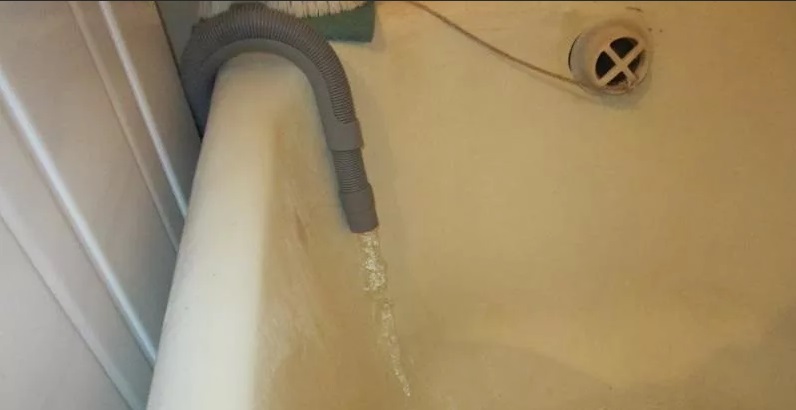
Another option is to drain the water through a hose. This method can be used at any stage of the cycle. All you need is access to the drain. You also need to consider where the water will drain. You can drain into a bathtub, toilet, or some other container.
Algorithm of actions:
find the place where the drain corrugated pipe connects to the sewer;
loosen the clamp securing the hose;
disconnect the drain hose from the pipe or siphon;
holding the end of the corrugated pipe upward, remove the hose from the hook located on the back wall of the washing machine;
position the sleeve at a level below the washing machine tank;
lower the end of the hose into the toilet, bathtub or prepared container;
Wait until all the liquid has drained from the machine.
If the Atlant washing machine is equipped with a check valve, then it will not be possible to drain the water by gravity through the drain hose.
Draining through a hose is considered the simplest method. However, it's not suitable for everyone. If your Atlant washer has a check valve, the water won't drain by gravity. This valve's purpose is to prevent a "siphon effect." Therefore, even if the corrugated hose is lowered below the tank level, liquid will remain in the system.
We scoop out the water by opening the door
This is the riskiest emergency drain option. It's only used when other methods fail. For example, the machine has a check valve, and water isn't flowing through the filter due to a severe clog in the drain system.
First, you need to determine approximately how much water is in the drum. Then, tilt the washing machine back as far as possible. This will reduce the amount of liquid spilling onto the floor after opening the door.
The algorithm of actions in this case will be as follows:
carefully move the machine away from the wall;
tilt the device back and lean the machine against the wall;
Place a large basin under the washing machine;
open the drum door;
Scoop water out of the tank using a ladle or mug.
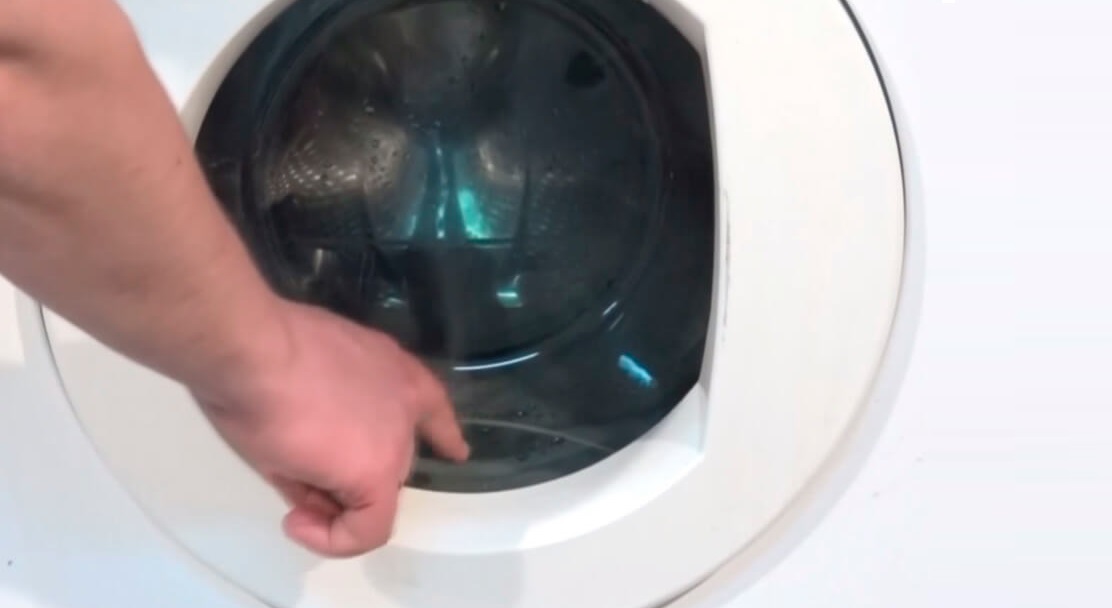
What problems might arise? You can't just open the door of a washing machine with a full tank of water - the door will remain locked. It will take some effort to open the locking device.
But even a locked door can be opened. To do this, you will need:
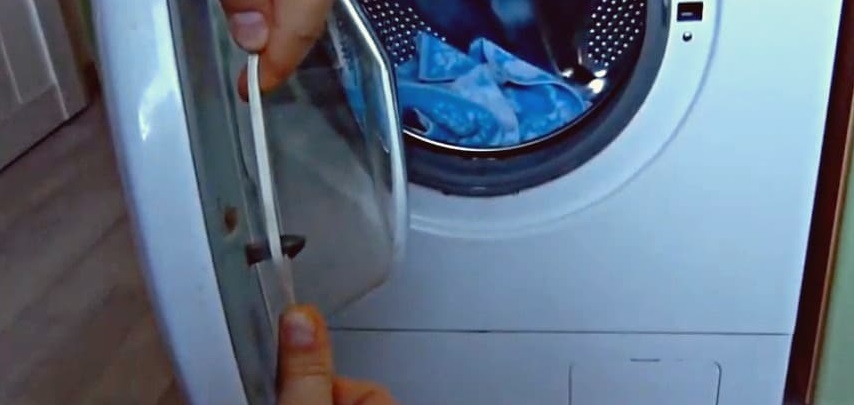
prepare a long, thick (but thin) rope or fishing line;
thread the cord under the hatch door, on the side where the lock is located;
pull the rope or fishing line so that it touches the “tongue”;
move the latch by moving the rope (you should hear a characteristic click).
This emergency drain method is used in extreme cases. Opening a blocked washing machine is no easy task. Moreover, it's important to understand that some water will spill onto the floor. Therefore, you'll have to scrub the dirty soapy water from the room.
This method also doesn't guarantee complete removal of water from the machine. You can only scoop out some of the liquid, but the soap solution will remain between the tub and drum, as well as in the drain system.
Trash filter outlet
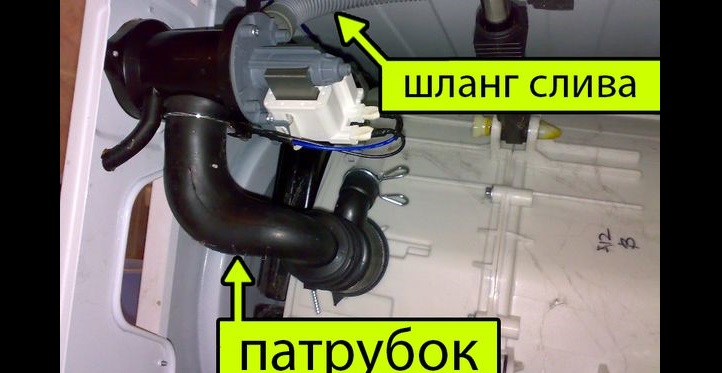
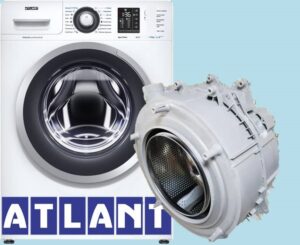
If you cannot remove the water using any of the above methods, you will have to resort to the last option. Emergency water drainage can be performed through the pipe connecting the tank and the pump volute. This is the most difficult, but 100% effective method. It will help you completely empty your washing machine.
The algorithm will be as follows:
Unscrew the screws securing the rear panel of the washing machine;
remove the back wall of the case;
Find the drain pipe connecting the tank to the pump;
Place several rags that absorb water well under the washing machine;
Place a low, roomy container under the machine;
loosen the clamp securing the pipe;
Unhook the hose from the pump fitting and direct the end of the pipe into the prepared container.
If the water still doesn't drain, it means there's a serious blockage in the drainage system. You'll need to remove the second clamp and unhook the hose from the tank as well. Try to collect as much liquid as possible in a container, but be prepared for some to spill on the floor. Then, clear the clogged hose.
This method is effective, but it's the most challenging. It requires not only partially disassembling the washing machine, but also getting underneath it, untangling the clamps, and attempting to collect at least some of the water in a container. This can be challenging because the work is done practically blindly, by touch.
It's important to understand that simply emptying the washing machine isn't enough. Next, you'll need to diagnose your Atlant machine to determine the cause of the problem. Draining the water and then restarting the cycle will cause the problem to reoccur. If possible, it's best to call a service technician to inspect the washing machine components and advise on repairs.

 Sometimes, a washing machine freezes during a wash cycle, even with a full tank of water. This "home assistant" stops responding to button presses. In this situation, the user will need to perform an emergency drain, remove the laundry from the drum, and only then begin troubleshooting the washing machine.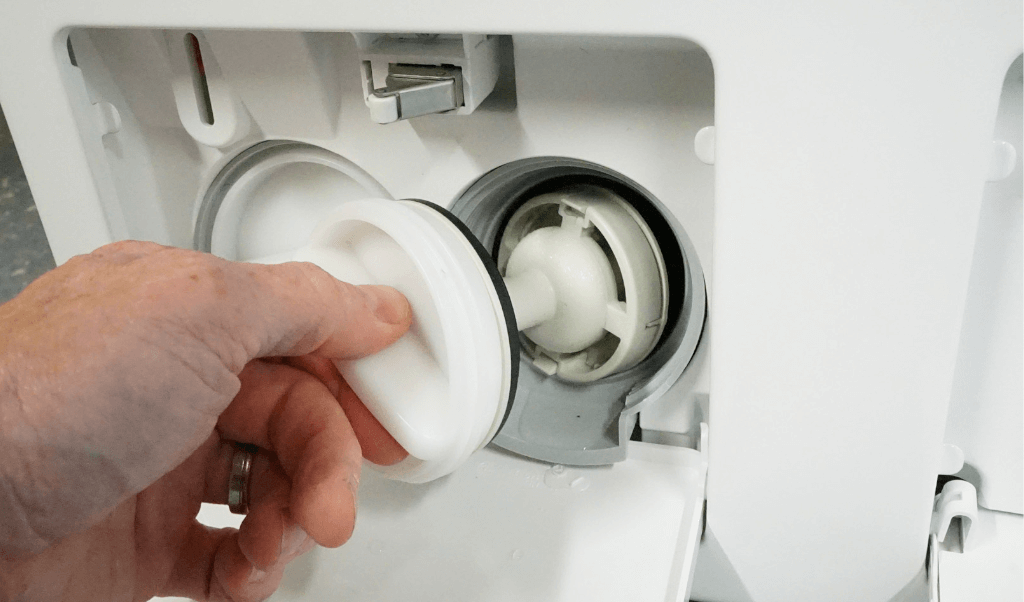

















Add a comment