
How to drain a Candy washing machine
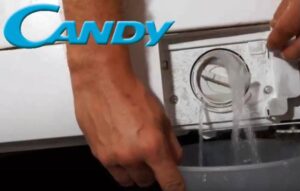 If your washing machine breaks down mid-cycle, the first step is to drain the waste water. This is crucial, as without draining the water from your Candy washing machine, you won't be able to diagnose or repair the problem. Therefore, we first remove the water from the system. This will also help prevent damage to your flooring from a flood, as well as a short circuit, which is extremely dangerous not only for the machine but also for your family. We'll show you how to drain the water from your "home helper" yourself.
How can I get rid of water from my washing machine?
The easiest and safest way to empty the washing machine yourself is by using the specially designed mode called “Drain/Spin”. It is very easy to turn on – move the programmer to the position with the corresponding designation, turn off the spin with the “No spin” button, and then activate the working cycle with the “Start/Pause” button.
If your appliance has suffered a one-time malfunction and is no longer responding to commands, simply emptying the tank won't work. In this situation, you'll need to force-drain the waste liquid. How exactly can this be accomplished?
- Using a drainage hose to allow the water to drain out on its own.
- Through the drainage filter, which must first be unscrewed.
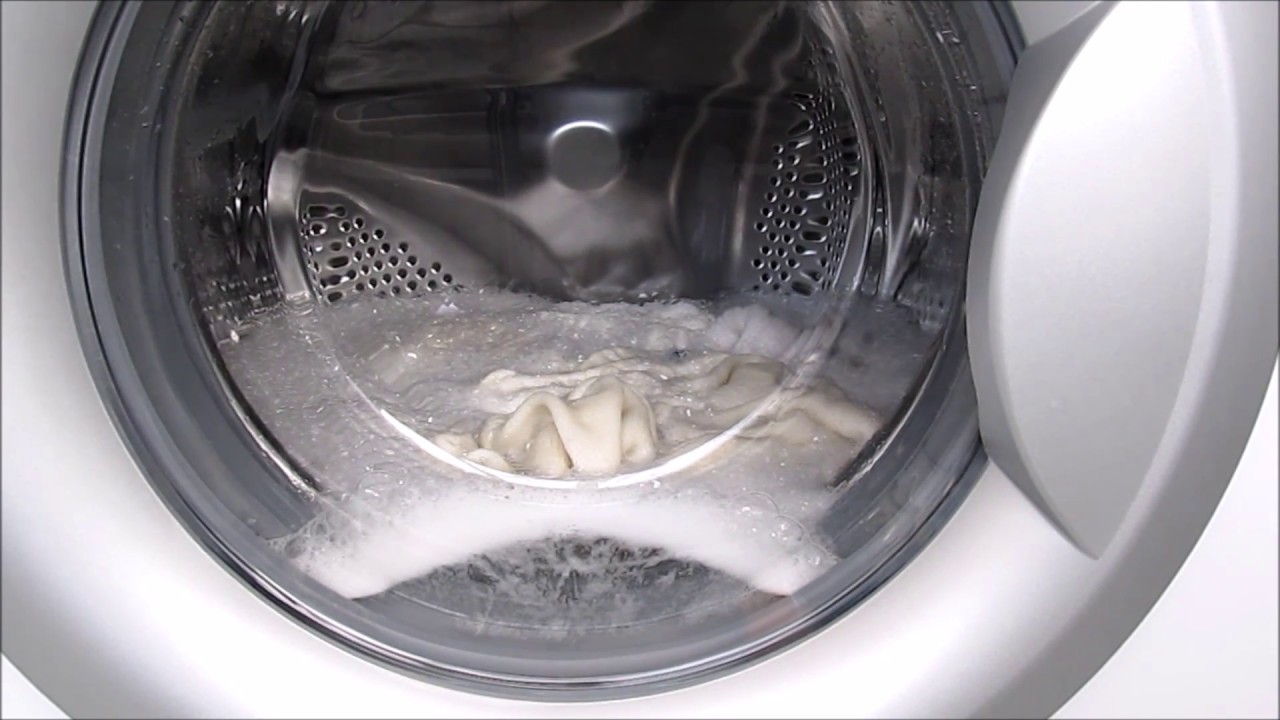
- Through the pipe that connects the tank and the snail.
- Simply by opening the CM hatch door.
Be sure to disconnect the appliance from the power supply and water supply before manually emptying the machine using any forced method.
All the described options have their advantages and significant disadvantages. The choice of method usually depends on the specific situation, as sometimes opening the washing machine's drum is the only solution. Regardless of the incident, first disconnect the Candy washing machine from all power supplies, assess the current situation, and then carefully follow the instructions for removing the liquid using one method or another.
We remove water through the "trash can"
If you are unable to start the drain using the drain function, you will need to try manually removing the water through the drain filter. This method can be used even after the automatic washing machine has frozen during the work cycle. The most important thing is not to forget about safety precautions.
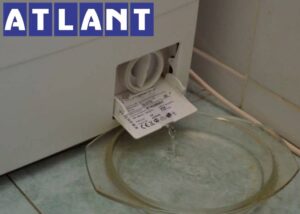
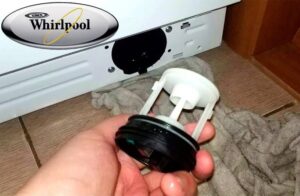
The drain filter looks like a small, spiral-shaped plastic attachment installed in a drain volute, which is hidden behind a decorative panel on the lower right side of the front wall of the housing. It's called a "trash filter" because all waste liquid flows freely through the element into the drain, but all debris and foreign objects remain on the plastic, preventing them from reaching the pump, where they could cause a clog. What should I do to activate the emergency drain through this filter?
- Use a screwdriver to pry open the washing machine's access panel.
- If there is no hatch, detach the decorative panel using the latches.
- Locate the debris filter plug.
- Place a large, flat container for water, such as a baking sheet, underneath it.
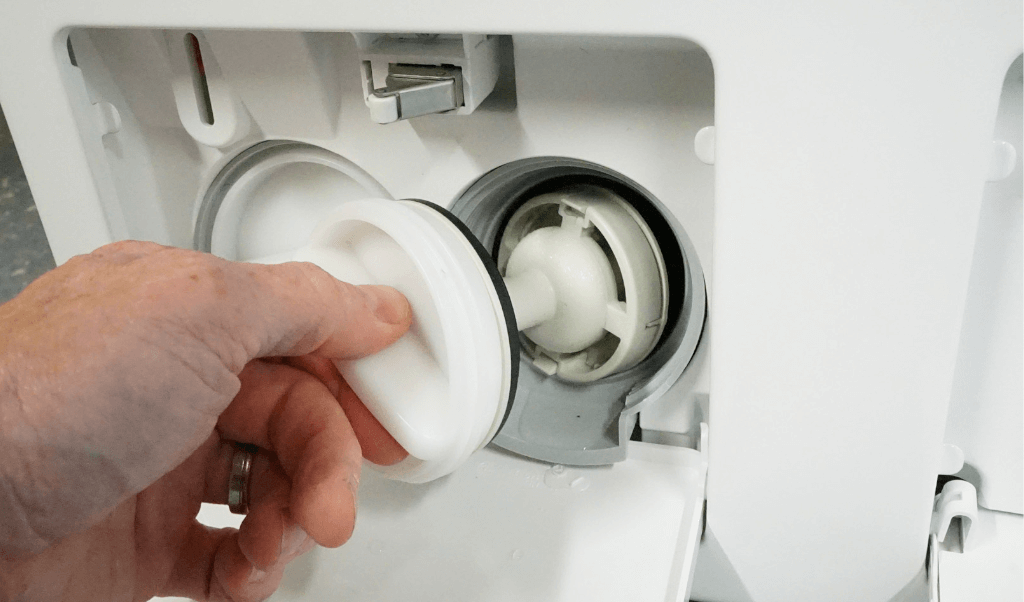
- Additionally, lay rags or unnecessary towels on the floor to avoid damaging the floor covering.
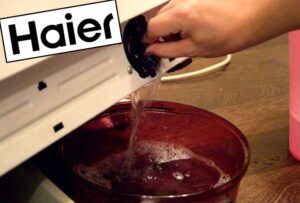
- Take the plug with your hands and carefully turn the filter clockwise.
Do not open the plug completely while there is waste liquid in the system, otherwise the water flow will be too strong.
- Wait until all the liquid has left the tank.
This method seems optimal, but even it has its drawbacks. First, it can't be used if the machine has been washing at high temperatures, as the risk of scalding from boiling water is too high. Second, the debris filter will likely spill onto the floor from the last cleaning. Finally, the third drawback is that users often struggle to install the debris filter evenly and tightly, causing the machine to leak during operation.
Through the drain hose
You can also manually drain the liquid through a drain hose. This is possible at any stage of the work cycle, as long as you provide clear access to the sewer pipe and prepare a draining area, such as a sink or toilet. How do you do this correctly?
- Locate the location where the CM drain hose connects to the sewer.
- Loosen the clamp that secures the corrugated pipe.
- Detach the sleeve.
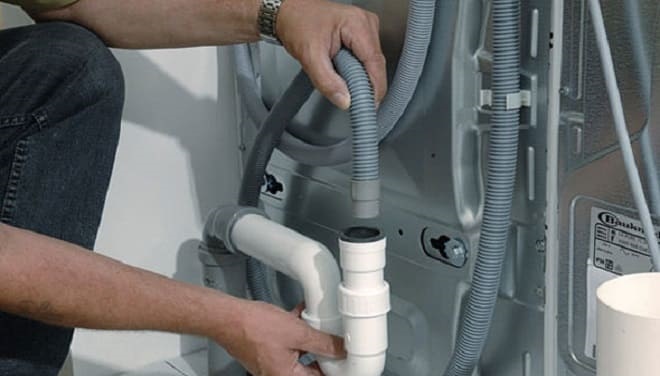
- Remove the hose from the rear wall of the housing together with the hook-holder.
- Place the corrugated pipe below the Candy washing machine tank.
- Place the end of the hose into a prepared container, sink or toilet.
- Make sure all the water has drained from the machine.
Please note that if your "home assistant" has a check valve, then this drainage method will not work.
It's believed that the drain hose is the easiest method for emptying a washing machine. It has only one drawback, but it's a significant one, as not every housewife has the means to do so. For example, modern Samsung appliances are equipped with a non-return valve to protect them from the "siphon effect." Therefore, if your automatic washing machine has such a valve, simply lowering the hose and draining the water won't work.
Let's open the door
One of the most dangerous options is emptying the tank through the hatch door. To do this, you need to roughly estimate the amount of water in the system, and then tilt the equipment back, leaning it against the wall. This can help reduce the amount of liquid spilled onto the floor after the machine depressurizes. What should I do in this situation?
- Carefully move the machine away.
- Lean her against the wall.
- Place a large basin or bucket underneath it.
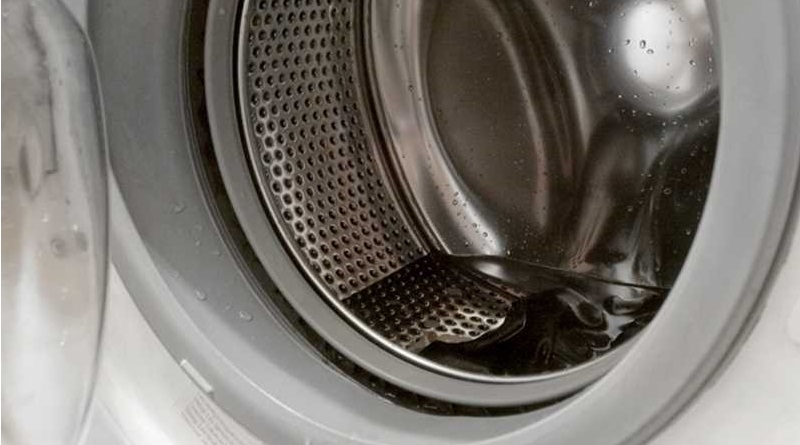
- Open the hatch door.
- Collect all the spilled water and scoop out the remaining water in the tank using available tools.
The most difficult part of this process is opening the machine, because if it freezes mid-cycle, the door lock will remain closed. Therefore, the electronic lock will have to be bypassed somehow. What can be done?
- Find a long rope or fishing line.
- Thread the rope under the door at the locking mechanism area.
- Pull the line tight enough to catch the latch.
- Press on it and wait for a characteristic click, after which the hatch will open.
This method is considered one of the most difficult precisely because of the UBL, so it should only be used in exceptional cases. Not only can the opening process be time-consuming, but you'll also have to manually drain the system afterwards, as well as thoroughly clean the floors to remove water, dirt, and soapy water. This method also doesn't guarantee that the system will be completely drained, as some water will remain not only at the bottom of the tank but also in the drain system.
"Main" pipe
Finally, if you still haven't been able to drain the system, you'll need to resort to the final method. Forced drainage through the drum hose is also difficult to achieve, but it's extremely effective, as it will completely empty the tank. In this case, you can also manually clean the hose itself, which is often the cause of a failed drain. The instructions are as follows.
- Remove the rear panel of the CM, having first disconnected all the fasteners.
- Locate the hose that connects the tank to the pump.
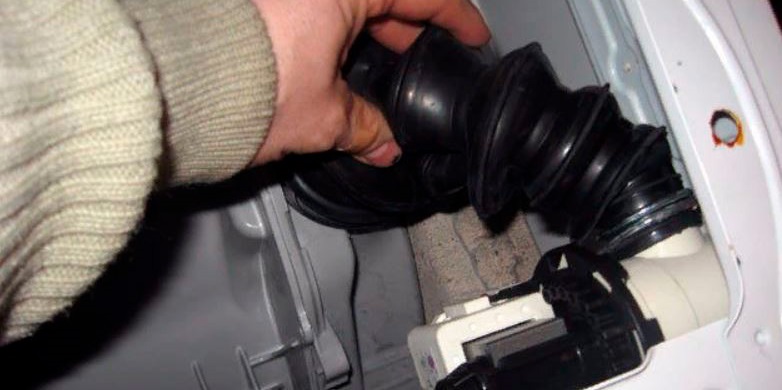
- Place a large basin or bucket underneath and lay a few rags on the floor.
- Loosen the clamp that holds the hose in place.
- Remove the hose from the pump nipple and then lower it into the prepared water container.
If the fluid hasn't started to drain, a blockage is to blame, so you'll need to loosen the second clamp, disconnect the hose, and thoroughly clean it of dirt and debris.
The latter method is extremely effective, but it may be inaccessible to housewives because it requires moving and partially disassembling the machine to reach the drum through the bottom, and then feeling your way to the drain. It's important to remember that simply lowering the machine isn't enough. A thorough system diagnostic will then be required to find and fix the problem. That's why it's sometimes easier to call a service technician directly, who can perform all the necessary procedures and then begin the repair.
Interesting:

Readers' comments
Headings
Washing machine repair




For buyers




For users


Dishwasher




Add a comment