
How to drain water from an Indesit washing machine?
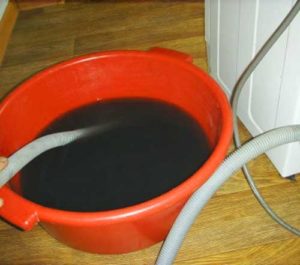 Sometimes, during a wash cycle, the machine freezes and stops working. In this situation, the key is to stay alert. First, drain the water from your Indesit washing machine before attempting to troubleshoot the problem. Let's look at how to empty the washing machine's drum.
Options for removing liquid from the tank
If the washing machine doesn't respond to any user commands, draining the water using the special program won't work. There are several ways to manually empty the tank. Assess the situation and choose the preferred method. The main options for forced draining are:
- through the drain hose, without activating the pump;
- by unscrewing the plug of the garbage filter;
- opening the washing machine door;
- by disconnecting the drain pipe.
Before draining water from an automatic machine, be sure to de-energize the equipment and close the shut-off valve.
Regardless of the nature of the problem with the system, any of the listed methods can be used. Each draining method requires specific preparation. Let's look at the steps to take when choosing one or the other for draining fluid from the unit.
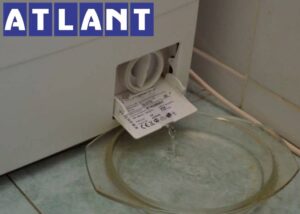
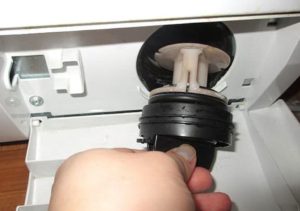
Unscrew the plug of the waste filter
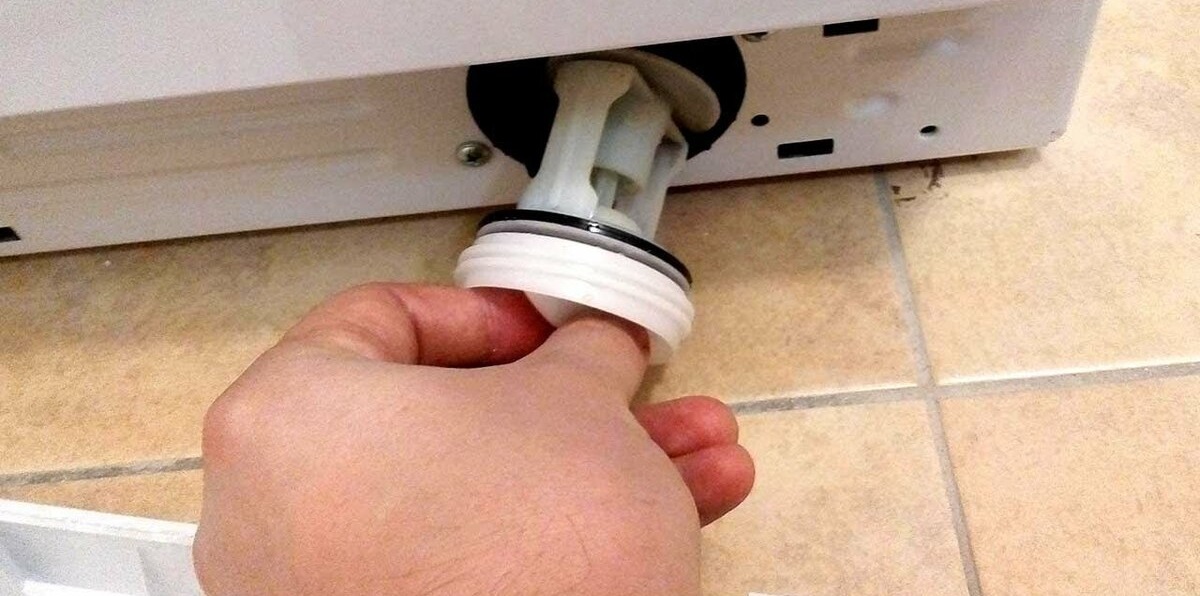
Every Indesit washing machine is equipped with a special filter that prevents foreign objects, such as coins, paper, and paper clips, from getting into the pump. Accessing the filter element is easy – it's located on the front of the machine, in the lower right corner behind a false panel. Follow these steps to drain water through the filter:
- Using a slotted screwdriver, release the latches and remove the trim panel;
- Tilt the washing machine slightly on its left side, carefully lean it against the wall, and place a basin under the bottom to collect the liquid. Be careful not to let the machine slip.
- Cover the floor around the washing machine with rags that absorb water well;
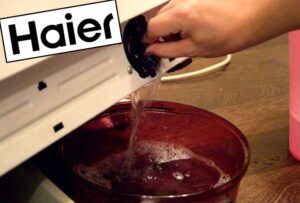
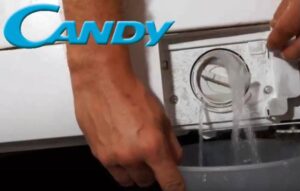
- Unscrew the filter a few turns until water begins to flow from under the plug. There is no need to completely remove the filter element from the system;
- collect the liquid in a container.
Unfortunately, it's very difficult to ensure a clean drain in this case; some liquid will still spill. The floor will have to be wiped by hand. However, this method has a significant advantage: the entire process takes very little time, as you don't have to disassemble the washing machine.
Hose manipulations
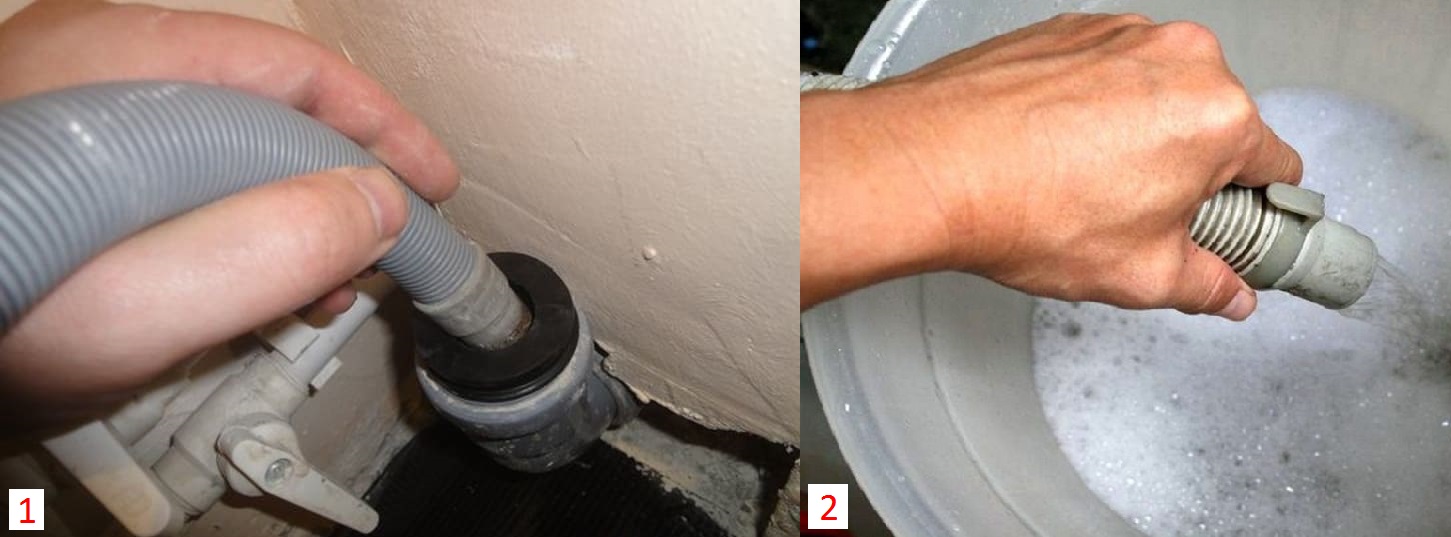
The second method will also help empty the washing machine drum in a few minutes. You can quickly and easily remove water from your washing machine through the drain hose.If the hose connection to the sewer system is easily accessible, this method is perfectly acceptable. To drain the water yourself:
- disconnect the drain hose from the sewer pipe;
- detach the tube from the back wall of the housing, remove the plastic retainer holding the sleeve at the base of the washing machine;
- place the drain hose below the washing machine tank, direct its free end into the bathtub, sink or a previously prepared container;
- drain the water, it should flow by gravity.
However, not all Indesit washing machines can be drained this way. Modern models are equipped with a special internal loop designed to prevent leaks during operation. Manually removing water through the drain hose is then impossible. This design feature is only found in washing machines manufactured after 2015. You can find out if your machine has a loop by consulting the user manual.
Emergency opening of the hatch door
If for some reason the first two methods fail to remove the water from the system, you can try opening the door and scooping out the liquid manually. Before forcing the door open, check the water level in the drum. The liquid almost always rises above the bottom of the door, so it's important to tilt the washing machine toward the wall. This will prevent a "waterfall" from the drum when the door is opened abruptly.
Removing water is quite simple: simply open the machine and scoop out the liquid using a mug or ladle. Some difficulty may be encountered when attempting to unlock the machine.
You can open the washing machine using a thin rope. The rope is inserted into the gap between the door and the wall of the machine, where the locking mechanism is located. Pull the ends of the rope until it goes as far as possible. Continue pulling until you hear a distinctive click. The door can then be opened.
If your washing machine breaks down, you'll do anything to empty it of water and get the clothes out of the drum. Therefore, if you can't remove the debris filter and the drain hose is clogged and doesn't drain by gravity, this method is the only option. The downside is that it requires more effort and time, as the scooping process is quite lengthy.
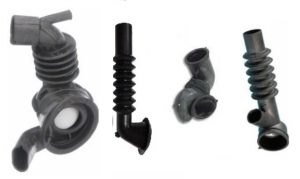
Let's disconnect the pipe
Forced water drainage through the drain pipe should only be used as a last resort, when no other method has worked. This method will not only remove water from the system but also possibly eliminate the cause of the machine's freezing, as sometimes the machine stops working precisely because of a clogged drain pipe. The procedure is as follows:
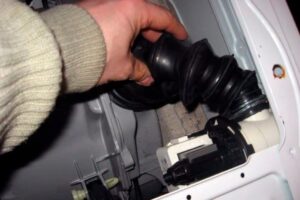
- remove the top cover of the washing machine housing, then the back wall;
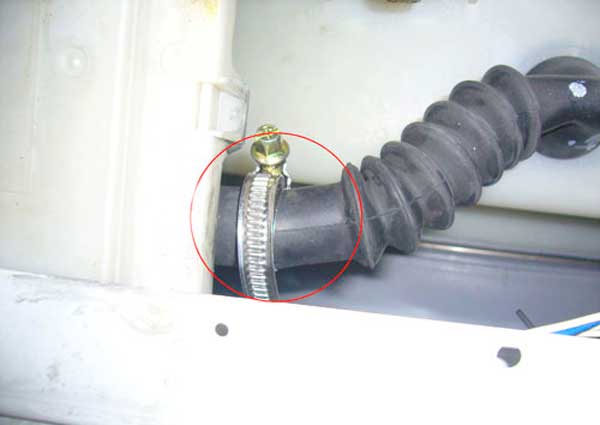
- find the pipe – it is located under the drum and connected to the pump;
- Place a basin under the pipe and place several dry rags on the floor to collect the leaking water;
- Using pliers, remove the clamp connecting the pipe and the pump;
- Disconnect the hose from the pump - liquid will start to flow out of it.
If the water does not drain, the pipe is clogged and needs to be cleaned.
The main drawback of this method is its difficulty. It will be difficult for a woman to move the washing machine away from the wall or partially disassemble it. However, it is possible to completely remove water from the system.
Why did the machine stop working?
Once the drum is empty of water and laundry, it's time to troubleshoot the system. There are many possible causes for an Indesit washing machine not responding to the drain command. The drain pump, debris filter, drain pump, hose, or the connection between the pump and the drum could be clogged. The machine may also freeze due to:
- Failure of the drain pump. If a pump failure is detected, you can attempt to repair the component. If repair is not possible, the faulty pump should be replaced with a new one;
- Control module damage. The main control unit monitors the equipment's operation. The "brain" receives signals from the main components and transmits them further, thereby ensuring a continuous wash cycle. If the module fails, commands are not transmitted, water does not drain from the machine, and the washing machine freezes. In this situation, repairing the control board or replacing it completely will help.
- Pressure switch malfunction. If the level sensor fails to measure the amount of water in the drum and transmit the information to the control module, the washing program will be interrupted. You can manually adjust the pressure switch or install a new sensor.
Modern Indesit washing machines can independently analyze system malfunctions and inform the user about them by displaying an error message. By decoding the fault code, you can narrow down the range of possible faults and quickly determine which element has failed.
For example, error code F04 displayed on a washing machine's screen indicates a faulty pressure switch. Code F11 indicates a defect in the drain pump circuit. If the machine is broken, you can immediately call a technician for diagnostics and repairs. You can also check the machine's components yourself, but in this case, it's important to understand the machine's design and follow safety precautions.
Interesting:
1 reader comment
Add a comment
Headings
Washing machine repair




For buyers




For users


Dishwasher




Thank you very much. One suggestion. After the error stop, I drained the water, cleaned the filter, and started the rinse cycle. The machine started filling without stopping. I stopped the process, drained the water, and turned the machine off for 20 minutes. The machine resumed normal operation. Turning it off helped the control unit return to normal. Thanks again!