
How to drain all the water from a washing machine for the winter?
 After washing, a washing machine doesn't stay dry—some liquid always remains at the bottom of the drum and pipes. While a "wet" machine in a warm apartment is safe, moving it outside in cold weather can be dangerous. Undrained water will freeze and turn into ice, damaging the internal components. Preventing freezing is easy: simply drain the washing machine for the winter. Afterward, the machine can be easily stored until warmer weather arrives.
Preparing your washing machine for winter
Concerns that freezing condensation "kills" the machine in a second, irreparably damaging its internal components, are actually less likely. However, they are not entirely unfounded – frozen water in the pipes, pump, and tank can indeed cause deformations and failures, but on a much smaller scale.
Clear evidence of this comes from store warehouses, where household appliances are stored for years and at temperatures far below freezing. Meanwhile, they also contain liquid left over from test washes at the factory. And yet, the washing machines sell well and serve their new owners for 5-15 years.
But it's better to be on the safe side and store your washing machine in an unheated dacha for safe wintering. The instructions are simple: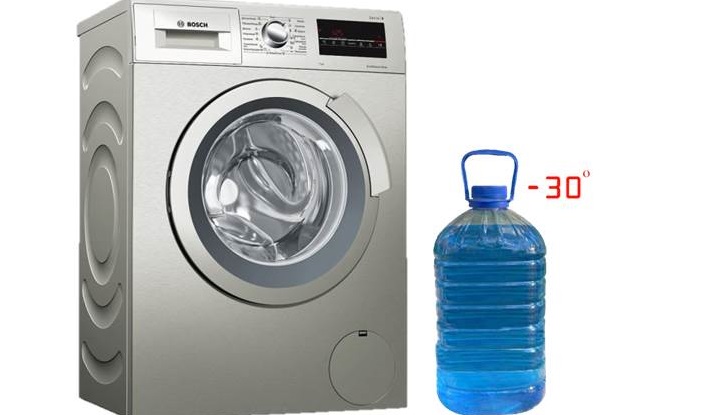
- plug the machine into the power supply;
- disconnect the machine from the water supply;
- Pour 50 ml of automotive antifreeze into the machine through the inlet hose;
- straighten the drain hose completely, allowing liquid to flow freely from the tank;
- pour a glass of antifreeze (about 250 ml) into the drum;
- If the washing machine is “trying” to fill the drum with water, blow out the inlet hose and inlet valve;
- start the spin cycle so that the antifreeze “runs” through the machine, replacing the water in the pipes and pump;
- de-energize the equipment.
To ensure a safe winter, the washing machine must be preserved by filling it with automotive windshield cleaner that does not freeze at low temperatures.
A washing machine with antifreeze inside will survive the winter at the dacha perfectly – a car windshield washer fluid is designed for low temperatures, not freezing even at -25. The main thing is, when the heat returns, don’t forget to drain the chemicals. It's easy to do: plug the machine into the power outlet and run an empty wash cycle. After a full cycle, the system will be flushed of any foreign liquid and ready for further use.
Completely removing water from the machine
The word "preservation" often frightens machine users, as does the recommendation to add any liquid to the drum. It seems simpler and more reliable to completely dry the machine by draining all the water from the system. But in reality, the alternative is not so easy: fully drying the machine will take several days and require partial disassembly.
But if you don't trust the antifreeze, then proceed to drying. You'll need to remove and dry all removable parts of the machine, drain any residual water, and finally, ventilate the machine. It's best to start early and proceed sequentially, from the debris filter to the drum seal.
- Powder receptacle. The tray should be removed and wiped dry. Ideally, set aside.
- The debris filter. Unscrew it completely; the attachment will open the drain system. After removing the coil, be sure to tilt the appliance forward to allow any remaining water in the pipes to drain out.
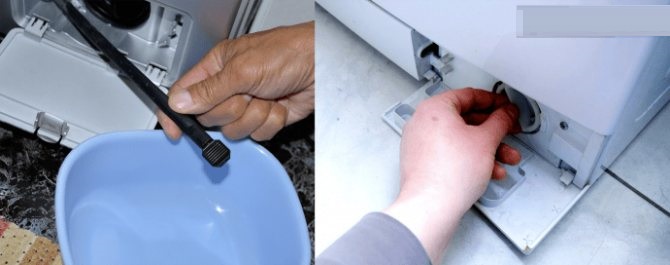
- Pump. It's recommended to remove the drain pump and dry it before winter storage, otherwise the wet impeller will freeze and break. Getting to the pump is easy: lower the machine onto its left side, disconnect the bottom and unhook the device from the snail.
- Hoses. The drain and fill hoses are disconnected from the risers and the machine, emptied, and dried. Then, they are returned to their original positions.
- Drum hose. Locate the hose connecting the tank to the pump, release the clamps, and unhook it from the fittings. This will drain most of the remaining water from the bottom of the machine.
- The cuff. You can't take it out into the cold while wet—the rubber will crack and lose its original elasticity and seal. It's better to play it safe and carefully wipe the folds with a dry cloth. You can also loosen the clamps and remove the entire seal. However, reinstalling the "rim" will require considerable effort and time.
After removing moisture from all key components of the machine, we move on to airing it out. Open the hatch door wide and leave the machine in this position for a few days. After 2-4 days, close the drum, replace the seal with the powder receptacle, wrap the machine in plastic, and store it.
Interesting:

Readers' comments
Headings
Washing machine repair




For buyers




For users


Dishwasher




Add a comment