
How to drain water from a Samsung washing machine?
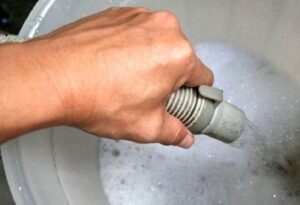 A full tank won't repair a washing machine. Before troubleshooting, you'll need to drain the water from your Samsung washing machine. Otherwise, the process will be complicated by flooding, short circuits, and permanent damage. You can drain the washing machine using a special program or manually. Let's look at each option, including the pros and cons.
Fluid removal options
The safest way to empty your washing machine is automatically, using the manufacturer's "Drain" program. It's simple: simply turn the selector to the appropriate position and start the cycle. However, if the system freezes, this option won't work. If the dashboard does not respond to user commands, you will have to force the water to drain manually. The "manual" drain is started in the following ways: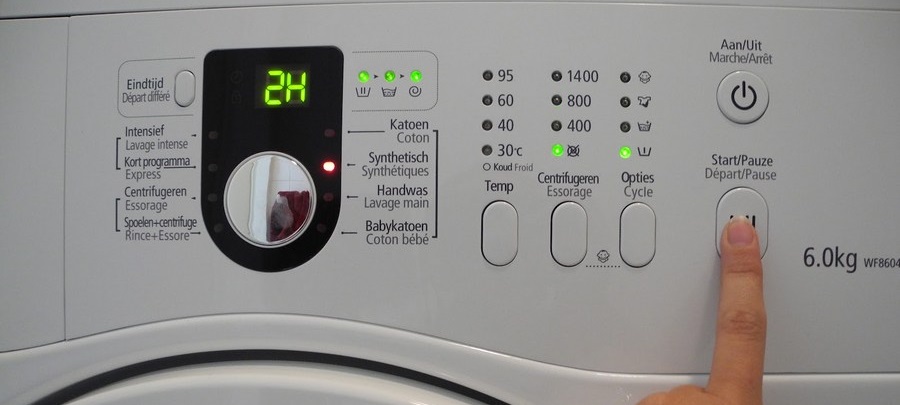
- through a drainage sleeve, by gravity;
- by unscrewing the trash filter;
- emergency "opening" of the hatch;
- by disconnecting the pipe connecting the tank and the snail.
Before forced drainage, the equipment should be disconnected from utilities: electrical network and water supply.
Each forced drain option has its own risks and benefits. Much also depends on the situation—sometimes, opening the drum is the only option. In any case, first de-energize the machine, shut off the water, and assess the extent of the situation, then choose a suitable drain method.
Unscrew the drain filter
The second safest option is draining the machine through a waste filter. This can be used almost any time, even if the machine freezes during a wash cycle. The key is to proceed consistently and remember safety precautions.
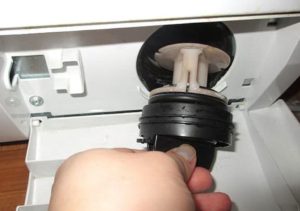
The waste filter is a spiral-shaped plastic attachment screwed into the drain volute and hidden behind a false panel on the lower right side of the housing. The name explains its function: wastewater passes through the plastic, while debris and dirt cling to the plastic, preventing it from reaching the pump, which is more susceptible to clogging. To activate the emergency drain through the waste filter, unscrew it: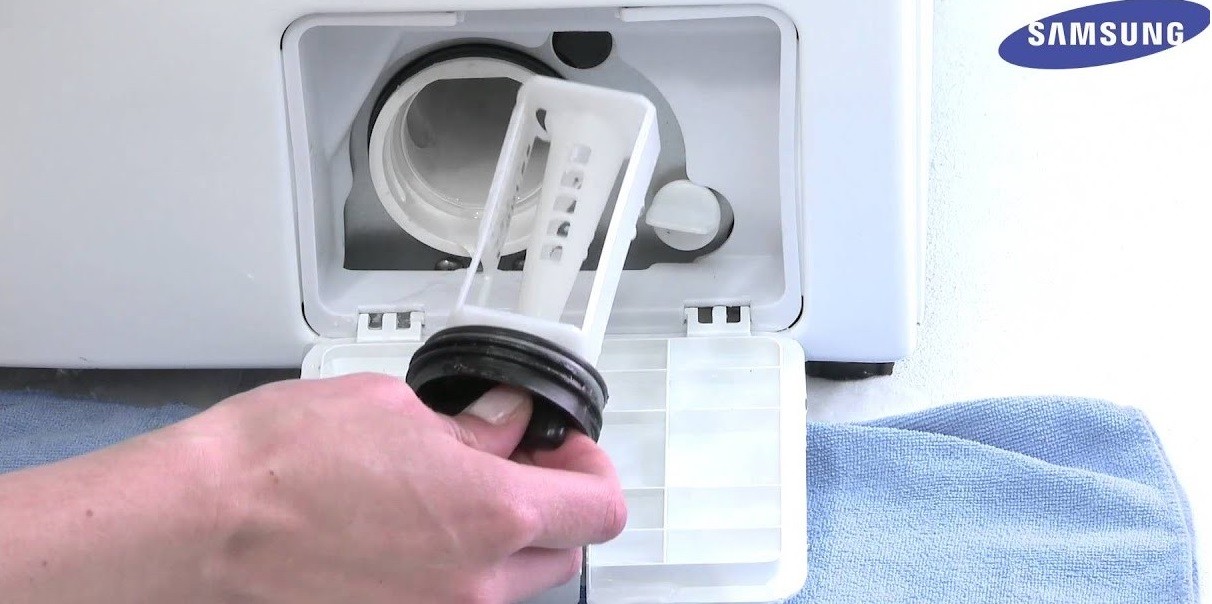
- Use a flat-head screwdriver to pry open the access door;
- detach the panel from the body by pressing the latches;
- find the filter plug;
- place a container under the filter to collect water;
- lay an oilcloth or rag next to the machine;
- grab the protruding part of the cork;
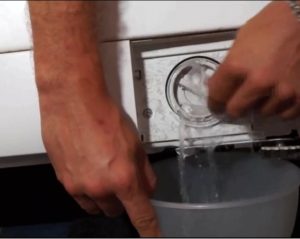
- slowly turn the filter clockwise (do not remove the entire nozzle, otherwise the water flow will be too strong);
- wait until all the water has drained from the tank.
Be careful! Do not drain the water through the filter immediately after the high-temperature cycle ends—you could get scalded by boiling water!
Emptying the tank through a filter has only three drawbacks. The first is the inability to quickly drain immediately after a high-temperature cycle, as there's a high risk of scalding from boiling water. The second is the inevitable mess, as it's difficult to control the flow of waste, and some will inevitably spill on the floor and appliances. The third drawback lies in the reverse installation: if the nozzle isn't screwed in tightly enough, a leak will occur.
Drain hose
You can drain the tank at any stage of the cycle using the drain hose. Simply clear access to the sewer pipe and find a suitable drainage location: a sink, toilet, or large basin. Then, get to work.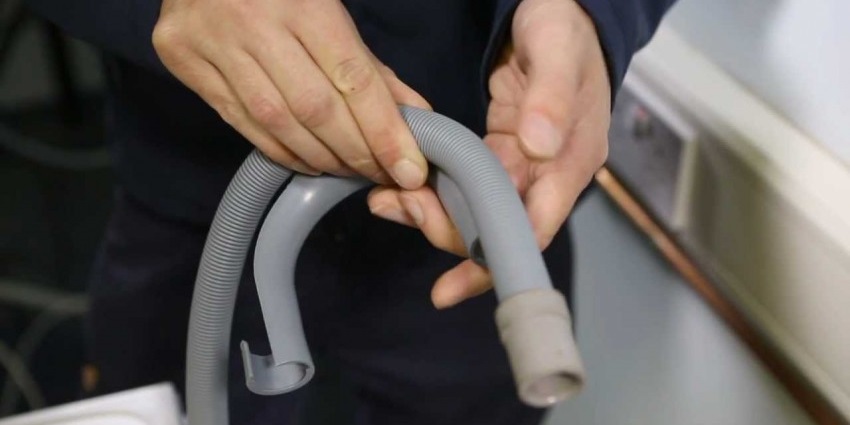
- We find the place where the drain hose of the machine connects to the sewer riser.
- We loosen the clamp that secures the corrugated pipe.
- We disconnect the hose from the branch.
- We remove the sleeve from the back panel of the washing machine (we also remove the hook-holder).
- We place the corrugated pipe below the bottom of the machine tank, and lower the freed end into the toilet or basin.
- We watch how the liquid flows out of the washing machine by gravity.
Washing machines equipped with a non-return valve cannot be emptied through the drain hose.
Emptying the drum through the drain hose is the easiest way. However, there is a significant drawback: this method is not available on all washing machines. Modern Samsung models are equipped with a check valve that protects the machine from the “siphon effect” and spontaneous drainage. In this case, lowering the corrugated pipe down will not start the drainage – the water will remain in the tank.
We open the hatch door
If draining the machine through a hose or filter fails, a more extreme option remains: open the drum and scoop out the water. However, it's best to first estimate the volume of un-drained liquid and be sure to tilt the machine back. If the tank is very full, a sudden "opening" will inevitably result in a flood. The instructions are simple:
- we move the machine away from the wall;
- tilt the washing machine back;
- we put a basin under it;
- open the hatch;
- We scoop out water from the drum.
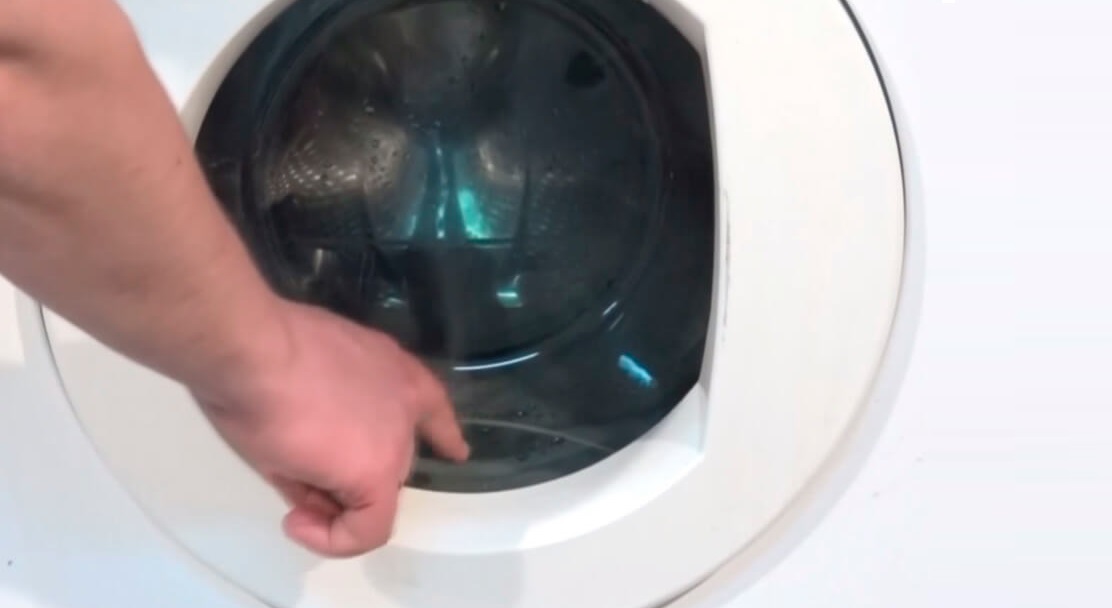
The difficulty arises when opening the door. If the machine freezes mid-cycle, pressing the handle won't unlock the drum—the electronic lock will remain engaged. You'll have to proceed differently:
- find a long string;
- pass the rope under the hatch door in the area of the lock;
- pull the cord so that it “reaches” the lock;
- wait for the click and open the hatch.
Emptying a washing machine through the drum isn't easy. First, you'll have to spend a long time scooping out the soapy liquid, and then clean the room—dirty splashes and puddles are unavoidable. Keep in mind that the result won't be 100% clean either: some water will remain at the bottom of the drum and in the drain system.
The pipe between the snail and the drum
If the previous methods fail, the last option is to force-drain the washing machine through the drum hose. This is more difficult, but more effective: all the liquid will drain from the drum. It will also likely eliminate the cause of the blockage, as a clogged hose is often the cause. How do you drain the washer?
- Remove the back wall of the case.
- Find the pipe connecting the tank and the pump.
- Place a deep container underneath and cover with rags.
- Loosen the clamp holding the pipe.
- Remove the hose from the pump nipple and lower it into the container.
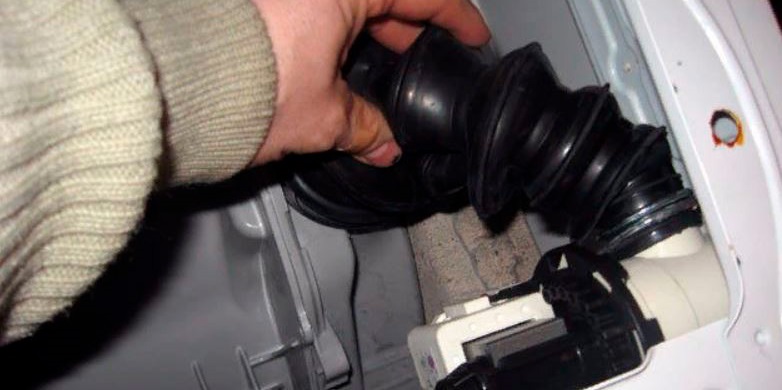
If no water flows when you disconnect the hose from the pump, there's a blockage. You'll need to loosen the second clamp and disconnect the hose from the tank. After draining, clean the element and replace it.
Accessing the tank with the drain hose is quite difficult. You need to move the machine away from the wall, gain access to the bottom of the machine, access the drum, and only then, moving by feel, begin the repair. Emptying the machine is only the first step in the repair. After that, diagnostics, identifying the cause of the malfunction, and eliminating the blockage come next.
Interesting:


Readers' comments
Headings
Washing machine repair




For buyers




For users


Dishwasher




Add a comment