
Dishwasher drain into the sewer
 A dishwasher can't operate independently. It requires a connection to a cold or hot water supply, as well as a sewer connection. These connections must be securely installed to prevent hoses from being accidentally torn off and causing a flood. Today, we'll discuss how to drain a dishwasher into the sewer system. We'll discuss the various methods for connecting to the sewer system, what you'll need, and provide instructions for completing the installation.
Connection options
To properly connect a dishwasher to the sewer system, you need to choose a connection method, purchase the necessary materials, gather the tools, and then, following the instructions, install the connection yourself. Let's start with connection options. In some cases, people don't bother connecting the dishwasher's drain hose to the sewer system at all. They simply run the free end of the hose into the sink. When the machine drains, waste flows into the sink and down the drain.
This type of "connection" isn't exactly aesthetically pleasing or practical, as the sink will need to be cleaned after each use. When it comes to actually connecting the dishwasher to the sewer system, there are three main methods.
- Direct connection of the dishwasher to the drain outlet. This option is very simple, but it's not suitable for everyone, as not everyone has a free drain outlet in their kitchen. Typically, there's only one outlet, and it's already connected to the trap.
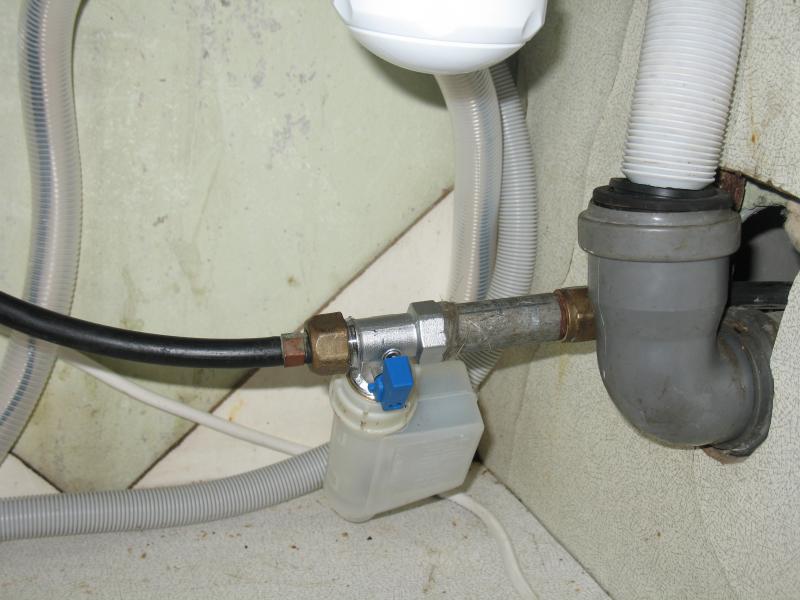
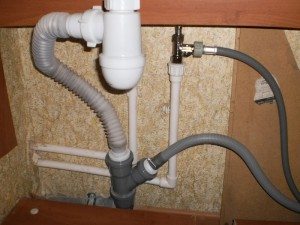
- Connecting the drain hose to the siphon fitting. This is the most popular method. Modern siphons have several nozzles that remain plugged when not in use. If you look under the sink now, you'll see that your trap also has a fitting. If not, you'll need to replace the trap. The dishwasher's drain hose connects to the fitting, and waste from the machine drains into the sewer through the trap.
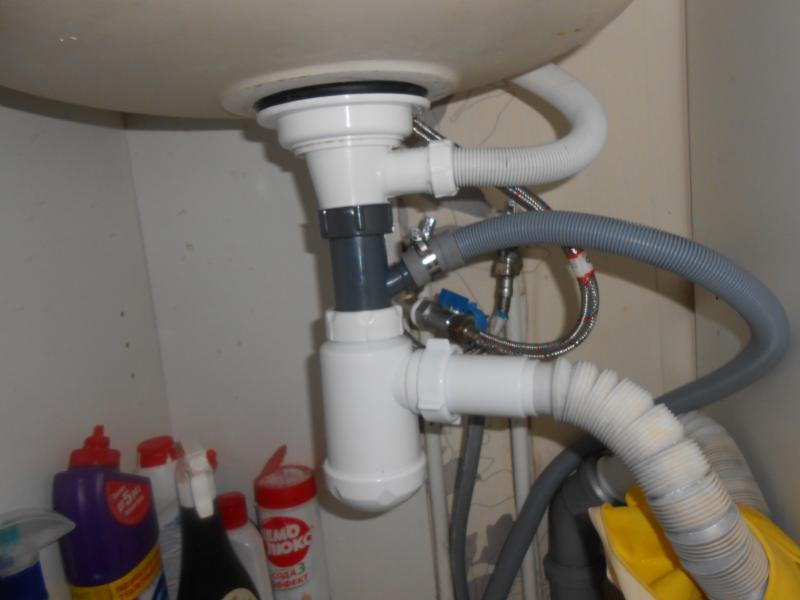
- Connection via a tee. This method is suitable if you have both a dishwasher and a washing machine in your kitchen. A special tee is installed between the trap and the drain pipe. The drain hoses of the washing machine and dishwasher are connected to its two outlets.
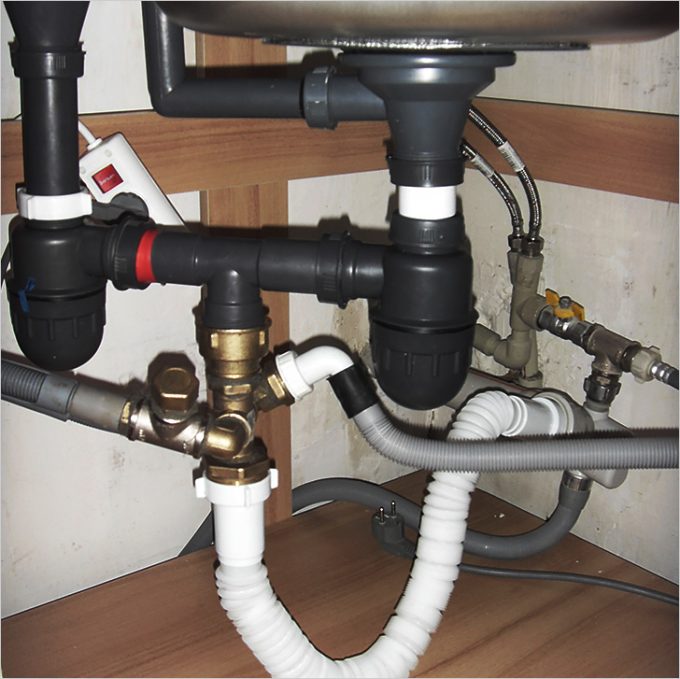
It's very convenient. Waste from the washing machine, sink, and dishwasher can be pumped through a single tee. Everything drains seamlessly into the sewer.
Once you've chosen a connection option, don't rush into work. You need to estimate the distance from the dishwasher's location to its sewer connection. You might ask: why bother? The answer is: if the distance from the dishwasher to the sewer connection is more than 3 meters, you risk damaging the pump, which, under the greatest strain, will wear out twice as fast. It's crucial to try to locate the dishwasher as close to the sewer as possible.
Let's gather everything we need
If we are talking only about connectionWhirlpool dishwasher (or any other) to the sewer system, no special tools are required. All you need is an adjustable wrench and some fumki for winding. The components you need will depend on the method you choose to connect the machine to the sewer system. Setting up a direct connection? Then you'll need a 40mm or 50mm sewer pipe adapter, depending on your existing pipe, two clamps, and a check valve.
If you choose to connect to a trap fitting, you won't need any accessories at all. This is provided, of course, that you already have a trap under your kitchen sink with a free side fitting. If connecting the drain hose through a tee, you'll need a 40 or 50 mm diameter tee, four clamps, four adapters of the appropriate diameter, and a check valve.
Description of the connection process
Now we can move on to connecting the dishwasher to the sewer system. We'll describe the process of connecting via a tee, as mentioned in the previous section.
- First, install the dishwasher body precisely level. This should normally be done before the connection process, but we'd like to remind you again.
- We check that the hose reaches the connection point and that there is still some reserve so that the drain hose can be bent.
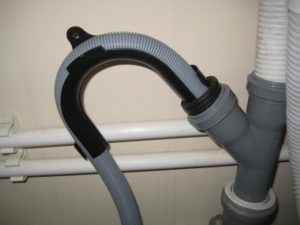
The drain hose must be long enough so that the distance to the floor is at least 40 cm.
- We place a tee between the siphon and the pipe, having first installed adapters on it and put on clamps.
- We install a check valve on the tee branch.
- We connect the drain hose to the outlet of the check valve.
- We either plug the free outlet of the tee or connect the drain hose of the washing machine to it.
- We wrap the connections with fumka and tighten them with clamps.
- We bend the drain hose so that the unpleasant smell from the sewer does not get into the dishwasher.
Why do you need a check valve? You can, of course, do without it, but then you might get into trouble. If a blockage occurs in the drain, a check valve will protect the dishwasher from waste that could flow back into the dishwasher system. This valve is inexpensive, so it is better to install it.
As you can see, connecting a dishwasher to the sewer system is not at all difficult; you could even say it's simple. The main thing is to know the basic rules and never violate them; the rest is just the details. Good luck!
Interesting:
Readers' comments
Headings
Washing machine repair




For buyers




For users


Dishwasher




Add a comment