
Floor drain for washing machine
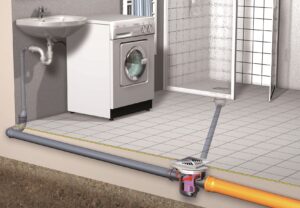 Most often, a washing machine drain is installed in the wall, but this isn't always possible. If this option isn't available for some reason, a floor drain can be installed for the washing machine. This is also very convenient, as it allows the pipe to be installed under various floor coverings and even in screeds. We'll take a detailed look at how to properly install such a drain, as well as the difficulties involved.
We lay communications in the finished screed
If your home already has a screed but the flooring has yet to be laid, installing a drainage system won't be particularly difficult. The following instructions will help:
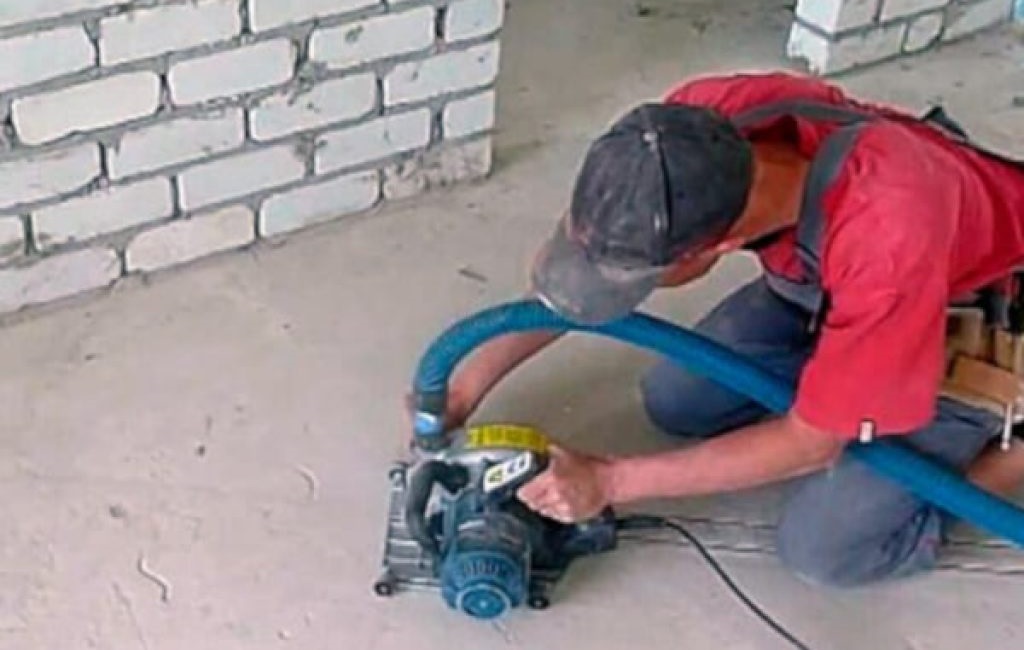
- Using a grinder, cut a groove in the screed so that the sewer pipe fits;
- then lay a 50 mm sewer pipe into it;
- then install a rubber adapter cuff into the sewer pipe.
- Finally, using the installed adapter, connect the washer drain hose to the drain.
When working, it is essential to take into account the slope of the sewer pipe. For example, if a 50-millimeter sewer pipe is connected to a washing machine, the slope should be 2.3-3 centimeters per 1 meter of pipe length.
If the screed is not yet ready, it is permissible to install the drain pipe before pouring. In this case, the slope rules must also be observed.
However, it is not recommended to immediately install the drainage hose of the “home helper” after extending it first. This is due to the fact that the service life of a washing machine hose is much shorter than the service life of a coupler. Furthermore, the drain hose is unable to withstand increased loads, and the longer the hose, the greater the load on the pump. This is why the maximum possible drain hose length is usually only 3 meters.
As a last resort, the drain hose can be installed before the screed, but a protective cover should be used. This will ensure the hose is contained within the pipe, improving its protective properties and making it much easier to replace if necessary.
Under the plank floor
Let's take a closer look at the situation where there's no screed, but there are wooden joists on a concrete slab, on which a plank floor or chipboard covering is already laid. In this case, you'll first have to open up the floors, and afterward, either replace the boards or replace them with new ones. You'll need to install a drain pipe under the flooring between the joists, and the same slope requirements apply.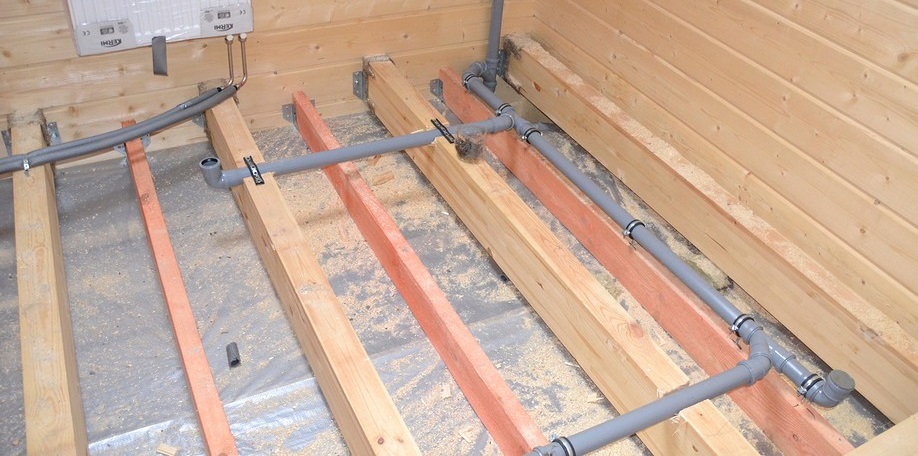
Next, connect the sewer pipe to the elbow, and then route the elbow through the hole in the floor. Finally, connect the washing machine hose to the pipe using a rubber adapter. The main drawback of this method is that the user has no control over any leaks. Therefore, if the sewer pipe leaks, you'll only discover it after the neighbors below are flooded. In this case, you'll have to remove the flooring first and then replace the pipe.
The nuances of connecting the SM drain hose
Finally, let's look at connecting the washing machine drain hose to an underfloor outlet located at floor level. This method is used to preserve the bathroom's design, but it's not recommended.
This is because the end of the hose must not be connected to a drain lower than 30 centimeters from the floor. This is the water level in the washing machine, so if the connection is not correct, a siphon effect may occur and the water seal may be damaged. Connect the washing machine to the drain properly to prevent an unpleasant sewer odor from developing in your home and appliances.
Interesting:


Readers' comments
Headings
Washing machine repair




For buyers




For users


Dishwasher




Add a comment