
AEG washing machine does not spin
 When your washing machine finishes its cycle, but instead of clean and almost dry clothes, you're left with wet clothes and a drum filled with water, the appliance needs troubleshooting. If your AEG washing machine isn't spinning, you're dealing with one of the most common problems. However, a lack of spin doesn't always indicate serious damage; sometimes, the problem can be caused by carelessness. Let's figure out what exactly is wrong with your "home helper."
What happened to the car?
In no case should you turn a blind eye to such a problem as the lack of spin. The problem isn't just that spinning laundry on your own is time-consuming and difficult, but also that an uncorrected spinning problem can lead to further damage to the equipment and ultimately render the equipment inoperable. That's why it's so important to have your appliance diagnosed and repaired up-to-date. First, let's list all the reasons why your washing machine might not spin.
- The user selected the wash mode without spinning.
- The drum has become unbalanced.
- The drain doesn't work.
- The tachogenerator is broken.
- The electric motor has failed.
- Drum bearings are worn out.
- The control module CM stopped working.
- A foreign object has entered the tank and is preventing the drum from rotating.
In most cases, you can fix the problem yourself at home, without even calling a professional. Calling a technician is only necessary if the control board has burned out. This type of problem is very difficult to resolve on your own. We'll run a diagnostic, checking all the washing machine components step by step.
Is the program chosen correctly?
First, it's worth checking for the most basic issues, which can be resolved in a few minutes even without special equipment. This is because, in most cases, there's no damage to the machine, and the culprit is simple user error. For example, a wash cycle may have been selected that does not include spinning, say, a wool, silk or down cycle.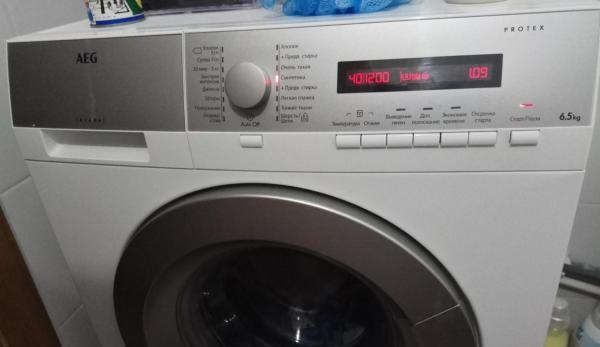
If you suspect this, simply find the official user manual and carefully review the description of the cycle you've selected for washing—it will indicate whether it includes a spin cycle or not. In the future, simply avoid selecting that cycle if you need to spin your laundry. Additionally, it's worth checking that you haven't accidentally disabled the spin cycle in the default program.
Just in case, lock the CM control panel to prevent accidental connection or disconnection of additional options.
Most new washing machines allow you to control the drum speed during the spin cycle, including disabling the spin cycle completely. Conduct a short test by selecting a program, setting the maximum spin speed, and waiting for the cycle to complete. If your laundry remains wet after this, you should proceed with further testing.
Is the laundry bunched up?
Another common cause of a lack of spin on AEG appliances is drum imbalance. This can be caused by overloading a single cycle, underloading a single cycle, or unevenly distributing the laundry inside the drum. This problem most often occurs with older appliances, as newer washing machines have a special feature that monitors the drum balance.
It's easy to determine that this is the cause of the malfunction: your washer will struggle to get the drum up to the required speed. This will cause the cycle to complete approximately 7-15 minutes faster than it should with the spin cycle running, leaving all the clothes wet. To correct this, follow the instructions.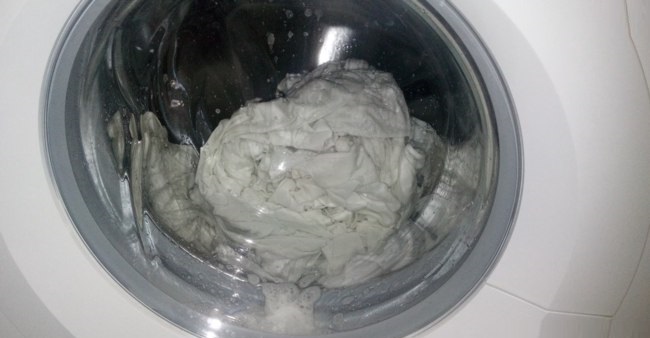
- Wait until the UBL allows you to open the car door.
- Remove some items if there is too much, add more if there is not enough, or break up the resulting lump of laundry.
- Close the hatch door.
- Run a separate spin cycle.
- After finishing work, check if the items are dry.
Another problem with imbalance is its negative impact on shock absorbers, bearings, and the shaft, which is why it must be corrected promptly. Remember to adhere to load limits to avoid adding too many or too few items. If you have a "home assistant" designed for 5 kilograms, then do not add less than 1 kilogram of things to it, and if the machine is designed for 9 kilograms, then the lower limit will be 2.5 kilograms.
Is water leaking from the machine?
If the cycle is complete and the laundry is not only wet but also floating in water, the problem most likely lies in the drainage system. The washing machine is likely unable to drain wastewater due to a burned-out pump, a blocked impeller, or a clogged hose or pipe. To accurately determine the problem, you'll need to perform a number of steps.
- Disconnect the drain hose from the drain and feel it to ensure there are no blockages. If there are, unscrew the hose and rinse it under a powerful stream of hot water.
Since the general sewer system occasionally becomes clogged, it is necessary to lower the drain hose into the sink or bathtub to check if the problem is in the drain hose.
- Locate the drain hatch located at the bottom right of the washing machine, pry it open with a screwdriver, and place a container underneath it that will hold the waste water from the waste filter. After draining the water, clean the filter and its connections, and you can also check the contacts with a multimeter.
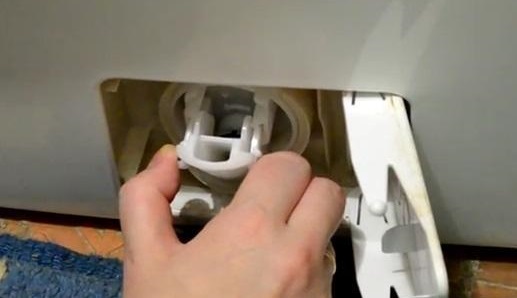
- Check the pump's functionality by cleaning the impeller of any dirt, rinsing the pump body, and checking the resistance with a multimeter.
If the pump and filter are damaged, you can skip repairs and buy new parts immediately. Once all checks are complete and the components are replaced, run the fastest possible cycle to check the drain's functionality. If there is no water left in the drum after washing, then the cause of the spin failure is definitely not related to the drainage system.
Is the engine or tachogenerator to blame?
Finally, there are a few key components to check. A spin cycle issue could be caused by the electric motor failing to accelerate the drum to the required speed. Commutator motors can stall due to worn brushes. In this case, the soak, wash, and rinse cycles will operate smoothly, but problems will arise during the spin cycle. If all stages of the cycle are difficult, the motor itself is most likely faulty. Here's how to check:
- disconnect your “home assistant” from the power supply and water supply;
- detach the back panel of the case;
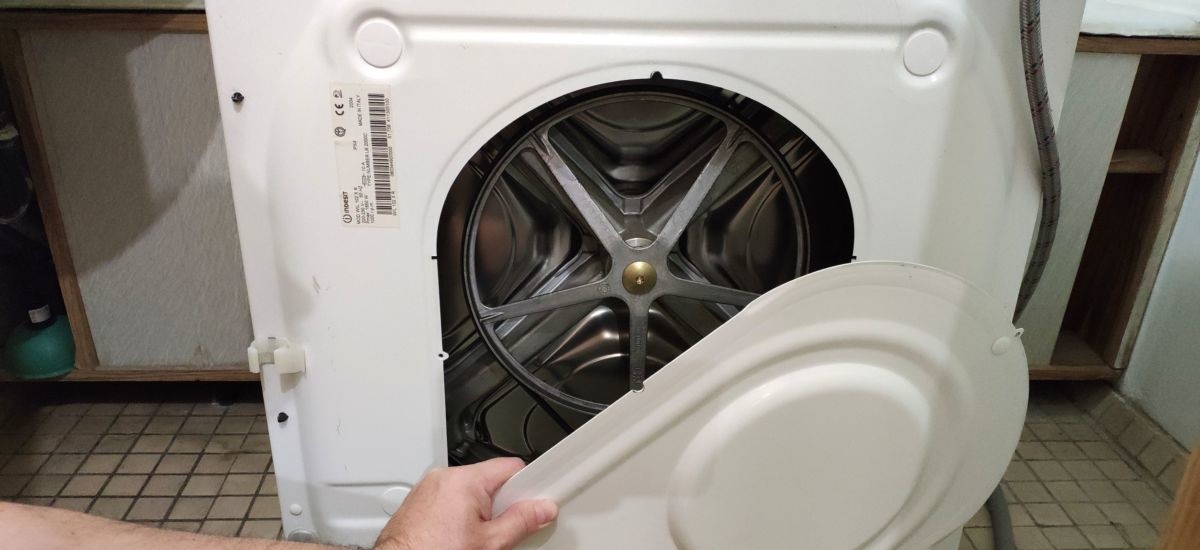
- remove the drive belt;
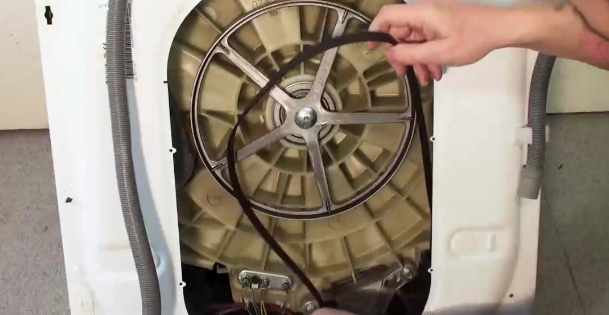
- Disconnect all wiring, remembering to first take a photo of the correct connection;
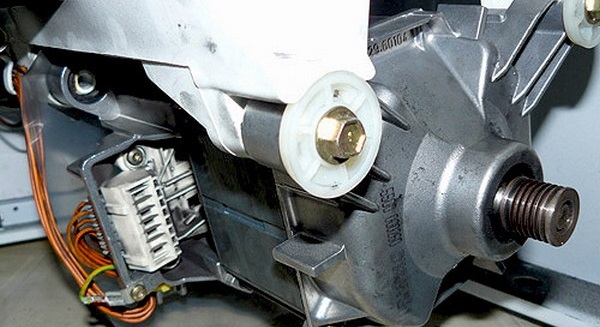
- Loosen the fastening fasteners and remove the electric motor.
Inspect the motor for damage, soot stains, charred wires, or other visible issues. Also, examine the motor brushes. Remove them from the housing, open them, check the contacts, and measure the tip length. It should be at least 0.7 millimeters. If the length is shorter, you'll need to replace both brushes, even if one is OK.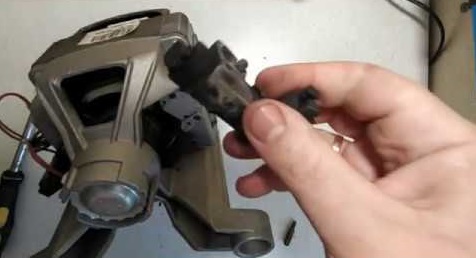
Problems with spinning will also occur if the tachometer sensor, which monitors the number of drum revolutions per minute and transmits this data to the washing machine control module, fails. If this element is damaged, the control board does not receive accurate information and, as a precaution, reduces the power of the electric motor. The part may fail in the following cases:
- Frequent exceeding of the maximum permissible weight of laundry in the drum;
- using the washing machine without interruption;
- loose fasteners;
- damaged wiring and loose contacts;
- sudden voltage surges during operation of household appliances.
If you suspect the tachogenerator, first inspect the wires, tighten the terminals, strip and insulate the conductors, and then test the unit with a multimeter. If any abnormalities are detected, do not attempt to repair the component; simply purchase a new sensor.
Interesting:




Readers' comments
Headings
Washing machine repair




For buyers




For users


Dishwasher




Add a comment