
The Ardo washing machine does not heat water.
 If your Ardo isn't heating the water, you can forget about quality washing. The machine will freeze, failing to start the selected high-temperature cycle, or spin the clothes at the minimum temperature of 20-30 degrees. In either case, the clothes will remain dirty. You can't operate a washing machine with a heating problem—you need to find the problem and fix it. We'll explain how, step by step.
Why does the water remain cold?
The most obvious reason for a lack of heating is a broken tubular electric heater. But before blaming it, it's worth ruling out less serious issues. Moreover, problems aren't always caused by broken parts. Sometimes, it's simply due to user inattention. First, check whether the heating should have been activated. Look at the dashboard, or more precisely, the program that's running. In the “Delicate Wash”, “Sports Shoes”, “Wool” and “Silk” modes, the machine will not heat the water – this is set in the factory settingsHigh-temperature cycles include Cotton 60, Synthetics, and Intensive.
A number of programs on the Ardo washing machine do not require heating water above 30 degrees.
If the "hot" mode is selected, check the set temperature. Advanced Ardo systems allow the user to vary the heating temperature by changing the factory settings. However, sometimes the system "doesn't recognize" the changes made due to a technical malfunction. It's best to double-check: turn the dial, press the appropriate buttons, and restart the cycle. It's important to confirm the absence of overheating by testing. Cold laundry after washing is not an argument, as the final rinse always occurs at 30 degrees Celsius, which cools the items before spinning. There's a more effective and reliable way to check the heating element's functionality.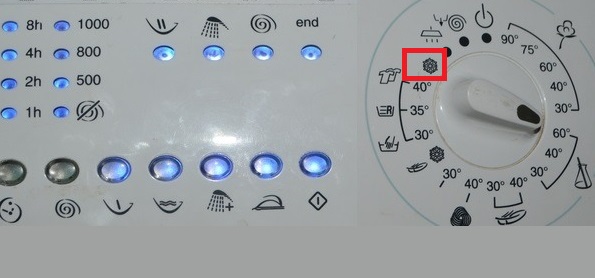
- Run any high temperature cycle with heat above 40 degrees, ideally 60-90 degrees.
- Wait until the machine has washed for at least 15 minutes (it is important that the machine does not have time to switch to rinsing).
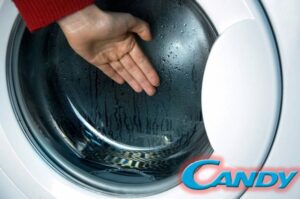
- Place your palm on the sunroof glass.
- Assess the degree of heating (if the glass is not cold, it means the machine has heated the water to the required degrees).
If your Ardo's door glass remains cold mid-heat cycle, diagnostics are essential. You'll need to identify the cause of the malfunction and try to fix it. Let's take a closer look at what these problems are and whether DIY repairs are possible.
Typical malfunctions
A modern Ardo washing machine will not operate in an unsafe mode. A built-in self-diagnosis system will detect heating issues before the cycle begins, and the machine will refuse to start the program. Another possibility is that the wash cycle will begin, but the items will be washed in cold water instead of hot. The latter scenario is worse: using a faulty washing machine can worsen the situation, even leading to its "fatal" failure. It's best to begin diagnostics immediately if you suspect a lack of heating. First, we determine the causes of this malfunction. There are five possible causes.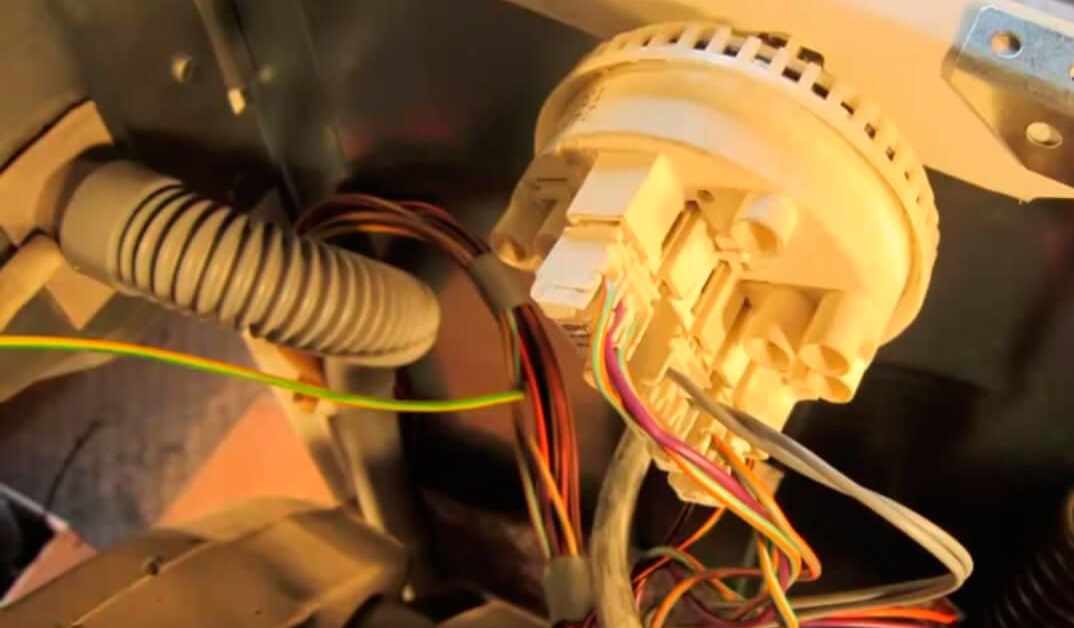
- A broken pressure switch. If the level sensor fails, the control board doesn't receive information about the tank's level. It is logical that the module does not activate heating and cancels the running wash.
- Damaged wiring. Another possibility is that the board sends a signal to the heating element, but due to wiring issues, the command doesn't reach its destination.
- A faulty heating element. This could be due to normal wear and tear, mechanical damage, or overheating due to a thick layer of scale or a short circuit.
- A malfunctioning thermistor. This sensor monitors the water temperature. If it fails, heating is stopped for safety reasons.
- The control board is not functioning. A resistor could have burned out, the contacts could have come loose, or the wiring connected to the heater could be damaged.
To identify the problem, you need to check each weak point one by one. This can be done at home without calling in specialists. The main thing is to follow safety precautions and follow the instructions.
Testing and replacing the heating element
First on the list is the heating element and the thermistor connected to it. To access the components, remove the back panel of the Ardo and look for the metal plate under the tank. But first, disconnect the appliance from its power lines and move it to the center of the room for convenience.
Any Ardo washing machine repair begins with disconnecting the appliance from its power lines!
It's difficult to confuse the heating element with another device—it's always located under the tank and surrounded by numerous wires. It's best to photograph the connections and contact locations to avoid mistakes during reassembly. Follow the instructions carefully.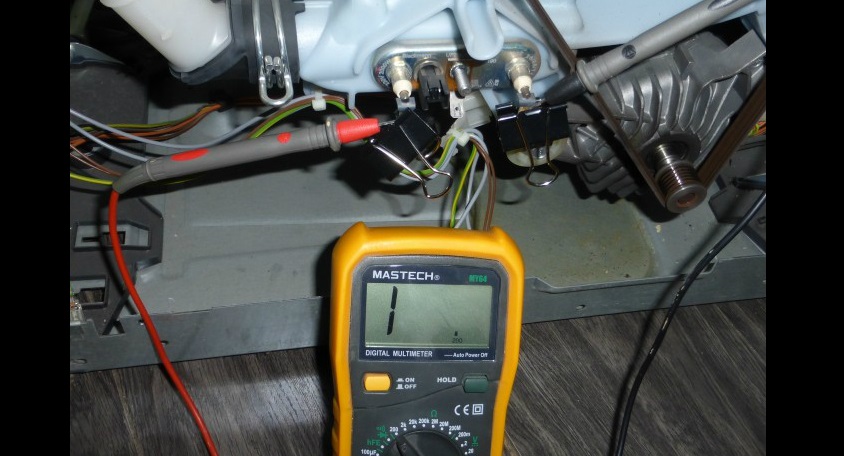
- Carefully detach the wiring from the connectors.
- We turn on the multimeter in the “Ohmmeter” mode, set it to 200 Ohms and touch the probes to the contacts.
- Check the display. Normally, the heater reads 26-28 ohms. If it displays "1" or "0," the problem is an internal open or short circuit. In extreme cases, repairs won't help—the only solution is to replace the heating element.
The heater inspection doesn't end there. It's also recommended to test the part for breakdown. Set the multimeter to the buzzer setting and place the probes on the housing. If a beeping sound is heard, the part is damaged and needs to be replaced. Before replacing, remove the faulty heater from the washing machine. Sometimes, removal is complicated by the gasket, which swells and prevents the part from leaving its seat. To eliminate this "obstacle," you need to:
- generously lubricate the rubber with WD-40 or any technical oil;
- let the product “work” for 10-15 minutes;
- unhook the thermistor from the heating element;
- loosen the central bolt;
- rock the part and remove it from the “nest”.
It's recommended to approach the search for a replacement heating element seriously. Select a new heater based on the markings stamped on the element's body. Ideally, bring the dismantled unit to the store and ask for a replacement. Installing the new heater begins with cleaning the mounting area. At the same time, clean the tank through the hole cleared by the heating element. Reassemble the machine in reverse order, based on the photographs taken.
Is it really a level sensor?
The second possible cause of a malfunctioning heater is a broken pressure switch. Checking its condition is easy: remove the top cover from the Ardo housing and locate the level sensor on the right side. The device looks like a "washer" and is usually blue or black. A long tube/hose extends from the rounded "box" into the tank. Diagnosing the pressure switch is as follows:
- disconnect the pressure switch tube from the housing;
- find a hose that is proportionate to the diameter of the sensor fitting;
- attach the found hose to the tube;
- easy to blow into the tube;
- listen: a working device will “respond” with 1-3 clicks of the triggered contacts.
A broken pressure switch will remain silent. If the first step reveals no problems, then we move on to the second: inspect the tube for chips, blockages, traces of burning, and other defects. If necessary, flush and blow out the hose. The third step is to test the pressure with a multimeter:
- We study the electrical circuit of the pressure switch and find contacts suitable for connecting to a multimeter;
- turn on the tester in ohmmeter mode;
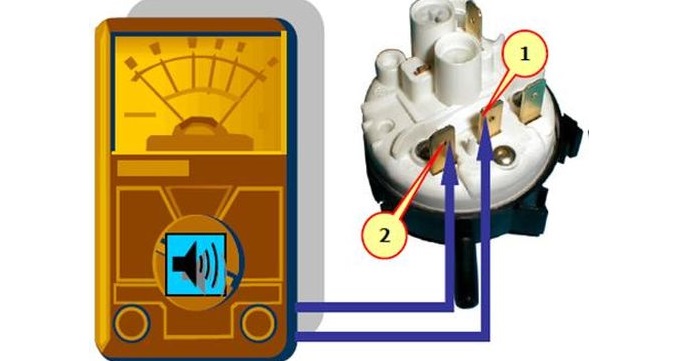
- we attach the probes to the sensor contacts;
- We look at the readings (normally the values should change).
If the pressure switch fails the test, there is no point in repairing it – it is cheaper and easier to replace it with a new one. First, the faulty device is removed: the clamps are loosened, the wires are disconnected and the holding bolts are unscrewed. Afterwards, a similar sensor is purchased and installed in the reverse order.
Self-diagnosing electronics is too risky! If you suspect a faulty control board, contact a service center immediately!
Worse yet, if diagnostics reveal a faulty heating element and water level sensor, there's a high probability that the control board is faulty. In this case, attempting any self-testing or repairs is strongly discouraged—it's best to immediately contact a service center for professional assistance.
Interesting:
Readers' comments
Headings
Washing machine repair




For buyers




For users


Dishwasher




Add a comment