
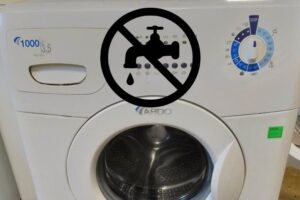
The Ardo washing machine does not drain water.
 A situation where an Ardo washing machine won't drain is far from pleasant. The wash cycle stops, and the laundry often remains trapped in the drum. At least two issues need to be addressed: identifying the cause of the malfunction and removing the laundry from the machine. Let's take a look at how to do this safely and at home.
Where did the drainage problems come from?
The first step is to determine why the washing machine has stopped draining. There could be many reasons – from a simple blockage to a faulty control board. The symptoms of almost any possible breakdown are the same, so you will have to check each “suspect”, moving from simple to complex.
Modern Ardo washing machines simplify troubleshooting. Thanks to a built-in self-diagnostic system, the machine automatically detects the problem and displays the corresponding error code on the display. All the user needs to do is decipher the combination according to the instructions and begin repairs.
Modern Ardo washing machines can independently detect malfunctions thanks to a self-diagnostic system.
Several issues can cause drainage problems. These include a clogged drain, a broken pump, a faulty control board, and even an overly long hose. Let's take a closer look at each issue.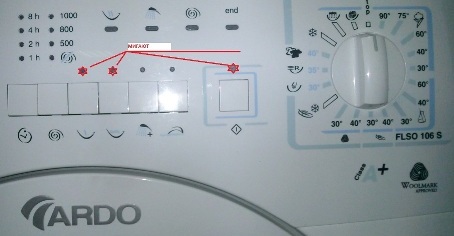
- External blockage. The sewer pipe or the trap to which the washing machine is connected may be clogged.
- Internal blockage. Debris, coins, keys, or clumps of hair caught in the machine often clog the drain filter or the hose running from the pump to the tank. The drain hose itself also often becomes clogged.
- A broken pump. In this case, the failure is accompanied by a characteristic humming sound. The cause of the malfunction can be either normal wear and tear of the part or a blockage. Often, the pump shaft, or more precisely, the plastic impeller on it, becomes blocked.
- Control module failure. A sudden power surge, short circuit, or water ingress onto the circuit board can cause the electronic unit to malfunction. In this case, the pump does not receive the command to begin draining.
- The hose is too long. Ardo washing machines are equipped with a standard pump, the capacity of which is rated for a specific hose length. Typically, this is 1-1.5 meters. If the hose is extended or replaced with a longer one, the pump may not be able to handle the increased load, and the water will not reach the drain and will return to the drum.
It's not always a breakdown. If your washing machine refuses to drain or spin, it's highly likely that the wrong program is selected. Most likely, you've selected a mode that doesn't allow for draining or spinning.
Removing excess fluid
Before troubleshooting, the washing machine must be emptied. If this doesn't happen automatically, using the program of the same name, then we'll try a forced drain. There are two options: using the drain hose or the waste filter. The easiest way is to try draining the water through the drain hose. Most Ardo washing machines, unlike machines from other brands, are not equipped with check valves. Therefore, drainage can be established by lowering the hose below the tank level. The drum will then empty automatically—all you need to do is place a container under the stream.
Some Ardo models have an emergency water drain hose that is activated by pulling a special cord.
The second option is to unscrew the dust filter. Here are the instructions:
- prepare a container to collect water;
- detach the technical hatch door from the body;

- unscrew the trash filter clockwise;
- if necessary, tilt the machine forward;
- wait until all the water has drained from the tank.
Sometimes unscrewing the filter doesn't produce the expected results—water doesn't flow out of the hole. In this case, you need to wiggle the hose coming from the tank. It's likely clogged with debris and isn't allowing liquid to flow. Sometimes wiggling alone isn't enough; you have to disconnect the hose and rinse it under the tap.
How are we going to find the problem?
After emptying the washing machine, you can begin a more comprehensive diagnosis. First, disconnect the appliance from the power supply and water supply. The next step is to remove the debris filter and inspect the drainage system. For convenience, the drainage system diagnostics are performed in a specific order.
- Filter seat. After removing the dustbin, inspect the "nest" itself and clean out any accumulated dirt.
- Drain hose. We reach the hose and feel the rubber with our fingers. If we notice a blockage, we unhook it from the tank and clean it. Then we return it to its place.
- Pump. We shine a flashlight through the hole cleared of the filter and inspect the pump. We spin the impeller, and if necessary, we clean any hair or debris from the blades.
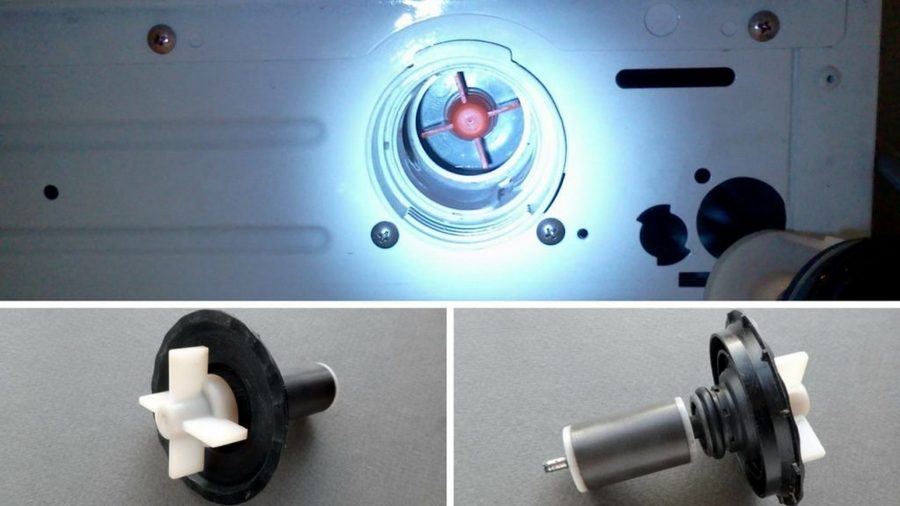
It's recommended not to stop at a visual inspection of the pump. It's better to perform a further pump check: run the "Spin" program and observe the machine's behavior. If the machine hums but the impeller remains motionless, the part is faulty.
Most often, the drain does not work due to a clogged drainage system - a debris filter, pipe or pump.
It's rare, but it does happen that the pump works during the spin cycle but not during the drain cycle. This problem occurs in older Ardo models due to normal wear and tear of the components. The magnet built into the mechanism begins to malfunction, weakens, and fails to generate the necessary magnetic field. As a result, the pump loses power, can't handle the load, and stops draining.
Problem with the machine pump
You can guess that the pump is broken without diagnostics—the washing machine will hum for a few minutes when it switches to drain, but the tank will remain full. However, it's best to follow all the steps described earlier and confirm the pump is faulty. If cleaning the drainage does not restore the machine's functionality, then there is only one solution - replacing the pump. There's no point in repairing the pump. It's much cheaper and easier to replace it with a new one—a job anyone can do, requiring no special skills or tools. Here are the instructions:
- disconnect the machine from the power supply and water supply;
- Having laid a carpet on the floor, place the washing machine on its left side (it is forbidden to place the machine on its right side - the water remaining in the dispenser will get on the board);
- detach the tray;
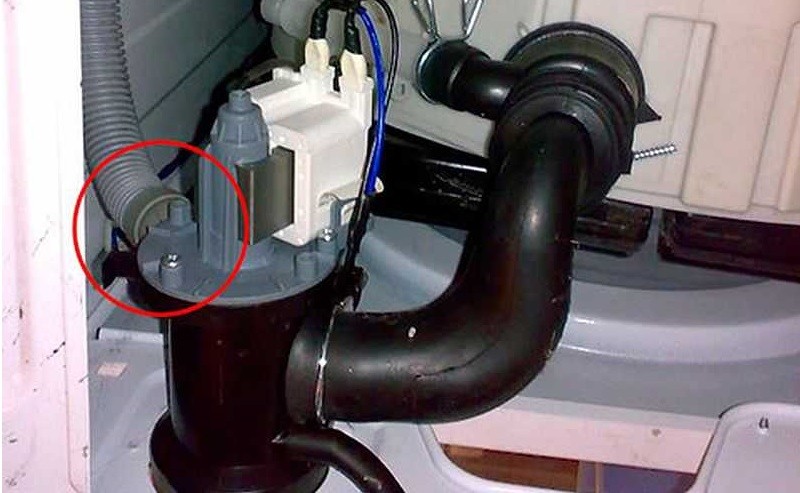
- find the pump;
- loosen the bolts holding the pump;
- disconnect the wires from the terminals;

- dismantle the old pump;
- install a new pump into the grooves;
- put the wiring and fasteners back in place.
A new pump is selected based on the serial number of the Ardo washing machine!
After the repair, connect the washing machine to the power supply and run a test wash. If the draining process is still not restored, contact a service center. The problem may be with the control board, which will require professional diagnostics. Testing the Ardo electronics yourself is highly discouraged, as it is too risky and unsafe.
Interesting:

1 reader comment
Add a comment
Headings
Washing machine repair




For buyers




For users


Dishwasher




Everything is fine and beautiful. How do I remove the back panel?