
Ariston washing machine jumps during spin cycle
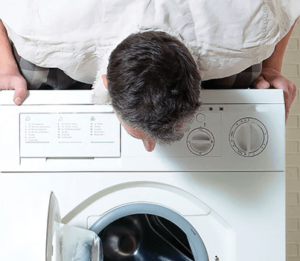 If your washing machine is constantly jumping during the spin cycle for no apparent reason, you shouldn't ignore it. Seemingly harmless vibrations can lead to serious problems: firstly, they can conceal serious malfunctions. Secondly, the incessant vibration can negatively impact the internal workings of the machine. Ignoring a "dancing" machine isn't recommended—it can worsen the problem, even lead to death. It's best to stop using it, identify the cause, and fix it.
Why did the car start moving?
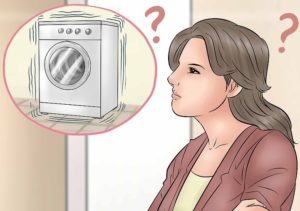
A modern Ariston washing machine shouldn't bounce during the wash cycle. Vibration is acceptable, but moderate and primarily during the spin cycle. If the machine starts shaking, "running away," and making a suspicious humming or clanking noise, there's a problem with the system.
There are several reasons that can lead to unhealthy shaking:
- errors made during installation of the washing machine;
- drum imbalance;
- failure to comply with the standards when loading the drum (both overloading and underloading);
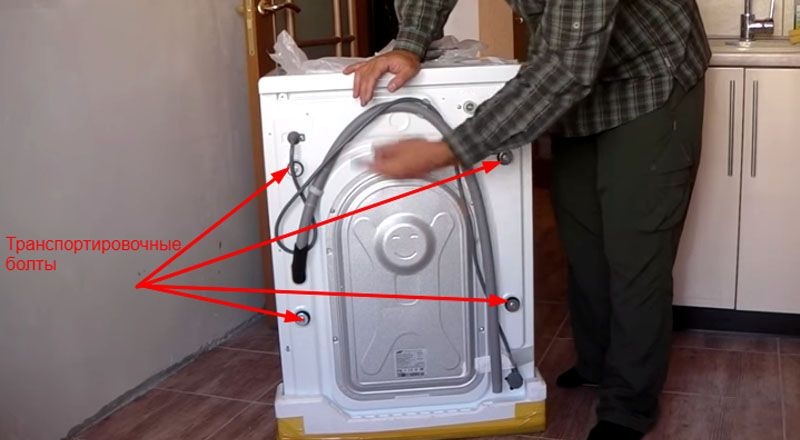
- unremoved transport bolts;
- foreign objects (coins, keys, socks, hairpins) that have gotten into the washing machine;
- deteriorated shock absorption system;
- worn bearings;
- damaged counterweights (loosened fastenings, concrete splitting).
Normally, Hotpoint Ariston should not jump: weak vibration is acceptable, with an increase during the spin cycle.
Some of the causes listed above can be resolved quickly, while others will require considerable effort and tools. In any case, it's important to understand the machine's design and remember safety precautions. The main thing is not to continue using the machine, hoping for the best, but to carry out diagnostics and appropriate repairs.
Let's look for the problem
If you notice your washing machine jumping around the room, you need to figure out why and what to do to calm it down. This isn't difficult if you take a step-by-step approach, working from simple to complex. Therefore, it's recommended to first rule out imbalance, installation errors, a stuck object, and problematic shock absorption.
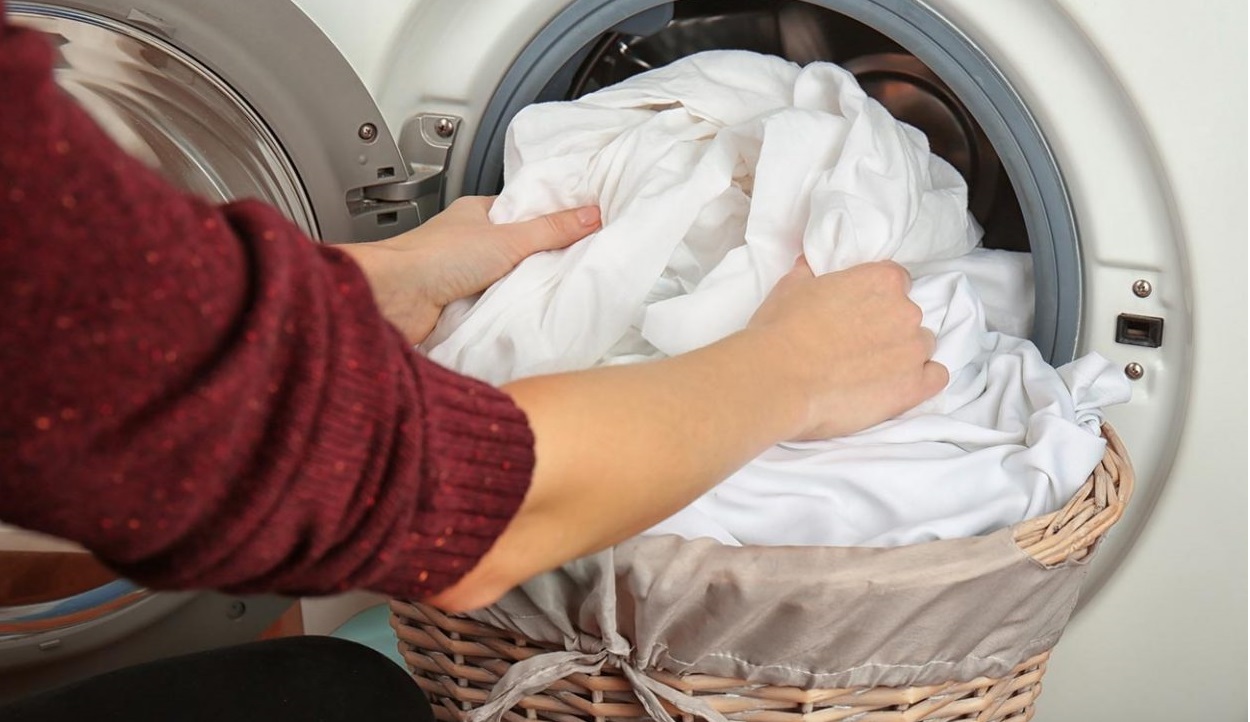
Let's start with imbalance, which most often causes the machine to "dance." Despite its frequency, drum imbalance is easy to spot and correct. Firstly, the display will show a corresponding error code, and secondly, balance issues can be detected with the naked eye. These include: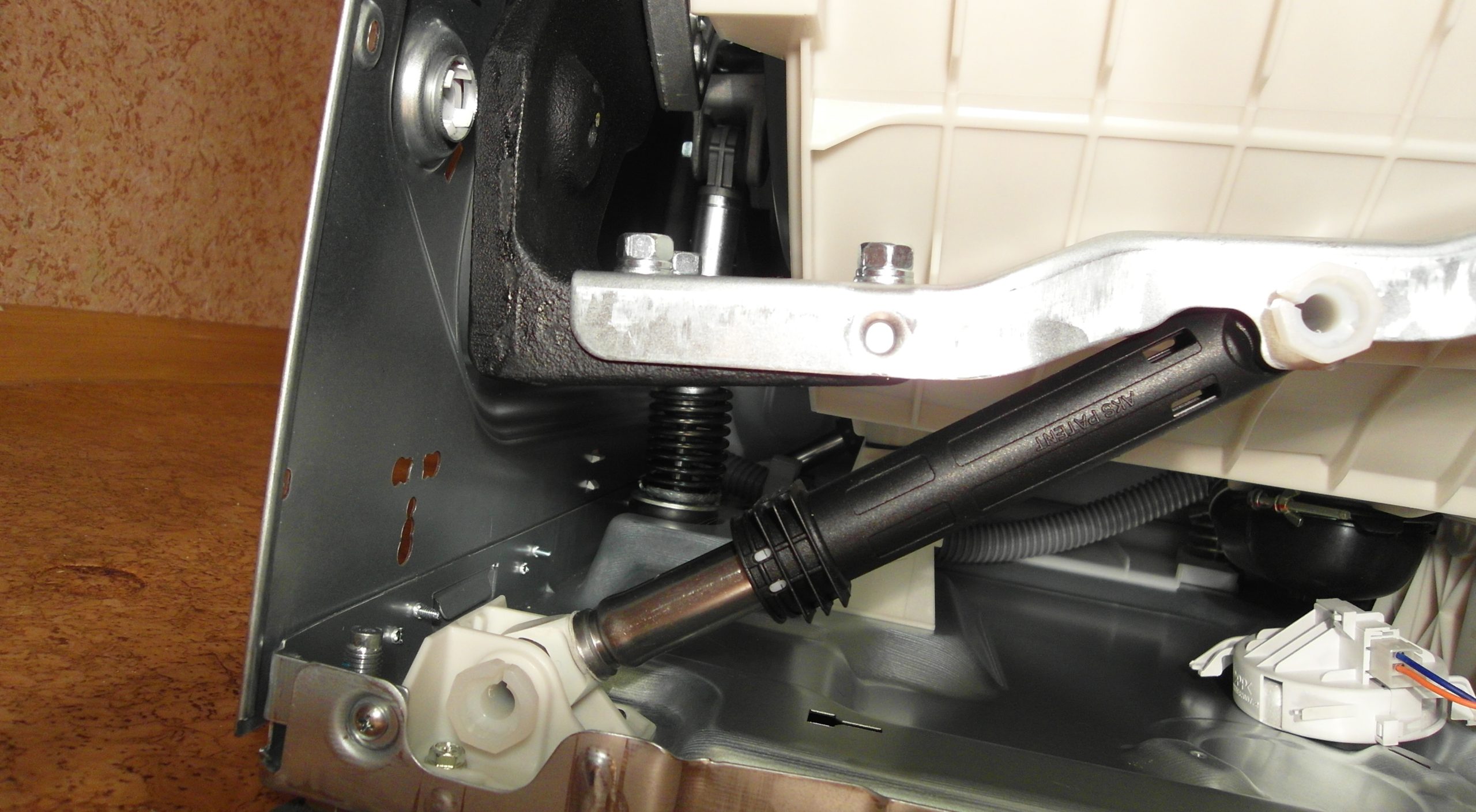
- crumpled linens (for example, when other things accumulate in the hole in the duvet cover);
- exceeding the weight limit for a specific program (some modes have separate weight limits);
- failure to comply with loading standards (there is too much or, conversely, not enough laundry in the drum).
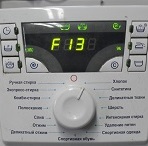
In case of imbalance, the self-diagnosis system will display the corresponding error code on the display.
If your washing machine is new and starts jumping during the first wash, the most likely cause is the transport bolts. These secure the drum, protecting it during transport, but they must be removed before use. Failure to remove them is essential, as otherwise, the machine will be severely damaged and the warranty will be void.
Incorrect installation of the washing machine can also cause severe vibration during the spin cycle. Confirming this is easy: unplug the machine and try to tilt it sideways. If the body shifts with even a slight jolt, there's clearly a problem with the installation. However, it's best to place a spirit level on the machine's lid and check that it's level.
Next, we check the tank for foreign objects. Something hard may have gotten inside, causing a jam and further shaking. Here's what to do: open the hatch door, turn on a flashlight, and shine it through the drum while simultaneously spinning it.
If the Ariston is under warranty, disassembling the case is prohibited; all work must be performed at a service center.
If the culprit still hasn't been identified, we move on to larger problems. First, we'll look at the shock-absorbing system, which is responsible for dampening vibrations as the drum spins. Stretched springs and worn dampers cannot perform their function, which leads to jumping and rattling as the tank begins to knock against the body. Knocking may also indicate damaged or weakened counterweights. Bearings "sound" different—a crackling and loud grinding noise.
To isolate the problem, remove the top and rear covers, then carefully inspect the dampers, counterweights, and bearing assembly. If they are all in good condition, there are two possible causes: a faulty motor or a manufacturing defect.
Let's put our hands to the problem
Once the problem is identified, you can begin repairs. The specific steps depend on the nature and extent of the problem. If the surges were caused by an imbalance, here's what to do.
- We forcefully stop the cycle by pressing “Stop”.
- We drain the water through the “Drain” button (if the automatic drain is not activated, empty the drum manually by unscrewing the waste filter).
- We disconnect the washing machine from the power supply.
- We open the drum and try to fix the problem (break up the “lump”, add more items or remove the excess).
- We close the car.
- We connect the machine to the power supply and repeat the cycle.
If the machine is shaking due to installation errors, all the defects must be corrected. Using a spirit level, level the surface and then adjust the feet on the machine itself. It's important that the machine is as stable as possible. It's also recommended to place special anti-vibration pads under the washing machine.
Foreign objects that have fallen into the tank are more difficult to remove. You'll either need to try to hook the object with a wire or try to pull it out manually by inserting your hand through the hole under the heating element. In the latter case, you'll need to remove the back panel and remove the heating element.
If the damping is insufficient, replacement is recommended. Furthermore, both dampers must be replaced at once, even if the second one is in perfect condition. Removing and installing spring struts is time-consuming and difficult: it’s best to study a separate article on this topic.
If the counterweights are suspect, remove the cover and inspect the concrete slabs. Any cracks or chips will inevitably cause the machine to jump, so damaged units must be replaced. If the concrete is solid, tighten the fasteners with pliers and wrenches. Remove any loose bolts, making way for new fasteners.
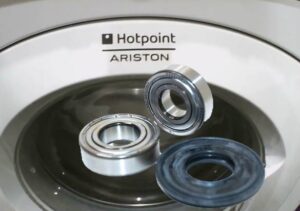
Fixing a washing machine that's dancing due to worn bearings is very difficult. It's best to avoid experimenting and immediately contact a service center. Repairing the bearing assembly requires completely disassembling the machine, then removing the drum and tapping the shaft. If you want to solve the problem yourself at home, check out the instructions in the article dedicated to this topic.
Bearings and seals need to be changed every 5-7 years.
It's worse if it breaks down. electric motorRepairing the engine yourself is practically impossible, and a new one will cost a significant amount. Often, both repair and replacement are unprofitable: it's better to play it safe and buy a different washing machine right away.
Why are "jumps" so dangerous?
When the machine bounces, all its internal components experience tremendous vibration and pressure. Contacts become loose, components break, which negatively impacts the machine's performance. To avoid the moment when harmless jumps turn into destructive force, it is worth thinking about prevention. The following vibration minimizing measures are involved:
- use anti-vibration pads on the feet;
- Place a soundproofing layer behind the back wall;
- give the machine some air, without placing it close to furniture or walls;
- comply with loading standards;
- remove transport bolts immediately;
- check the pockets of items being washed;
- Sort laundry by fabric type and size.
Don't ignore a jumping car – it's essential to immediately identify and fix the problem. If you can't diagnose it yourself, contact a service center.
Interesting:

Readers' comments
Headings
Washing machine repair




For buyers




For users


Dishwasher




Add a comment