
The Atlant washing machine does not heat water.
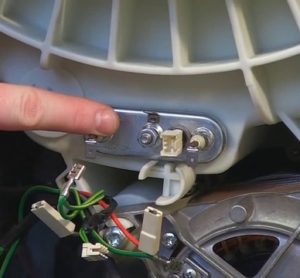 If your Atlant washing machine isn't heating water, you can forget about quality washing. If there's a heating problem, the machine won't run the high-temperature program, or it'll spin clothes at only 20-40 degrees Celsius for the specified time. In either case, washing will be ineffective or disrupted. The only way to fix this is with repairs. We suggest you figure out what and how to fix to restore your washing machine's ability to heat.
Let's outline the range of faults
The heating element isn't always to blame for a lack of heating. Other malfunctions can also cause hot water problems, and more often than not, the cause is simple carelessness. It is better not to rush into disassembling the machine, but to carry out a pre-repair check.
Many basic programs on Atlant washing machines do not allow washing at high temperatures.
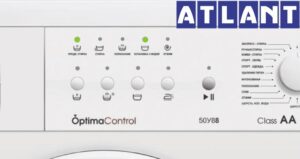
The pre-repair check begins with an inspection of the control panel. It's important to remember which mode was selected. Many basic washing machine programs don't require heating. For example, when you press the "Delicate Wash," "Sportswear," "Wool," "Silk," or "Curtains" buttons, the temperature is automatically set to 20-30 degrees.
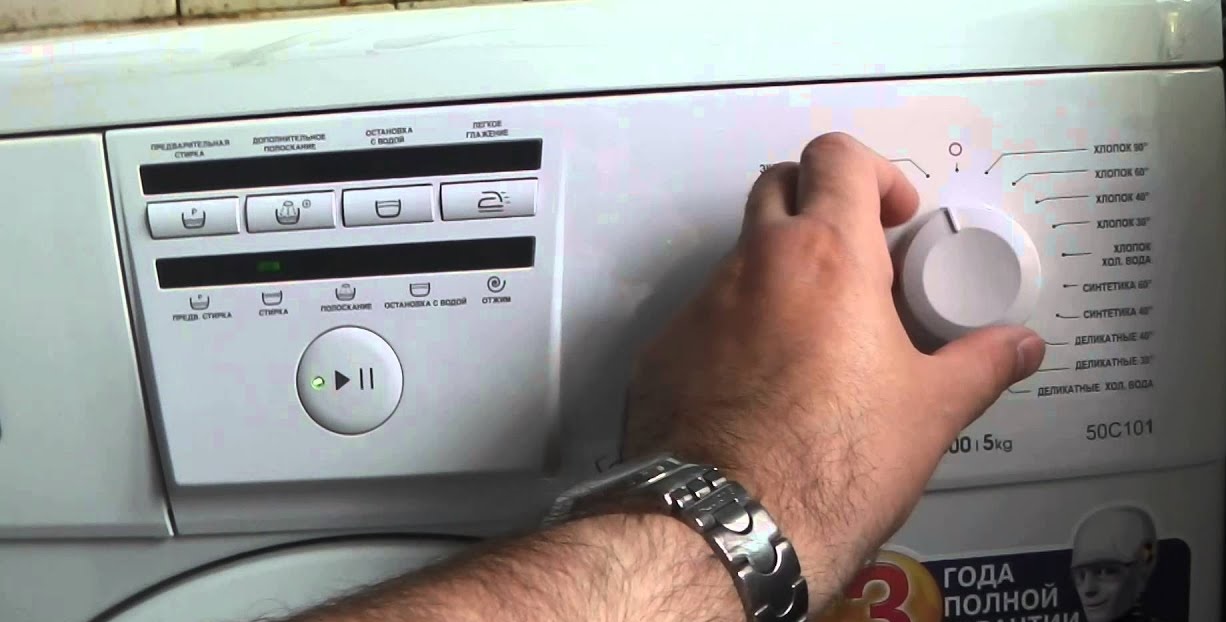
If you've selected a "hot" program, pay attention to the temperature indicators. Modern Atlant machines allow you to manually adjust the washing conditions by setting specific temperatures. However, the mechanical controls occasionally fail to operate, and the washing machine fails to read the user settings and heat the water. It's best to err on the side of caution, try turning the dial again, and restart the machine. The automatic control may be malfunctioning.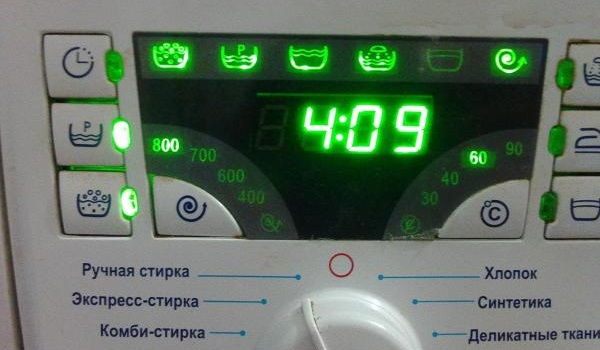
Finally, check to see if the heating element is working. It's a mistake to assume that cold laundry means there's no hot water. The heating element isn't to blame here – the final rinse occurs at 30 degrees Celsius, and the clothes cool down. A much more effective and reliable way is to conduct a quick test:
- turn on the high temperature mode on the machine (preferably 60 degrees, but 45-90 is also acceptable);
- wait at least 20 minutes (the main thing is not to miss the machine’s transition to the rinsing stage);
- place your palm on the door glass;
- assess the degree of its heating (the glass should be warm or hot).
A cold glass will confirm a "temperature problem." You'll need to stop the machine and figure out what's causing the lack of heat and what to do to fix it. Detailed steps and instructions are provided below.
What should be checked?
First, you need to figure out why your Atlant washing machine isn't heating up. Modern automatic machines are easier to troubleshoot, as their built-in self-diagnostic system automatically detects the problem, signals the error via the display or indicator, and stops the machine. In other cases, the machine continues to wash, but only in cold water, not hot, which complicates diagnosis. The situation is further complicated by the fact that a faulty washing machine cannot be used—the problem worsens with each cycle.
The reasons for non-functioning heating on Atlant washing machines may be: heating element, pressure switch, temperature sensor, control module or wiring.
Several faults can cause problems with water heating.
- A faulty pressure switch. If the level sensor is malfunctioning and unable to monitor the tank's fill level, it means the control board isn't receiving the necessary information and isn't commanding the heating element to turn on.
- Damaged wiring. If the heating element or pressure switch contacts the circuit board loosely or fails to connect, the circuit fails to complete, preventing the system from transmitting a signal to heat.
- Broken heater. The heating element can fail due to a thick layer of scale, improper use, a manufacturing defect, a short circuit, or mechanical damage.
- A broken thermistor. A special sensor monitors the heating element's temperature. If it breaks, the water stops heating.
- A faulty circuit board. Most likely, the track or resistor corresponding to the heating element has burned out.
To restore the machine's ability to heat, you'll need to conduct a comprehensive diagnosis of all possible weak points, followed by any necessary repairs. Fortunately, users can resolve almost all temperature-related issues at home. We'll discuss step-by-step instructions and safety precautions in more detail below.
Let's test the heating element
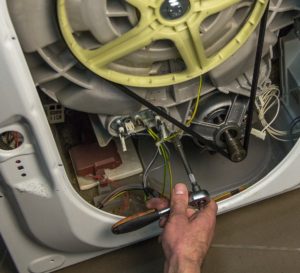
When water heating problems occur, the first suspect is always the heating element. This is logical, so it's recommended to start troubleshooting there. To access the heating element, disconnect the washing machine from the power supply and water supply, move it away from the wall, and turn it so the back panel is facing forward. Next, unscrew the screws holding the back panel in place, remove it, and locate the element. It's located at the bottom of the housing, directly under the drum.
In Atlant washing machines, the heating element is located in the lower part of the body, directly under the tank.
Once the panel is removed, it's easy to find the rounded heating element connector, as well as the thermistor and associated wiring. However, first, you'll need to remove the drive belt from the pulley to ensure easy access to the heater. After that, photograph the locations of all connections and begin diagnostics: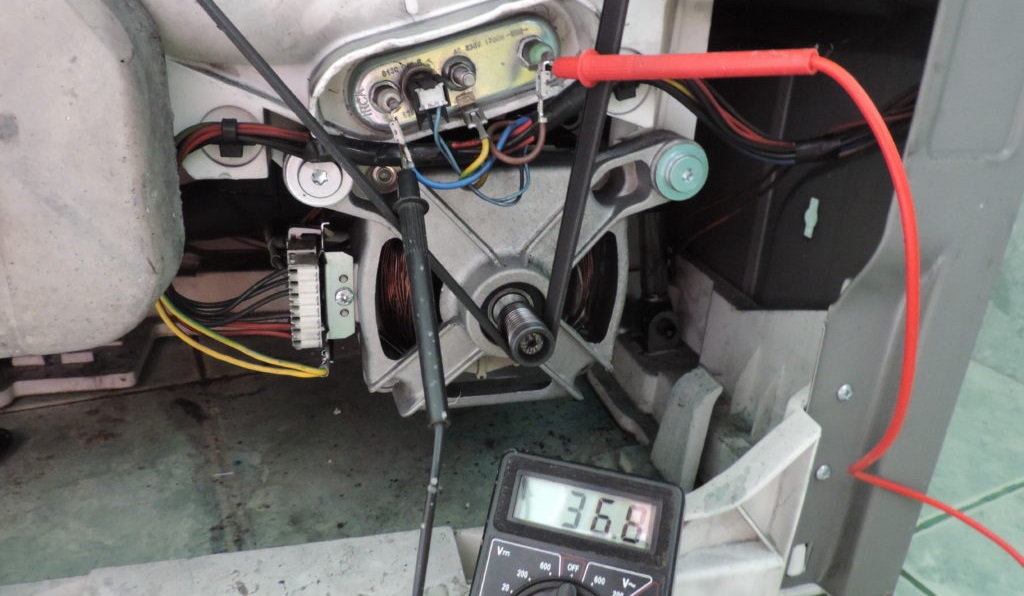
- we disconnect the connected wiring;
- switch the multimeter to the “Resistance” mode and set it to “200 Ohm”;
- we bring the probes to the terminals of the heating element;
- We evaluate the indicators.
A functioning heating element displays a minimum reading of 26 ohms and a maximum reading of 28 ohms. If the device displays a "1" instead of the normal reading, the heater has suffered an internal open circuit in the winding.A result of "0" indicates that a short circuit has occurred. In the two extreme cases, the element cannot be repaired and must be replaced.
The next step is to check the housing for a breakdown. Set the tester to buzzer mode and attach the probes. If you hear a beep when touching them, a current leak has been detected – the heating element will need to be replaced.
Replacing the heating element is simple. Simply remove the old unit, loosen the central nut, and disconnect the thermistor. Difficulties arise when the existing rubber gasket deforms, expands, and "blocks" the heater. In this case, you need to:
- generously lubricate the cuff with WD-40;
- wait 15-20 minutes;
- collect the remaining grease;
- swing the heater and pull it out of its seat.
When replacing, it's important to select the correct replacement. The markings stamped on the heater body will be the primary reference. The serial number of your existing Atlant heater will also be helpful. Even better, bring the removed heating element to the store and find a replacement on-site. Before installing the new heater, it's recommended to thoroughly clean the mounting surface of dirt and scale. Reassemble the machine according to the instructions described earlier, but in reverse order.
How to check the pressure switch correctly?
If the heating element is OK, you need to check the pressure switch. This is easy to do yourself: unscrew the bolts holding the cover, slide it open, and locate the level sensor. The “water device” is located at the right wall of the housing.
The diagnosis is carried out as follows: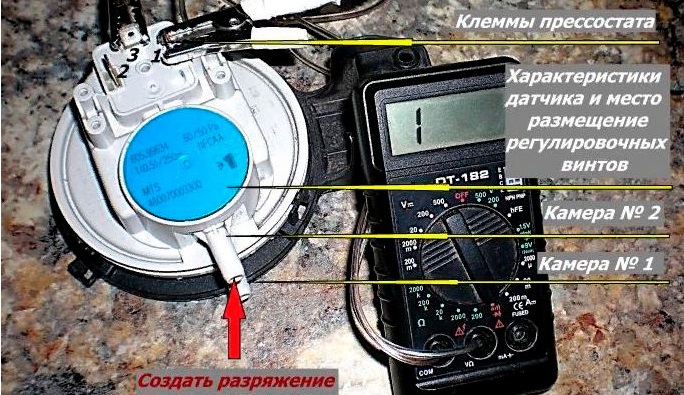
- we disconnect the wires connected to the pressure switch;
- we take the hose out of the tank;
- we find a tube proportionate to the fitting;
- we attach the tube to the fitting;
- blow lightly into the tube;
- evaluate the result (1-3 clicks should be heard).
Next, inspect the device itself for damage. Then, rinse it to eliminate any blockages. Finally, check the sensor with a multimeter:
- connect the probes to the contacts;
- We look at the scoreboard (normally the indicators are constantly changing).
Pressure switches are not repaired because it's time-consuming and uneconomical. It's much easier and cheaper to buy an original replacement and replace the faulty sensor with it. If the heating element and pressure switch are working properly, there's a good chance the control board is faulty. Trying to do it yourself would be harmful; it's best to contact a service center.
Interesting:

Readers' comments
Headings
Washing machine repair




For buyers




For users


Dishwasher




Add a comment