
The Atlant washing machine does not drain water.
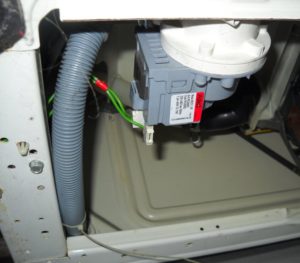 If your Atlant washing machine isn't draining, it's noticeable. At best, clothes remain wet; at worst, the drum doesn't empty after the cycle. Naturally, further washing becomes impossible. Drainage problems are a common problem with Atlant washing machines. Therefore, it's important to once and for all figure out what's causing the delay and how to fix it yourself.
Range of possible breakdowns
If you notice that your tank isn't draining properly, don't panic—you can fix the drainage problem on your Atlanta tank yourself. The main thing is to promptly record any deviation from the norm and try to analyze the machine's behavior. If water drainage is difficult, the machine starts to signal with the following “symptoms”:
- slow drainage, which affects the duration of the cycle;
- the machine washes properly, but stops during the draining stage;
- periodic malfunctions occur: water sometimes drains, sometimes remains in the drum;
- when rinsing the machine “freezes”;
- After draining, the spin cycle does not start.
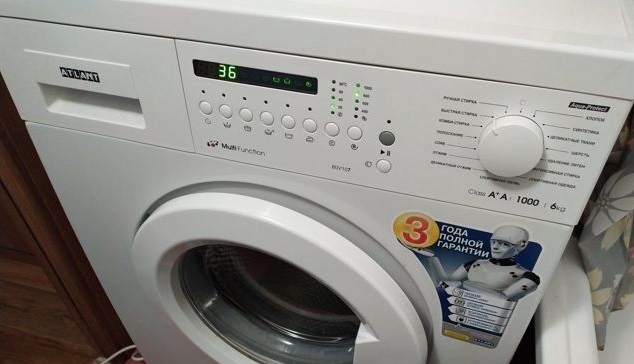
In case of drainage problems in Atlant washing machines, the self-diagnosis system will display the error code F4.
It's impossible to immediately pinpoint the exact cause of the delayed drain. The range of possible causes includes several malfunctions with similar symptoms. These include the following issues:
- blockage in the pipe connecting the pump and the drum;
- pump clogged with a foreign object;
- dirty drainage filter;
- broken pump;
- clogged siphon or general sewerage system;
- clogged drain hose.
To more accurately determine the nature of the problem, it's necessary to inspect all key points of the drainage system. We'll explain in detail below where to start and what repairs are needed.
Has the filter been cleaned recently?
If your Atlanta or any other washing machine isn't draining properly, the first thing to check is the drain filter. This is a plastic spiral-shaped attachment that protects the pump, volute, and impeller from accidental objects and debris. When too much debris accumulates, drainage becomes difficult and the drum remains full. To remedy this, clean the spiral.
Cleaning the dust filter is a simple task that any washing machine user can handle. Just follow these instructions:
- disconnect the machine from communications;
- move away from the wall by 7-10 cm;
- tilt the washing machine back so that the front legs are raised up by 5-6 cm;
- find a technical hatch in the lower right corner of the body;
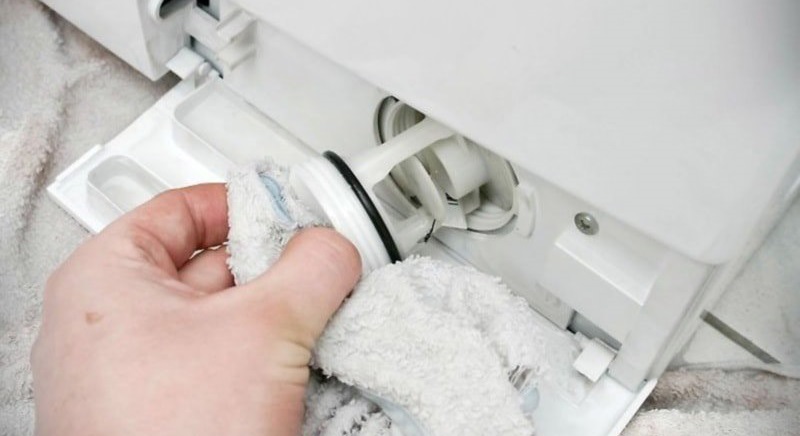
- carefully pry the hatch with a screwdriver and, having released the plastic holders, remove it;
- find the black round cap – the plug of the trash filter;
- Place a container under the plug to collect water and cover the surrounding area with rags;
- take hold of the protruding handle and unscrew the filter clockwise;
- remove the filter and collect the water.
Do not wash the filter in hot water – the plastic will deform at high temperatures!
Logic will tell you what to do next. Take a dish sponge or cloth and thoroughly clean the filter seat, removing any scale and dirt. Then, move on to the nozzle itself, rinsing it under the tap and, if necessary, scrubbing it with soap and a toothbrush. If there's a lot of debris stuck to it, soak the plastic part for 20-40 minutes in a solution of warm water and citric acid. Do not submerge the coil in boiling water, as the material will deform at high temperatures.
Main drain pipe
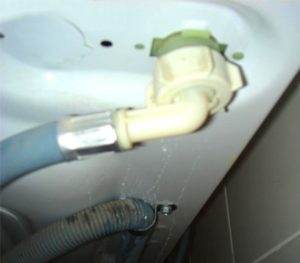
Statistics show that the most common cause of drainage problems is a clogged main drain hose. It's easy to spot—just look through the bottom of the washing machine. If your washing machine doesn't have a bottom panel, you'll only be able to see the hose by laying it on its side. If you have a special tray, you will first have to remove this obstacle by unscrewing several holding screws.
Typically, this hose is connected to three components: the tank, the pump, and the pressure regulation hose. Therefore, to remove the hose, you'll need to loosen the clamps at all the specified points. Then, simply slide the hose aside, remove it from the washing machine, and inspect it.
You can't try to repair hoses yourself by gluing cracks - this can lead to further ruptures and leaks!
If the hose is intact and relatively clean, simply brush it with a special brush and rinse it under the tap. In more severe cases, it's best to soak the part for 2-3 hours in a citric acid solution (100 grams of citric acid per 2 liters of water). If the hose is heavily soiled, damaged, or has a stubborn blockage, you'll need to replace it with a new one. Finding a replacement yourself is easy if you provide the machine's serial number or bring a sample to the store.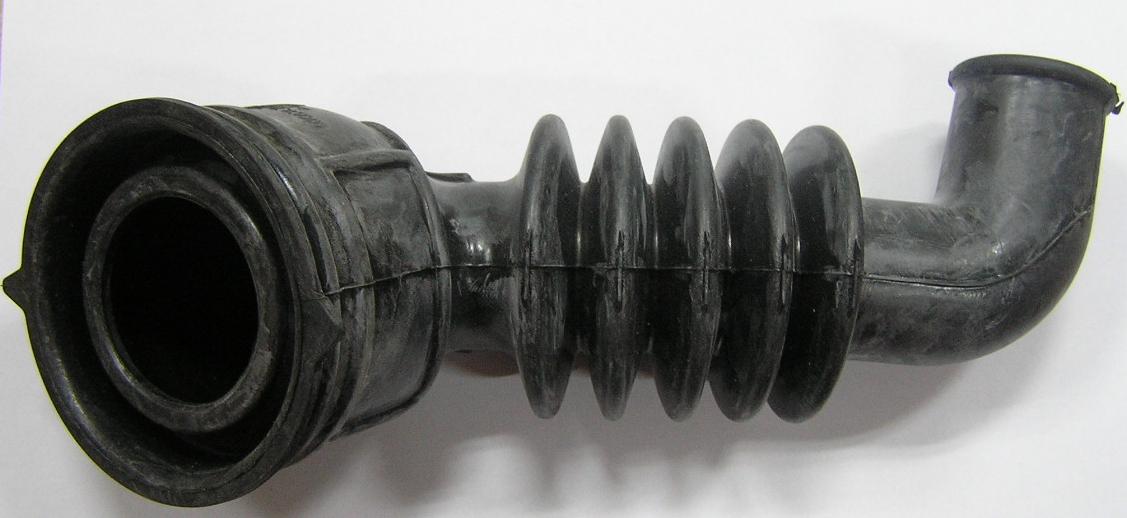
Sewage pump
If the debris filter and hose are fine, there's a more serious issue. The impeller and pump are suspect; they could be broken, blocked, or clogged. You'll need to look underneath the machine again and inspect both components.
First, look at the impeller—the bladed wheel located just behind the debris filter. The problem is that any foreign object accidentally introduced into the drain system, such as keys, coins, or rivets, can jam the rotating element and cause damage. So, we reach the impeller and try to spin it. If it rotates too freely, tighten the fastener; if it's difficult, remove the blocking object, tangled hair, or a stray item.
Is the impeller working properly? Then we turn our attention to the pump, or more precisely, check its electronics for proper operation.
- We remove the trash filter.
- Set the "Spin" mode.
- We shine a light into the hole freed from the filter and evaluate the behavior of the impeller (if it is motionless, then the pump is broken).
Trying to repair the pump yourself is pointless. Firstly, most pumps are not repairable. Secondly, it's much easier and more reliable to buy an inexpensive replacement. Finding the right part won't be a problem: Atlant washing machines come with standard parts, so just pop into your nearest home appliance store or hardware store. As a last resort, contact the manufacturer or online store. Use the serial number on the drainage body as a reference.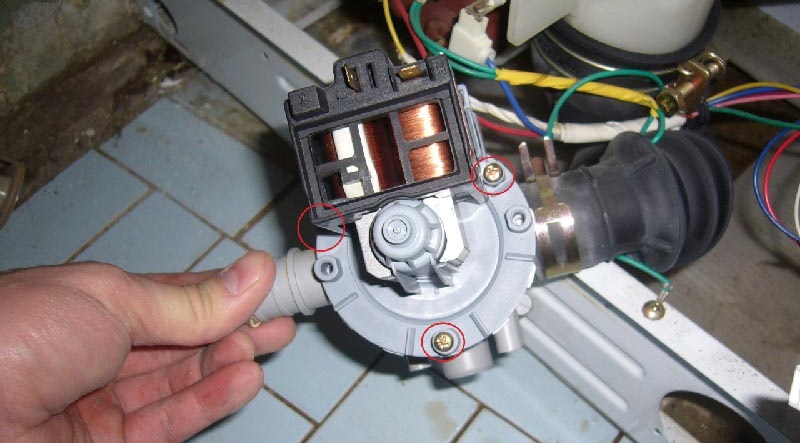
The old pump is removed through the bottom. First, disconnect the wires and hoses, then unhook the impeller. Next, unscrew the retaining bolt, and then remove the pump from the volute. To replace, follow the same procedure, only in reverse order: secure it in place and reconnect the contacts. If replacing the pump doesn't help, the problem is with the circuit board. This isn't something you can handle yourself—you'll need to call a professional.
Interesting:


Readers' comments
Headings
Washing machine repair




For buyers




For users


Dishwasher




Add a comment