
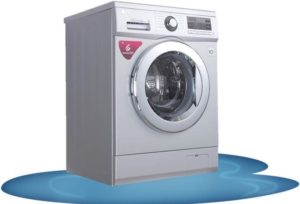
Water is leaking from below the Atlant washing machine.
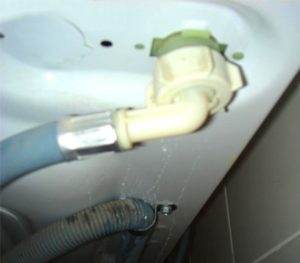 A puddle under your Atlant automatic washing machine can be an unexpected and unpleasant surprise. Simply wiping away the water and continuing to use the machine is not an option; it's extremely dangerous. Firstly, there's a high risk of flooding not only your apartment but also your neighbor's. Secondly, a short circuit could occur, leading to disastrous consequences. Let's look at what causes water leaking from underneath the machine and what steps can be taken in this situation without calling a repairman.
Why did the leak form?
No washing machine is completely immune to leaks, and Atlant models are no exception. Leakage may be caused by a manufacturing defect, improper connection of equipment to utilities, or careless operation of the equipment. First, it is worth understanding what caused the accident.
The main reasons why an Atlant washing machine leaks:
- violation of equipment use rules;
- use of low-quality detergents that are not suitable for automatic machines;
- mechanical defect, natural wear of washing machine parts;
- installation of poor quality components;
- incorrect connection of the device to house communications;
- a defect made by the manufacturer.
If the leak is caused by low-quality parts or a manufacturing defect, the car will begin to leak almost immediately after purchase or after the next repair.
When it comes to wear and tear, the following components are most susceptible to wear and tear in Atlant machines: the drum, drain pump, drain hoses, sealing cuff, inlet and drain hoses, drum seal, and detergent drawer. These are where various breakdowns most often occur, such as component failures and leaks. This can cause the washing machine to leak during a wash cycle.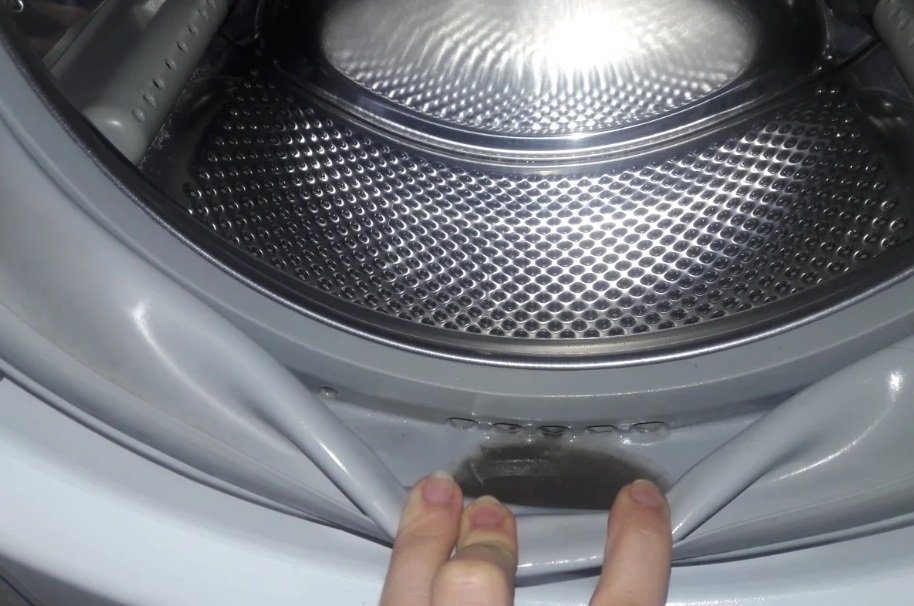
You can find the cause of the leak and try to fix it yourself. You'll need to check each of the described components of the Atlant washing machine. But before you begin troubleshooting, you should quickly drain the water from the machine and remove the large puddle that has spread across the floor.
Urgent actions
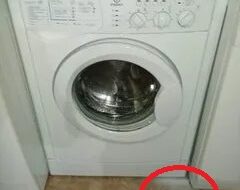
If you see a wet spot near your washing machine, be careful. Water combined with an electrical appliance plugged in is always dangerous to life and health. It is strictly forbidden to touch the puddle or step into it until the equipment has been disconnected from the power supply. Even if the machine has not yet completed the washing program, you need to quickly pull the power cord out of the socket.
If the outlet is located very close to the washing machine, it is advisable to completely cut off the electricity supply to the room or apartment through the electrical panel.
The subsequent algorithm of actions will be as follows:
- close the shut-off valve (responsible for supplying water to the machine);
- wipe away the wet spot around the body;
- drain the water from the system through a debris filter;
- move the washing machine away from the wall or remove it from the niche (if the appliance is built-in);
- inspect the unit.
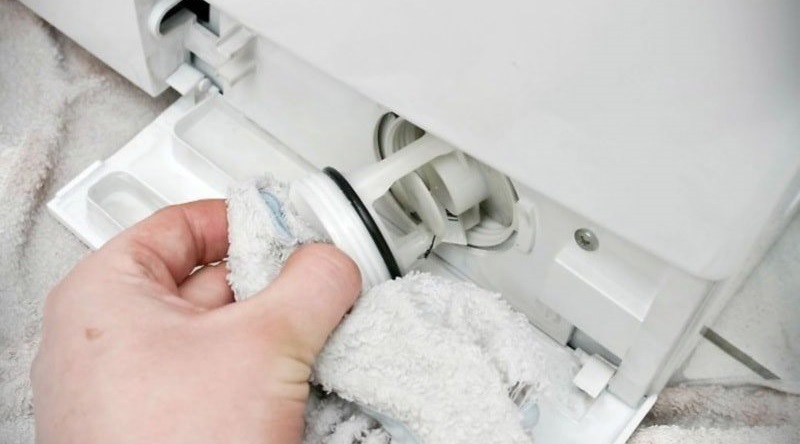
To determine why your Atlant washing machine is leaking, you'll need to remove the back, top, or side (on top-loading models) of the machine. Some models may need to be tilted toward you and a platform placed underneath to peer inside. It's crucial to determine at what point in the cycle the leak began; this will make it easier to pinpoint the problem.
You should also check the water – if it's dirty, it means it started leaking mid-cycle; if it's clean, it's leaking at the very beginning or at the end. Let's look at all the machine components that could be the culprits behind the leak.
Water intake hose
The inlet hose is often the culprit behind a minor flood. It may be loose at the joints, worn, kinked, worn, or pinched by a foreign object. To determine the cause, carefully inspect the hose.
You can check the water inlet hose without plugging in the washing machine. Follow these steps:
- remove the "top" of the washing machine;
- disconnect the rear panel of the unit;
- Tilt the washing machine forward and place something like a platform under the bottom;
- inspect the inlet hose for defects, cracks, and gaps at the joints;
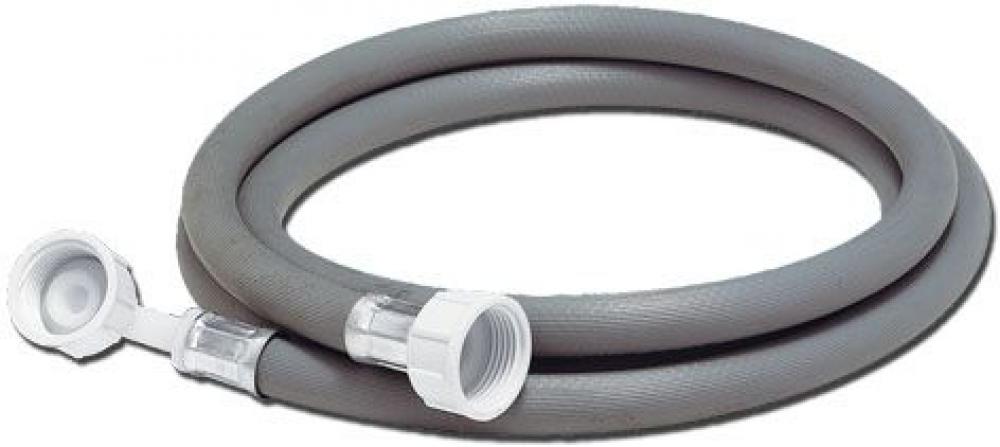
- If there is no visual damage, wipe the entire surface of the tube with a dry cloth;
- Turn on the water supply and watch carefully to see if any splashes or drops appear on the hose.
Dryness will indicate that replacing the rubber hose is pointless. If there are defects, the leaking area will give itself away. If you find a crack, don't try to seal it with tape or electrical tape or seal it with sealant. The inlet hose is under pressure, so if damaged, it will have to be completely replaced. If the leak is coming from the joints, you can fix the problem by replacing the gaskets and tightening the connection securely.
It depends on what water has flowed out.
Dirty water under the Atlant washing machine will tell you that the water intake hose is not to blame for the leak. Cloudy, used liquid indicates a leak from the lower elements of the washing machine: the tank, drain pipe, drainage sleeve, pump, and debris filter.
Turn on the "Rinse" mode on your washing machine and observe how it operates. If the drain hose starts leaking, you'll need to replace the hose. Buying a hose is very easy—parts for Belarusian-brand machines are readily available at plumbing supply stores and online.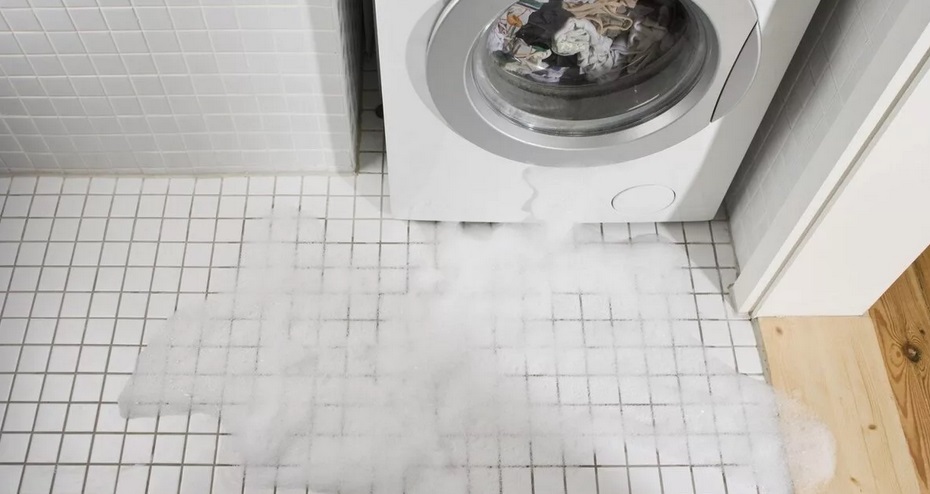
Water may leak from the hose connections to the siphon, pump, or volute. This is likely due to a loose connection. Replace the sealing gaskets, reinforce the connection with a clamp, and apply a water-resistant silicone sealant.
Intake valve pipes
Clear water may indicate a problem with the hoses connecting the fill valve and the detergent drawer. This can be easily verified by opening the dispenser and checking how well the detergent has been flushed from the compartments. If the detergent is wet but not completely dissolved, the hose is leaking.
To fix the problem, you should:
- detach the top panel of the machine;
- find the pipes leading to the detergent dispenser and inspect their surface;
- replace hoses if defects are detected;
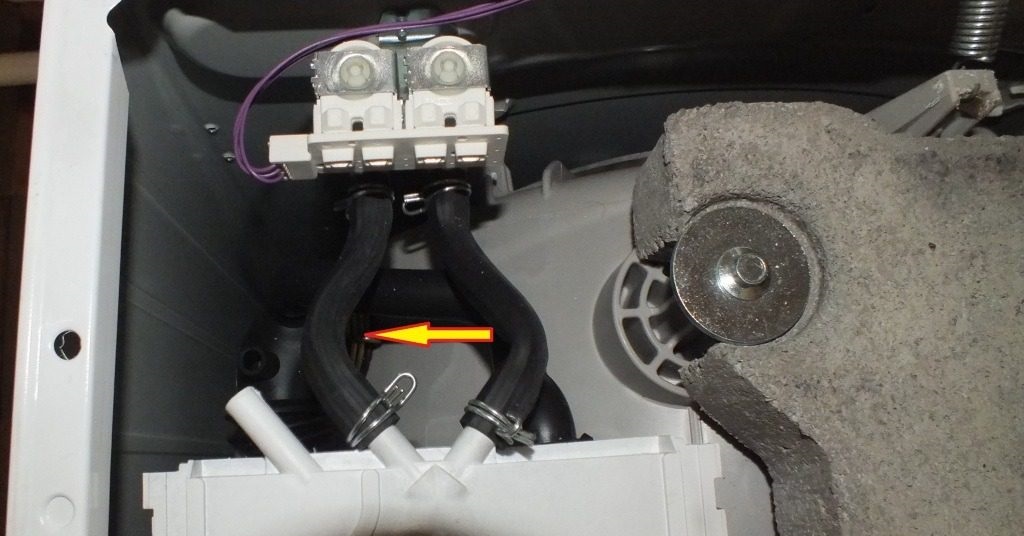
- tighten the clamps more tightly;
- assemble the washing machine.
With this type of malfunction, the leak won't be severe. The user may notice the problem immediately after starting the wash cycle. Insufficient water will flow into the detergent drawer, and some will spill out.
The pipe between the tank and the snail
In rare cases, the leak may be caused by the drain hose located under the Atlant machine's tank. This hose constantly contains water, so the "lake" under the machine will continue to grow even after the machine is turned off. If you notice that the leak doesn't stop, you can safely blame this hose as the culprit.
You can fix the problem yourself. The steps are quite simple. Remove the water from the drain system by unscrewing the debris filter, then lay the machine on its side, disconnect the hose, and attach a new element. Replacement parts are available at specialty stores.
It is important to tighten the clamps well to minimize the risk of emergency leaks in the future.
Drain pump
If water is leaking from below, the problem could be with the pump. It's also located at the bottom of the washing machine. To access it, drain the water through the filter and lay the machine on its side. Check the pump, disassemble it if necessary, and thoroughly clean it from the inside.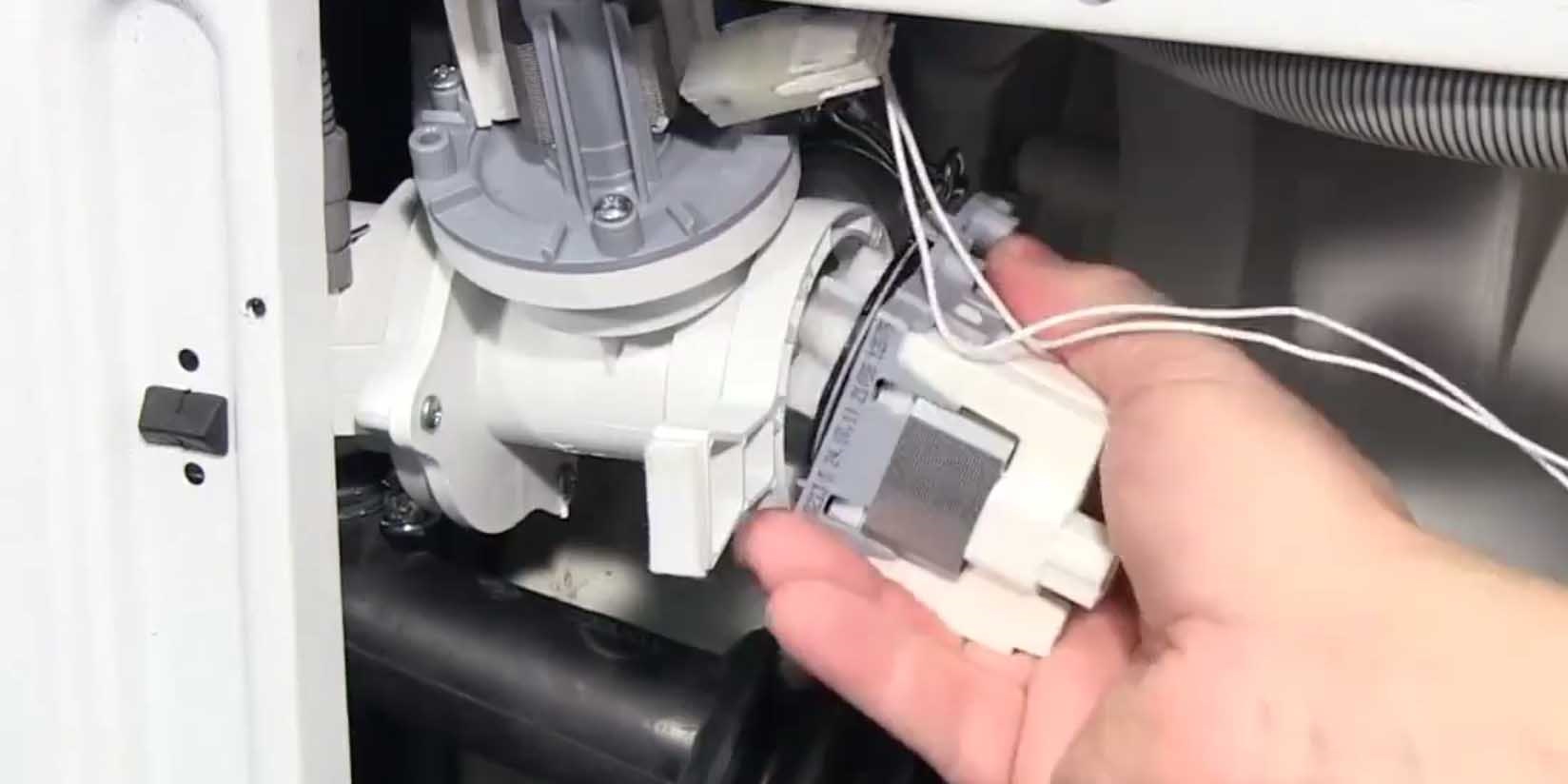
If the pump appears to be working properly, inspect the coil; it should be dry and free of any cracks or defects. If there is damage, it's likely a manufacturing defect that has caused the coil to break and leak. Only replacement will resolve the issue.
The main tank is broken
If the "lake" under the machine is substantial and the water is soapy, it's likely the drum is the problem. The main drum of a washing machine often suffers from overloading with items and foreign objects (coins, bra underwires, buttons, etc.). This can cause cracks in the drum walls, and water begins to leak.
To test this theory, you'll need to inspect the inside of the washing machine for any signs of water sludge. A flashlight will come in handy here. For a front-loading machine, position it at an angle. For a horizontal machine, remove the side panel and try to locate any water accumulations.
You can perform a local repair by sealing the hole in the tank with a special moisture-resistant compound, which will restore the seal. The crack will close, but only temporarily. To solve the problem once and for all, you'll need to install a new unit. Replacing the component yourself is difficult for the average person, so it's best to seek professional help.
If the drum is split in two, a simple gasket replacement will likely solve the problem. This is a fairly labor-intensive job, so it's best to leave it to a professional.
Hatch cuff and powder box
These components are also among the possible causes of leaks. Most often, this is not due to wear and tear, but to the negligence of Atlant washing machine users. For example, the detergent drawer is often clogged by poor-quality detergent or an object accidentally dropped into the drawer. If the drawer is clogged, it's necessary to thoroughly clean the dispenser to remove any blockages.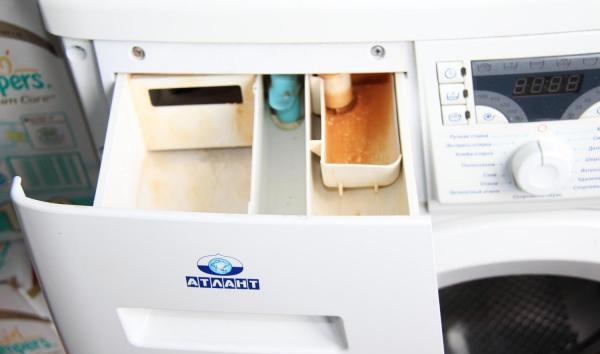
The door seal is easily damaged by sharp objects caught in the washing machine drum. It can also be damaged by careless loading and unloading of laundry after washing. A defective cuff compromises the tightness of the system, which means it increases the likelihood of leaks. In this case, water leaks from under the hatch, and it seems that it is pouring from below.
There is no need to try to seal the rubber seal; it is more practical to install a new cuff.
Safety precautions
To avoid leaks during washing, follow the basic rules for using your washing machine and ensure proper maintenance. By following the manufacturer's recommendations, many problems associated with water leaks can be easily avoided. What tips are we talking about?
- When washing clothing items with metal inserts, patches, and other small details, use special bags.
- Don't leave the machine running unattended for 2-3 hours; check on it periodically to make sure everything is running as planned. The sooner a leak is detected, the easier it will be to fix.
- After using the machine, always unplug the power cord from the socket.
- Do not place washing equipment in rooms with high humidity.
- After washing, run an "empty" cycle to rinse the inside of the appliance.
- Strictly adhere to the maximum permissible weight of dry laundry that can be loaded into the drum.
- Install an additional filter in front of the washing machine if the water in the pipes is too hard.
- Use only high-quality detergents designed for automatic machines.
- Don't forget to clean the drainage system components—periodically flush the debris filter and drain hose. This will help prevent clogs.
Knowing what to do if you find a puddle under your washing machine can help prevent flooding your downstairs neighbors, avoid electric shock, and prevent damage to your washing machine. Furthermore, you won't have to call a repairman and pay for repairs—most leaking problems can be easily solved at home. The key is to act carefully and cautiously, following the guidelines outlined above.
Interesting:



Readers' comments
Headings
Washing machine repair




For buyers




For users


Dishwasher




Add a comment