
My Haier washing machine won't drain.
 For Haier washing machine owners, a clear sign of a malfunction is a difficult drain. This can lead to problems such as items becoming damp or trapped in the drum. Experts say that calling in a professional for repairs isn't always advisable. In this article, we'll explore why your machine won't drain and how to troubleshoot the issues yourself.
How does this breakdown manifest itself?
It's easy to reliably determine if your Haier washing machine has stopped draining. During the cycle, a number of characteristic signs will appear. Classic symptoms of a drainage problem include:
- increasing the duration of the washing program;
- the draining process takes more than 3-4 minutes;
- there is a reset mode in which the Haier washing machine freezes;
- during draining the machine “stops”;
- the draining process becomes intermittent, the machine sometimes drains water, sometimes it doesn’t drain it;
- Washing is done without any problems, but the machine stops during rinsing;
- The spin mode does not turn on.
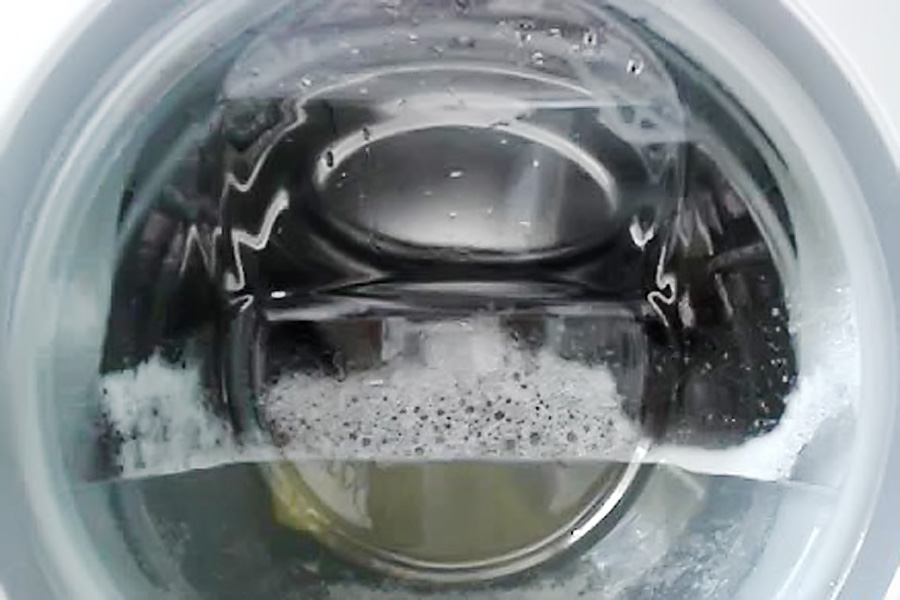
It's important to remember that the cause of the malfunction can be a wide range of issues, ranging from a simple blockage to a faulty control board (a rarer, but very difficult to fix problem). Most often, a machine won't drain if:
- the pipe connecting the tank and the pump is clogged;
- the pump is broken or clogged;
- the filter is clogged;
- the drain hose is clogged or pinched;
- There is a blockage in the sewer.
One of the unique features of the Haier washing machine is its self-diagnosis function. This built-in system automatically identifies the problem causing the drainage system to malfunction. The owner simply needs to look at the error code displayed on the screen or the corresponding indicator. The instructions then help pinpoint the specific problem and its location. A repair plan should then be developed.
We check and clean the "main" drain
Repairs begin with cleaning the drain. In most cases, clogs in the drain are the cause of the machine not draining. The procedure does not require any special skills, but must be performed methodically and in compliance with safety regulations.
First, the unit is disconnected from the power supply, water supply, and sewerage systems. Next, the filter is opened and the water is drained from the machine.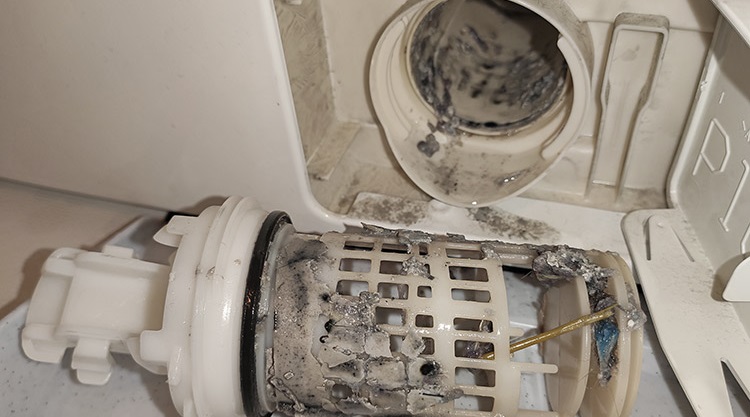
- Using a screwdriver, unclip the cover of the technical hatch.
- Tilt the machine body back (3-4 cm).
- We place a container for draining water under the filter.
- The cork is unscrewed slowly.
- The water is completely drained from the tank.
Next, remove the filter and rinse it thoroughly. All types of dirt, including scale, must be removed. Avoid damaging or deforming any plastic or rubber parts during cleaning. If necessary, use a brush (old toothbrushes are best) and a citric acid solution.
Important! Never use boiling water while cleaning, as this will inevitably damage the plastic stopper!
All that's left to do is clean the filter housing, replace the plug, reassemble the machine, and run a test cycle. Normal drainage will confirm the repair was successful.
The waste water is not pumped out by the pump.
What should you do if the machine still won't drain? Then you'll have to continue troubleshooting. Disconnect the Haier washing machine from the water and power sources again. Remove the panel again, and take out the filter. Next, begin diagnosing the pump. First, check the impeller. Its job is to pump the drained water in the correct direction.
The impeller itself should spin freely and rotate by inertia. However, over long periods of use, this pump component can become tangled with fabric fibers, hair, or become jammed by a common coin. When the pump is inoperative, drainage becomes impossible.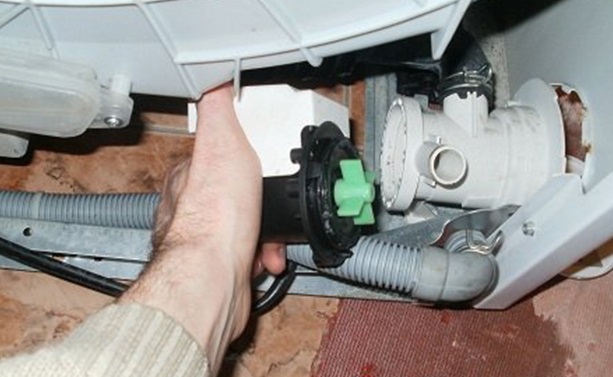
Using a flashlight, inspect the pump through the hole where the filter element is installed. Remove any debris and spin the impellers. If the impeller rotates freely, the pump is working properly. If rotation is difficult or impossible, the pump is faulty. The next step is an electrical drain test. Plug the Haier washing machine into the power outlet and start the spin cycle. If the impeller doesn't spin while the motor is running, the pump is faulty.
Based on the cost-benefit ratio, repairing a broken pump makes no sense. It's much more practical to purchase a new pump and install it in the machine. As a rule, you can find components and spare parts on Haier It's not difficult, as they are available in specialized stores and offered by online suppliers. When purchasing, please specify the washing machine's serial number or provide the removed pump for accurate selection. The pump removal procedure is as follows:
- the washing machine is disconnected from the water and electricity sources, and then laid on its side, on the dispenser side;
- the pallet is dismantled (if any);
- The location of the pump is determined through the bottom (on the snail);
- the pipes are removed, the wires are disconnected;
- the fastening bolts are unscrewed;
- the pump is removed;
- The snail is cleaned.
Installing the new pump is done in reverse order. The unit is placed in its housing, the fasteners are tightened, and the hoses and wiring are connected. The drip tray is replaced. The washing machine is placed on its feet, connected, and a test wash is performed. If the desired results are not achieved, contact a repair shop.
Interesting:

Readers' comments
Headings
Washing machine repair




For buyers




For users


Dishwasher




Add a comment