
Bosch washing machine makes noise during spin cycle
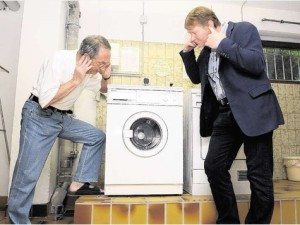
 Almost every Bosch washing machine is normally noisy during washing—absolutely "quiet" models are rare and very expensive. Many machines are loud, but the key is for the output noise to be uniform and not accompanied by knocking, grinding, or excessive vibration. Otherwise, you may suspect a serious malfunction.
If your washing machine used to spin quietly but now suddenly becomes noisy, don't ignore it. It's best to take a closer look at the machine and determine the cause of the change in volume.
Causes of loud noise
A loud noise in a machine doesn't just appear out of nowhere. There are certain reasons that can cause excessive hum and vibration, and it is not recommended to ignore them. Sometimes the problem can be solved by adjusting the housing, but more often a more complex repair with replacement of components is required.
Typically, a washing machine becomes noisier for the following reasons:
- The transport bolts that secure the tank during transportation have not been removed (when the machine starts, the engine tries to spin the secured drum, which results in knocking and noise);
- the bearing assembly has failed (worn bearings cannot ensure smooth rotation of the shaft, it rotates intermittently and noisily);
- a foreign object is stuck between the tank and the drum (the tank hits it);
- the pulley has become loose due to a loose nut (in this case, the drum, when spinning, loses its intended trajectory and hits the walls of the tank, creating noise);
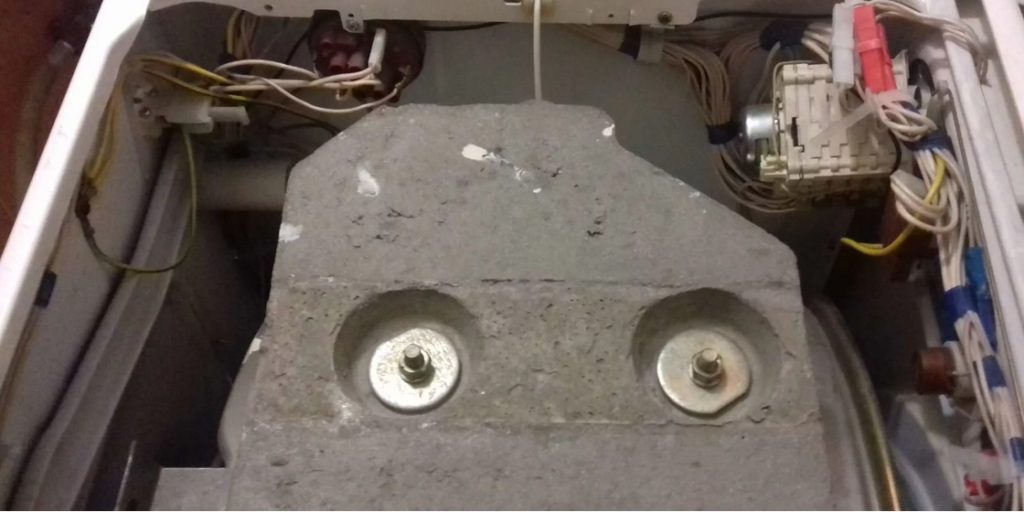
- the counterweights were not fully secured (thus the vibration coming from the machine was not fully dampened);
- the hatch cuff has come loose or is not the right size (which also leads to increased noise from the machine);
- The washing machine body is not adjusted (an unevenly installed machine “jumps” and makes a lot of noise during the spin cycle).
If your washing machine starts making suspicious noise, it's time to have it thoroughly diagnosed!
You can determine the nature of the problem yourself. Some problems can be detected without disassembling the machine—you just need to listen to the machine and evaluate its behavior. It's important to understand at what stage of the wash cycle the machine begins making loud noise: immediately upon starting the cycle, during the spin cycle, or during the drain cycle. This information will help you find the cause.
Dangerous foreign object
 All items loaded into the drum should be carefully checked. Forgotten keys, hairpins, and coins can fall out of their hiding place during the wash cycle and then slip into the drum. A foreign object is unlikely to lie quietly on the bottom; rather, it will bounce around during the spin cycle and the increased vibration, eventually becoming lodged in the rotating element. A dropped underwire from a bra will have a similar effect. In any case, the machine will react to the unexpected "guest" with noise, creaking, or rattling.
It's easy to determine if there's a foreign object in the tank. Simply turn off the machine and run a simple test:
- open the hatch door;
- release the drum;
- spin the drum with your palm.
If something is interfering with the drum's rotation, you feel strong resistance, or hear clanking and grinding sounds, the problem is with the keys or the key ring. This can be solved quickly and easily: remove the back panel, remove the heating element, and then reach into the hole cleared of the heating element and remove the missing key ring. The clanking should stop.
The tank is statically fixed
Sometimes a brand-new washing machine starts making noise the very first time it's started. This happens frequently, and in most cases, it's not a manufacturing defect but the user's carelessness that's to blame. They forget to remove the shipping bolts securing the shock absorbers and start the wash cycle with the drum still in place. The motor will try to spin the unyielding mechanism, causing noise and loud banging.
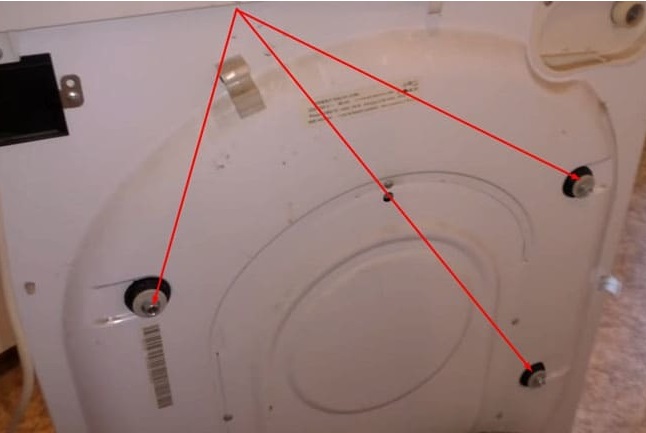
Removing the transport bolts before starting the washing machine is one of the manufacturer's requirements, which is always included in the instructions. The consequences of operating a machine with a locked drum are not limited to just knocking and noise: serious damage to the internal parts of the machine is possible. The fasteners are removed according to the algorithm described in the manual:
- find 4 transport bolts in the center of the rear wall of the case;
- unscrew the nuts and remove the fasteners;
- Insert the special plastic plugs included in the kit into the holes.
Running the machine with the transport bolts in place is not considered a warranty case – you will have to pay for the repairs out of your own pocket!
Problems with drum rotation can also arise if the bearing assembly is damaged. With damaged bearings, the washing machine runs noisier, especially when accelerating to maximum speed. You can confirm this with a simple test: rotate the cylinder left and right by hand. If you hear a creaking or gritty grinding sound, the bearings and seal need to be replaced.
Problems with weights and pulley
A Bosch washing machine often makes unusual noises when a pulley becomes loose. This component can be diagnosed using a test wash cycle, during which the drum rotates at minimum speed in both directions. It's important to listen carefully to the machine's operation: if you hear a distinct clicking sound, the pulley needs tightening. This will require removing the back panel of the machine and tightening the retaining nut.
Poorly secured counterweights also lead to increased noise levels. Concrete blocks enhance the washing machine's stability, dampening vibrations emanating from the shaft, preventing the machine from wobbling or bouncing. However, this harmony is disrupted if the bolts securing the blocks become loose. To solve this problem, simply remove the top cover of the washing machine and tighten the fasteners.
Adjusting the body will help
Washing machines often make noise due to improper installation. The instructions detail the installation process and mandatory requirements for the location of the machine. For example, the washing machine must be placed strictly level on a flat, solid surface. The machine's position can be adjusted by adjusting the feet.
An unevenly installed machine will become unbalanced when operating at high speeds. This results in:
- increased vibration;
- knocking, grinding and humming;
- swinging and "jumping" around the room.
The washing machine must be installed using a building level!
The solution is simple and obvious: readjust the position of the machine or reinforce the flooring. As a preventative measure, it's recommended to install special anti-vibration pads on the washing machine's feet.
Loading hatch rubber
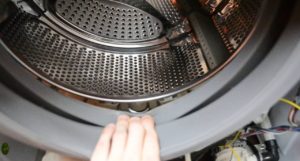 Unusual squeaks can't be avoided when your washing machine is running if the seal over the door isn't the right size. The noise will begin immediately when the drum starts spinning and will persist until the program is turned off. Another sign is rubber shavings stuck to the cylinder surface. This mismatch can often be corrected with sandpaper. What should you do?
- We take a piece of sandpaper.
- We place it on the rubber cuff and press it with the hatch door.
- We turn on the quick program.
- We wait until the sandpaper smooths out the rubber band after a half-hour cycle.
- At the end of the program, we take out the paper.
- We start rinsing to get rid of the shavings.
- We clean the trash filter.
If your washing machine starts making noise while draining, there's a good chance the pump is broken. In this case, it's recommended to test the part with a multimeter.
What happened to the new technology?
 It is not always the case that a washing machine makes noise due to a malfunction or failure.If the washing machine hums from the first start, but there are no obvious knocks or squeaks, and the noise itself is monotonous and uniform, then there is no cause for concern. Perhaps this model is supposed to be "loud" based on its performance characteristics. It's easy to verify this: study the included instructions and check the decibel ratings.
In the technical data sheet, the manufacturer always specifies the maximum noise level the washing machine emits during the fastest spin cycle. The value is given in dB, but it's impossible to accurately determine the noise level by ear. A special device called a sound level meter is required.
The permissible noise level of the washing machine is indicated in the technical data sheet.
Sound level meters can be purchased both in specialized stores and online. Prices vary depending on the functionality and country of manufacture. Chinese-made meters can be found for $1.50–$3.
You can try to estimate the volume of a washing machine without a sound meter. For example, compare the emitted hum with known sound "situations." Experts estimate a normal human conversation at 50 dB, a truck engine operates at approximately 80 dB, a car siren 5 meters in diameter reaches 100 dB, and an airplane taking off reaches 150 dB. These values are approximate, but they can sometimes help "hear" the machine.
The main thing is to assess the nature of the noise. The machine should operate in a consistent rhythm, without any sharp knocks or clanking. Otherwise, you may suspect a malfunction.
Use equipment with care
In most cases, a washing machine starts making noise due to malfunctions. It's much easier to prevent them than to fix them. Prevention consists of careful use of the machine. So, the following recommendations will help delay the manifestation of “high-profile problems”:
- Observe the drum loading norm: overweight or underweight leads to imbalance;
- do not use high temperature modes in a row;
- Avoid spinning at maximum speed - strong acceleration overloads the machine;
- clean the debris filter regularly;
- prepare clothes for washing, sort and check pockets;
- add high-quality detergents that are completely washed out of fabric and the washing machine;
- Do not store heavy objects on the top lid of the washing machine – it should be empty;
- Place your underwear in special laundry bags, especially underwire bras;
- take care to soften hard tap water with special products;
- Finish using the machine with an "idle" cycle.
Using the machine too frequently is not recommended. It's best not to overload it, allowing it to "rest" after three consecutive cycles. It's also important to keep the machine dry by wiping it down after washing and leaving the door open.
Interesting:


Readers' comments
Headings
Washing machine repair




For buyers




For users


Dishwasher




Add a comment