
The Candy washing machine fills with water but does not wash.
 Automatic washing machines can sometimes act up. For example, they might freeze mid-cycle, reset user settings, or fail to spin. In some cases, a Candy washing machine will fill with water but never start washing. Let's explore the possible causes of this malfunction and how to repair it yourself, at home.
List of malfunctions
Repair of a new Candy washing machine may be necessary after careless transportation of the appliance or improper connection and installation of the equipment. Also, breakdowns of this kind occur due to gross violation of the operating rules of the device. The reasons may also include natural wear and tear of components and assemblies.
The machine filling with water and not washing is caused by a malfunction of one of the following components: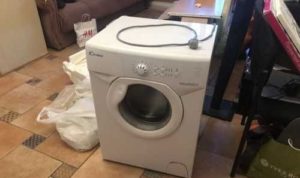
- inlet solenoid valve;
- drive belt;
- electric motor;
- drum;
- heating element;
- control module.
To troubleshoot a breakdown yourself, you need to determine what exactly is causing the equipment failure. Once the cause is identified, the next course of action can be determined.
Inlet valve
If your Candy washing machine is filling very slowly, it's best to inspect the inlet filter mesh to ensure it's not clogged. Close the shut-off valve, disconnect the inlet hose from the machine, and remove the element using pliers. If it's clean, you'll need to check the inlet valve.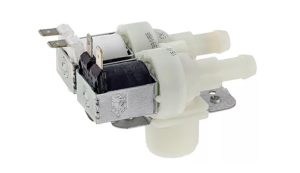
The solenoid valve in Candy front-loading washing machines is located under the top cover, in the area where the inlet hose is connected. When performing diagnostics on an element, it is important to exercise caution.
To test the inlet valve, connect the inlet hose to it. Then, apply 220 volts to each coil. If it's working, it will open and let water through, and when the power is cut, it will close. When performing this procedure, be careful not to let any liquid come into contact with any live wires, as this could easily cause a short circuit.
If diagnostics reveal that the intake valve is faulty, it will need to be replaced. A similar part should be purchased and installed in its original location.
Drive problems
A Candy washing machine may fill with water but fail to start due to drive problems. Most often, belt stretching is caused by constantly overloading the machine. If you load the machine with more laundry than is permitted, the belt will wear out over time. As a result, the machine will not be able to spin the drum and, consequently, wash the laundry.
The drive belt on front-loading washing machines is located behind the rear wall, while on vertical washing machines it is located behind the side panel of the housing.
To remove the wall and access the belt, you need to remove all the screws securing the panel. This will require a screwdriver.
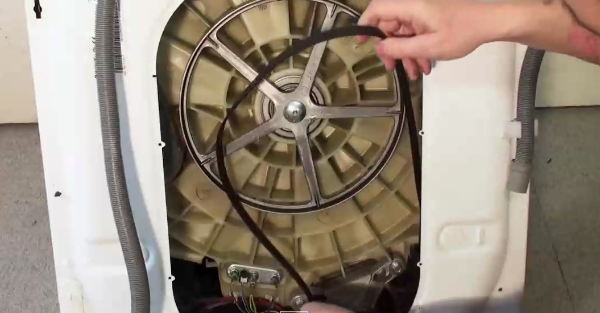
A "jumped" belt should be inspected. Cracks or small tears may be causing it to slip off the pulley. A worn rubber band should be replaced. To tension a new drive belt, first place it on the engine pulley. Next, place the rubber band on the larger "wheel" and rotate it from right to left. This will seat the belt.
Drum jamming
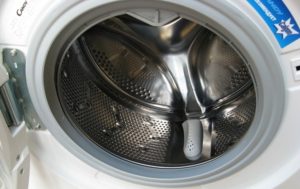 Sometimes the machine fills with water but doesn't start washing because a foreign object has become lodged between the walls of the tub and the drum. This could be a loose screw, a large button, or a bra underwire. In this case, the drum "jams." The machine attempts to spin the centrifuge, and the motor runs at high speeds and makes a loud humming sound.
Removing the foreign object from inside can help fix the problem. It can be accessed through the gap between the tub and the drum. To do this, remove the top cover and tilt the washing machine backward. Another option is to remove the back panel, pull out the heating element, reach into the resulting opening, and pry out the stuck object.
Heating element
A Candy washing machine may stop working due to a burnt-out heating element. This can be easily checked at home. A multimeter is required for diagnostics. Sometimes, a thick layer of scale can prevent the heating element from functioning properly. In this case, you need to clean off the scale and replace the element.
How does a faulty heating element affect the overall performance of the washing machine? After the required volume of water has been filled into the tank, the heating element is activated. It needs to heat the liquid to the desired temperature. Then, a sensor is triggered, starting the motor.
If the heating element cannot heat the water to the set temperature, the control module does not give a command to the motor, so the wash does not start.
To check the heating element, you need to: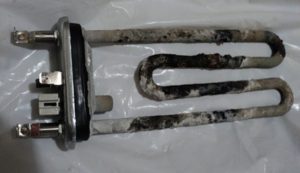
- turn off the power to the washing machine, turn off the water supply tap;
- remove the top cover of the case by unscrewing the bolts that secure it;
- remove the screws around the perimeter of the rear panel, remove the wall;
- take a photo of the wiring diagram for the heating element;
- disconnect the wires, reset the terminals;
- unscrew the central nut;
- push the bolt deeper by tapping it gently;
- pry up the heater body with a thin screwdriver;
- remove the heating element from the tank.
After this, be sure to clean off any limescale deposits from the heating element. If black spots are visible on the surface of the heating element, it's likely a breakdown. In this case, the element will need to be replaced.
If no defects are found during the heater inspection, the element is checked with a multimeter. The tester is set to resistance measurement mode, and its probes are then applied to the heating element contacts. If the element is in good condition, the device will display a value between 20 and 40 ohms.
A burned-out heating element should be replaced with a new one. Carefully insert the new element into the "socket" and spin the drum. This will ensure the centrifuge doesn't touch the heating element. Then, tighten the central nut, connect the wiring, and reassemble the machine.
Brushes or motor capacitor
If you still haven't been able to identify the cause of the breakdown, you'll have to check more complex components of the Candy washing machine. A broken motor can also cause the washing machine to fill with water and not wash. Most often, the motor cannot perform its functions due to:
- worn brushes;
- non-working starting capacitor (in an asynchronous motor that does not have brushes).
The electric motor of an automatic washing machine may not turn on due to overheating, for example, when using the washing machine for several loads in a row without a break.
You can change the motor brushes yourself. To do this:
- gain access to the engine by removing the top and rear panels of the case;
- disconnect the drive belt, all wires and sensors from the motor;
- remove the engine by unscrewing the bolts that secure it;
- Using a screwdriver, disconnect the terminal from the electric brush;
- Remove the carbon rod from the motor by unscrewing the fasteners and pressing the spring.
Inspect the brush. If it's clearly worn, replace it. When installing new brushes, be sure to check which way the worn end of the carbon electrode is facing. If you place it upside down, it could cause sparking in the engine.
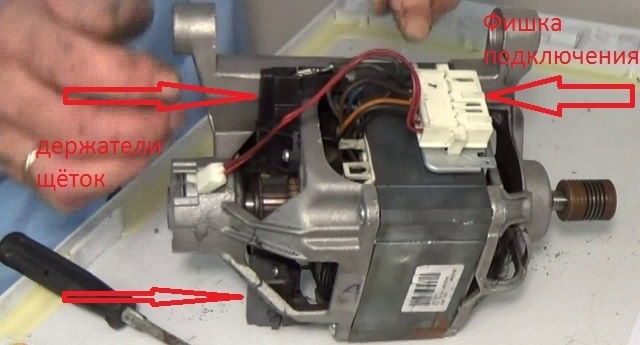
When selecting replacement parts, be sure to check the motor model of your Candy washing machine. The markings can be found on the motor housing. Electric motor brushes must be changed in pairs, even if one “coal” is practically intact.
Cleaning the manifold may be necessary to fix the problem. Use fine-grit sandpaper, preferably "zero" grade.
Place the sandpaper on the commutator and rotate the shaft. Continue rotating until the entire surface is polished. Then, insert the brushes into the motor at the correct angle and secure them with clips. The repair is completed by mounting the motor, connecting the wiring, sensors, and drive belt. Afterward, you can reassemble the housing and test the washing machine's performance.
You will need the help of a specialist
It's extremely rare for a washing machine malfunction to be caused by a faulty control module. However, even if all other components are in good working order, it's still worth checking the machine's "brain." Perhaps, due to some damage, it's unable to properly communicate with the other components, causing water to fill the drum, but the wash cycle won't start.
Only a qualified technician with a good understanding of electronics can repair the control board.
Don't try to mess with the "brains" of your Candy washing machine yourself. You could cause even more damage. A specialist will carefully disassemble the unit, diagnose the control module, and determine whether repair is necessary.
In most cases, you can fix a Candy washing machine yourself. However, if the problem is caused by a damaged main control unit, it's best to contact a service center for assistance.
Interesting:
2 reader comments
Add a comment
Headings
Washing machine repair




For buyers




For users


Dishwasher




They explain everything very clearly, I liked it.
I liked the story about the heating element. What does it have to do with it if the water heating is off? And what if the machine fills with water, but the spin and rinse functions don't work?