
Candy washing machine does not heat water
 If you notice your Candy washing machine isn't heating, troubleshoot it immediately. Wash quality will deteriorate significantly in this case, so don't delay repairs. Let's figure out which internal components are causing the lack of heating and what to check first.
Is there really a problem?
It might seem like if the water in the washing machine isn't heating, it means the heating element is broken. However, it's not always the culprit. Often, it's not even a breakdown. Therefore, don't disassemble the washing machine right away; it's recommended to conduct a little investigation first.
Some Candy washing machines' washing programs do not heat the water by default.
So, first, check which washing program is running. It's possible the selected algorithm doesn't involve heating the water. If you're unsure which mode you've selected, select "Cotton 60" and observe how the machine operates.
Modern Candy machines allow you to adjust the default program settings. Sometimes the buttons don't respond, and the user thinks they've increased the wash temperature, but in fact, this isn't the case. You'll need to check the cycle settings by reactivating the mode and manipulating the control panel. If the machine heats up the water, it's a simple system glitch.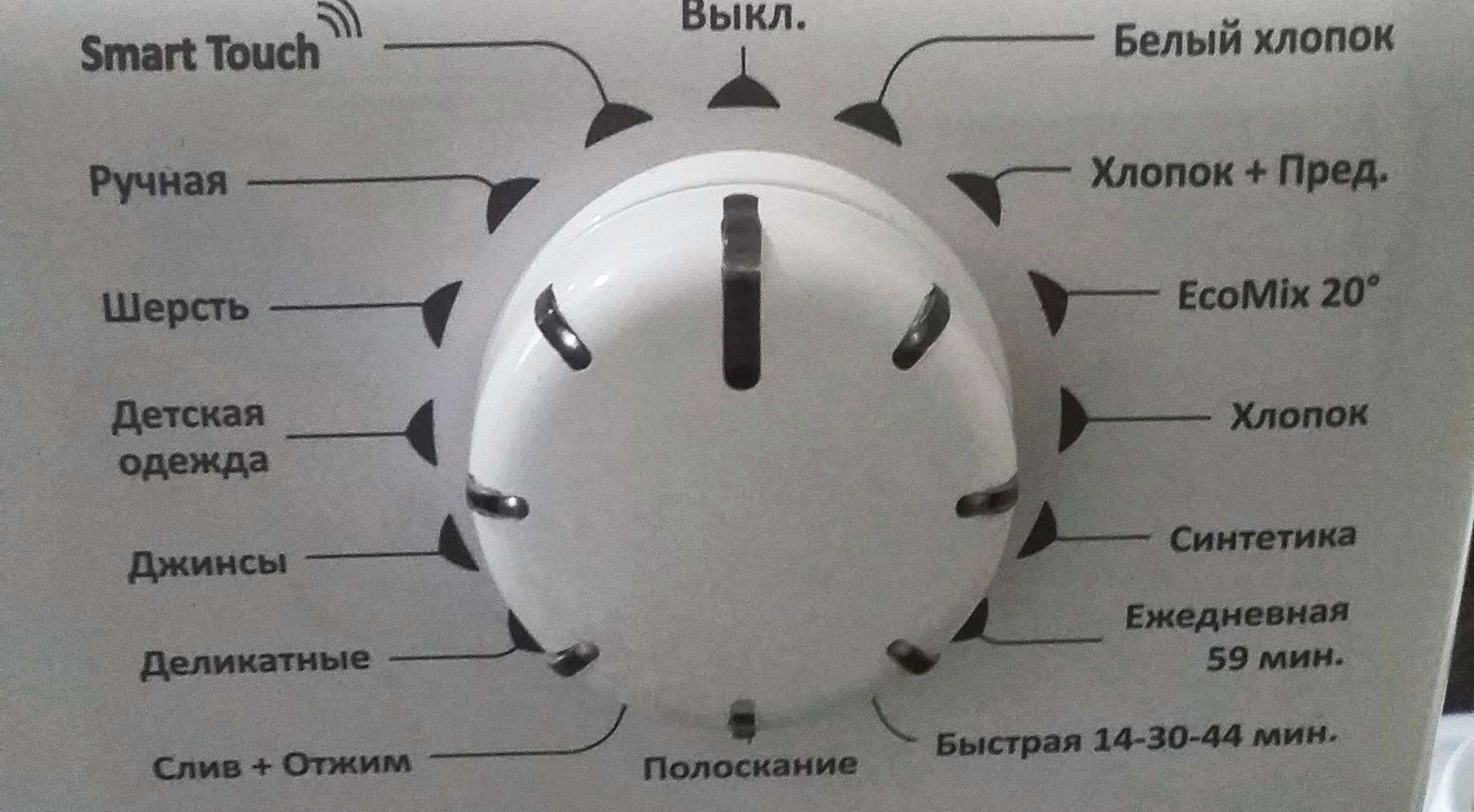
Many users, when removing cold laundry from the washing machine, assume the machine isn't heating the water during the wash cycle. In fact, the final rinse occurs in cool water. Therefore, this doesn't necessarily indicate a lack of heating.
To check if your washing machine is heating water:
- select any high temperature mode (for example, “Cotton 60”);
- activate the cycle;
- wait 20-30 minutes;
- touch the door glass;
- Assess the degree of heating of the hatch - the glass should be warm.
It doesn't have to be really hot, just warm. If, after starting a high-temperature wash cycle, the door glass remains cold after half an hour, there is a heating problem. In this case, a machine diagnostic will be required. We'll figure out which faulty components could be causing this behavior.
The most likely problems
Using a washing machine that's not working properly is not recommended. Therefore, don't delay troubleshooting. Otherwise, the situation may only worsen, and your "home helper" may completely fail.
Modern Candy washing machines are equipped with a self-diagnostic system – they detect malfunctions, stop the cycle, and immediately notify the user of the problem.
In this case, it's easier to figure out what's wrong with your washing machine. Simply decipher the error code displayed by the washing machine using the manual. The manual will indicate the malfunction the washing machine is reporting.
Candy machines without a self-diagnostic system continue to run, washing items in cold water. Users begin to suspect heating issues when they receive poorly washed items.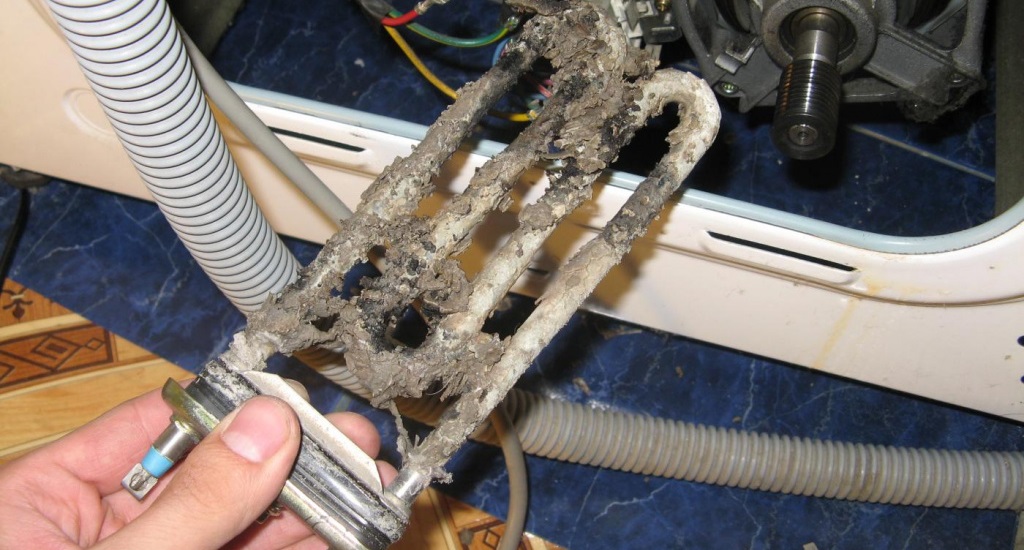
Most often, Candy washing machines stop heating water due to:
- heating element malfunctions (usually the heater is covered with a thick layer of scale, which disrupts its thermal conductivity; sometimes the cause is a short circuit in the element);
- pressure switch failure (the water level sensor does not inform the module that the tank is full, the machine’s “brain” does not give the command to heat the liquid);
- a break in the wiring connecting the heating element to the control board (the circuit is broken, which prevents the heating element from working);
- damage to the temperature sensor (an incorrectly functioning thermostat will transmit incorrect readings to the module, as a result of which the water in the tank may not heat up);
- failure of the main control module (probably a breakdown of the resistor responsible for communication with the heating element or separation/oxidation of the contacts).
Most problems can be resolved at home. A service center specialist will only be required to repair the electronic module. If you decide to do it yourself, remember safety precautions and follow the instructions.
The heating element is at fault
Water in most Russian regions is extremely hard. Few users regularly descale their washing machines—many forget about it. As a result, limescale builds up on the internal components of the machine. This is the main cause of heating element failure.
The tubular heating element of the washing machine becomes covered with a thick layer of scale, which leads to a disruption of heat transfer and burnout of the element.
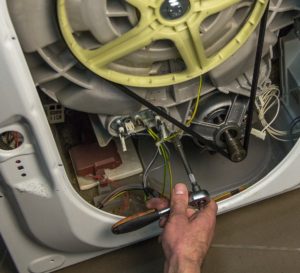
You can check the heater at home. To diagnose the heating element, you will need a multimeter. Before disassembling the washing machine, be sure to completely disconnect the power supply. Next:
- close the shut-off valve that supplies water to the machine;
- Move the washing machine away from the wall (you will need access to the back of the unit);
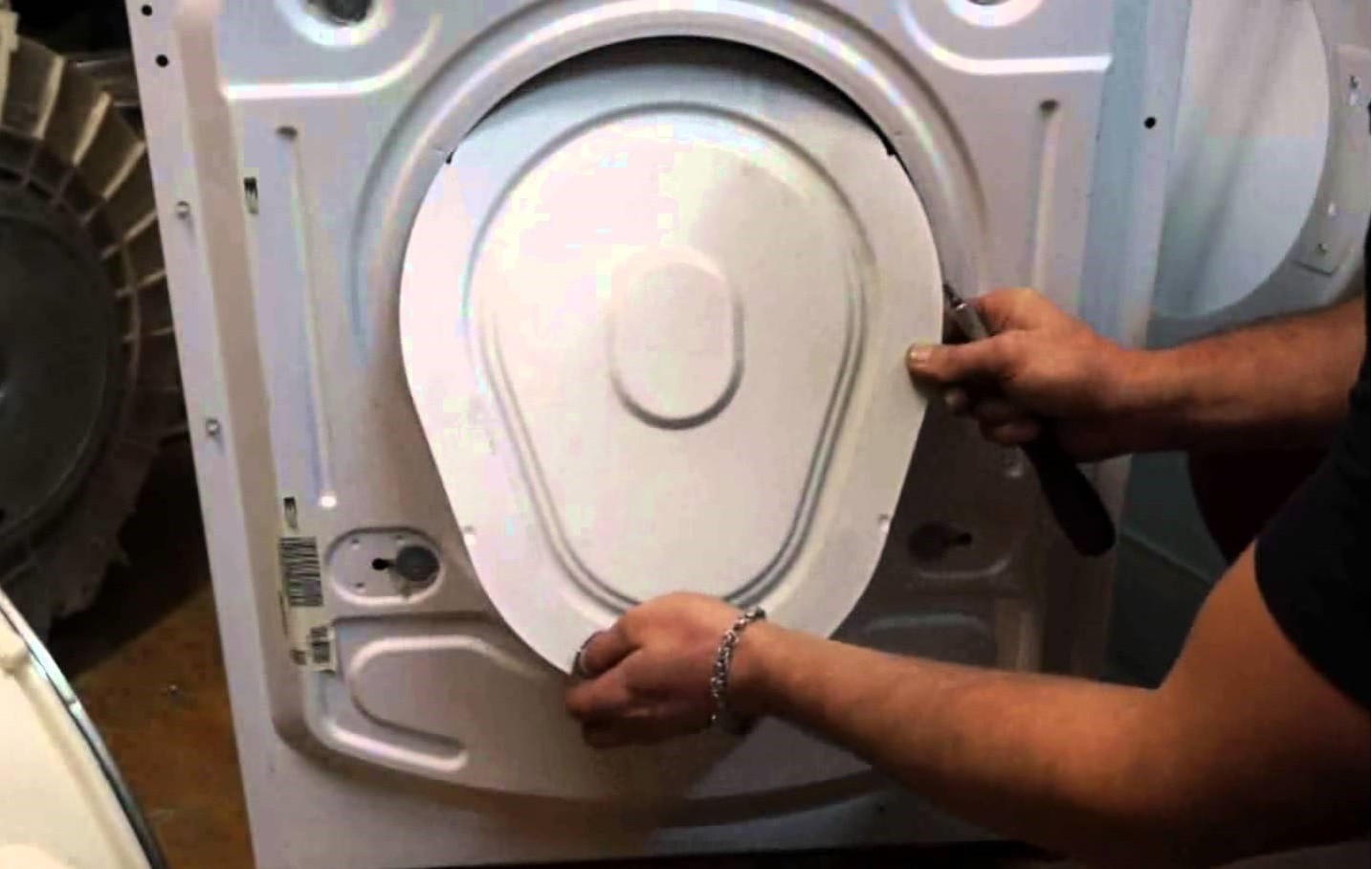
- remove the back wall of the washing machine;
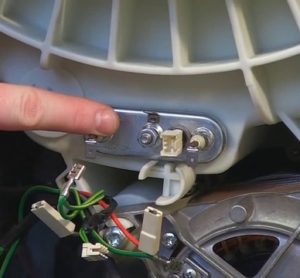
- Find the heating element, it is located under the tank.
Before disconnecting the terminals, take a photo of the wiring diagram. This will help you avoid mistakes during reassembly. Next steps:
- reset the heater wiring;
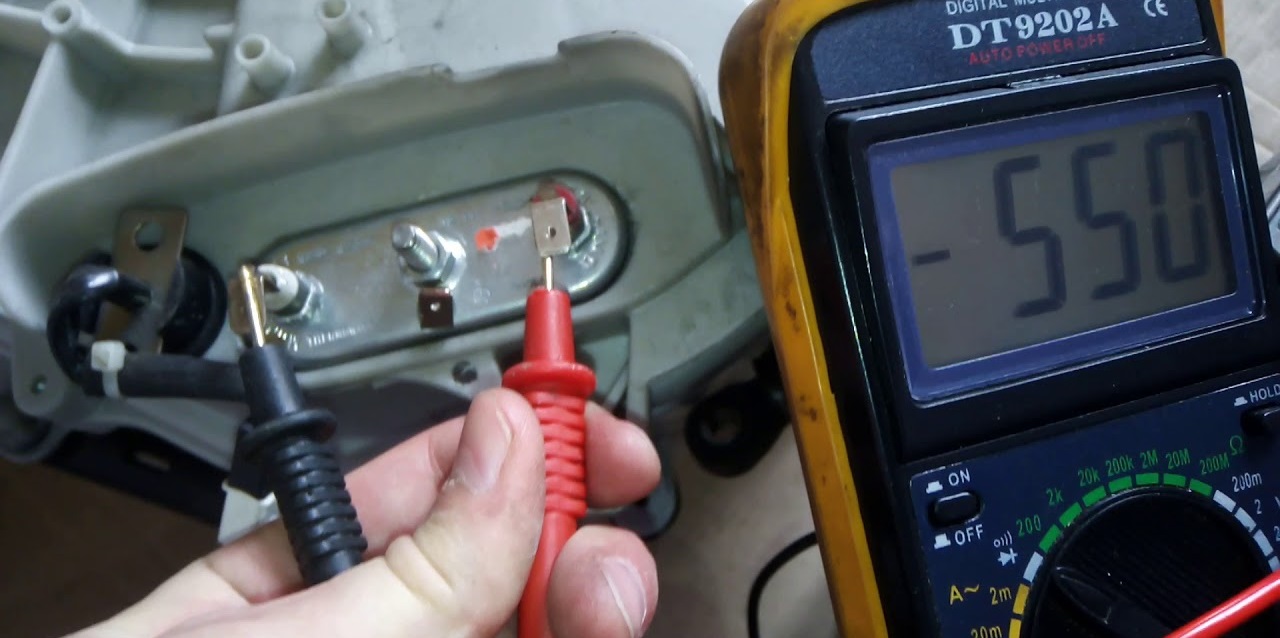
- turn on the multimeter, set it to resistance measurement mode;
- set the tester to 200 ohms;
- Place the multimeter probes against the heater terminals;
- evaluate the readings on the screen of the measuring device.
Normally, the multimeter should read 26-28 ohms. If the tester display shows a one, this indicates an internal open circuit in the heater. A zero indicates a short circuit in the element. The heating element cannot be repaired and will need to be replaced.
If the resistance readings are normal, the heater housing is checked for breakdown. To do this, switch the tester to buzzer mode. Next, touch the multimeter probe to the heating element. If the device beeps, there is a problem and the part will need to be replaced.
A new heating element is purchased for a specific Candy washing machine model. It's best to purchase original components. You'll also need to remove the old heating element. Removal is often complicated by deformation of the protective gasket—it expands and interferes with the element's removal. The procedure is as follows:
- Treat the rubber gasket with WD-40 cleaner;
- wait 15 minutes;
- disconnect the temperature sensor;
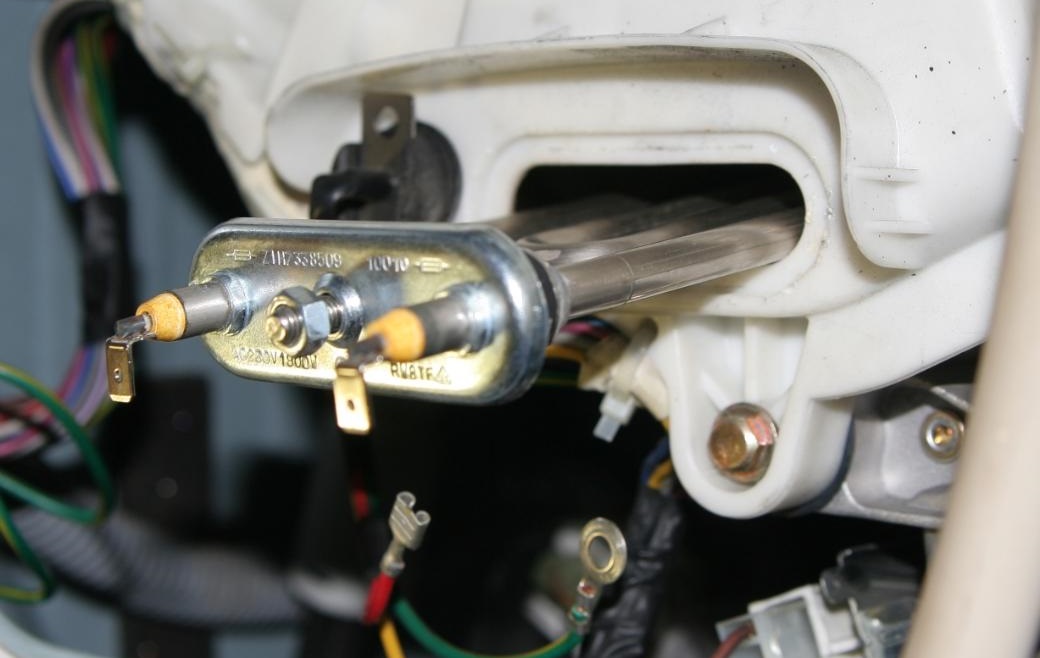
- unscrew the central nut, remove the bolt holding the heating element;
- gently rocking the heater, remove the element from the “nest”.
Before installing the new heating element, be sure to clean the seat of any scale or dirt. It's also a good idea to reach into the hole and remove any debris that may have accumulated inside. Next, insert the heating element into the seat and secure it with the bolt and nut. Then connect the thermistor and wiring. Then reassemble the machine and run a high-temperature test cycle.
The level sensor is malfunctioning
Another possible cause of a lack of heating is a broken pressure switch. Checking the level sensor is easier. To access it, simply remove the top panel of the washing machine.
The water level sensor is located in the center near the dispenser. It resembles a washer, with a long hose extending from it that goes into the tank. How to test the pressure switch: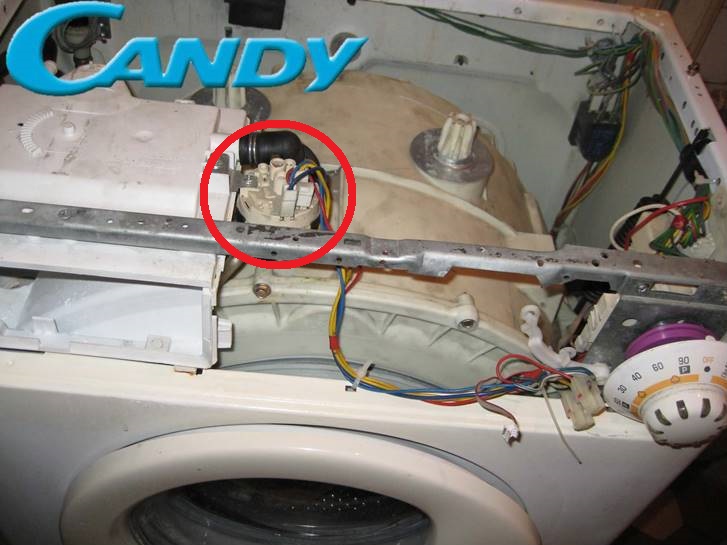
- prepare a tube whose diameter will match the size of the level sensor fitting;
- disconnect the pressure switch hose by removing the clamp;
- insert the prepared tube into the nozzle and blow into it;
- Listen carefully - if the sensor is working properly, the contacts will be activated, which will be indicated by 1-3 characteristic clicks.
Next, the level sensor is inspected for defects, cracks, and burn marks. Be sure to check the pressure switch tube for clogging. If necessary, rinse the hose under warm running water.
It's also worth checking the pressure switch with a multimeter. Set the tester to ohmmeter mode, then touch its probes to the component's contacts. Then, evaluate the readings—if they change, everything is fine. If not, the level sensor will need to be replaced.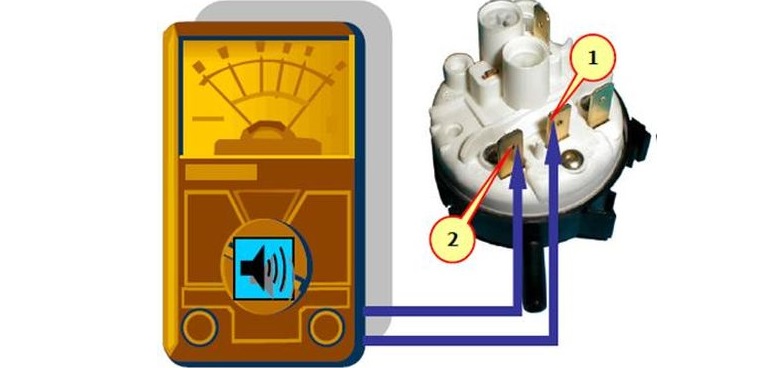
Repairing the pressure switch is pointless; it's much easier to buy a new sensor. The removal process is standard: loosen the clamps, remove the connector with the wires, and remove the washer. A working part is installed in the reverse order.
If the pressure switch is OK, the temperature sensor is checked. It is also tested with a multimeter. If the thermistor is also working, the problem lies with the control board. It's best to entrust diagnostics and repair of the Candy washing machine's electronic module to specialists.
Interesting:

Readers' comments
Headings
Washing machine repair




For buyers




For users


Dishwasher




Add a comment