
The Candy washing machine does not spin.
 If your washing machine has finished its cycle but there's still water in the drum and your laundry is completely wet, it's safe to assume it's not spinning fast enough. Don't worry, this is a common problem with Candy washing machines and isn't always associated with a serious malfunction. In this article, we'll look at possible causes of this problem and provide troubleshooting instructions.
Why can't the machine spin the drum?
Wet laundry is unpleasant to deal with. Finishing the job after your "home helper" is not only time-consuming but also dangerous, as a faulty repair can worsen the problem and lead to complete machine failure. It's important to address all possible causes of spin cycle issues promptly to avoid major problems later. Specifically, with a Candy washing machine, the following situations may arise:
- a program without spin was selected;
- the drum was out of balance;
- the drain does not work as it should;
- the tachogenerator failed;
- the electric motor stopped working;
- the drum bearings are worn out;
- the control board is not working;
- The drum does not rotate because a foreign object has entered the tank.
In most cases, you can resolve this yourself. The exception is when the problem lies in a burned-out control module. In this case, you won't be able to repair it yourself and will have to call a technician. To accurately determine the source of the problem, it's necessary to conduct a thorough diagnosis and identify all possible causes. Detailed instructions for doing so are provided below.
Was the correct mode started?
The spin cycle often stops working properly in Candy washing machines. This is caused by an imbalance in the drum. This problem occurs when the load is overloaded and the laundry is not properly distributed along the drum walls.
Modern washing machines have a special function that controls the balance during the washing and spinning process, so this problem is more common in older models!
This problem is fairly easy to spot: the machine will try to spin up, but with little success. The cycle will finish 7-15 minutes before the set time, and the laundry will be wet. This situation can be corrected as follows: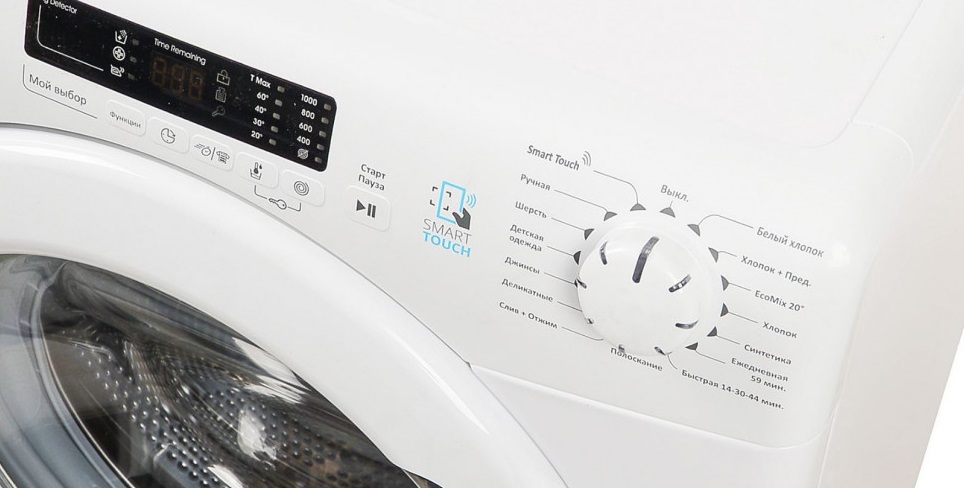
- we wait until the hatch is unlocked and open the door;
- we take out some of the laundry (if it’s overloaded), untangle the “lump” or, on the contrary, add things (if it’s not enough);
- close the hatch tightly;
- start the spin cycle;
- We check the laundry for dryness.
It is also worth noting that imbalance failure has a very negative impact on the shaft, bearing assembly and shock absorbers, so it should be avoided at all costs. Always be mindful of how much laundry you load. For example, in a Candy washing machine with a capacity of up to 5 kg, you should wash at least 1 kg of laundry. In machines with a maximum capacity of 8-9 kg, you should wash at least 2.5 kg.
No engine speed data
A faulty tachogenerator can also cause the spin cycle to stop working. This device, also known as a Hall sensor, monitors the motor's RPM and transmits all the information to the control board. When it fails, communication is lost, and the system stops receiving the necessary information, causing it to reduce motor power for safety reasons. This type of malfunction is often caused by improper use of the machine, specifically: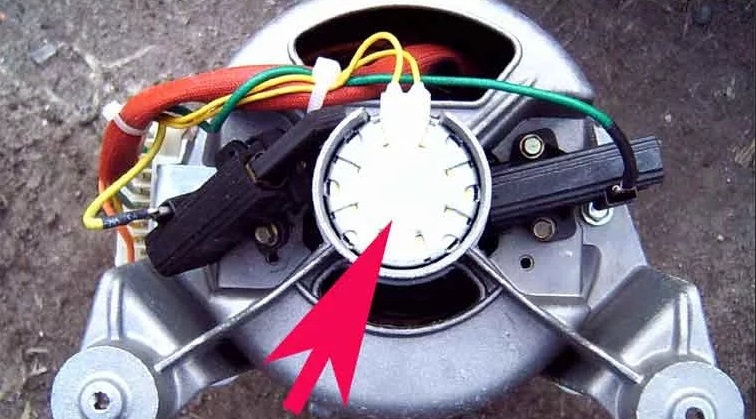
- constant overloading of the machine with laundry;
- too long and continuous use of the machine;
- loose fasteners;
- damaged wiring and contacts that may have come loose;
- a sudden power surge or a short circuit.
First, carefully examine the wires and tighten the terminals if necessary. Clean and insulate the conductor, then test the sensor with a multimeter and evaluate the results. If there are any deviations from the norm, replace it with an equivalent.
The engine lost power
Another situation arises when the motor is unable to accelerate to the required power. This type of slowdown in brushed motors occurs when the electrical panels are worn out: the machine's main processes operate as usual, but the spin cycle is disabled. If other cycle stages are also struggling, the motor itself has failed. To confirm this, do the following: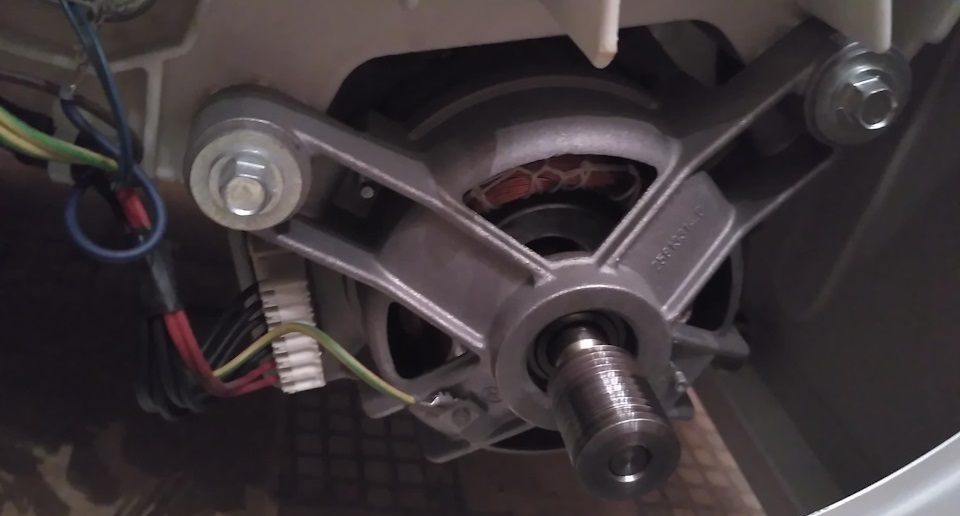
- disconnect the machine from all communications;
- unscrew the back cover;
- remove the drive belt;
- disconnect all connected places;
- loosen the retaining fasteners;
- rock the engine and remove it from the grooves.
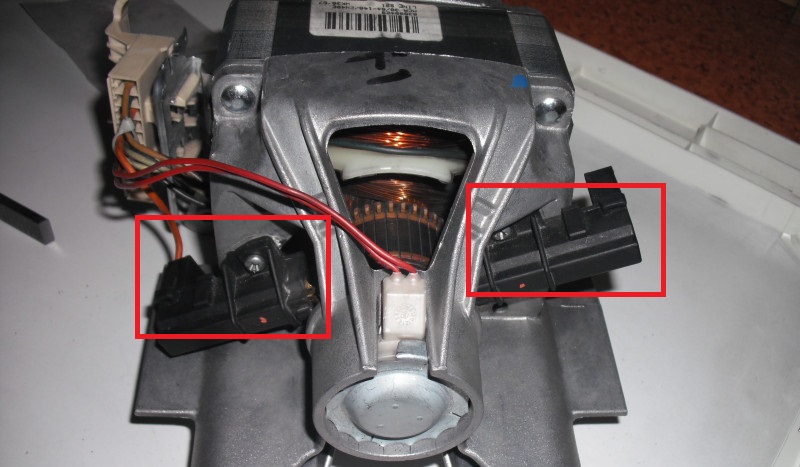
Next, we wipe the body with a cloth and inspect for damage. Typically, if the motor has burned out, you'll smell an unpleasant burnt odor and notice charred wires and stains. After that, we turn our attention to the electrical panels. Remove them from the motor on both sides, open them, and measure the length of the tip. If the tip is less than 0.7 mm, you can safely replace the pair with a new one and don't forget to test the coils.
The drum bearings are to blame for everything
To determine if the bearing assembly is at fault, listen carefully to the sounds coming from the machine. Any unusual noise indicates that the seals have worn out and leaked, causing grease and corrosion to accumulate in the bearings. It will be impossible to return these parts to normal, so they will have to be replaced.
The next instructions won't be so simple. First, you'll need to find a suitable replacement, based on the Candy washing machine's serial number. Then you'll need to disassemble it, even removing the drum and counterweights. Next, you'll need to knock out the rusted rings, taking care not to damage the shaft or drum walls. The job will be challenging, especially because anyone attempting the repair themselves won't have access to a special puller or other essential tools and materials.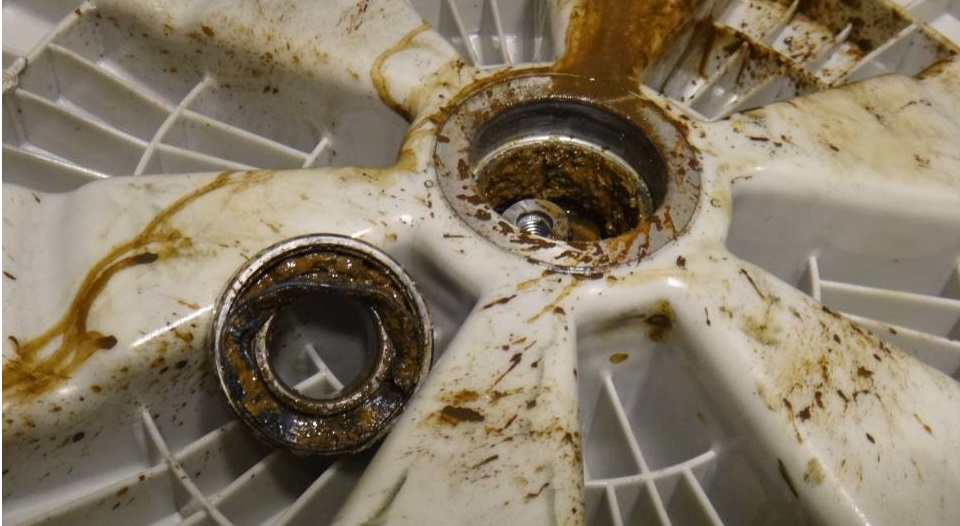
Before you decide to begin, approach this matter with the utmost seriousness and consider whether you truly have the strength and experience to undertake such a task. You risk damaging the wiring or ruining the hoses and fuel tank. However, it's important to understand that if you seek professional help, such repairs will be quite expensive. Sometimes replacing the unit and seals can cost a third of the price of a new car.
Interesting:


Readers' comments
Headings
Washing machine repair




For buyers




For users


Dishwasher




Add a comment