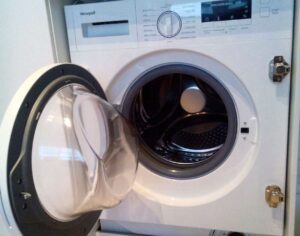
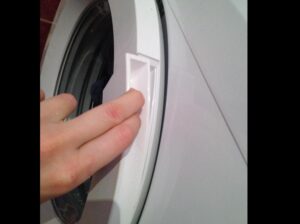
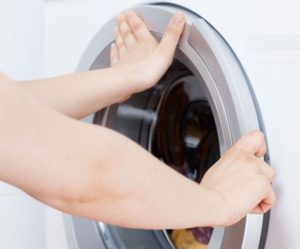
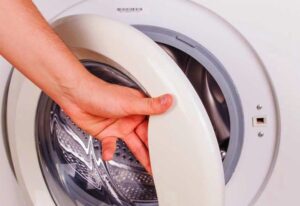
If your washing machine doesn't open at the end of the cycle, don't panic. Normally, the machine may remain closed for several minutes while the metal plate in the door lock cools and unlocks the mechanism. Then, the electronic lock will be released, and all you have to do is press the handle and open the door. However, it can take 10 minutes or more for the Candy to unlock. In this case, delaying the door is futile—you'll need to force it open and troubleshoot the problem.
How to delicately "open" the hatch?
A full drum won't allow you to diagnose or repair your machine. Before addressing the problem, empty the drum and remove the clothes. Make sure the door remains locked for at least 10 minutes after washing—it's recommended to force the Candy open only after this time.
Most often, the machine remains locked due to a full drum. For some reason, the water hasn't drained into the sewer, and for safety reasons, the system doesn't trigger the electronic lock release. In this situation, it is necessary to empty the tank. The easiest way is to activate the “Rinse”, “Spin” or “Drain” program.
After the program ends, try unlocking the door again. If the lock is still present and the drum remains full, it's time to check the drain function. First, inspect the drain hose for any kinks or blockages. If necessary, free and clean the hose. Then, try any of the above-mentioned modes again and observe the washing machine's response.
Sometimes cleaning the drain doesn't help, and the system doesn't respond to attempts to drain automatically. In this case, you'll have to empty the tank manually by removing the debris filter. The procedure is as follows:
de-energize the machine;
cover the surrounding area with oilcloth or rags;
find a basin to collect water;
pry open the technical hatch door and open access to the filter;
unscrew the nozzle;
drain the water from the machine.
The emptied machine is ready to be opened. Use a thin piece of string, a knife, or a flat-head screwdriver to perform an emergency opening. Place the string in the opening between the door and the body near the locking mechanism and gently push it in. Pull the string in both directions until you hear a click, indicating the latch has engaged. Then press the handle and open the loading door as usual.
If the rope method doesn't work, try another approach. Disconnect the appliance from the power supply, remove the top cover, and tilt the machine back. The drum should lift away from the front wall, after which you can reach into the door lock, feel for the release tab, and slide it. This will unlock the door.
What caused the problem?
Problems with opening the door are not always related to the system's protective reaction to a full drum. The hatch may remain impregnable for other reasons as well. Typically, Candy lock problems are caused by a broken handle, faulty door locking system, or a faulty control board.
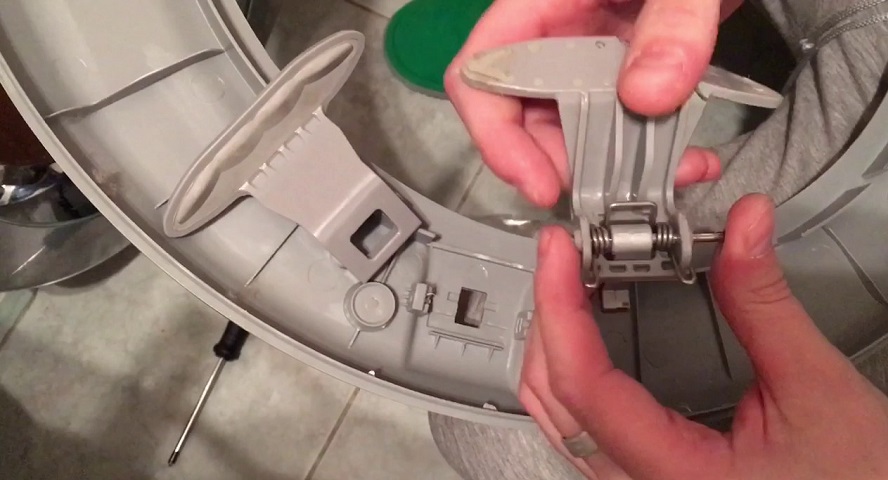
A broken door handle. Careless opening of the hatch, repeated slamming, or children's mischief can damage the locking mechanism.
Defective door lock. Electronic door locks fail after prolonged use, as the mechanical components wear out and break over time.
The pressure switch is faulty. It's likely the level sensor is malfunctioning and sending incorrect information to the board. For example, it's reporting the tank is full, even though it's actually empty.
Board failure. The most serious failure, in which the system freezes and stops analyzing incoming data and commands.
We strongly advise against testing the control board yourself for functionality – it's too risky!
Sometimes the cause of a blocked drain is a malfunctioning drain. It's possible that the internal hose or debris filter is clogged, the impeller is blocked, or the pump is broken. If you can't determine the cause of the problem yourself, it's worth contacting a service center.
It's all about the castle
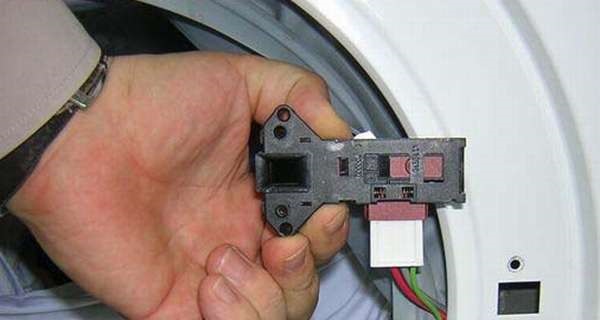
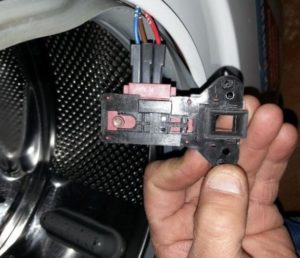
Most often, a Candy washing machine won't open due to a faulty locking mechanism. Checking the locking mechanism yourself is easy; just remove it from the housing and test it with a multimeter. First, follow these steps:
disconnect the machine from the power supply;
we open the previously opened hatch;
bend the edge of the hatch cuff to the side, find the latch and loosen the outer clamp;
we pull the seal to the left side, exposing the locking mechanism;
we unscrew the two fasteners that secure the blocker;
We press the additional latches and detach the UBL from the body.
Once you have the device, you can begin diagnosing it. To check, you will need a multimeter set to measure resistance and an electrical circuit diagram of the blocker. Our task is to evaluate the performance of the heating element responsible for heating the plate:
turn on the tester;
we apply the probes to the neutral contact and the phase of the blocker (the norm is any three-digit number);
we move the probes from the phase to the common contact (if “0” and “1” are present, the UBL will need to be replaced; the other values are normal).
If the door lock is working properly, we return it to its original location and look for the problem elsewhere. If a faulty lock is detected, we'll need to find a replacement and install it in the old unit's place. Install the lock in reverse order: connect the wiring, secure it in the housing, and secure it with bolts. Finally, straighten the seal and tighten the clamp. Don't forget to perform a test run to ensure the system is working properly.

 If your washing machine doesn't open at the end of the cycle, don't panic. Normally, the machine may remain closed for several minutes while the metal plate in the door lock cools and unlocks the mechanism. Then, the electronic lock will be released, and all you have to do is press the handle and open the door. However, it can take 10 minutes or more for the Candy to unlock. In this case, delaying the door is futile—you'll need to force it open and troubleshoot the problem.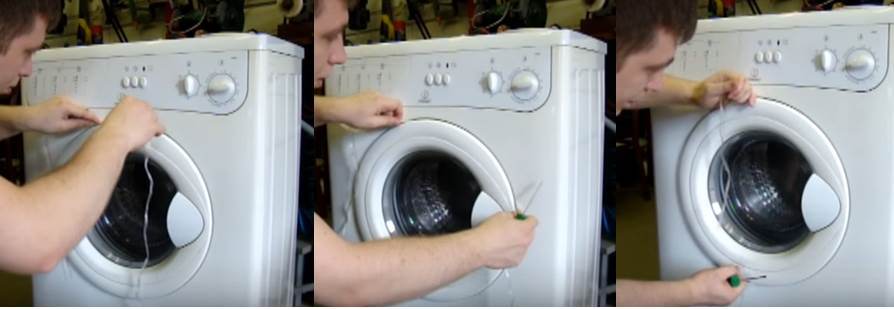














Add a comment