
Candy washing machine won't drain
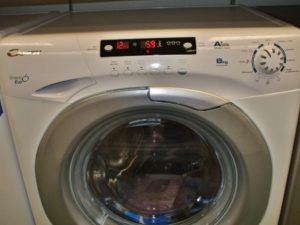 It's easy to tell if your Candy washing machine isn't draining. The system will try unsuccessfully to start the pump, hum, and after a couple of attempts, it will stop, cancel the program, display an error, and be left with a full drum. Ignoring this interruption won't work—your laundry will remain soaked in soapy water in the locked door. In any case, you'll have to address the problem—finding the fault and repairing it.
Don't neglect to inspect the filter.
It's impossible to immediately determine the cause of a malfunctioning drain. A comprehensive diagnosis is required, including an analysis of the washing machine's behavior and an inspection of the drainage system's weak points. It's important to remember at what point the system froze, whether the pump managed to pump out at least some of the water, and how the machine hummed before the pump stopped.
Most often, drainage problems on Candy machines are caused by one of the following drainage components: the waste filter or the pump itself. The former becomes clogged, while the latter becomes blocked by hair or malfunctions. In any case, troubleshooting the machine begins with the waste filter. You can access it as follows:
- disconnect the machine from the power supply, turn off the water supply;
- move the washing machine away from the wall;
When draining water through the waste filter from the machine, it is best to remove all moisture-absorbing items, coverings, and detergents.
- prepare the area for drainage: remove powders and mats, lay down oilcloth and rags;
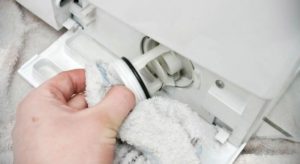
- find a container to collect water (you will need a basin the size of the drum);
- unhook the technical hatch door, which is located at the bottom right, from the body;
- lean the washing machine against the wall, raising it by 4-8 cm;
- Place the prepared container under the filter – the black “washer”.
Now all that's left to do is grab the protruding part of the cap and gently twist it clockwise. It's best to move slowly so the stream of water isn't too strong. Once the leak stops and the "spiral" loosens, you can remove the "trash can" from its seat. Avoiding a small "flood" is almost impossible; be prepared for dirt and soap.
Next, we begin cleaning the filter. Using an old toothbrush and soap, remove any stuck-on debris, tangled hair, and other dirt from the plastic. Then, thoroughly rinse the attachment under the tap. If this cleaning isn't enough and a thick layer of scale or ingrained dirt remains on the coil, soak the part in a warm lemon solution. The soaking time depends on the condition of the filter; on average, 4-5 hours is sufficient. Avoid placing the part in boiling water, as water above 60-90 degrees Celsius will cause the material to deform.
The pump will have to be removed.
If the waste bin is clean, the problem with the failed drain lies elsewhere—a broken pump. The pump is responsible for emptying the tank, and if it breaks, pumping water out becomes impossible. To restore the drainage system, you need to remove the device, check it for proper operation, and repair it if necessary.
Candy washing machine owners are lucky – the pump is accessible through the bottom, making the task much easier. But first, it's important to prepare: grab a wrench, screwdrivers, and a basin large enough for the drum. Here's what to do next:
- de-energize the equipment, shut off the water supply;
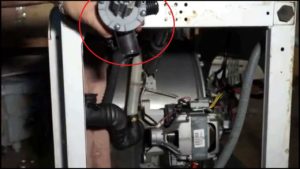
- detach the hatch door from the body;
- unscrew the drain filter and empty the drum;
- loosen the bolts holding the pump;
- disconnect the wiring and connected hoses from the device;
- turn the pump counterclockwise, pushing it in;
- Look under the washing machine through the bottom, feel the pump and pull it out.
When disassembling Candy, observe safety precautions: disconnect the washing machine from the power supply and ensure you wear personal protective equipment!
For greater convenience, the Candy can be turned on its side. It's important to turn it on the side with the powder compartment, usually the left. This allows you to look underneath and remove the pump more quickly. Once removed, place the pump on a dry surface and begin diagnosing the device.
Major cleaning of the pump
At home, DIY pump repairs are limited to cleaning. The pump itself doesn't get particularly dirty, but its impeller often gets clogged by hair and threads tangled around the blade. To get the part to spin again and the mechanism to work, it is necessary to remove all the stuck debris. It's simple:
- Using a suitable screwdriver, unscrew the housing;
- we divide the pump into two "halves";
- We find the “head” with the impeller and remove all the debris from the blades.
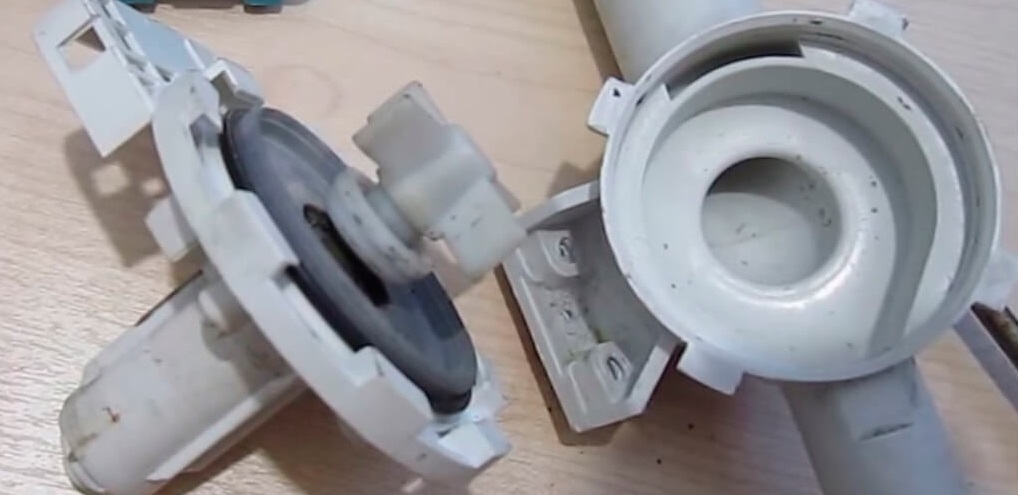
The impeller should spin but not fall off the axle. If the "wheel" falls off the shaft, you'll have to reverse the process—tighten the fasteners. If tightening doesn't help, the part needs to be replaced. Trying to secure the blades with glue or tape is both futile and harmful.
It's recommended to immediately rinse the volute. After cleaning, reinstall the impeller onto the pump, which is then secured in place. Then, return the debris filter to the machine and plug it in. Testing the cleaned pump is essential: run the "idle" quick cycle and evaluate the drain function. If water drains smoothly from the drum into the drain, everything has been done correctly.
Arming ourselves with a multimeter
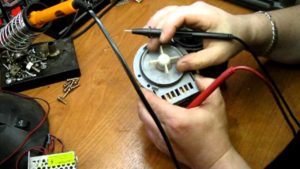 To be on the safe side and avoid disassembling the Candy again, it's recommended not only to clean the pump but also to immediately test it with a multimeter. Simply turn the meter on as an ohmmeter, connect the clamp to the contacts, and read the readings. A properly functioning device will read a minimum of 150 ohms and a maximum of 260 ohms. Any other readings indicate a malfunction.
If the display shows "O," the drain is not working due to a short circuit in the system. A resistance reading of approximately 120 indicates a broken winding. Repairing a faulty pump at home is difficult and unprofitable – it’s easier and cheaper to buy a new one.
Installing a new pump yourself is easy. You just need to select the correct replacement based on the Candy serial number. The easiest and most reliable way is to take the old pump to a store and find a similar replacement. If cleaning the filter and replacing the pump don't help, the control board is at fault. Diagnosing it at home is prohibited; it's best to contact a service center.
Interesting:




Readers' comments
Headings
Washing machine repair




For buyers




For users


Dishwasher




Add a comment