Modern Candy automatic washing machines can accelerate the drum to 1400-1600 rpm during the spin cycle. To neutralize the resulting centrifugal force, these machines are equipped with a shock-absorbing system and counterweights. However, it's impossible to completely eliminate vibration, so some slight shaking of the washing machine body during the final stage of the cycle is perfectly acceptable.
What if my Candy washing machine jumps around during the spin cycle, shifting from its position? And it's making a lot of noise and shaking? This shouldn't happen. Let's figure out what the problem might be and which components of the washing machine need to be checked. We'll also explain what faults can cause this behavior.
Why does the car "like to jump"?
Any automatic washing machine vibrates during the cycle. This is especially noticeable during the spin cycle. Dampers and counterweights dampen the resulting centrifugal force, but not completely. Therefore, slight shaking of the body during the washing machine operation is acceptable – it does not cause discomfort to household members and does not raise any questions.
It's a completely different matter if the washing machine bounces around the room, making knocking and rattling noises. This will require diagnostics. In some cases, such behavior is caused by errors made during the washing machine installation.
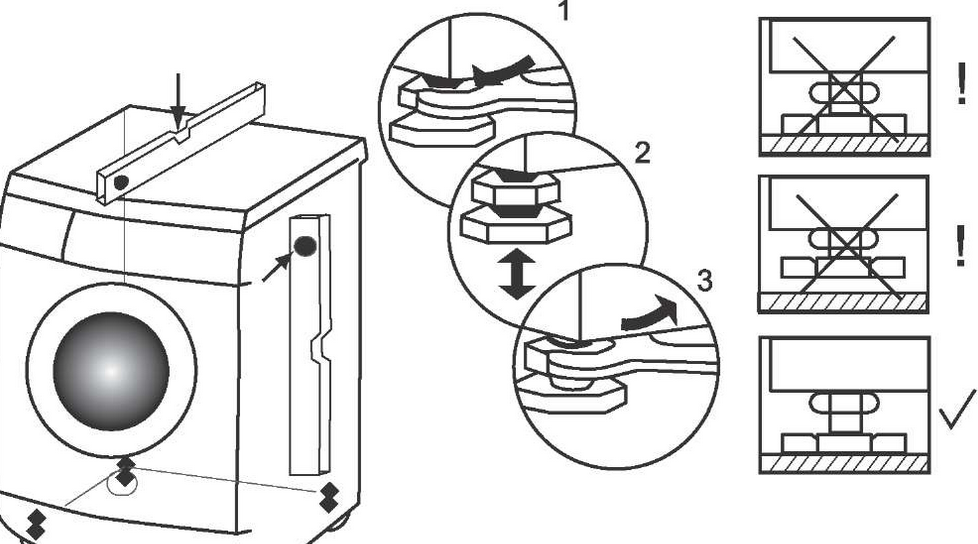
Therefore, first make sure the machine body is level. If it's not level, adjust the feet. Also, check the flooring underneath the washing machine—it should be level and firm.
Why else might a Candy washing machine make noise and jump during the spin cycle? There are several possible causes:
drum imbalance;
violation of the permissible loading weight (it may be either exceeded or underweight);
unremoved transport bolts (typical only for new washing machines being started for the first time);
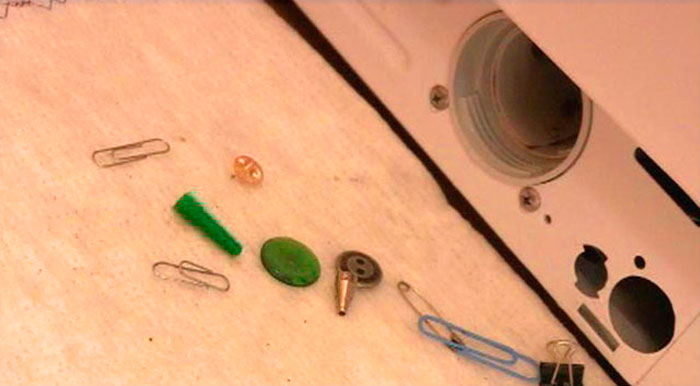
a foreign object that has fallen into the space between the tank and the drum of the washing machine (this could be a coin, a button, a hairpin, a bra underwire);
wear of shock absorption system elements (dampers or springs);
damage to concrete counterweights or loosening of weight fastenings;
engine failure;
wear of drum bearings.
There is no need to continue using a jumping and rattling washing machine - it is better to start diagnostics and repairs as soon as possible.
Most problems can be resolved independently. For example, you can replace bearings or counterweights, repair shock absorbers, and tighten fasteners yourself. Let's figure out where to begin diagnostics.
Problem search algorithm
It's best not to attempt self-diagnosis if your washing machine is under warranty. In this case, we recommend contacting a service center. Specialists will check your washing machine free of charge and replace any faulty components (unless, of course, the breakdown was caused by the user violating the operating instructions).
If the warranty has expired, you can try to resolve the problem at home. The first thing to do is observe the washing machine. It's important to determine at what point in the wash cycle the noise starts to rattle and jump.
Troubleshooting progresses from the simplest to the most complex. Sometimes Candy washing machines start to bounce due to an imbalance in the drum. The metal tank deviates from its normal path and begins to hit the walls of the drum. This contact causes loud noise and vibration in the casing.
The reasons for drum imbalance may be the following:
the laundry gets lumped together, and this “ball” is located mainly in one part of the drum;
The user exceeds the maximum permissible loading weight of the washing machine by the manufacturer.
The manufacturer sets:
total maximum and minimum permissible loading weight;
recommended load weight for each washing mode separately.
Each program has its own load limits. For example, the "Cotton" cycle allows for the maximum load weight for a specific model. When using the "Wool" cycle, the drum can typically hold no more than 1.5-2 kg of items.
When a newly installed Candy washing machine starts to bounce, it may be because the shipping bolts haven't been removed. These are designed to secure the drum, preventing the machine from dangling during transport. Before using the machine for the first time, be sure to remove the fasteners.
It is strictly forbidden to start the Candy automatic washing machine without the transport bolts removed.
The primary purpose of the transport bolts is to securely hold the drum in place. When starting a wash cycle, the screws will prevent the drum from unscrewing. This will cause the motor to run at maximum speed and could easily burn out. Therefore, it's crucial to remove the fasteners before using the washing machine for the first time.
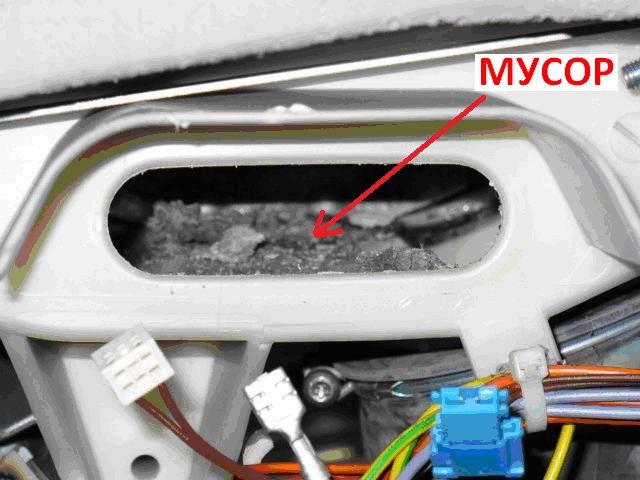
If your washing machine is noisy throughout the entire cycle, it could be due to a foreign object lodged in the drum. To prevent this, carefully check pockets before loading items, and wash bras in special bags. You can remove the foreign object through the "nest" under the heating element or by disassembling the drum.
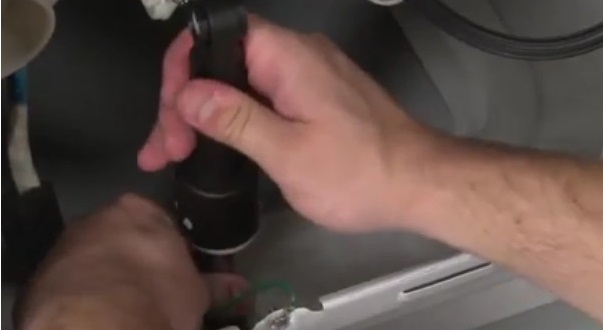
Next in line for inspection are the shock absorbers. They are responsible for dampening centrifugal force and preventing excessive shaking of the car. Worn dampers cannot perform their functions 100%, so the washing machine starts jumping and making noise.
To check the operation of shock absorbers and springs, you must:
de-energize the machine;
remove the top cover of the Candy case;
Use both hands to press hard on the tank so that it drops 3-5 cm;
stop pressing abruptly;
Observe the behavior of the tank.
If the plastic container immediately snaps back into place, the dampers and springs are working properly. If the tank continues to wobble for a while, there's a problem with the shock-absorbing elements. Repair or replacement will be necessary.
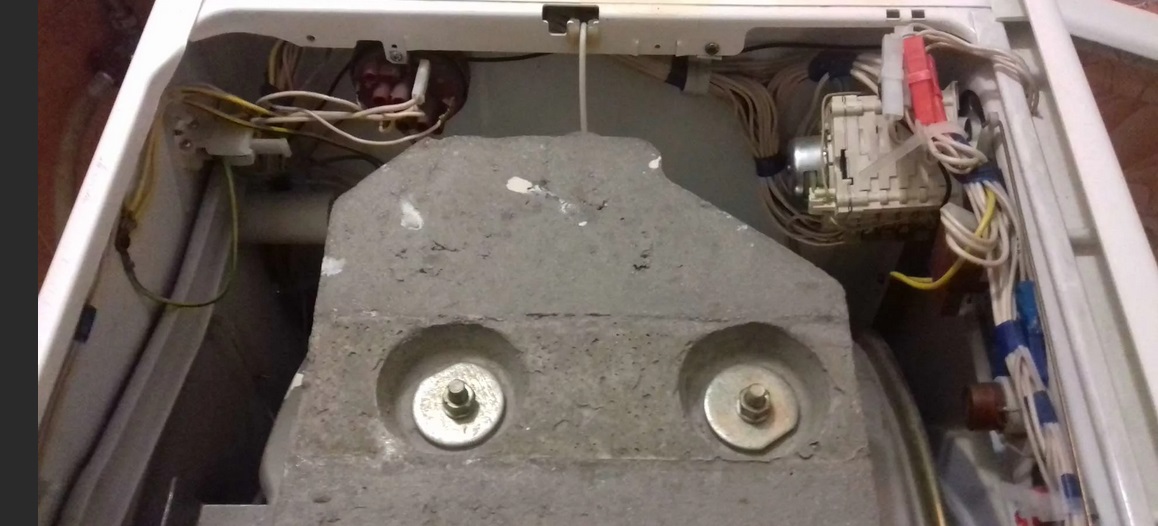
Next, carefully inspect the counterweights. First, check that their fasteners are tight. Sometimes, tightening the fasteners a bit more can eliminate shaking. If the weights have significant defects, such as deep cracks, it's best to replace the blocks.
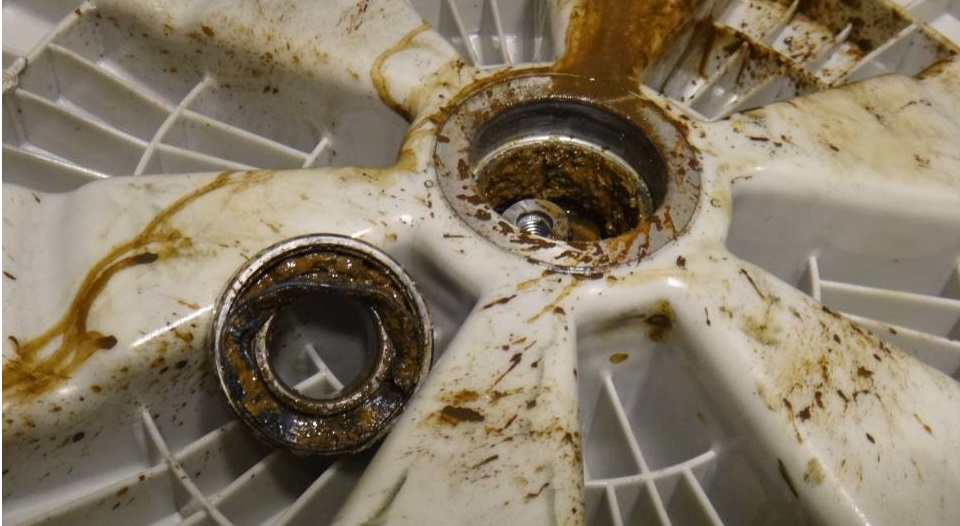
Strong vibration and shaking of the machine are not the only signs of bearing failure. The washing machine also makes loud clanking and grinding sounds. Rusty stains may also appear on the back of the drum.
The bearings, along with the seal, will need to be replaced. In this case, the washing machine will need to be completely disassembled, the drum removed, and split in half. Next, the old rings are pressed out and new components installed in their place.
If all other possible causes have been ruled out, a manufacturing defect is possible. Problems of this kind usually surface during the first year of use, precisely when the machine is under warranty. Therefore, the best option is to contact a service center for a free diagnostic.
What can I do to stop my car from jumping?
The course of action will depend on the nature of the problem. The easiest solution is a simple drum imbalance. Then, to fix the problem, simply follow these steps:
complete the cycle the machine is running by pressing the “Off” button;
de-energize the device by pulling the power cord out of the socket;
drain the water from the tank (through the emergency hose);
open the hatch and distribute the laundry evenly in the drum;
start the wash cycle again.
This is what you should do if your laundry has become lumped together. If it's overloaded or underweight, remove some items from the drum or add more accordingly. After this, the machine will stop bouncing and complete the cycle smoothly.
It's easy to tame a bouncing washing machine if the problem is improper installation. All you need to do is level the machine. Adjust the feet until the washing machine sits perfectly level.
It is recommended to place a special anti-vibration mat under the washing machine - then the washing machine will work much quieter.
If a foreign object has fallen into the space between the tub and the drum, it will need to be removed. The easiest way to remove it is through the heating element's "nest." To do this:
de-energize the machine;
remove the back panel of the case;
loosen the nut securing the heater;
remove the heating element from the “nest”;
Put your hand into the resulting hole and remove the foreign object.
To check the counterweights, you'll need to remove the top panel of the washing machine. The weights are located just under the lid. If the concrete blocks have deep cracks or significant chips, the components will need to be replaced; they cannot be repaired.
If the counterweights are intact, check that their fasteners are tight. Sometimes, tightening the weights a bit more will solve the problem. This will make the machine more stable and stop shaking during operation.
If diagnostics confirm problems with the shock absorbers, the struts will have to be replaced. In some cases, dampers can be repaired, for example if the internal lining is deformed. Then it will be enough to remove the worn vibration dampers, disassemble them, put a new rubber seal inside and return the elements to their place.
When the bearings are the problem, it's a real pain. You'll need to disassemble the washing machine almost completely. You'll need to remove the top, front, and back panels, as well as disconnect all the parts, wires, and pipes connected to the drum.
After this, the tank-drum assembly is removed. The plastic container is then disassembled, and only then is the bearings accessible. Damaged rings are pressed out, and new components are installed in their place.
Spare parts are purchased for a specific Candy washing machine model. If you're concerned about making a mistake, you can remove the damaged parts, take them to the store, and ask the salesperson to select an alternative. Once the washing machine is repaired and reassembled, a test cycle is run to ensure proper operation.

 Modern Candy automatic washing machines can accelerate the drum to 1400-1600 rpm during the spin cycle. To neutralize the resulting centrifugal force, these machines are equipped with a shock-absorbing system and counterweights. However, it's impossible to completely eliminate vibration, so some slight shaking of the washing machine body during the final stage of the cycle is perfectly acceptable.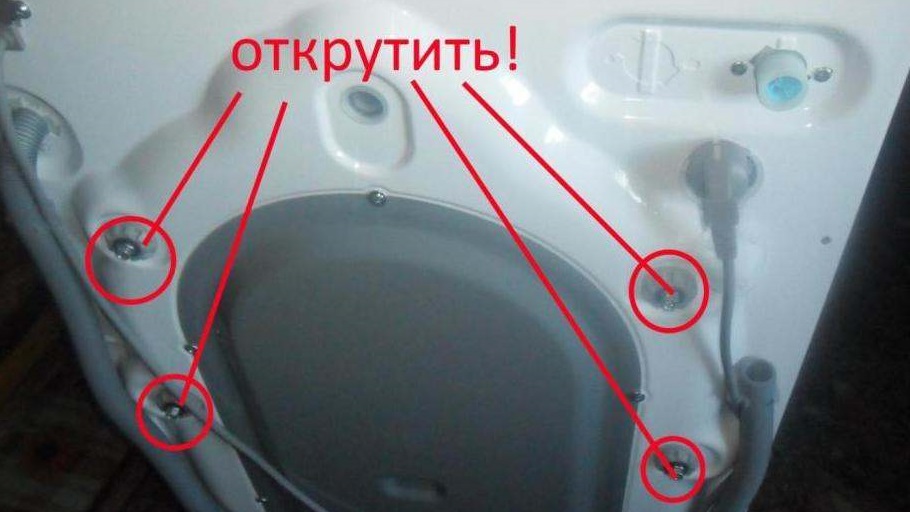



















Add a comment