
The washing machine is filling with water slowly.
 Washing machines typically fill very quickly, within seconds. However, if your washing machine takes a long time to fill, even without displaying an error message, it's time to seriously consider the condition of your appliance. It's better to resolve the issue now than to wait for it to worsen and cause even more problems.
What could have happened to the car?
If water enters the drum slowly, there are four main classes of problems that can be directly or indirectly related to this problem.
- A broken inlet valve. This part is responsible for filling the washing machine with water. If it's damaged, it may not open fully, preventing water from entering.
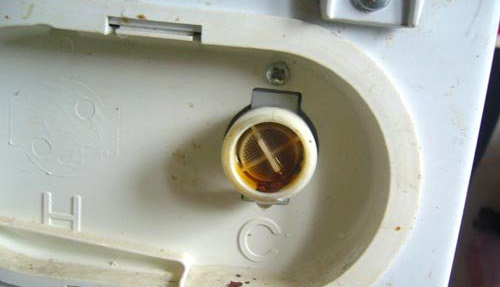
- A clogged mesh filter. Located at the end of the inlet hose, this element filters large particles of dirt and impurities from the tap water before it enters the washing machine. Any filter eventually becomes clogged, and this one is no exception. The debris creates a dense plug through which water cannot pass with the required pressure.
- A clogged flow-through filter. It's located directly in the water pipe and absorbs even more impurities and dirt. If a clog forms here, water won't even reach the inlet hose in the required quantity and at the required speed, so cleaning it periodically is necessary.
- Problems with the dispenser or filler pipe can also cause slow water intake. Laundry detergent clogs the drain holes or filler pipe, preventing water from moving further.
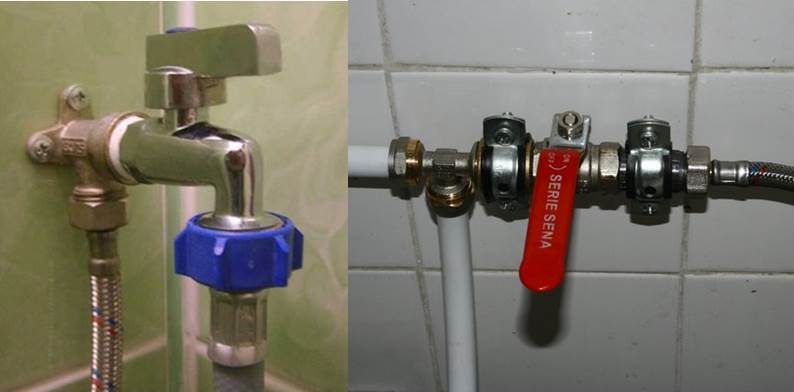
Important! Sometimes problems with liquid intake have very simple causes: weak water pressure in the water supply system, a water supply valve that is not fully open, or a kinked or bent hose.
How are we going to find the problem?
In almost all of the above cases, professional repairs are not necessary; everything can be easily done yourself. Just be sure to turn off the water supply to the machine and unplug it from the power source before beginning the inspection.
Now let's rule out the most basic faults. Check that the tee is fully open. Then, make sure the central water supply is functioning properly and that the problem is indeed with the machine. Finally, inspect the inlet hose for kinks or bends; if found, repair them.
If there are no problems, we proceed to a more detailed inspection. The best place to start is with the mesh filter.
- Disconnect the inlet hose and remove any remaining water from previous washes.
- Find the filter and, depending on how dirty the mesh is, rinse it under strong running water, clean it with an old toothbrush, or even soak it in lemon juice for a while.
- Place the filter back in place and connect the drain hose to the machine.
If cleaning the mesh does not solve the problem, you should look at the coarse filter built into the water pipe.
- Disconnect the inlet hose.
- At its base (the place where it connects to the water supply), find the fastening and unscrew several elements with a wrench.
- The resulting hole will allow water to escape, and a powerful stream of water will flush the filter on its own. The main thing is to put some kind of container underneath first so that the water doesn’t flow onto the floor.
What should I do with the powder dispenser and its outlet (the corrugated tube next to the dispenser)? Cleaning them is fairly easy. Remove the top panel of the washing machine. First, remove the dispenser itself and rinse it thoroughly. Then, use pliers to loosen the outlet clamps and carefully remove it. Rinse the element under a strong stream of water using an old toothbrush.
Valve replacement
Regarding the intake valve, repairing it is unfortunately complicated. The easiest option is to buy a new part and install it. You can also do the installation yourself. Just be sure to select the part strictly according to the serial number of the corresponding model, otherwise you'll waste money by buying the wrong part. Once you've purchased everything, you can begin replacing it:
- disconnect the unit from communications;
- drain the water from the hose and put it away;
- remove the top panel of the washing machine.
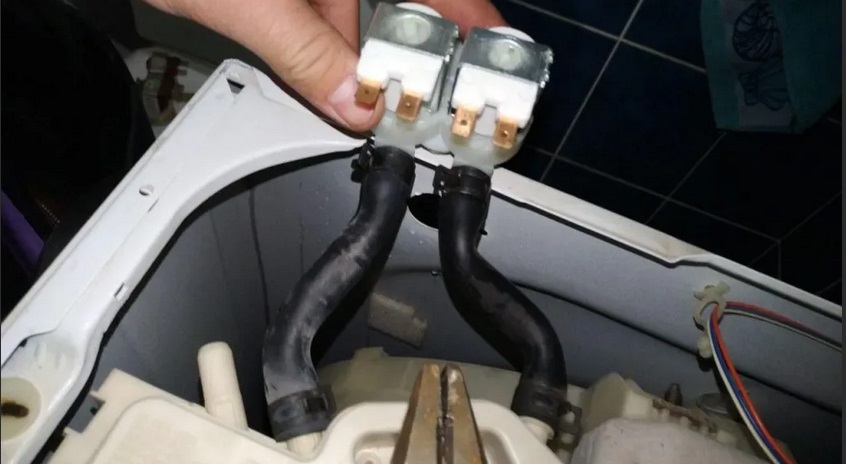
Locate the valve located at the back of the washing machine where the inlet hose connects to it.
- take a picture of the wiring and disconnect it;
- Loosen the center bolt and screws on top, remove the old part and replace it with the new one.
After replacing the valve, install it in reverse order. After installation, run a test wash; if your steps don't work, you'll need to call a professional.
Interesting:



Readers' comments
Headings
Washing machine repair




For buyers




For users


Dishwasher




Add a comment