
The washing machine takes a long time to spin
 Spinning in an automatic washing machine typically doesn't take very long, so if it starts, the cycle is about to end. However, if the spin cycle is taking a long time, there's likely a problem with the machine. It could be caused by several things, from a simple overloaded drum to a faulty electronics. A diagnostic program is unlikely to help in this situation, as the "home assistant" will simply display an error code indicating the lack of spinning, not the cause of the problem. Let's look at what to do in this situation at home.
The machine does not complete the spin cycle.
A situation where a washing machine spins endlessly instead of stopping the drum and finishing its cycle is very dangerous, as it can lead to overheating and damage to the bearings. Therefore, in this case, it is crucial to shut down the machine as quickly as possible, using the safest method. To do this, you need to press the “Start/Pause” button and wait until the reel has completely finished spinning.
If the button does not work, all that remains is to unplug the power cord from the socket and thus de-energize the equipment.
You shouldn't overuse unplugging, but if this is the only way to turn off your "home assistant," don't delay.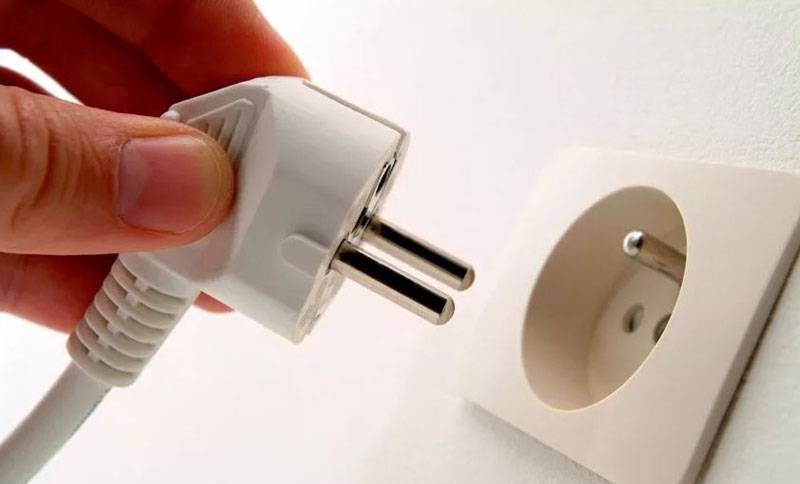
What caused this problem?
Any washing machine performs dozens of different actions in a single cycle. First, it draws tap water into the drum, which requires opening the inlet valve. Then, detergent is mixed with the liquid, and the motor activates the drum rotation. After the soaking phase, the washing machine discards the waste water, draws in fresh, clean water, and then mixes it with the main wash detergent, which is stored in another compartment of the detergent drawer.
Once the main processing stage of the clothes is complete, the machine will drain the used liquid again and then fill with clean water again – this time for rinsing. After rinsing, the spin cycle will begin, which is what we'll try to troubleshoot today. A malfunction during the spin cycle can sometimes be identified by the error code the machine displays on the information display, but if the appliance doesn't indicate which component is faulty, you'll have to investigate the cause yourself. In this case, it's best to familiarize yourself with the washing machine's design to accurately determine the problem. First, ensure that the problem isn't caused by user error.
- Washing machine overload.
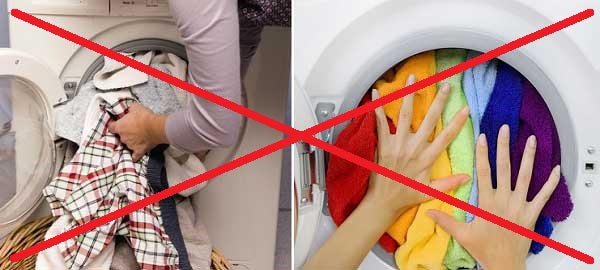
- An attempt to wash one, but excessively bulky item.
- Too few items were loaded for one work cycle.
- The user selected a mode that does not include spinning of clothes.
- A foreign object, such as a bra bone, a hair clip, a paper clip, a nail, a needle, a coin, etc., has fallen into the drum. Even small objects like these can interfere with the spin cycle, preventing the drum from spinning at the proper speed.
If you overload the washer with items, the clothes will simply bunch up into a tight ball, causing the drum to become unbalanced. This behavior can damage the drive, causing the washer to immediately stop the cycle to allow the user to remove the excess items.
This can also happen if the load is too light. Many new machines can detect an extremely light load and stop spinning. If the cause is a foreign object lodged in the space between the drum and the tank, the foreign object must be removed immediately to prevent it from blocking the drum's free rotation or damaging the plastic components, which could cause the machine to leak during operation.
Once you've confirmed that none of the five points above are the cause, you can begin diagnosing the device at home. This will require partial disassembly of the device, which is easy to do without much experience or knowledge if you follow our instructions.
We look at the motor and tachometer
First, let's examine the most common components that fail: the electric motor and tachometer. The electric motor often loses power due to worn brushes, which means it can't accelerate the drum to the speed required for a proper spin cycle. This prevents spinning, and the washing machine begins to malfunction. How do you properly check the motor brushes?
- Turn off the power to the machine and disconnect it from all utilities.
- Remove the top cover of the CM, for which you must first unscrew the fixing bolts.
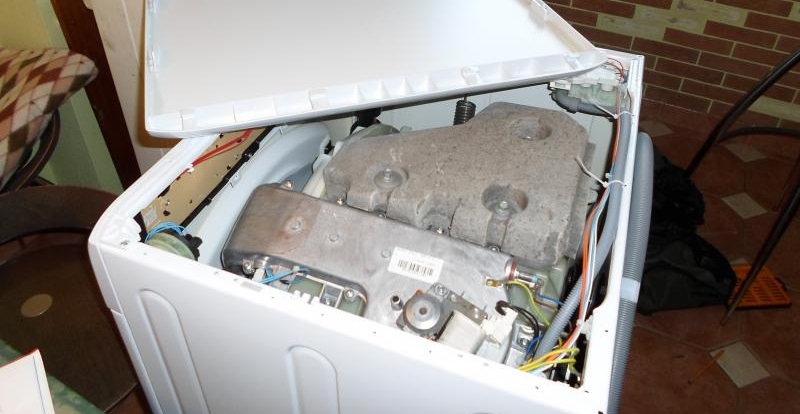
- Remove the back panel of the device case.
- Remove the drive belt from the pulleys.
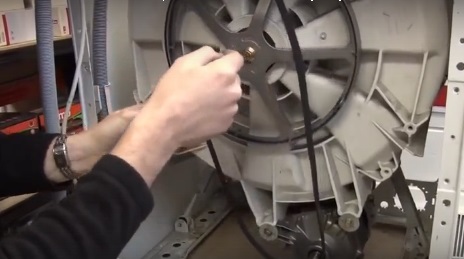
- Disconnect all wires from the electric motor.
Before disconnecting the wiring, it is better to record the correct connection on paper or by taking a photo, so that you will have an example to hand for reassembly.
- Unscrew the motor fasteners.
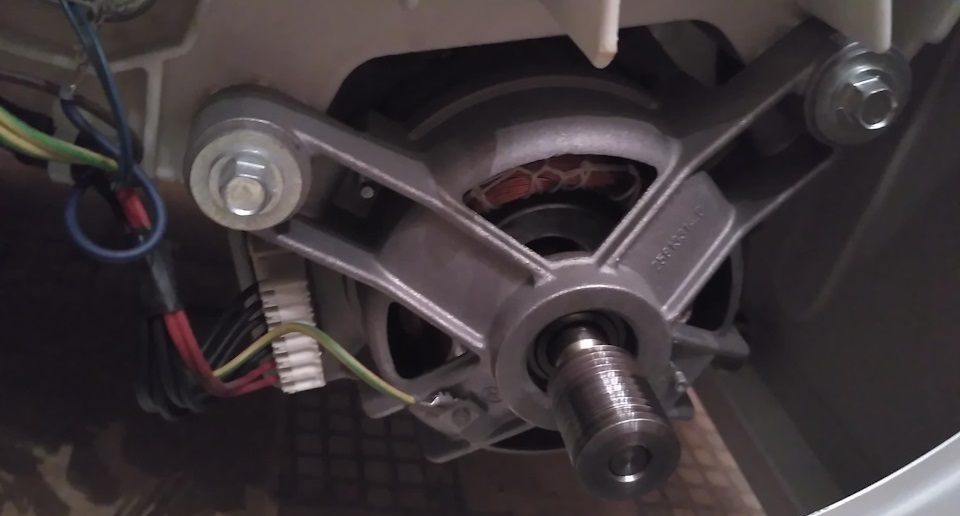
- Remove the unit from the device body.
- Remove the small screws on the sides of the element to remove the carbon brushes.
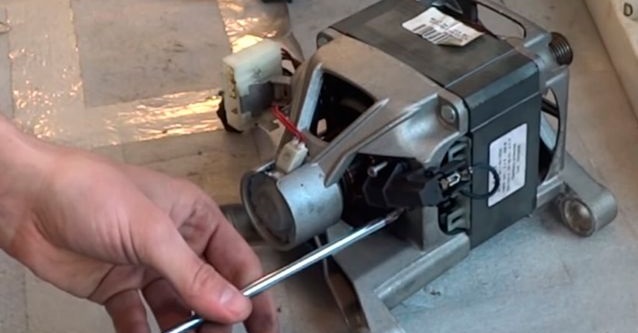
- Visually assess the wear of the brushes.
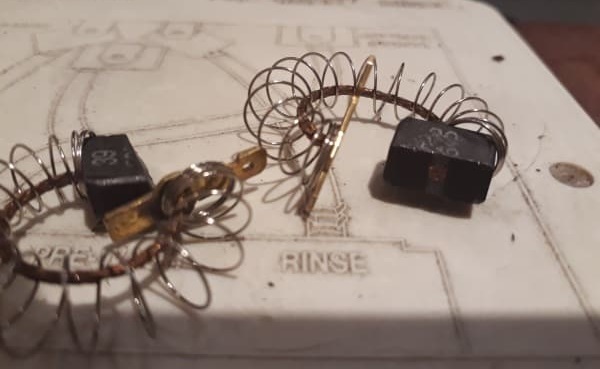
- If at least one brush is worn out, then both elements must be replaced at once, even if one of them is in perfect condition.
If checking the brushes yields no results, the tachometer sensor may need repair. The tachometer generator should be checked with a multimeter:
- Set the tool to ohmmeter mode.
- Measure the resistance of the tachogenerator with it.
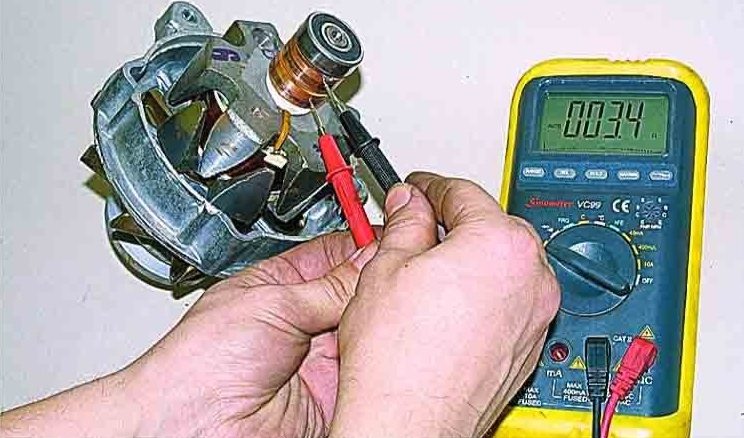
- It would be good if the value was around 60 Ohms.
- Then the device should be switched to voltage measurement mode.
- Measure the voltage at the tachometer terminals while cranking the engine.
- Everything is fine if the multimeter shows a reading of about 0.2V.
If the tachogenerator is faulty, it won't be able to control the electric motor speed, preventing spinning. Be sure to replace the element if you determine that it is the cause of the malfunction.
Control board
The worst case scenario is when the machine stops spinning because the control board is damaged. The electronic control board is considered the "brain" of the machine, and it's impossible to understand without specialized knowledge and experience. Therefore, repairing this component yourself is virtually impossible. If this happens to your "home assistant," your only option is to call a repair service so that a specialist can first conduct a special diagnosis and then restore the component's functionality or help replace it.
Do not attempt to repair the control board yourself under any circumstances, as this could only cause further damage to the component.
Therefore, if your washing machine starts malfunctioning during the spin cycle, don't call a service technician. First, check that the drum wasn't overloaded or underloaded, and that no foreign objects have gotten into the drum. If the problem lies with a mechanical component, you can try repairing or replacing it yourself. Installing new brushes is completely effortless, as long as you have our instructions at hand.
Interesting:




Readers' comments
Headings
Washing machine repair




For buyers




For users


Dishwasher




Add a comment