
The drum of the Gorenje washing machine does not spin.
 One of the most frustrating situations in washing is a sudden stoppage of the drum. You've loaded your laundry, added detergent, added fabric softener, selected the desired program, and started the machine, but the wash never starts because the drum simply won't spin.
If your Gorenje washing machine's drum isn't spinning, you can't just accept it, but you can fix it. There's no need to call a service center specialist; you can fix the problem yourself. Our article today explains what might be causing the drum to stop spinning and how to safely fix it.
What part stops the drum?
First, it's important to correctly determine the cause of the malfunction in order to understand how to fix it. Typically, the washing machine drum itself starts to slow down, while all other components function normally: the circuit board correctly detects the wash program, the drum fills with water, and the pump removes the used water without any problems. In this case, pay attention to the engine, especially if you hear a faint crackling noise coming from it. This is a sign that either the motor is broken and no longer drives the drum, or it has simply stopped transmitting power to the shaft. This can happen for a number of reasons.
- The drive belt has broken or come off the pulley.
- The electric brushes are worn out.
- The car's engine failed.
- A foreign object got into the drum and jammed the movement of the element.
- The tachogenerator, also known as the Hall sensor, is broken.
- Finally, the lamellas on the motor shaft may have peeled off.
Do not use Gorenje appliances or other washing machines if the drum has stopped rotating—this cycle can damage the motor and the washing machine's tub.
All of the above points apply to situations where the drum has completely stopped rotating. If it continues to rotate, but just very slowly and stiffly, there may be even more possible causes for the malfunction.
The engine is broken
The drum stops moving completely when the motor is unable to spin the drum. It seems simple—the drum isn't spinning, meaning the motor isn't powerful enough. However, in reality, things can be more complex: the motor may not turn on at all, or it may not accelerate fast enough to get the drum moving. When the engine starts humming, the shaft rotates, but when the drive belt is engaged in the chain, the entire mechanism stops - this is a signal that the problem lies in the electric brushes. In such a situation, diagnostics with subsequent replacement of elements is necessary, for which it is necessary:
- disconnect the device from all communications;
- remove the back wall of the Gorenje washing machine and put it away so that it does not interfere during repairs;
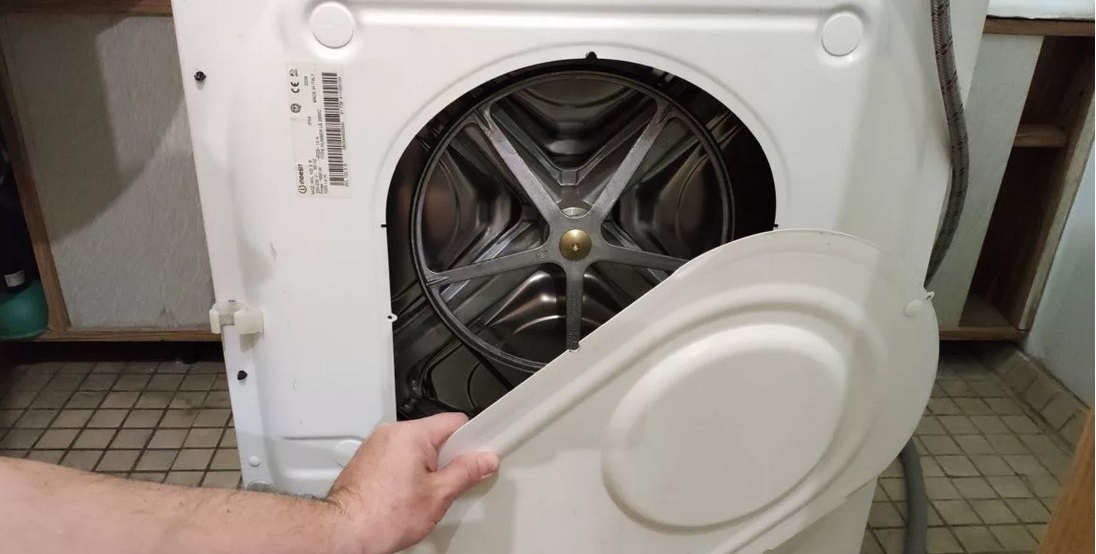
- tighten the drive belt;
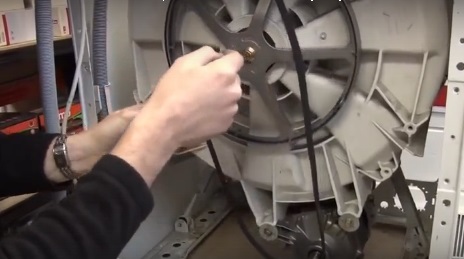
- get to the machine's engine and disconnect all the wires;
Be sure to take a few photos of the wiring - this will help you connect the wires correctly during assembly.
- remove the bolts and remove the motor;
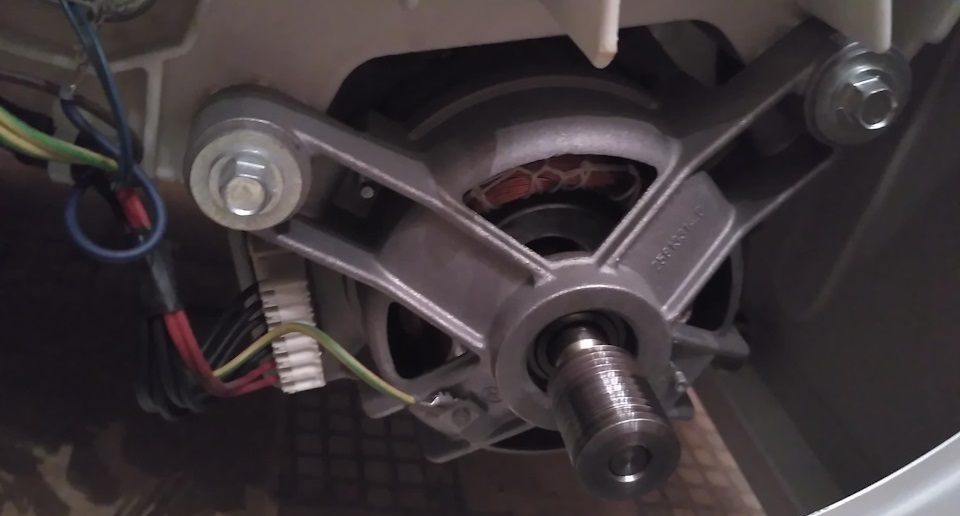
- Now you should try to spin the shaft to evaluate its performance;
- remove all fasteners that secure the brushes to the engine;
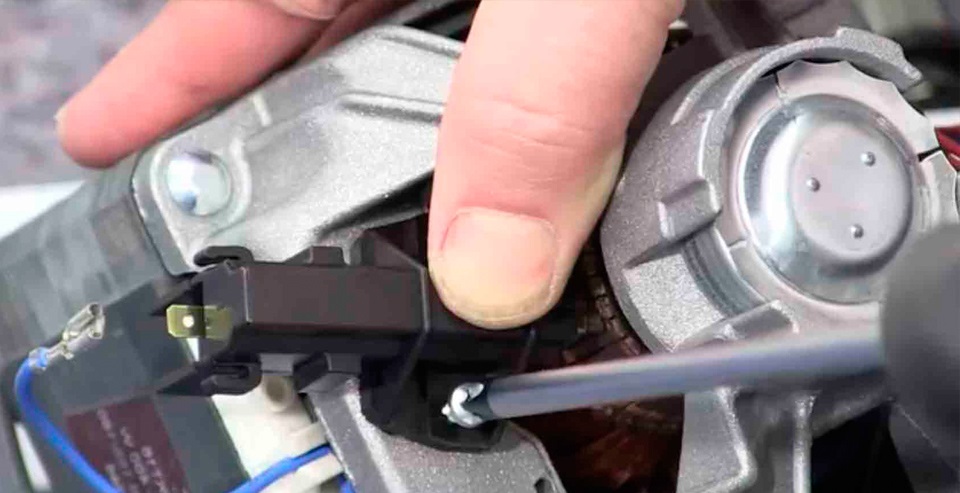
- disconnect the electric brushes.
Next, we need to unscrew the brush case and remove the rod with the carbon tip from it. If the rod is only 1-1.5 centimeters long, then it definitely needs to be replaced. Then it's worth buying a pair of new brushes at a hardware store or service center. These parts are always replaced together, even if only one is damaged.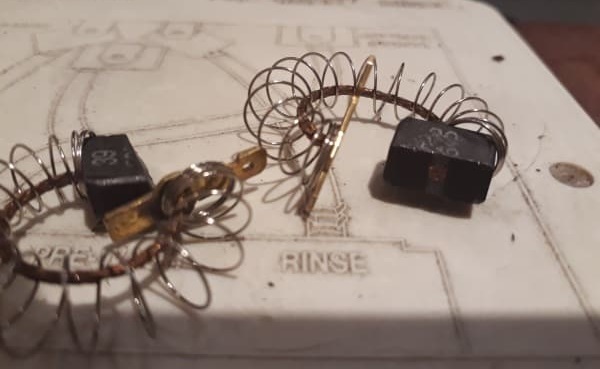
If the rods are longer than 1.5 centimeters, the drum has most likely stopped rotating due to a damaged tachogenerator. This component is fixed to the motor housing and controls its rotation. If the tachogenerator is faulty, it will stop detecting the motor's RPM, so the control module will simply stop the cycle for safety. To test the tachogenerator, you will need a multimeter with an ohmmeter mode, and connect the probes to the contacts of the element.
The commutator plates, also known as lamellas, can also be to blame for the drum stopping. They are fixed to the shaft to transmit current through the mechanism. Problems arise when parts peel off, causing contact to be lost and the shaft to stop working. To ensure the lamellas are in good condition, you need to disassemble the motor and personally assess the condition of the strips.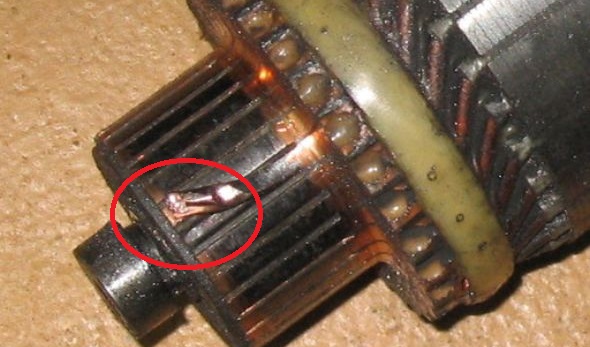
Finally, if the cause is still undetermined, you can examine the winding, which may be shorted. For this, you should also use an ohmmeter, placing the probes on the commutator plates and winding. If the readings are between 0.1 and 0.4 ohms, there is no damage; otherwise, the motor will need to be replaced.
It's worth checking the belt.
If the drive mechanism is damaged, repairs won't take long. If the problem lies with the belt, you can simply check by rotating the drum manually. If the rotation is too free, then the belt has actually come off the pulley, either because it has broken or because it has been stretched too much. Both cases require urgent replacement of the element.
Never buy a belt by eye, as there is a risk of purchasing the wrong product – always check the washing machine's serial number or the belt markings.
Anyone can replace the rubber belt. Simply remove the back panel of the appliance, place the belt on the small wheel, and then tighten it onto the drum pulley while turning it. It's much better to have someone help you—Gorenje appliances are renowned for their tight belt mechanisms, so having a helper will make the job quicker and easier.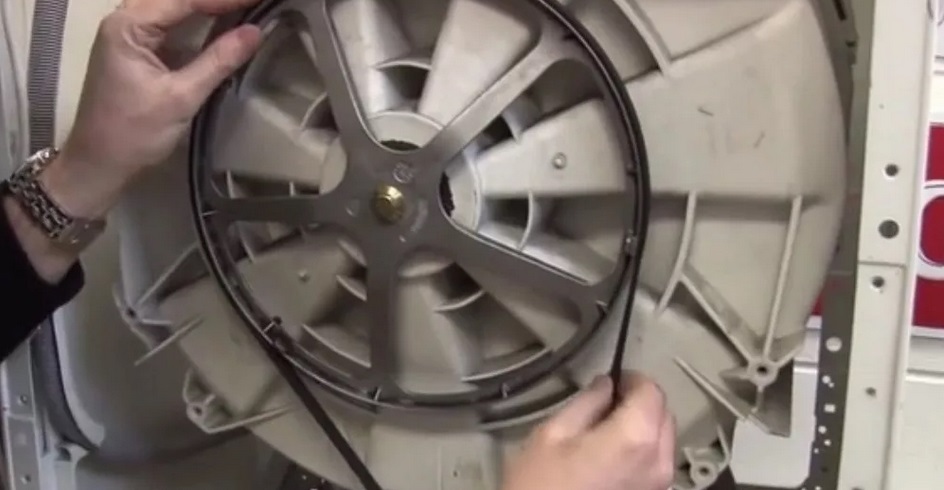
An object is stuck between the tank and the drum
If the drum won't spin even by hand, the problem should be looked for not in the internal structure of the machine, but in an external irritant. Most likely, a foreign object has simply gotten into the drum, such as a coin, button, keys, bra underwire, or something else. Even such a small object can catch in the drum and jam it. In this case, only removing the foreign object will help. For automatic washing machines, the procedure consists of the following steps:
- disconnect the washing machine from the power supply;
- remove the back panel of the CM case;
- we find the heating element at the very bottom of the tank;
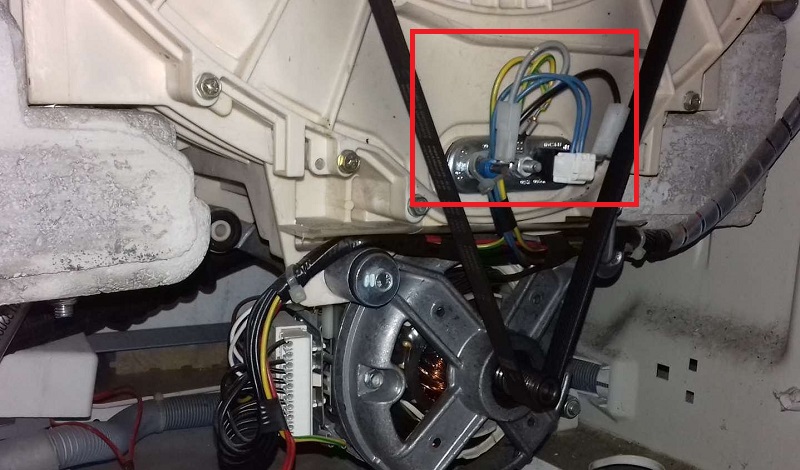
- we disconnect all the wires from it;
- loosen the retaining bolt located in the center of the water heating element;
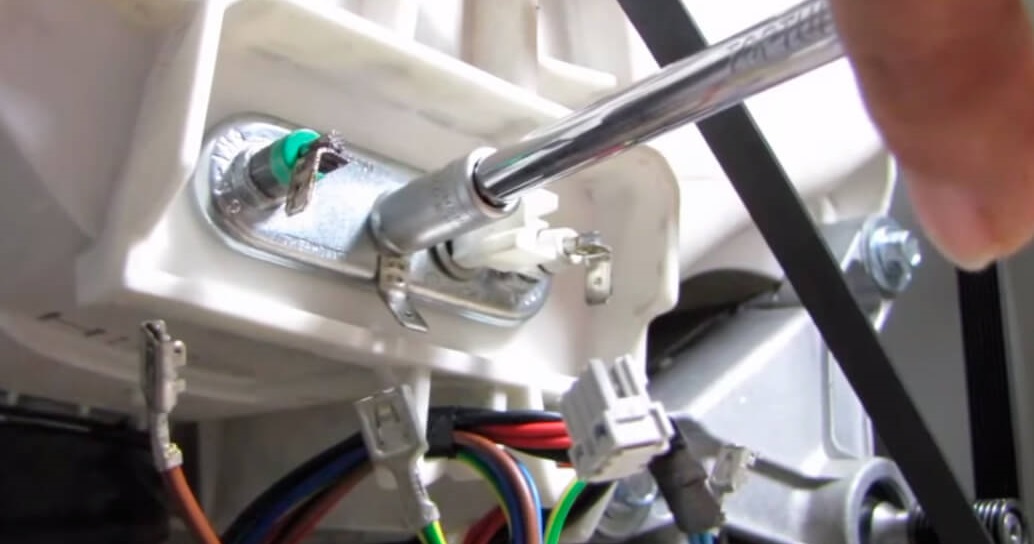
- we loosen the water heater and remove it;
- Now you can look into the freed hole, where you can use a flashlight to find the foreign object;
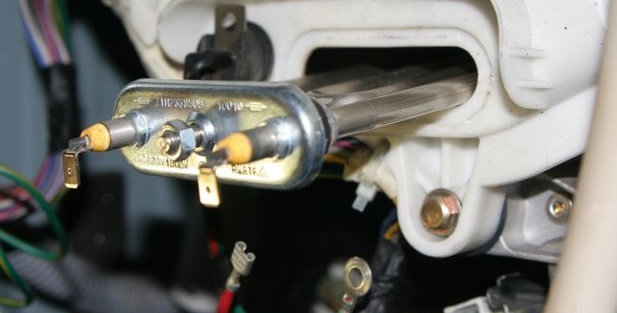
- We extract the lost object by hand, wire or any other convenient method.
This instruction helps in most cases, but it may happen that the object cannot be removed through the heating element. In this case, you will have to disassemble the entire washing machine, remove the tub and drum, and disassemble them to remove the foreign object.
As you can see, if the drum stops spinning, there's no reason to call a repairman. You can resolve this issue yourself with a thorough diagnosis and then repair it yourself.
Interesting:


Readers' comments
Headings
Washing machine repair




For buyers




For users


Dishwasher




Add a comment