
The spin cycle of my Gorenje washing machine doesn't work.
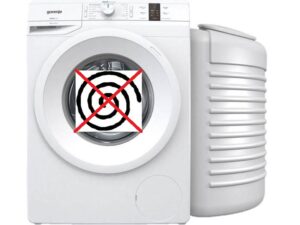 Sometimes, the spin function on a Gorenje washing machine suddenly stops working. The machine starts the cycle as usual, fills with water, and drains it, but the wash ends with the machine stuck with wet clothes in the drum. What should you do if your Gorenje washing machine won't spin? What internal components could be causing this malfunction? Let's find out.
List of probable malfunctions
If the spin function isn't working, first check whether this function was even activated when you started the machine. You could inadvertently disable the option or select a program that doesn't support it. Then, the laundry in the drum will remain wet. This is one possible cause. A Gorenje machine won't spin if the following components fail:
- Drive belt. A worn or stretched rubber belt can slip off the pulley, and the drum simply won't rotate;
- Tachogenerator. If the Hall sensor fails, the intelligent system will not be able to regulate the engine speed, which will disrupt the normal operation of the washing machine;
- Electric motor. The cause may be worn commutator brushes or a broken winding;
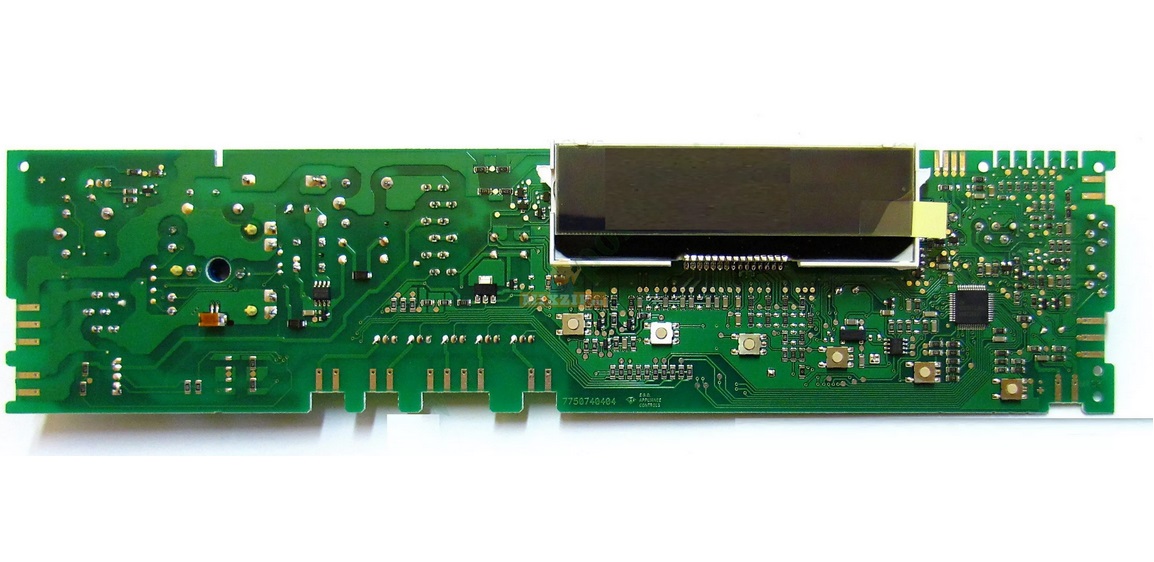
- Control module. If the triac on the board that controls the motor or tachometer burns out, problems with the spin cycle may occur.
If, in addition to the inability to spin, your Gorenje automatic washing machine also fails to discharge water into the sewer, the list of potential problems will be even longer.
To determine the cause of the lack of spin, you'll need to run a diagnostic test on the machine. You can check the machine yourself without calling a technician. You'll need a couple of screwdrivers to disassemble the housing and disconnect the components, as well as a multimeter to test the washing machine's components.
The hostess herself got something mixed up
If the machine worked as expected, but the items in the drum are wet, make sure that you did not mix up the settings when starting the program. Some modes, such as “Shoes”, “Silk”, “Outerwear”, simply do not include a spin function. If you're absolutely sure you selected the correct program, check to see if the option was disabled. Some Gorenje washing machines have a spin deactivation button with a special spring mechanism. This means the machine will only spin items when the button is released. If the button is pressed during the previous wash, or accidentally, the spin function will be disabled for all subsequent cycles, even after the machine is turned off.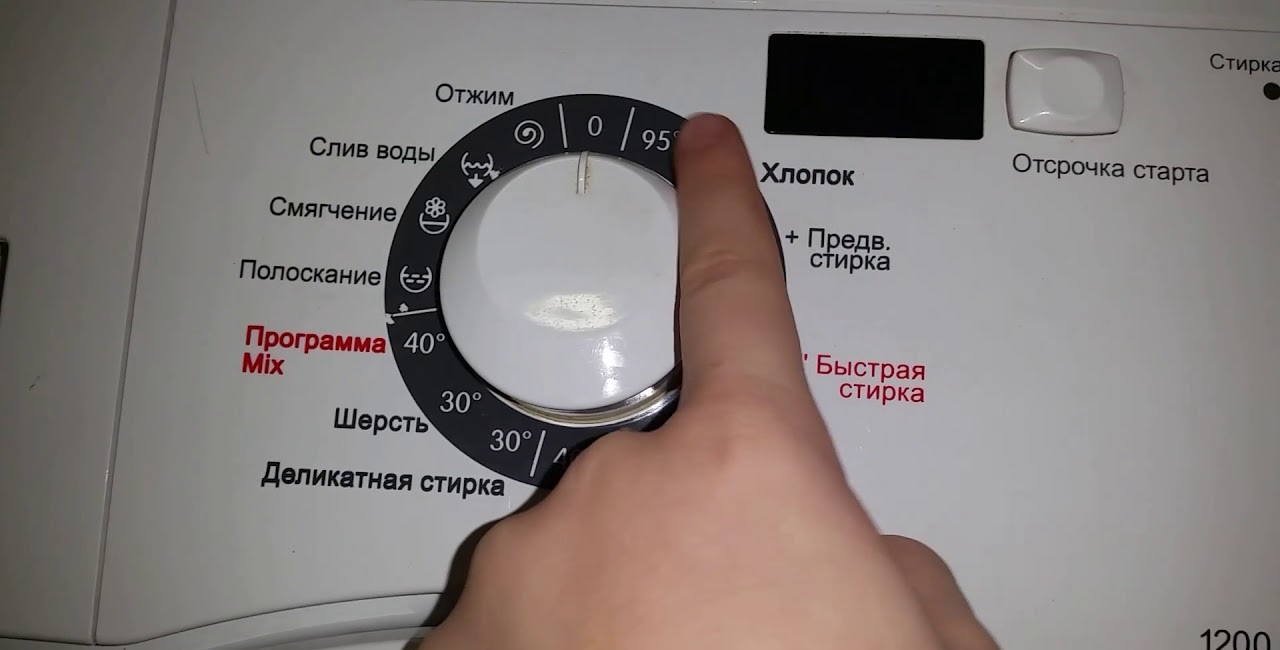
At first glance, this seems like a simple proposition, but many users solve the problem this way. Simply return the button to its proper position, and the spin cycle will resume.
Sometimes a washing machine won't spin properly if the drum is overloaded or if the laundry is clumped. Therefore, it's crucial to load the exact amount of items recommended by the manufacturer. To prevent imbalances, be sure to distribute the clothes evenly throughout the machine.
Speed sensor or drive
Sometimes, the spin cycle doesn't work because of a broken element. In this case, a Gorenje automatic washing machine module will need repair or replacement. To determine the exact problem, a diagnostic is required. What should you do first? Start your inspection from the simplest to the most complex, eliminating one possible cause after another. First, check the drive belt.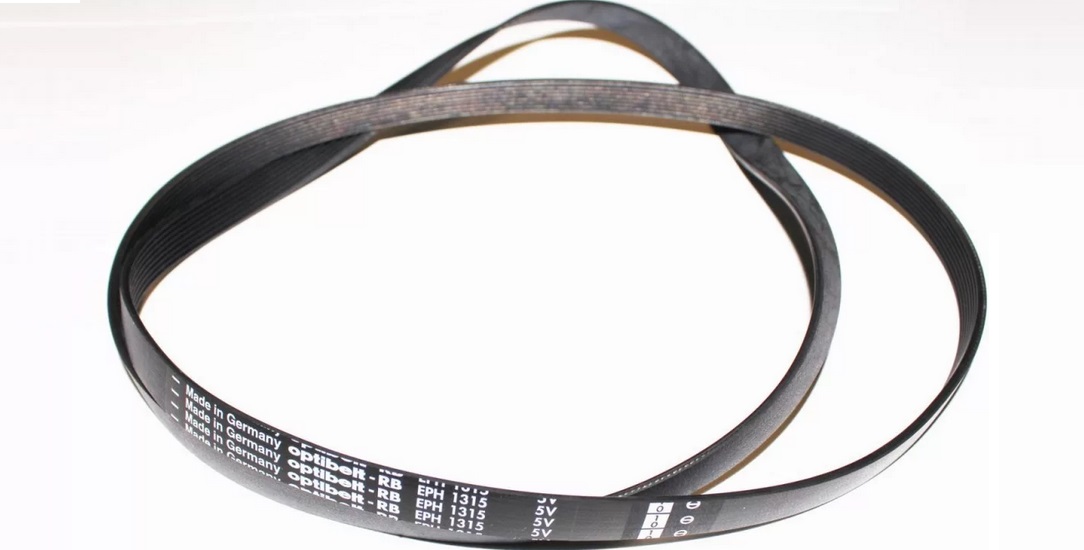
The drive belt and the spin function are directly connected. If the belt doesn't consistently transmit impulses from the motor to the drum wheel, the centrifuge doesn't spin up to the required speed, causing the washing machine to stall and stall.
Before working with the equipment, be sure to unplug the power cord from the outlet and turn off the water supply tap.
To check the drive belt, you need to:
- Move the machine away from the wall to gain free access to the back of the case;
- unscrew the screws and remove the back panel of the washing machine;
- Check the belt tension. It should fit snugly on the pulleys. If the elastic is loose or defective, the belt will need to be replaced.
Sometimes, after removing the back panel of the machine, the user can't see the belt on the drum pulley. This means the belt has stretched so much that it has slipped off and is lying under the machine. In this situation, it's best to replace the belt. Tensioning a new drive belt is easy: first, place it on the large pulley, then on the small pulley. The correct method is to apply the belt with one hand and turn the wheel with the other, tightening it.
A non-functioning spin cycle could also be caused by the Hall sensor. This is a small metal ring with a wire attached directly to the motor. The tachogenerator is what tells the washing machine's "brain" how fast the motor is spinning. If the Hall sensor fails, the machine may behave differently. Sometimes the machine stops washing altogether, while in other cases, only the spin cycle fails. To check the tachogenerator, you need to: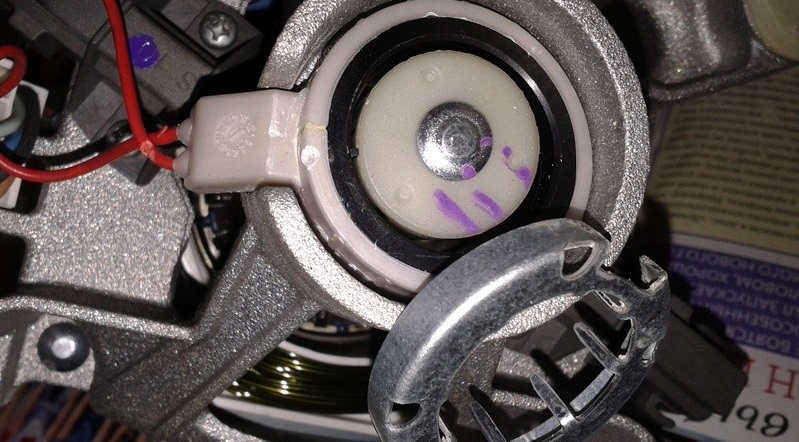
- remove the back wall of the case;
- remove the drive belt;
- unscrew the bolts securing the engine;
- Disconnect the power supply wiring from the motor. It's best to take a photo of the wiring diagram beforehand to avoid making mistakes during reassembly;
- remove the engine from the housing;
- measure the resistance of the Hall sensor contacts using a special device – a multimeter.
If the test shows the tachogenerator is working properly, you'll need to investigate further. Once the problem is identified, the sensor should be replaced—it can't be repaired.
It's all about the electronics or the motor
What to do next? Next on the list is the electric motor—it'll need to be checked too. A Gorenje washing machine might not spin properly because the motor isn't working at full capacity. When the motor brushes wear out, the drum rotation speed required for spinning is not achieved.
You can check and, if necessary, replace the commutator brushes yourself. They are located on the sides of the engine housing; to remove them, simply unscrew a couple of small bolts. Inspect the graphite rods—if they have become noticeably shorter, you'll need to purchase and install new components.
Electric motor brushes must be replaced in pairs, even if one of the graphite rods is intact.
Replace the new brushes in their original locations and secure them with clips. After this, check the electric motor winding. While a breakdown is very rare, it cannot be ruled out. A multimeter will be required for diagnostics. Test all wires with the device. If a breakdown is detected in the stator or rotor winding, the entire motor will have to be replaced. Rewinding it is impractical—the cost of the work is comparable to the price of a new electric motor.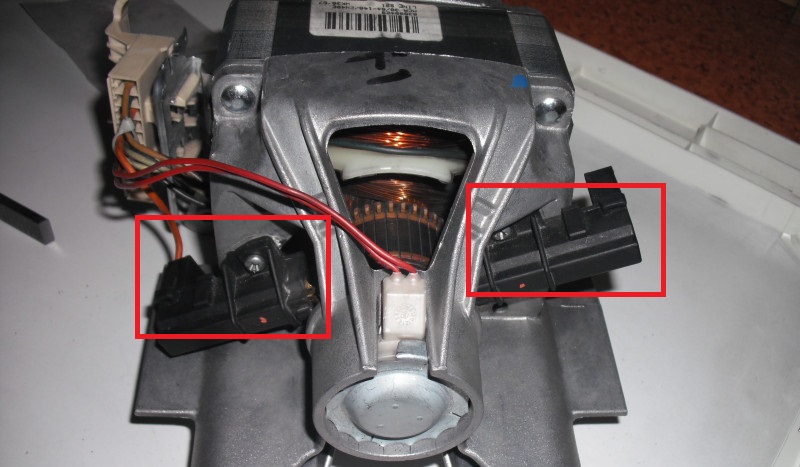
If the previous checks have confirmed no faults with any of the components, the only remaining task is to inspect the control module. It's best to leave this work to a specialist. Without the necessary knowledge and experience, tinkering with the washing machine's "brains" is not recommended; it could only make the situation worse.
A technician will use a special tool to check the semiconductor components on the control board and determine whether repair is necessary. If the module is severely damaged, it may need to be replaced. If the spin cycle in your Gorenje washing machine isn't working, don't panic. You can try to find and fix the problem yourself. Calling a technician is a good idea, but you'll have to pay for the repair. Most problems can be easily resolved yourself; the key is to follow the instructions.
Interesting:





Readers' comments
Headings
Washing machine repair




For buyers




For users


Dishwasher




Add a comment