The washing machine heats up the water during rinsing.
When starting the rinse cycle in a properly functioning washing machine, the heating element switches off, as the laundry should be in cold water after the main wash cycle. If the washing machine heats the water during the rinse cycle, it has malfunctioned. If this type of malfunction occurs, the tubular electric heater does not switch off during the spin cycle, which creates a hazard because the element heats up when dry. Why does this happen?
What should the hostess do?
If the spun laundry is still warm to the touch after a full wash cycle, do not run the washing machine again, as the heating system is faulty. This could be due to a damaged heating element, which means there's a high risk of current leakage into the appliance body.
In this case, the owner should immediately, carefully, and without touching the machine, unplug it. Then, call a specialist. If this is not possible for some reason, a professional can check the electric heater and temperature sensor.
Thermistor test
Sometimes washing machines overheat during the rinse cycle when the thermistors are faulty. They fail less frequently than heating elements, but they still need to be tested periodically. Furthermore, removing a temperature sensor from the housing is easier and quicker than removing a heating element, and repairs are more logically performed in order of complexity. The thermostat is located inside the heating element, which in most models is installed in the lower part of the housing. To test a washing machine thermistor, follow these steps:
disconnect the device from the power supply;
remove the rear panel of the car;
Find the wires that run from the temperature sensor to the external temperature controller. Disconnect them;
the screw that holds the tubular electric heater must be loosened;
remove the sensor from the heating element.
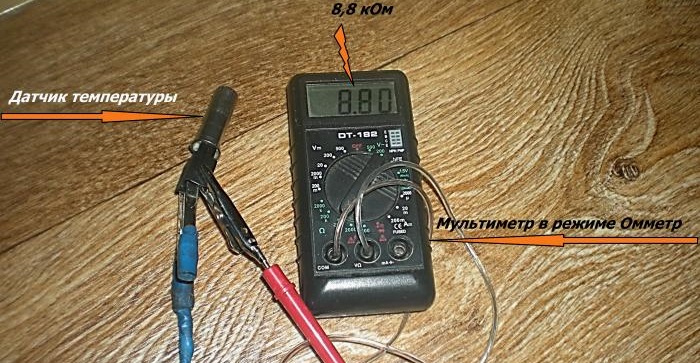
You can handle this task yourself. To test the thermistor, you'll need a multimeter. It's used to check the resistance. Here's how to do it:
set up the measuring device to determine resistance;
connect the probes to the thermistor contacts and check the readings.
Important! The resistance value at an ambient temperature of +200C should be equal to about 6000 ohms.
The sensor is then immersed in heated water and the resistance reading is monitored as the temperature changes. It should decrease.
If the temperature is +500If the thermistor is working properly, the resistance value is approximately 1350 ohms. If it is faulty, the sensor must be replaced. Install the new part and reassemble the washing machine in reverse order. Connect the appliance to the power supply last.
Let's take care of the heating element
If the machine heats up the water during the rinse or spin cycle, you may suspect a damaged heating element. Many technicians begin their inspection with this component. To do this, you need to perform a number of steps.
The equipment is disconnected from the network.
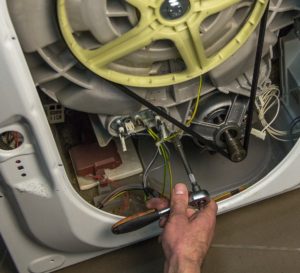
Turn the washing machine over to gain easy access to the rear panel. Unscrew the screws holding it in place. Remove the panel.
Remove the drive belt from the pulley.
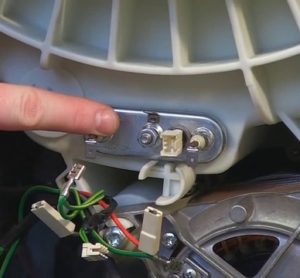
Find the heating element contacts at the rear wall of the tank, the thermostat and the connected wiring.
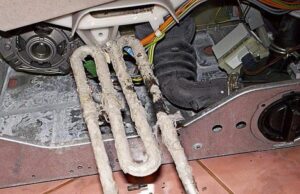
The heating element is typically located at the bottom of the case. However, in some manufacturers' devices, such as Samsung, it is located at the front, so the front panel of the case must be removed to test or replace the electric heater.
Photographing the nodes.
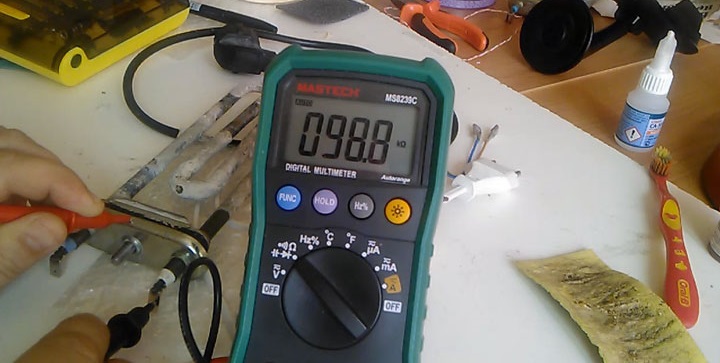
To diagnose, disconnect the wiring, take a multimeter and set it to measure resistance, setting the value to 200 Ohms.
They connect the probes to the terminals of the electric heater and check the readings.
If the heating element is working properly, the resistance value should vary between 26–28 Ohms. If the device shows a value of “1”, the electric heater is damaged and its winding has broken, and the value “0” indicates a short circuit.
Attention! If the test result is "1" or "0", the heating element must be replaced with a new one.
The next diagnostic step is to check the machine's housing for a breakdown. To do this, set the tester to buzzer mode and apply the probes. A characteristic beep when touched indicates a current leak and the electric heater needs to be replaced. Remove the old element as follows:
loosen the central nut and disconnect the thermostat to remove the faulty heating element;
If deformation of the rubber gasket that “blocks” the heating element is detected, lubricate the cuff with WD-40;
After 20 minutes, having removed the remaining grease, the heating element is rocked and removed from its seat.
It's important to select the correct replacement part to replace the faulty one. Use the markings on the heating element housing and the washing machine's serial number as a guide. If in doubt, take the old heating element to the store and consult with the salesperson. Install the new heating element according to the instructions provided, but in reverse order. Clean the mounting surface of any dirt or scale beforehand.

 When starting the rinse cycle in a properly functioning washing machine, the heating element switches off, as the laundry should be in cold water after the main wash cycle. If the washing machine heats the water during the rinse cycle, it has malfunctioned. If this type of malfunction occurs, the tubular electric heater does not switch off during the spin cycle, which creates a hazard because the element heats up when dry. Why does this happen?
















Add a comment