
The washing machine hums but doesn't fill with water.
 It's easy to tell if your washing machine isn't filling with water. Open the detergent drawer and look inside—dry granules indicate a problem. What could be causing this?
If your washing machine is humming and not filling with water, you'll need to run a diagnostic. A simple clog or a malfunctioning electronic module could be the cause of a water supply problem. Let's figure out where to start checking and how to repair your "home helper" yourself.
The most likely problems
There are many possible causes for a washing machine humming but not filling with water. The most common are a water supply outage in a high-rise building or a shutoff valve. Yes, sometimes these situations are as trivial as that. So, first, check the water pressure in the pipes and whether the valve is open.
The most difficult problem occurs when the control board needs repair. You won't be able to fix the problem yourself; you'll have to call a technician. However, a washing machine's failure to fill isn't usually related to the module; there are more common faults. Most often, a failure to fill is caused by:
- failure of the intake valve;
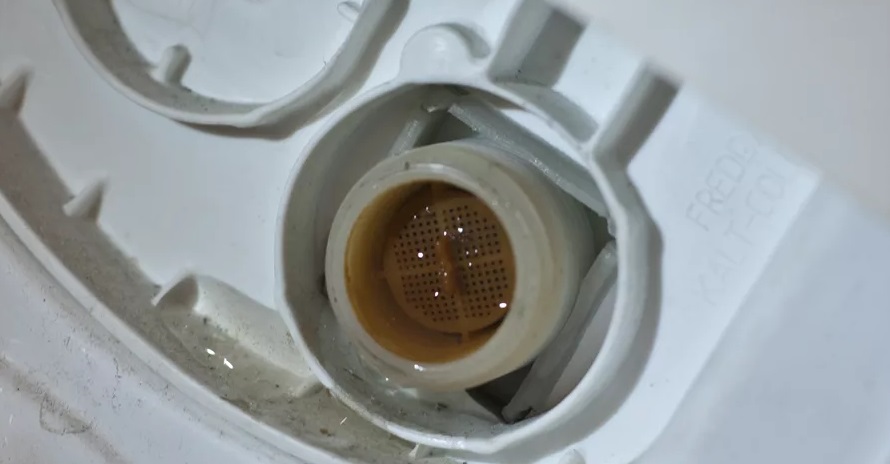
- clogging of the inlet mesh filter;
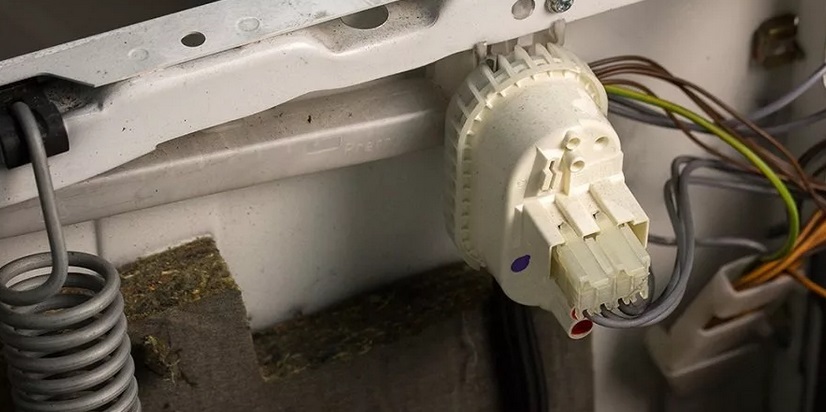
- pressure switch malfunction;
- breakdown of the drain pump.
These are the typical malfunctions that should be suspected first. We'll describe in more detail how each component plays a role in the water intake process, and how the machine will behave if a component fails.
The inlet valve is responsible for filling the washing machine with water. After the user activates a cycle, a sensitive membrane opens and liquid begins to flow into the system. If a malfunction occurs, the device's operating algorithm is disrupted, and the valve "door" remains in the closed position.
You can diagnose the intake valve yourself. Apply 220V to its coils. A functioning device will short-circuit, and you'll hear a distinctive click. If the device remains silent, it's broken. The component cannot be repaired; it will need to be replaced.
Another common problem is a clogged inlet filter. All water entering the washing machine is filtered. The filter is installed at the inlet of the machine, before the water inlet valve. When it becomes clogged with various impurities, the water flow is obstructed. The "home helper" hums and buzzes, trying to fill, but it doesn't—the hose is clogged.
The pressure switch monitors the water level in the tank. When the reservoir reaches the desired level, the sensor sends a pulse to the control module. This "brain" closes the inlet valve, stopping the flow of liquid into the system.
A malfunctioning pressure switch may signal the module that the tank is full, while it's actually empty. The electronic unit won't open the inlet valve, leaving the washing machine "dry." To test the sensor, blow into its tube. A working element will click, while a broken one will make no sound.
If the drain pump is faulty, the machine will also fail to fill. This is because at the beginning of the cycle, the washing machine automatically pumps out any remaining liquid from the bottom of the drum to test the pump. If the drain is found to be not working, the control module will not give the go-ahead to the inlet valve to draw water. The washing program will end without even starting.
And, of course, any process can be slowed down by the control board. If the triac responsible for the water inlet valve or pressure switch burns out, the washing machine simply won't fill.
Sometimes the machine does not fill due to damaged wiring, for example, connecting the level sensor and the tank, or the inlet valve to the electronic unit.
Water may also fail to fill if the door locking mechanism malfunctions. The door doesn't lock, and the "brain" understands that the system's seal is compromised and can't start the wash.
A simple misunderstanding
What should you do if you discover that your washing machine, which you started 20 minutes ago, is still empty and making an inexplicable humming noise? First, check to see if the water supply to your home has been shut off. Turn on the faucet in the bathroom or kitchen; if there's sufficient pressure, you'll need to inspect the machine.
Make sure the hatch is slammed shut. If the door is open, the locking device will not work and the machine will not start filling with water. If there are no external problems, you will have to “dismiss” typical faults one by one.
Diagnostics should be performed from simple to complex: first, the inlet valve and filter mesh are checked, then the pressure switch and pump, and finally the control module.
Before servicing the washing machine, be sure to unplug it. Unplug the power cord from the outlet. Also, remember to turn off the water supply valve. First, check the inlet hose and filter mesh for blockages. Follow these steps:
- loosen the clamp - this will help to detach the inlet hose from the machine body;
- disconnect the "sleeve" from the water pipe;
- inspect the hose, rinse it under the tap;
- find the filter element, it is installed where the inlet hose connects to the inlet valve;
- Use pliers to grab the mesh protrusion and pull out the filter;
- clean the filter element,
- put the mesh back;
- reconnect the inlet hose.
You should also check the filter built into the pipe. It's installed before the shut-off valve. This element is responsible for the primary, "rough" purification of tap water, so it's where a lot of debris and impurities settle.
To clean the coarse filter, use one wrench to secure the joint and another to loosen the nut holding the flywheel. Be sure to place a container nearby. Once the fastener is loosened, water will flow from the pipe. The powerful stream will clean the mesh, flushing out all debris. Afterwards, replace all components.
Intake mechanism and heater
The most common reason why an automatic washing machine won't fill is problems with the inlet mechanism. The water intake valve cannot be repaired; if it breaks, it must be replaced with a new, working part. This is a fairly simple procedure, the algorithm of actions will be as follows:
- de-energize the machine;
- make sure the shut-off valve is closed;
- remove the housing cover - to do this, unscrew the two bolts holding it;
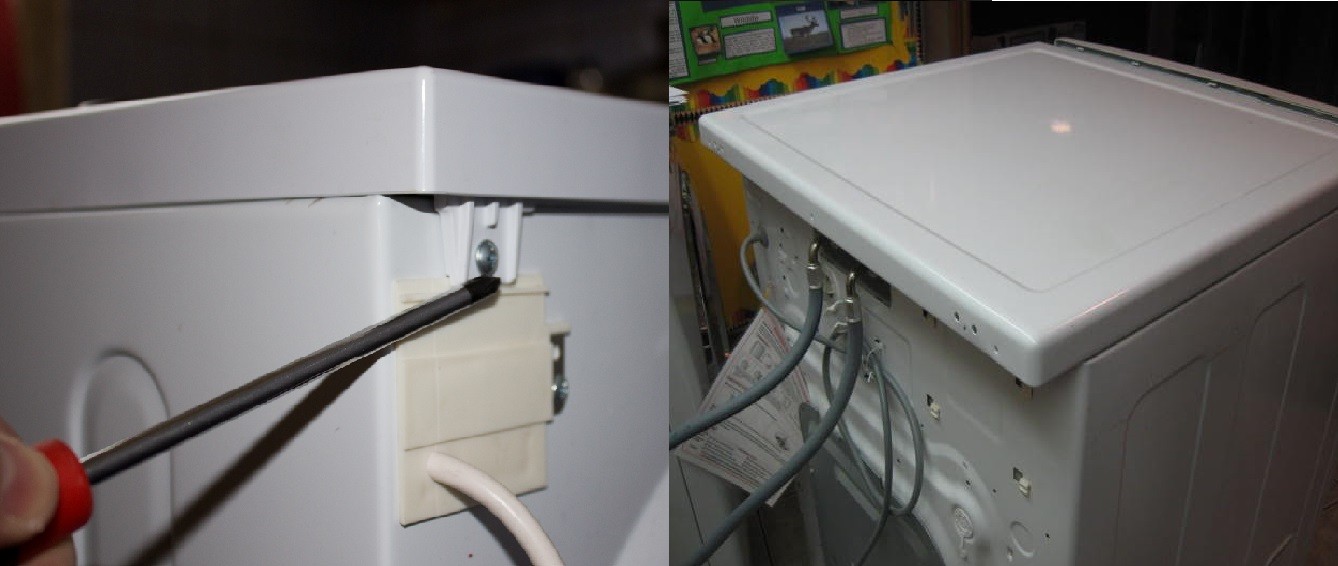
- disconnect the inlet hose from the rear panel of the machine;
- find the inlet valve;
- Take a photo of the electrical diagram of the wiring connected to the device;
- reset the valve contacts;
- disconnect the pipes connected to the element;
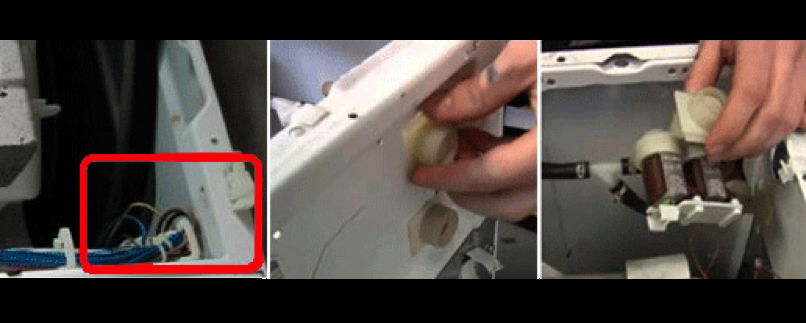
- unscrew the bolt securing the device and remove the valve from the washing machine;
- install the serviceable part into the grooves, secure the valve with a bolt;
- connect the previously removed wires, connect the pipes (referring to the photo taken);
- put the inlet hose and housing cover back in place;
- Connect the machine to the water supply.
After replacing the water inlet valve, be sure to run an empty wash cycle. Observe the machine to see if the water inlet has improved.
When purchasing replacement parts, it is important to refer to the model and serial number of the automatic machine.
Common faults with a washing machine's water-fill system include problems with the heating element. This is usually caused by a thick layer of limescale. The scale builds up on the surface, causing the element to overheat and fail. This can be checked with a multimeter. The procedure is as follows:
- unplug the machine;
- remove the top cover of the housing;
- remove the back panel of the washing machine;
- remove the drive belt (if equipped);
- find the heating element – it is located under the washing machine tank;
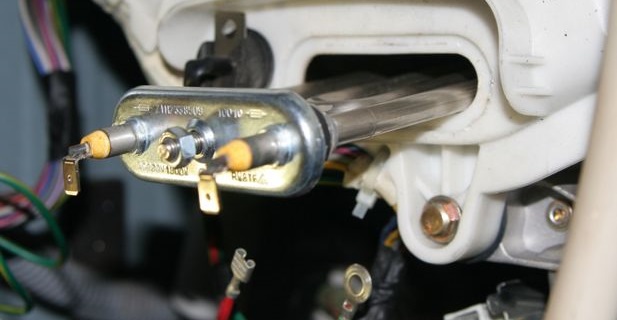
- Take a photo of the wiring diagram for the element;
- remove the wires connected to the heating element;
- loosen the center nut, push the bolt inward;
- Remove the heating element using rocking movements.
If a multimeter test reveals that the heating element is faulty, it will need to be replaced to fix the problem. The seal on the new element should be treated with dishwashing liquid, and the heater should be inserted into the "socket." Next, secure it with a nut and connect the previously removed wiring.
A broken locking mechanism can cause the washing machine to not fill with water. The locking mechanism can also be checked with a multimeter. A new mechanism is installed to fix the problem.
If the washing machine's drum isn't filling and the machine is leaking from the bottom, it's likely there's a defective hose in the system. Inspect the hoses leading to the dispenser and the tank. Once you locate the leak, fix the problem.
Interesting:

Readers' comments
Headings
Washing machine repair




For buyers




For users


Dishwasher




Add a comment