
My Haier washing machine won't drain.
 If your Haier washing machine won't drain, your washing machine is at risk. This is a common and frustrating situation – you'll have to deal with delays, wet laundry, or laundry stuck in the drum. Fortunately, you can fix the problem without calling a repairman. We'll explore the underlying causes of a blocked drain and how to fix them. We'll take a closer look at who's to blame and what to do.
Symptoms of a malfunction
It's not difficult to understand that the washing machine has stopped draining water. Her behavior will change dramatically and certain “symptoms” will appear. So, you can suspect problems with drainage based on the following signs:
- the washing program is delayed;
- the drain, which lasts 3-4 minutes, slows down significantly;
- the running mode is reset, the washing machine “freezes”;
- the machine stops at the drain stage;
- the washing machine drains water intermittently: sometimes it drains, sometimes it doesn’t;
- Haier washes normally, but when switching to rinsing it “stands up”;
- The spin cycle is not activated.
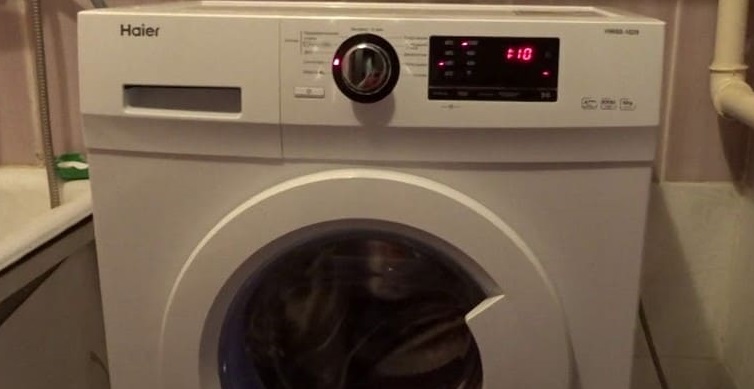
Several malfunctions can cause drainage problems, ranging from a simple clog to a complex, repairable control board failure. The latter is typically rare. More often, delayed drainage occurs for the following reasons:
- the pipe going from the pump to the tank is clogged;
- the pump is dirty or broken;
- the trash filter is clogged;
- an external blockage has occurred (in a siphon or sewer);
- The drain hose does not allow water to pass through.
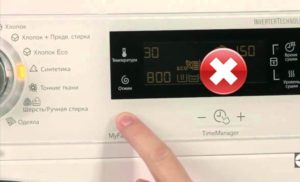
Modern Haier washing machines make it easy to identify the cause of drainage problems. A built-in self-diagnostic system automatically detects the problem and alerts the user via an error code on the display or an indicator light. All that's left to do is consult the manual, decipher the "message," and determine the cause of the problem and what to do to fix it.
Let's clean the drainage system from dirt
If you're having problems with the drain, the first step is to clear the drain. Clogs are the most common cause of obstructed drainage, preventing liquid from leaving the tank. You can inspect and clean the drain tract yourself. The main thing is to act consistently and remember safety precautions.
The drainage diagnostic begins with disconnecting the Haier washing machine from the power and water supply to avoid any problems when disassembling and moving the appliance. Next, access the waste filter and drain any remaining water.
- we pry open the technical hatch door with a screwdriver;
- press the latch and move the panel to the side;
- tilt the body back 3-4 cm;
- we place a container for collecting water under the filter and lay out rags;
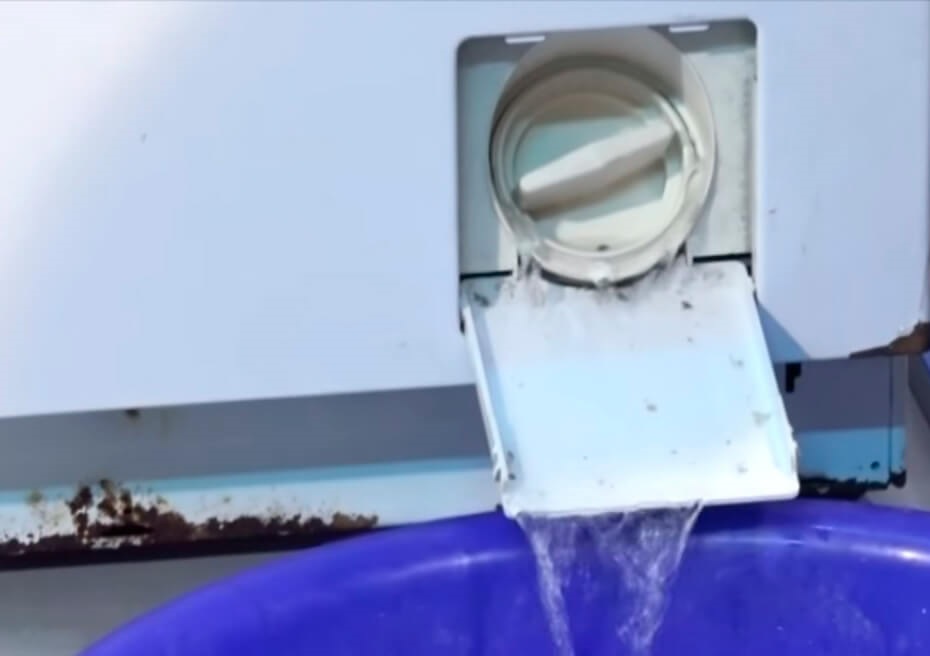
- slowly unscrew the nozzle;
- We wait until all the water leaves the tank.
The next step is to completely remove the filter. The removed attachment must be rinsed to remove any accumulated dirt and debris. First, remove any large debris by hand, then use a dish sponge to scrub away any scale and other debris. If the buildup is stubborn, then resort to the "heavy artillery": a toothbrush or soaking in a lemon solution. In any case, use only warm water when cleaning—boiling water will warp the plastic and rubber.
Do not wash the debris filter in hot water – this will damage the attachment!
Be sure to clean the filter housing along with the filter itself. Using the same sponge or brush, go over the walls of the housing, removing any debris. Then, we complete the repair: screw the nozzle back into the slots, return the washing machine to its original position, and run a test cycle. If drainage is restored, the problem is solved.
Sewage pump
After cleaning the filter, the drainage hasn't returned? Then we continue diagnosing the drainage system. Disconnect the appliance again, remove the false panel, and unscrew the "trash can." The pump needs to be checked for proper operation. First, check to see if the impeller is jammed. This part of the pump should spin and direct the water being pumped. However, its blades often become blocked by tangled hair or a stuck coin. Eventually, the pump stops, and the drainage ceases.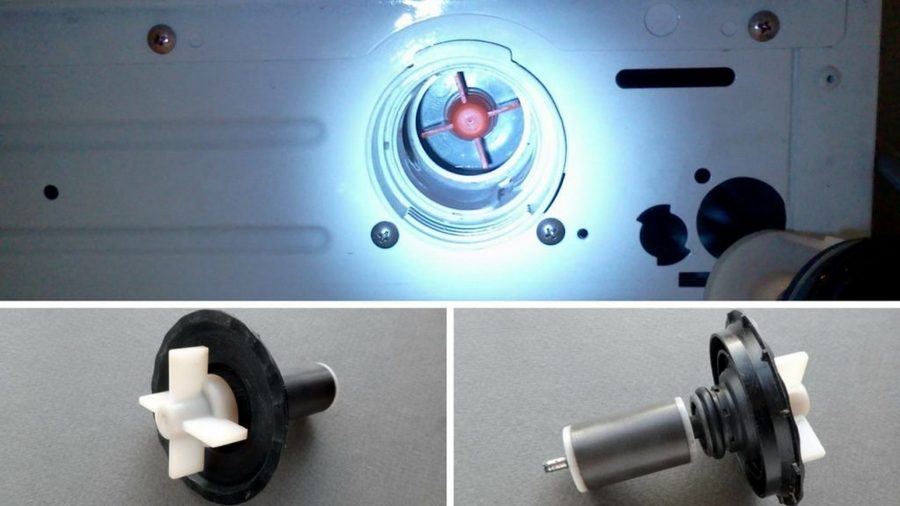
Shine a flashlight through the filter-free hole and inspect the pump. If any large debris is visible, clean it off the impeller. Be sure to try to spin the impellers: free rotation indicates proper operation, while difficulty indicates a clear problem. Diagnostics continue with an "electronic drain test." Plug the washing machine in, run a spin cycle, and evaluate the pump's performance. If the Haier motor hums but the impeller remains motionless, the pump is broken.
Repairing the pump isn't practical—it's cheaper and easier to buy a new one and replace the old one. Finding an equivalent shouldn't be difficult.Haier parts are available from online suppliers and most hardware stores. The main thing is to provide the consultant with the washing machine's serial number or present the pump removed from the machine as a sample. To remove the pump, follow these instructions:
- Place the washing machine, disconnected from the utilities, on its left side (on the side where the detergent drawer is located);
- remove the tray, if provided;
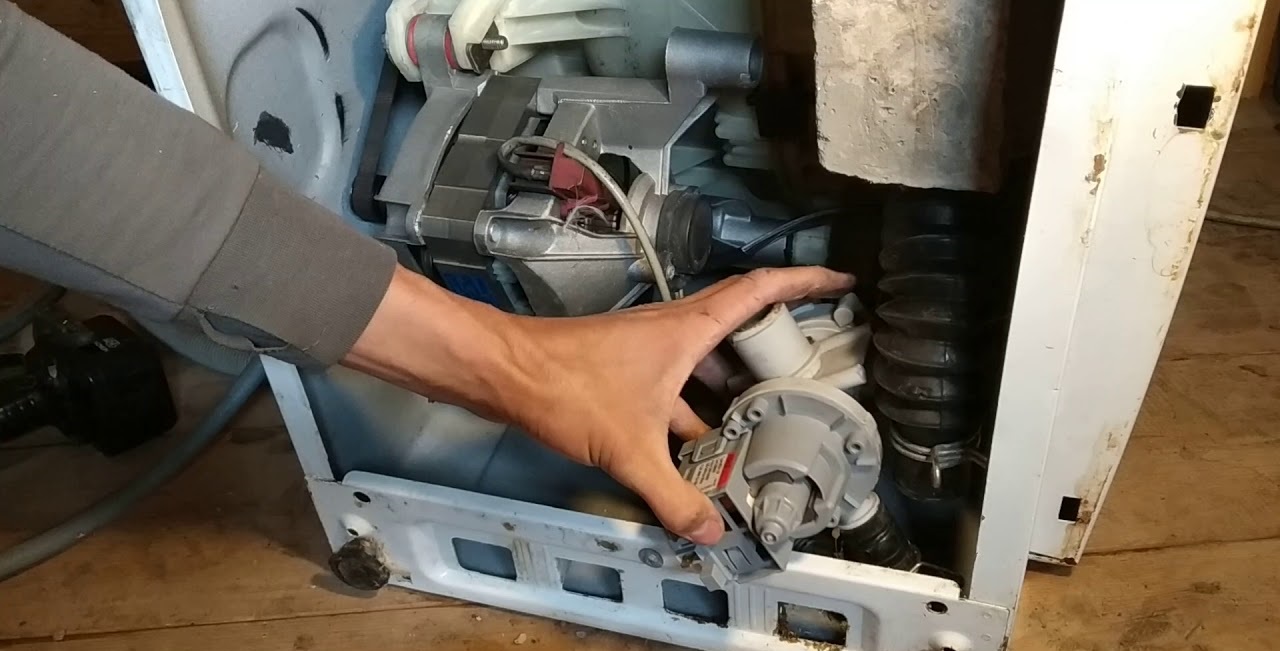
- find the pump fixed on the snail;
- disconnect the wiring and pipes from the device;
- unscrew the retaining bolts;
- remove from the seat;
- clean the snail from dirt.
The new pump is installed in the same way, but in reverse order. Place the unit in its mounting location, secure it with fasteners, and reconnect the previously removed wiring and hoses. Then, screw the tray back in place, lift the Haier, and start the wash cycle. If the repair fails, contact a service center.
Interesting:


2 reader comments
Add a comment
Headings
Washing machine repair




For buyers




For users


Dishwasher




It helped
Thanks a lot!!!