
Hisense washing machine does not spin
 It's easy to tell that a Hisense washing machine isn't spinning. The laundry in the drum will remain wet. The washing machine will try to reach the required speed, but it can't, so it will immediately drain the waste water.
Why might this happen? What should you do if you find wet laundry in the drum? Can you fix the washing machine yourself? Let's explore the details.
Possible causes of failure
The worst thing a user can do is ignore the problem. Some housewives continue to wash clothes in the machine and spin them by hand. This is not recommended. The situation can only worsen, the appliance will fail completely, and repairs will be much more difficult and expensive.
Therefore, as soon as you notice that the spin cycle isn't working, begin troubleshooting immediately. The main causes of this type of malfunction are:
- a program that does not include spinning has been started;
- the algorithm settings were changed accidentally (sometimes users don’t even notice how they enable the “No spin” option);
- the control module detected an overload or imbalance and therefore turned off the spin cycle for safety reasons;
- the bearing unit is worn out;
- the washing machine's electric motor has failed;
- a foreign object has entered the tank, preventing the drum from spinning;
- the drainage system does not work, which is why water from the tank cannot go into the sewer;
- the control board is damaged.
Most of these problems can be fixed at home. Calling a technician is necessary if the control module is damaged. You also need to call the service center if it’s a washing machine Hisense the warranty is still valid.
Don't attempt to repair a washing machine under warranty yourself. Even if you simply open the case and then reassemble it, you won't receive free after-sales service. Therefore, if your washing machine was recently purchased, call the service center immediately and ask to pick it up for diagnostics.
The selected algorithm does not provide for spinning
One common scenario: Users often run a program that doesn't include a spin cycle and are surprised to find wet items in the drum. A Hisense washing machine won't spin the laundry when running the following cycles:
- "Wool";
- "Silk";
- "Downy things";
- "Delicate fabrics";
- "Hand wash".

It's also worth noting that Hisense washing machines have an adjustable spin intensity. You can set both the maximum and minimum drum speed. Sometimes, due to inattention, users activate the "No Spin" option using this button.
Perhaps the spin cycle is not included in the settings of the selected program, or was accidentally disabled by the user, so the items remained wet.
How can I test this assumption? Run a quick wash cycle, making sure the spin cycle is enabled. Make sure the cycle speed is at least 800 rpm. Watch the machine closely during the cycle—this will help you notice when the washing machine starts to malfunction.
If your Hisense washing machine still won't spin, you'll have to dig deeper. Troubleshooting starts with the simple and progresses to the more complex. Next, rule out overloading and drum imbalance.
The technology failed to cope with the imbalance
The next step is to ensure there is no imbalance. If the control module detects an imbalance in the drum, the washing machine will stop and the spin cycle will not start. What could cause such an effect?
Imbalance occurs due to exceeding the maximum permissible loading weight or the items being bunched together.
This problem is common in older Hisense models, released more than five years ago. Modern washing machines are equipped with special sensors that prevent drum imbalance. If they detect an imbalance, the "brain" immediately stops the wash and displays a corresponding error code on the washing machine's display.
Drum imbalance has characteristic "symptoms." Here's how the machine behaves:
- after washing and rinsing, the drum begins to spin for spinning;
- when trying to “speed up” the drum, a hum and knock are heard;
- the washing machine body vibrates strongly and may start to “jump”;
- the control module, noticing this, cancels the spin cycle and gives the command to drain the water from the tank;
- As soon as all the water goes down the drain, the washing machine notifies you that the cycle is complete.

If an imbalance occurs, the wash cycle will finish 20-25 minutes earlier than expected. The laundry will remain wet in the drum. How can this problem be solved?
It's important to strictly adhere to the manufacturer's maximum load weight limit. It's important to remember that there are both maximum and minimum load weights. The load weight will also vary depending on the selected wash program.
Let's say a Hisense washing machine holds up to 6 kg of laundry. How much can it wash?
- The Cotton cycle allows for a maximum load of 6 kg and a minimum load of 1.5 kg.
- When selecting the “Synthetics” algorithm, the maximum load is 3 kg, the minimum is 1 kg.
- On the “Silk” or “Delicate” mode, maximum 2 kg of clothes, etc.
Solving the problem of an overloaded washing machine is very simple. Simply pause the cycle, remove some laundry, and continue washing. If the problem is caused by underweight, reverse the process and add a few items to the drum.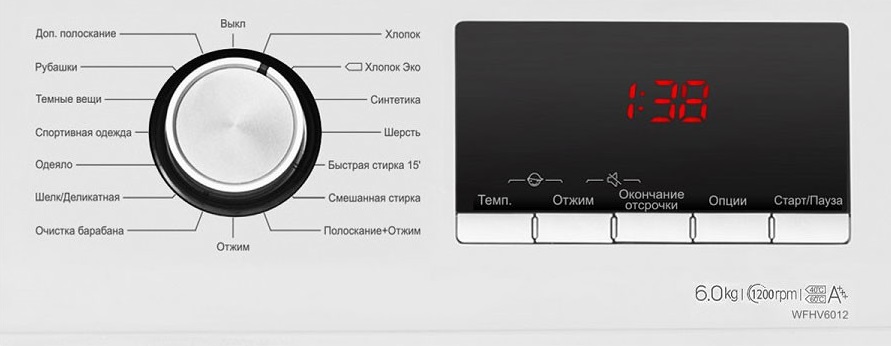
If the imbalance is caused by clumps of laundry, stop the cycle, wait for the door to unlock, and redistribute the laundry evenly in the drum. Then restart the program.
Imbalance is dangerous. It not only interferes with the spin cycle but also negatively impacts the integrity of the rest of the washing machine's components. The longer the washing machine tries to "speed up" the drum, the greater the risk of damage to the bearings, spider, shock absorbers, counterweights, and other internal components.
The engine lost power
Another possible reason for poor spinning is a broken motor. A faulty electric motor will not be able to spin the washing machine drum to the required speed. The machine will try to accelerate to maximum speed, but after several unsuccessful attempts it will skip this stage and begin draining.
To diagnose the Hisense washing machine engine:
- unplug the washing machine;
- detach the drain and inlet hoses from the machine;
- remove the back wall of the case by unscrewing the screws holding the panel;
- remove the drive belt from the pulley;
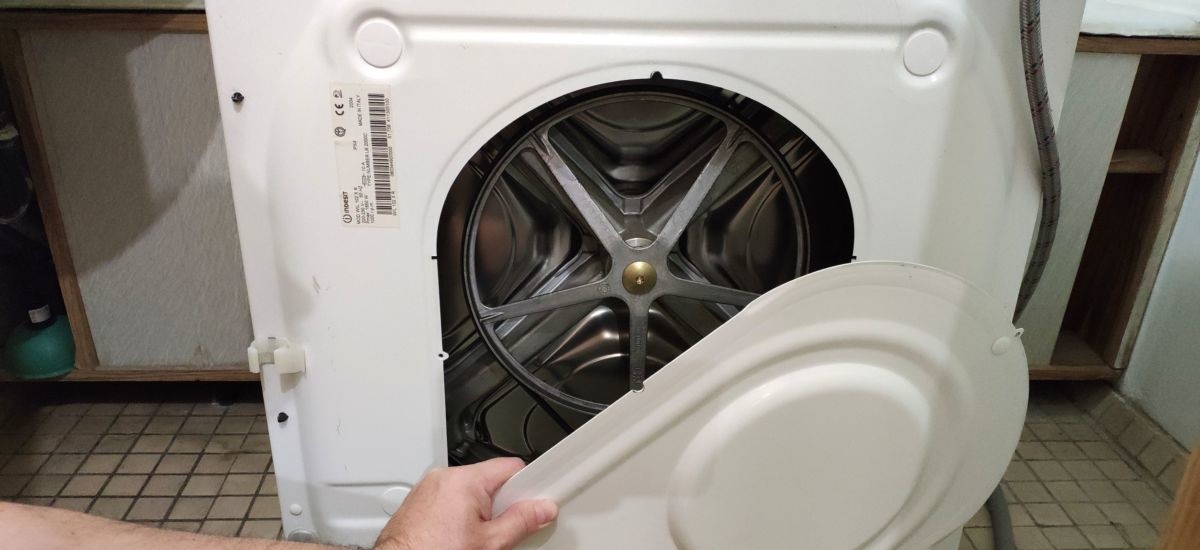
- Take a photo of the wiring diagram for the engine;
- Disconnect all wires and connectors from the electric motor;
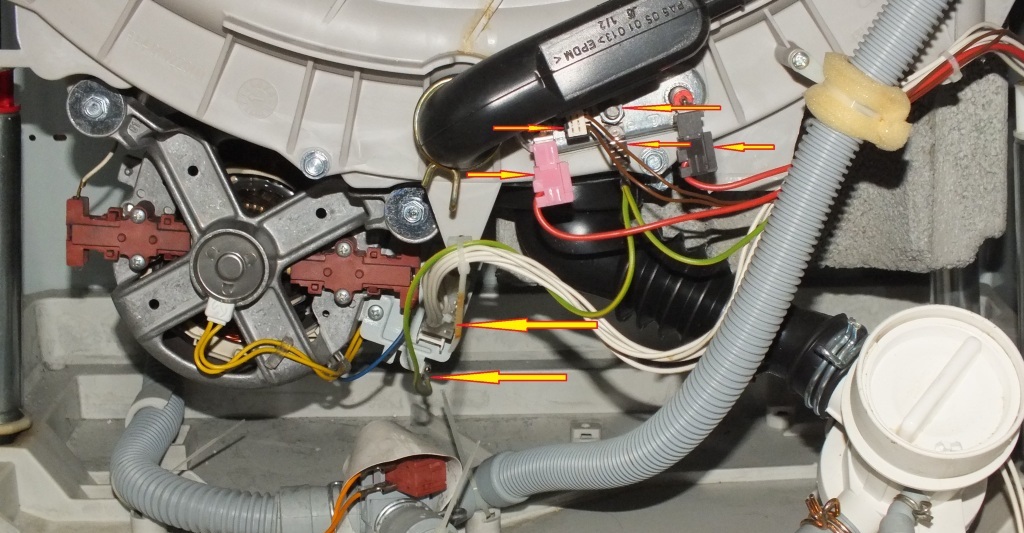
- unscrew the bolts holding the engine;
- Gently rock the motor to remove it from the washing machine housing.
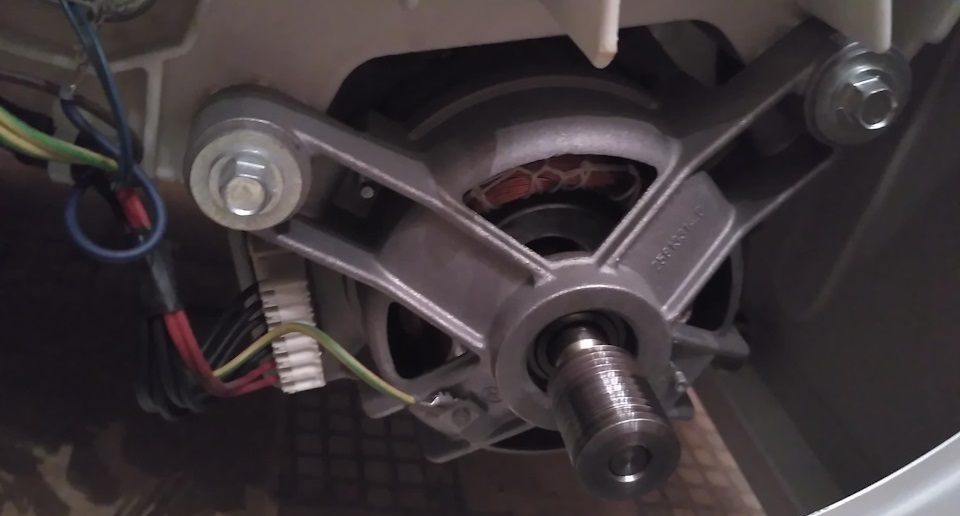
Once you have the engine in your hands, inspect it carefully. Defects are often visible to the naked eye. There may be black spots on the surface or areas with damaged insulation. Sometimes the engine will emit a distinct burning smell.
It's also worth inspecting the motor brushes. The graphite rods wear down over time. They should always be replaced in pairs, approximately every 3-5 years of use.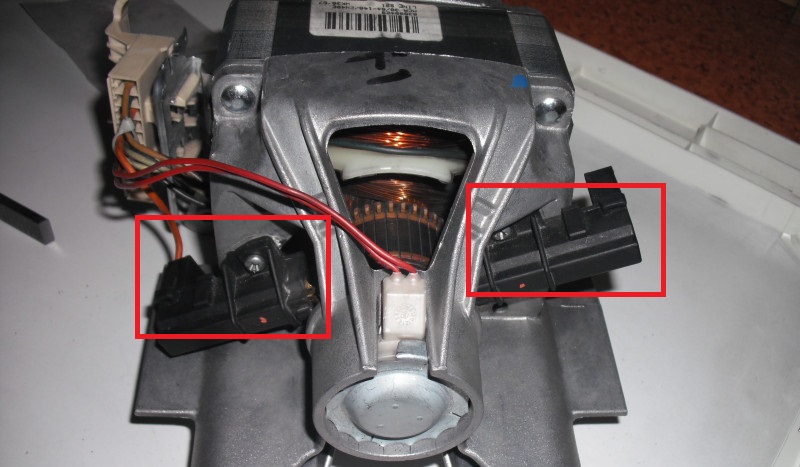
If the motor appears to be in good working order, test it with a multimeter. This checks the motor's resistance. If it's below normal, there's a short circuit. If it's above normal, there's a break in the stator or rotor winding. In this case, repairs won't help; the unit will need to be replaced.
Finally, a Hisense washing machine may stop spinning due to damage to the control board. This module coordinates the operation of all the machine's components. Therefore, if a malfunction occurs, the washing machine's behavior may become erratic. It is recommended to entrust diagnostics and repair of the electronic control board to specialists.
Interesting:

Readers' comments
Headings
Washing machine repair




For buyers




For users


Dishwasher




Add a comment