
The Indesit washing machine takes a long time to wash
 A standard wash cycle programmed into a washing machine's memory can last anywhere from 15 minutes to 2.5-3 hours. Machines equipped with a display show the remaining run time. If the machine doesn't have a display, you'll have to monitor the cycle time manually. An abnormal situation occurs when, for example, you start a 30-minute program and wait for the cycle to finish for over an hour. It's important to understand why your Indesit washing machine is taking so long to complete its wash cycle and what might be causing the problem.
What happened to the car?
These symptoms are very vague, and it's impossible to immediately pinpoint a single, precise cause. However, by analyzing the situation, it's possible to narrow down the possible problems with the equipment. A washing machine that runs slowly may be caused by:
- Overloading the drum. It might seem like the maximum load capacity has nothing to do with this. The problem is that the washing machine spends more time distributing the laundry across the drum, resulting in a longer cycle. The solution is simple: remove the excess items.
- Problems filling the drum with water. Wash times can increase significantly if the machine takes a long time to fill with water. This could be caused by a clogged filter or inlet hose, or a defective inlet valve. The water shutoff valve may not be fully open.
- Long drain time. It takes several minutes for the waste liquid to drain from the tank. When running a standard cycle, water is drained from the system at least 3-4 times. Therefore, adding an additional 5-10 minutes to each drain will significantly increase the program run time. Water may have difficulty draining from the drum due to a clogged drain hose, debris filter, or pump.
- A faulty heating element or temperature sensor. In this case, the water takes much longer to heat up to the desired temperature, resulting in increased program execution time. A large amount of scale may have accumulated on the heating element, reducing its performance. The problem may also lie in a faulty thermistor, which is not accurately recording the liquid's heating temperature;
- Damage to the main control unit. The main symptom of such a malfunction is that the machine begins to freeze during the wash cycle, after which it restarts the cycle.
In fact, the list is quite extensive. To fix the problem, you need to run diagnostics, eliminate one possible cause after another, and finally determine the underlying cause of the system failure.
Poor fluid intake, too much laundry
If you load the machine with more laundry than the manufacturer's recommended capacity, it will have a harder time distributing the items within the drum. The washing machine will also struggle to reach the required spin speed. The washing machine will start the cycle, but the wash will be slower. The Indesit will also take longer to distribute the laundry evenly across the surface if it's clumps together.
It is important not to exceed the permissible load weight and, when placing items in the drum, distribute them over the surface yourself.
As for slow fluid intake, this can happen for several reasons:
- Weak water pressure in your home's utilities. If the water is barely flowing, you should postpone washing until the problem is resolved;
- shut-off valve not fully open;
- The filter mesh on the inlet valve is clogged. In this case, the filter will need to be cleaned or replaced;
- The intake valve is faulty. A new element must be installed.
First of all, it is necessary to discard the most obvious factors that can lead to breakdown. When, according to your calculations, the wash cycle should have finished long ago, but the program still won't turn off, you can start by checking the pressure in the system, the position of the shut-off valve, and inspecting the inlet hose. If the issue is definitely not related to the factors described above, you need to dig deeper.
It slows down when draining, continuous water intake
Programs may take longer to run due to water draining too slowly from the tank. You'll need to check some parts of the drainage system. The following factors can cause obstructed water drainage:
- The debris filter is clogged. This element is located at the front of the washing machine, in the lower right corner. This element needs to be cleaned;
- Damage to the impeller. Check if the blades are spinning. This can be done through the hole created by removing the debris filter.
- The drain pump hose is clogged. To fix this, de-energize the washing machine, turn off the water supply, lay the machine on its side, locate the pump, loosen the clamp securing the hose, and clear the hose.
- Dirt buildup in the drain hose or a kink. If any defects are detected, flush or replace the hose.
Uncontrolled water drainage from the drum also increases the washing time. Water can accumulate in the system and then immediately drain into the sewer. This occurs due to:
- The washing machine is incorrectly connected. Water fills to a certain level and then immediately drains. This prevents the required volume of water from entering the drum, and the wash cycle does not start. Check that the drain hose is installed 60 cm above the floor. It's important to pay attention to the position of the hose relative to the washing machine;
- A faulty pressure switch. The sensor measures the water level in the system and signals the control module to begin the wash cycle when sufficient water has been collected. If the pressure switch is faulty, the level is not accurately assessed, and the washing machine cannot determine whether the tank is empty or full. This can result in water constantly draining and refilling. Replacing the sensor will resolve the issue.
- Intake valve misfires. In this case, the element doesn't operate properly and may not open fully or become stuck. The problem can be resolved by replacing the part.
Therefore, cycle time increases when the drainage system is clogged or water is backed up uncontrollably. You can fix this problem yourself. Simply inspect the components of your Indesit washing machine and clean or replace them.
Heating problems
Let's look at a situation where the cycle is extended due to improper water heating. The issue could be either the heating element or the temperature sensor. In this case, the machine either doesn't turn off, runs much longer than expected, or, conversely, freezes without even starting the wash. The main causes are:
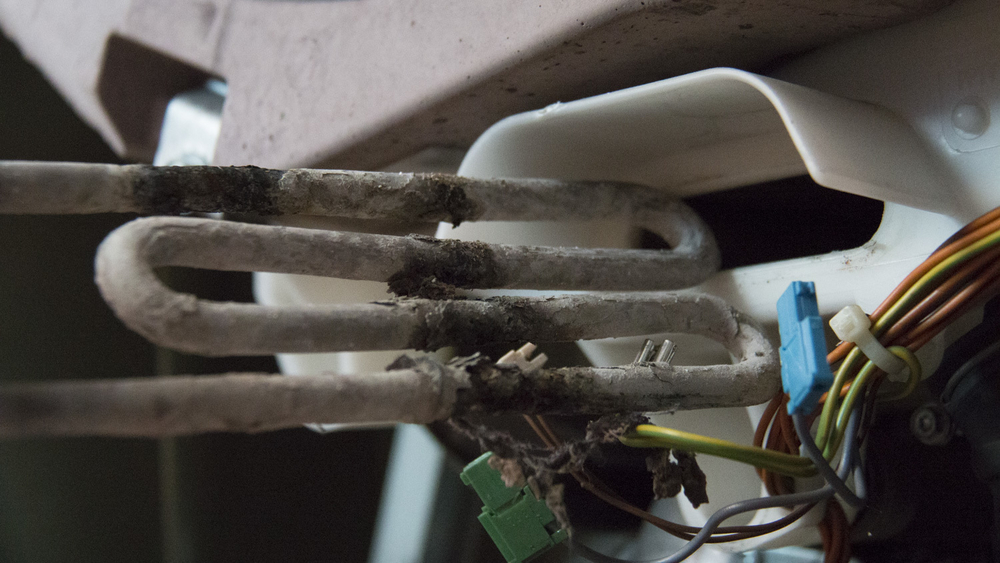
- A significant layer of scale on the heating element. The quality of tap water often leaves much to be desired, so it's difficult to prevent scale buildup on various washing machine parts. Over time, scale builds up on the surface of the heating element. This affects the element's operation—the water heats up much more slowly. You can try cleaning the part or immediately replacing it with a new one.
- A faulty temperature sensor. In this case, the control module doesn't receive a signal that the water has reached the desired temperature. Then, the wash cycle either doesn't start at all or is delayed because the washing machine's "brain" decides to wait until the water reaches the set temperature. The machine can "wash" for several hours, waiting for the desired temperature to be reached. A good thermostat replacement is sufficient.
If the heating element burns out, the washing machine will freeze at the water heating stage, without even starting to spin the drum.
Typically, if the heating element is completely damaged, the machine alerts the user by displaying an error code. In this situation, there's no other option but to install a new heating element. Before replacing it, check the old heater with a multimeter.
The brains are broken
This type of breakdown is considered the most serious; it is very difficult to fix it on your own; it is better to entrust the work to a specialist. If the main control unit fails, the Indesit washing machine can continue washing indefinitely, constantly switching washing programs, freezing, and then starting up again.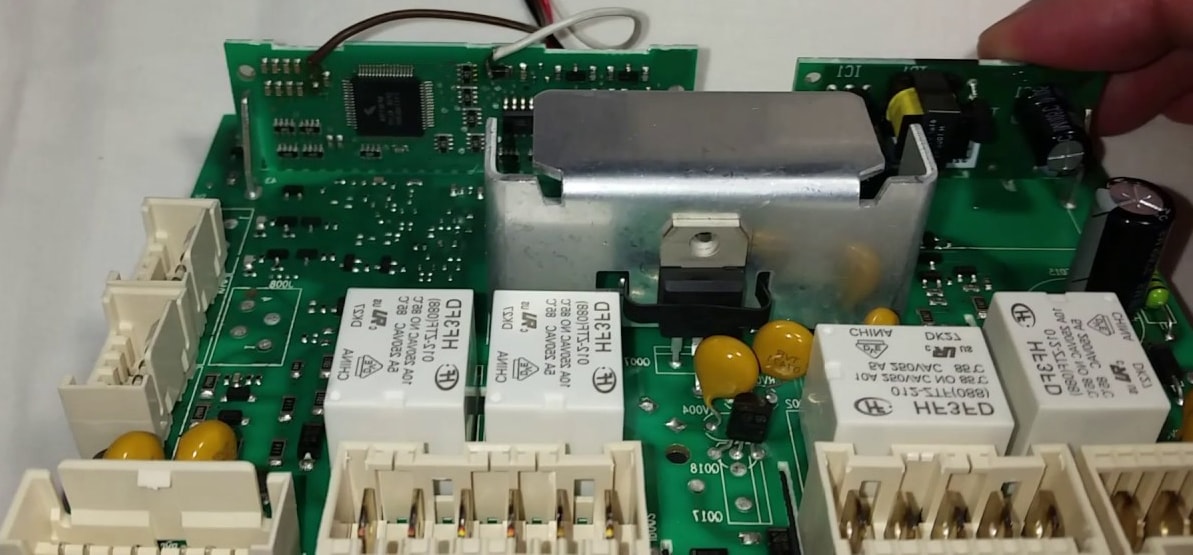
In most cases, the solution is to reflash the washing machine or replace individual components on the control board. To avoid making matters worse, it's not recommended to attempt to access the machine's "brains" on your own. A thorough diagnostic of the equipment is required, which is impossible to perform without the appropriate equipment, knowledge, and experience.
Interesting:

Readers' comments
Headings
Washing machine repair




For buyers




For users


Dishwasher




Add a comment